Posts

Interventions: Rewriting the Canadian Landscape

Canadian landscape painting has long carried a sense of distance. Vast, quiet, and often untouched, the land is presented as something to behold rather than inhabit. The viewer stands at the edge, looking in. In this series, Interventions, I step inside. I am rewriting the Canadian Landscape.
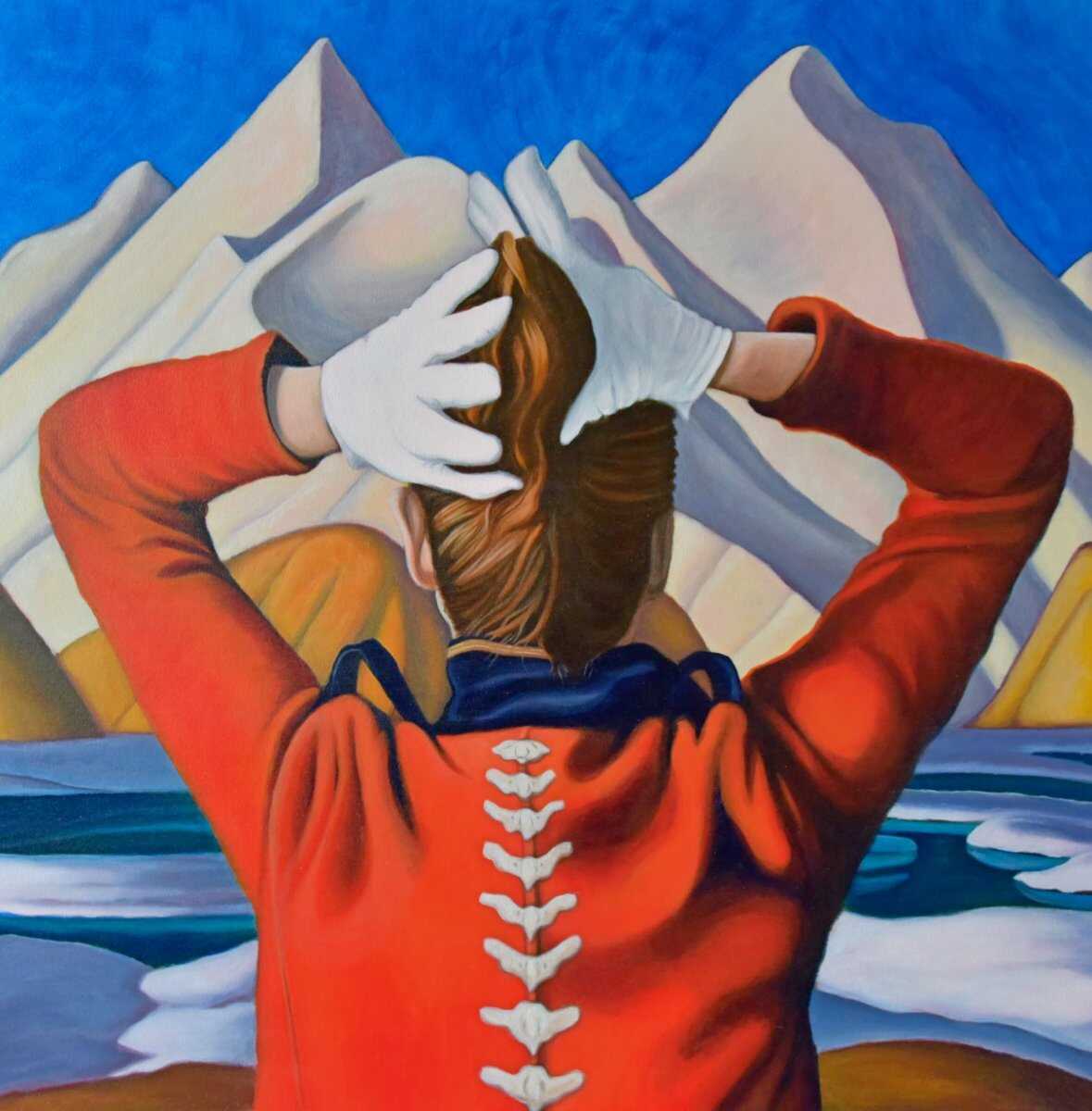
Rewriting the Canadian Landscape

Let Your Backbone Rise, c. 2016 Acrylic 36 x 36 x 1.5 in – Brandy Saturley – Private Collection Montreal, Canada ref. Lawren Harris Baffin Island

These paintings begin as homage to artists such as Lawren Harris and Emily Carr, whose work has profoundly shaped how we see and understand Canada. Their landscapes are not only images, but part of a shared visual language – icons that have come to define a national identity. Rather than approaching these works from a distance, I engage them directly, entering the image and reworking it through my own perspective.

Each painting is an intervention into art history. I revisit familiar compositions and forms, but I do not preserve them as fixed. Instead, I shift them – through colour, symbol, and presence -allowing the image to open up and speak again in a contemporary voice. The past remains visible, but it is no longer static.
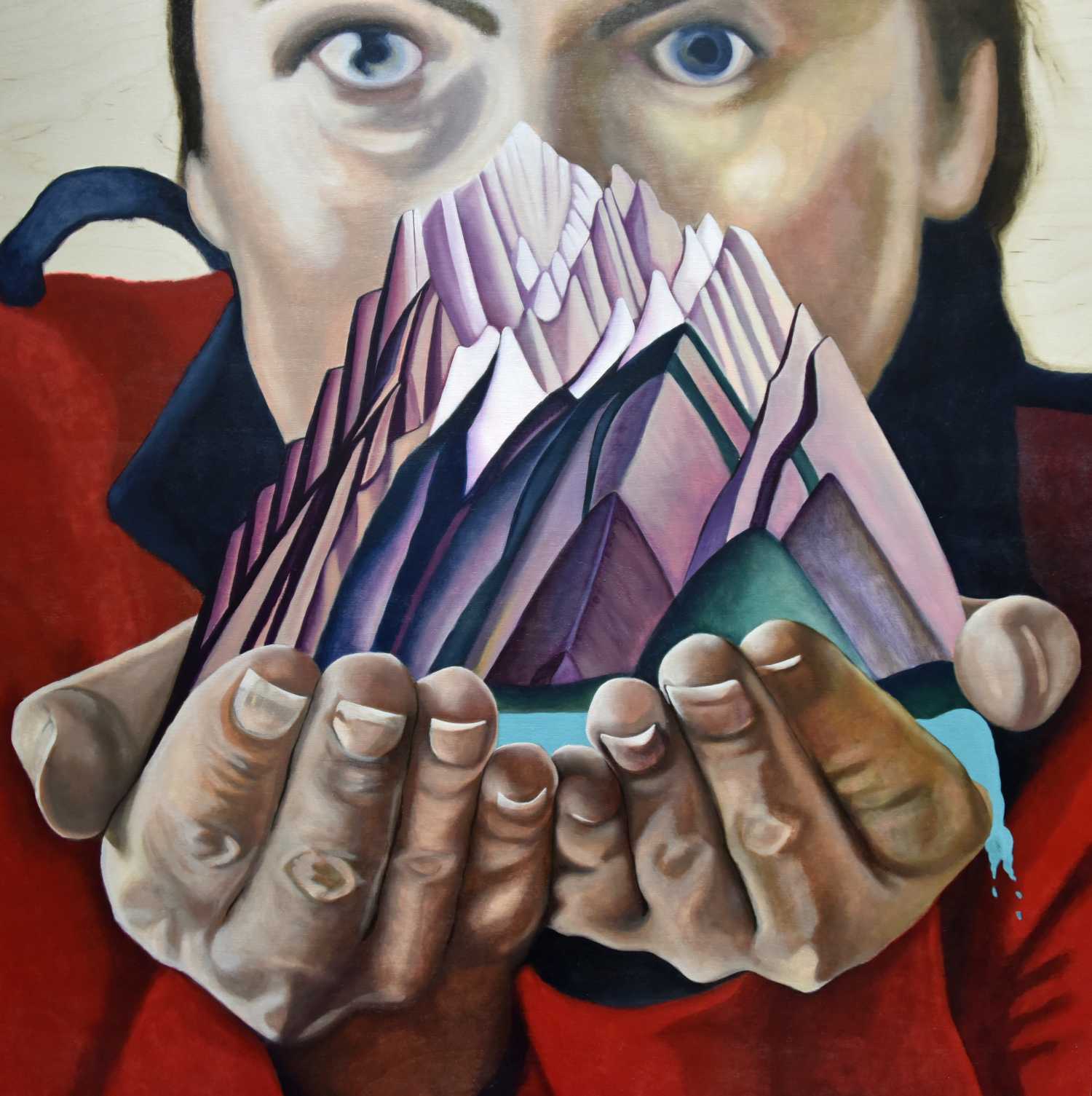
Rewriting the Canadian Landscape

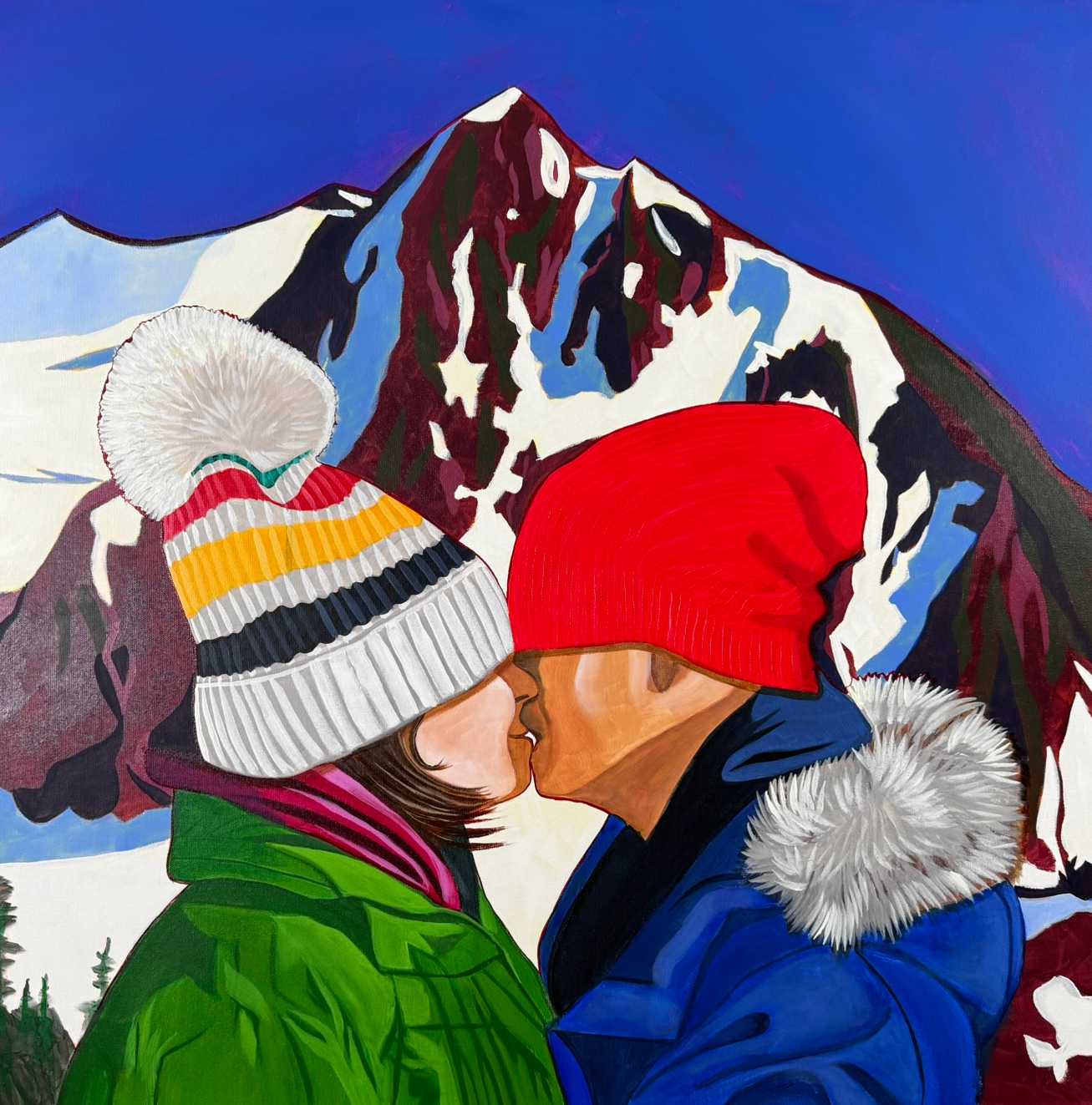
A Landscape To GO, c. 2017 Acrylic on wood panel 30 x 30 x 1.5 in – Brandy Saturley – ref. Lawren Harris Mountain Forms

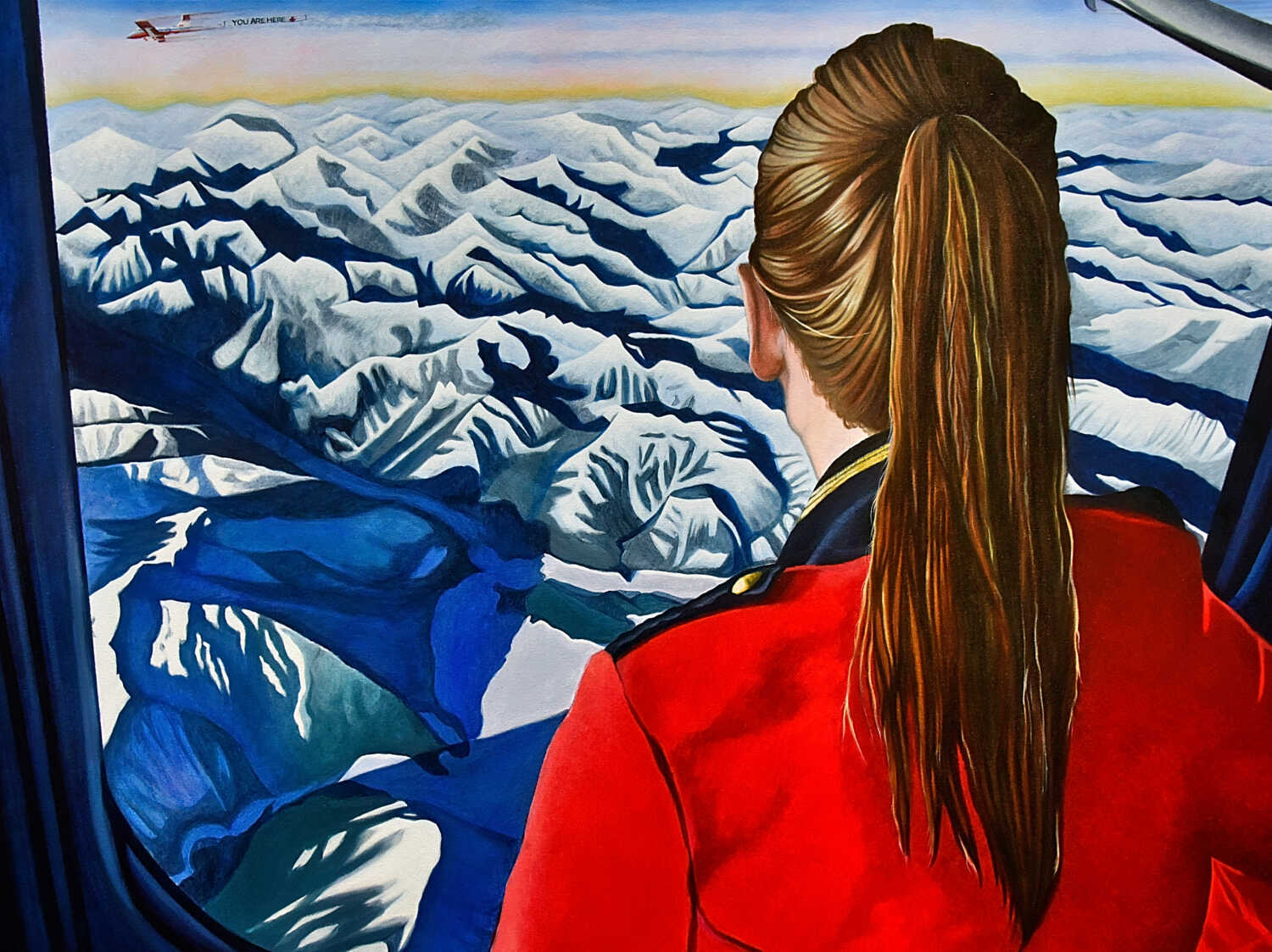
A central gesture within this series is the act of placing myself within the landscape. Where these historic works often suggest solitude or absence, I introduce a figure – my own – as both observer and participant. This is a deliberate shift. It challenges the idea of the landscape as something separate or distant and instead positions it as lived, experienced, and ongoing.

By inserting myself into these spaces, I am also acknowledging lineage. These works are not about replacing what came before, but about continuing it. Canadian art history is not a closed chapter; it is a living narrative. Through these interventions, I locate my practice within that continuum, adding a contemporary voice to an enduring conversation.
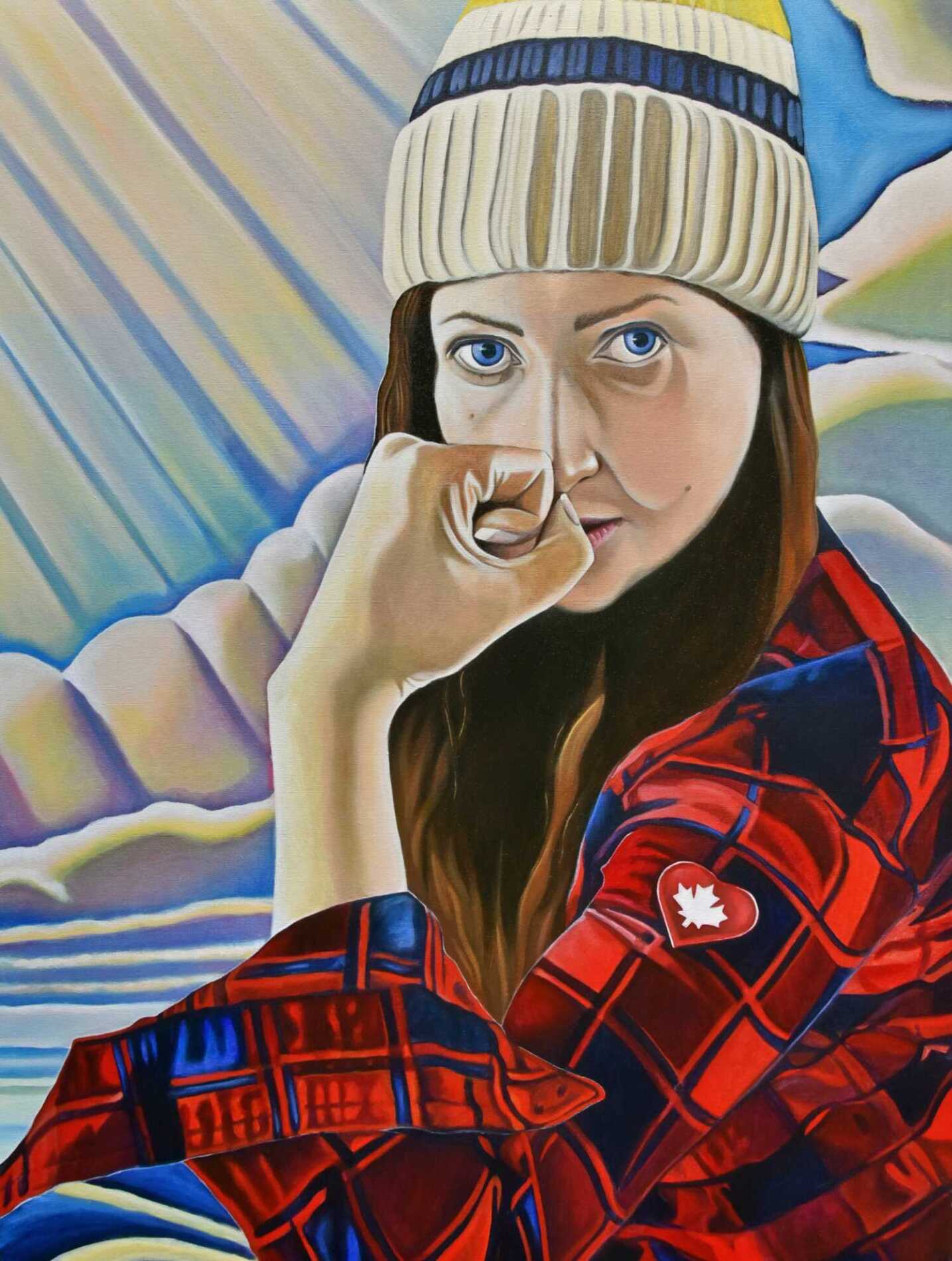
Rewriting the Canadian Landscape

Hearts On Our Sleeves, 2017 Acrylic On Canvas 40 x 30 x 1.5 in – Brandy Saturley – Private Collection Toronto, ON – ref. Lawren Harris North Shore Lake Superior

Rewriting the Canadian Landscape – Lawren Harris Connection

This painting, With Hearts On Our Sleeves,  is part of my Interventions series, engaging directly with the iconic landscape language of Lawren Harris – specifically his 1926 work North Shore, Lake Superior. The original composition, known for its stillness and clarity, becomes a point of entry rather than a fixed image.

Within this familiar terrain, I introduce my own presence. By placing myself into the landscape, the painting shifts from observation to participation. The quiet, uninhabited space associated with Harris is interrupted – transformed into a lived and contemporary environment.

The dialogue between past and present unfolds through this gesture. Harris’ vision of the Canadian landscape remains visible, but it is no longer distant or untouched. Instead, it becomes active, evolving, and open to reinterpretation.

This work moves beyond homage. It is an intervention into Canadian art history – one that honours the legacy of the landscape while asserting a new voice within it.
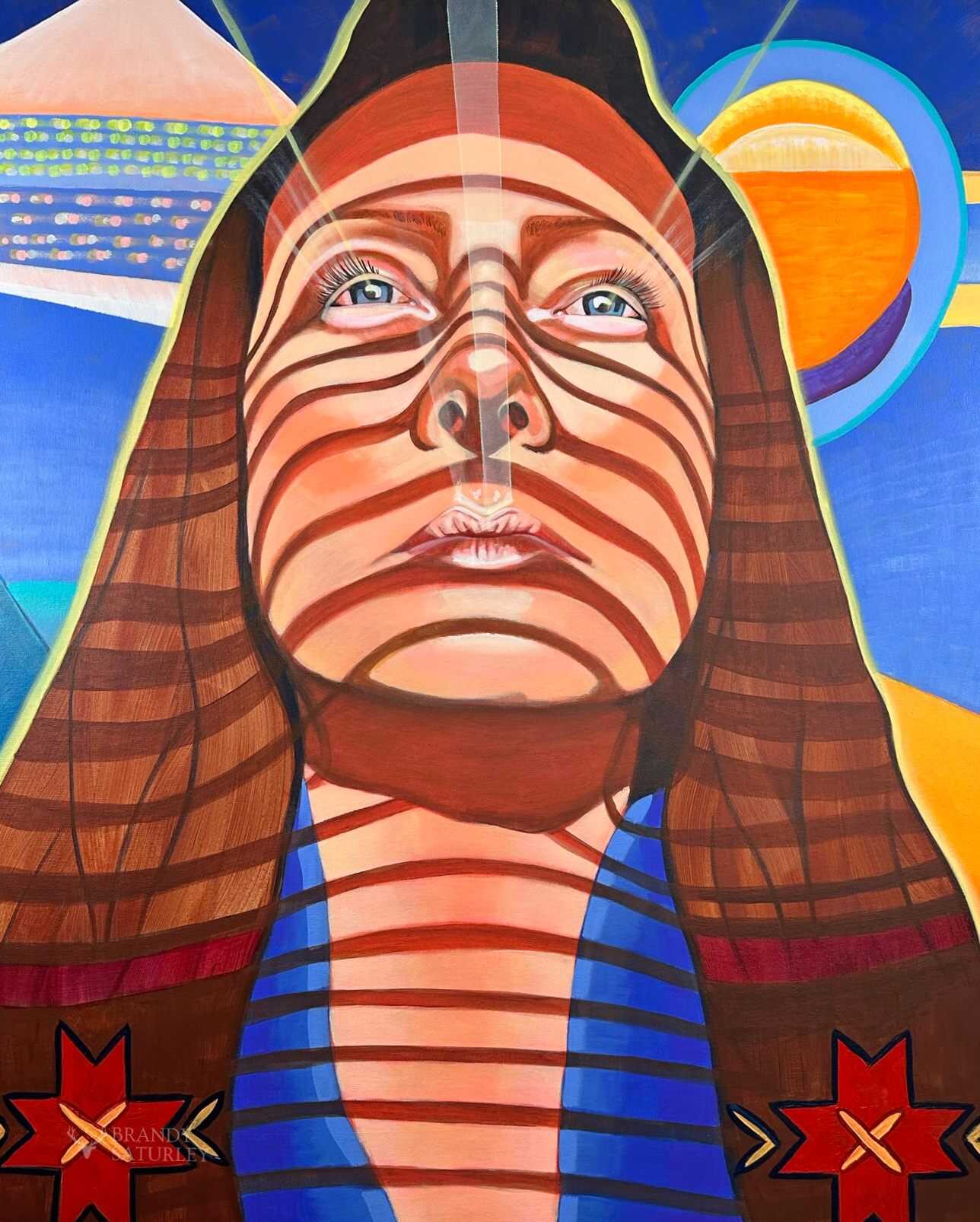
lawren harris homage

Dochka Rising, c. 2023 acrylic and gouache 36 x 30 x 1.5 in – Brandy Saturley – ref. Lawren Harris Sun and Earth

Rewriting the Canadian Landscape – Emily Carr

This painting feels like a quiet collision between memory, identity, and landscape—a conversation staged inside the lush, breathing green of the West Coast.
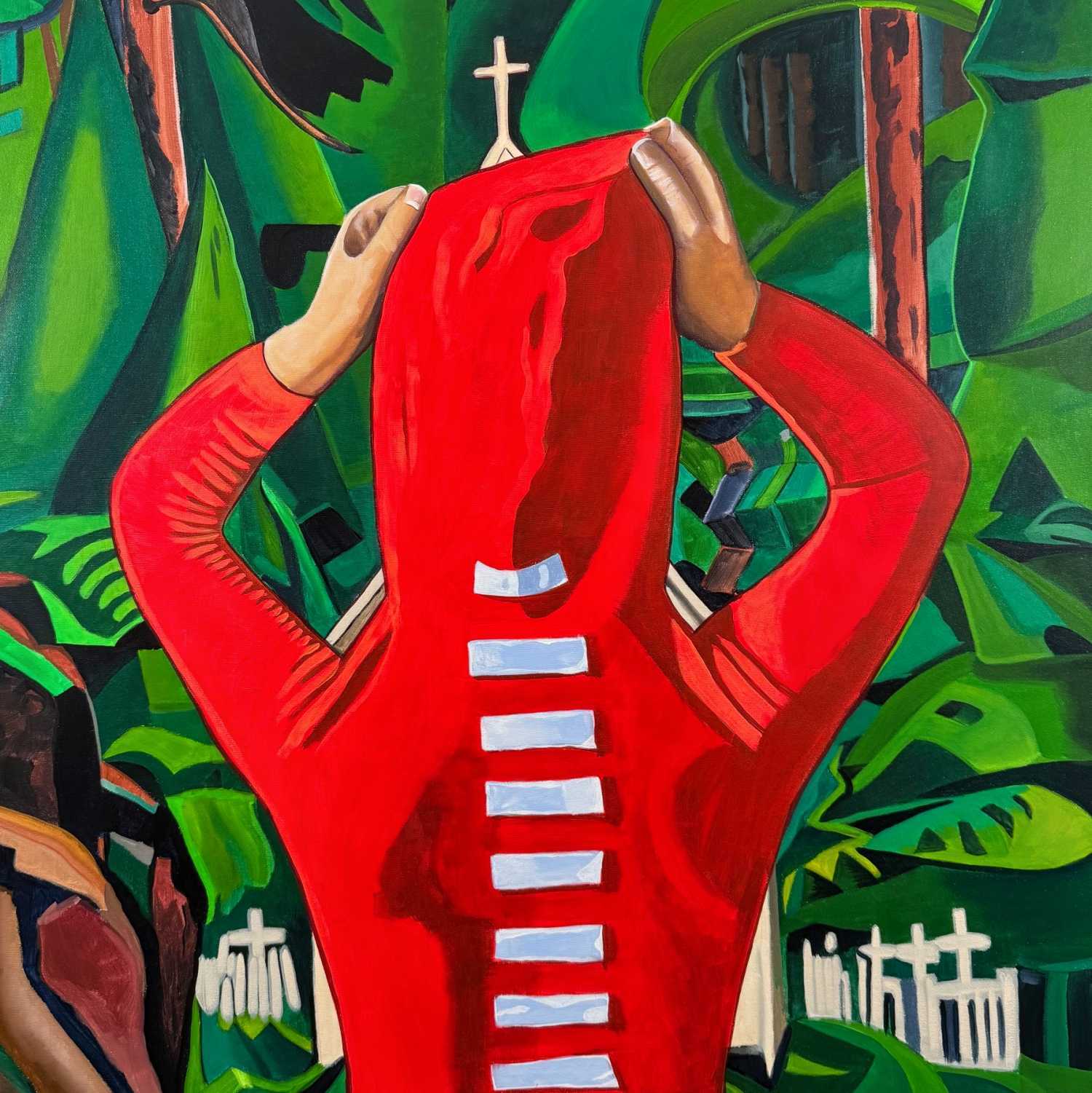
The Red We Carry, c. 2026 Acrylic On Canvas 30 x 30 x 1.5 in – Brandy Saturley – ref. Emily Carr, Indian Church

Inspired by Emily Carr’s Indian Church, the iconic white chapel emerges again here, but it no longer stands alone in solemn stillness. Instead, it is partially veiled – interrupted – by a contemporary figure caught mid-gesture, pulling a vivid red garment over their head. The act is intimate, almost ceremonial, as though the figure is stepping into a role, or shedding one.

The red dominates the canvas like a pulse – alive, urgent, impossible to ignore. It cuts through the dense, Carr-like forest, where deep greens twist and press inward, echoing both protection and pressure. The church, traditionally a symbol of colonial presence in Carr’s work, is now fragmented and repeated, its crosses peeking through the foliage like quiet witnesses.

There is tension here: between past and present, visibility and concealment, identity and imposed narrative. The figure’s face is hidden, denying us easy recognition. Instead, we are left with gesture and colour – universal languages that ask more than they answer.

This is not just a homage – it is a re-entry. A stepping into the landscape that Emily Carr once painted, but with a contemporary body, a contemporary voice. The result is a layered story about Canada itself: how histories linger, how identities are worn and re-worn, and how the land continues to hold it all, quietly, relentlessly.

My work has always been rooted in storytelling through symbols, cultural references, and the landscapes that shape us. In Interventions, that language meets the canon. The result is a layering of time – where past and present exist simultaneously, and where meaning is not fixed but continually evolving.

For the viewer, there is both recognition and disruption. Familiar forms draw you in, but something has shifted. The image asks to be seen again, reconsidered, reinterpreted. For collectors, these works offer a connection to the legacy of Canadian painting while carrying a distinct and contemporary perspective – bridging history and reinvention.

These are not quiet tributes. They are active engagements. They are a way of stepping into the landscape, into the image, and into the ongoing story of Canadian art.

View the Interventions series on my website.
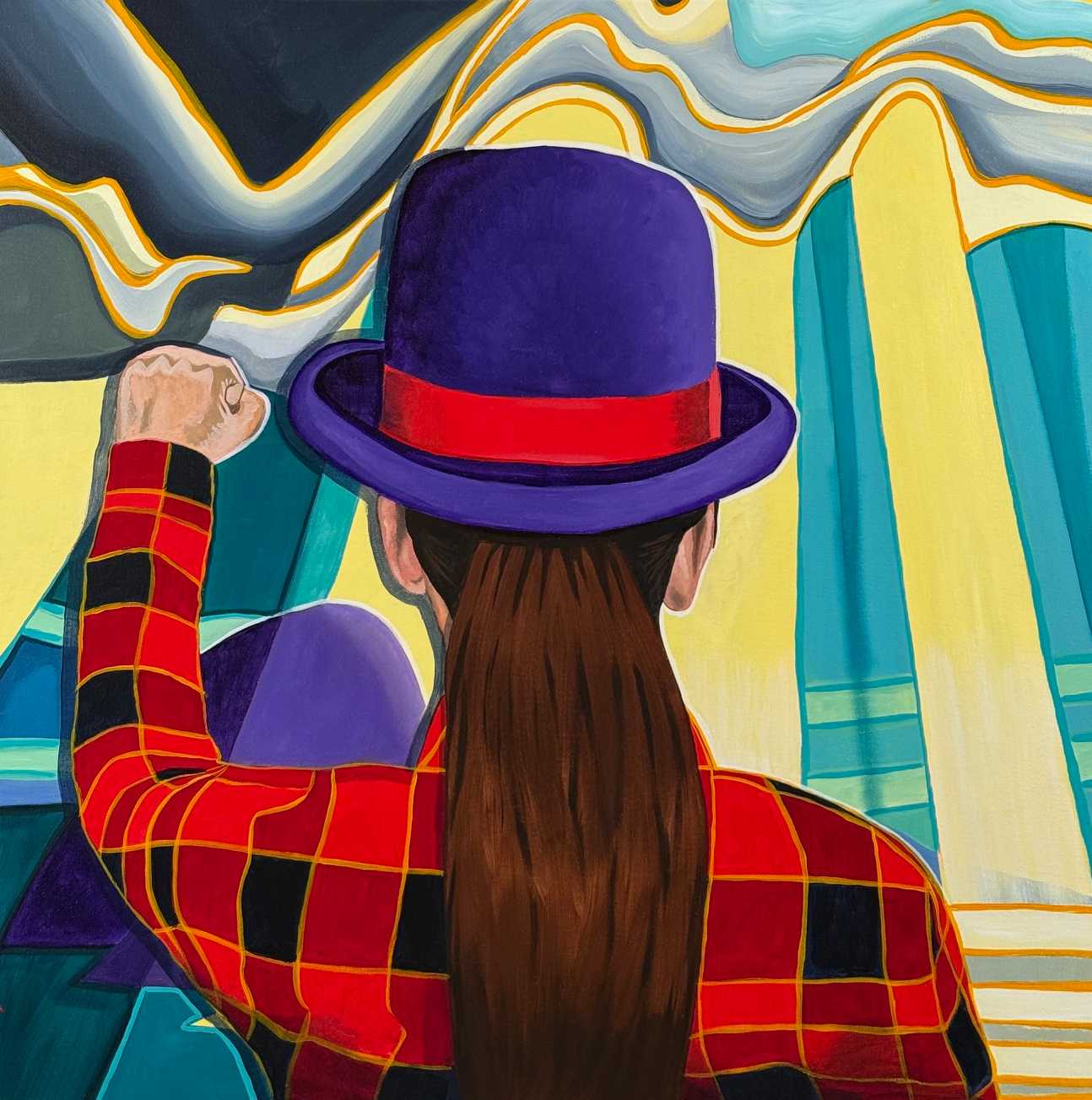
bowler hat painting

Knocking On The Sky, c. 2025 Acrylic On Canvas 30 x 30 x 1.5 in – Brandy Saturley – ref. Lawren Harris Lake Superior
Figurative Landscape and the Language of Colour: Canadian Art Reimagined

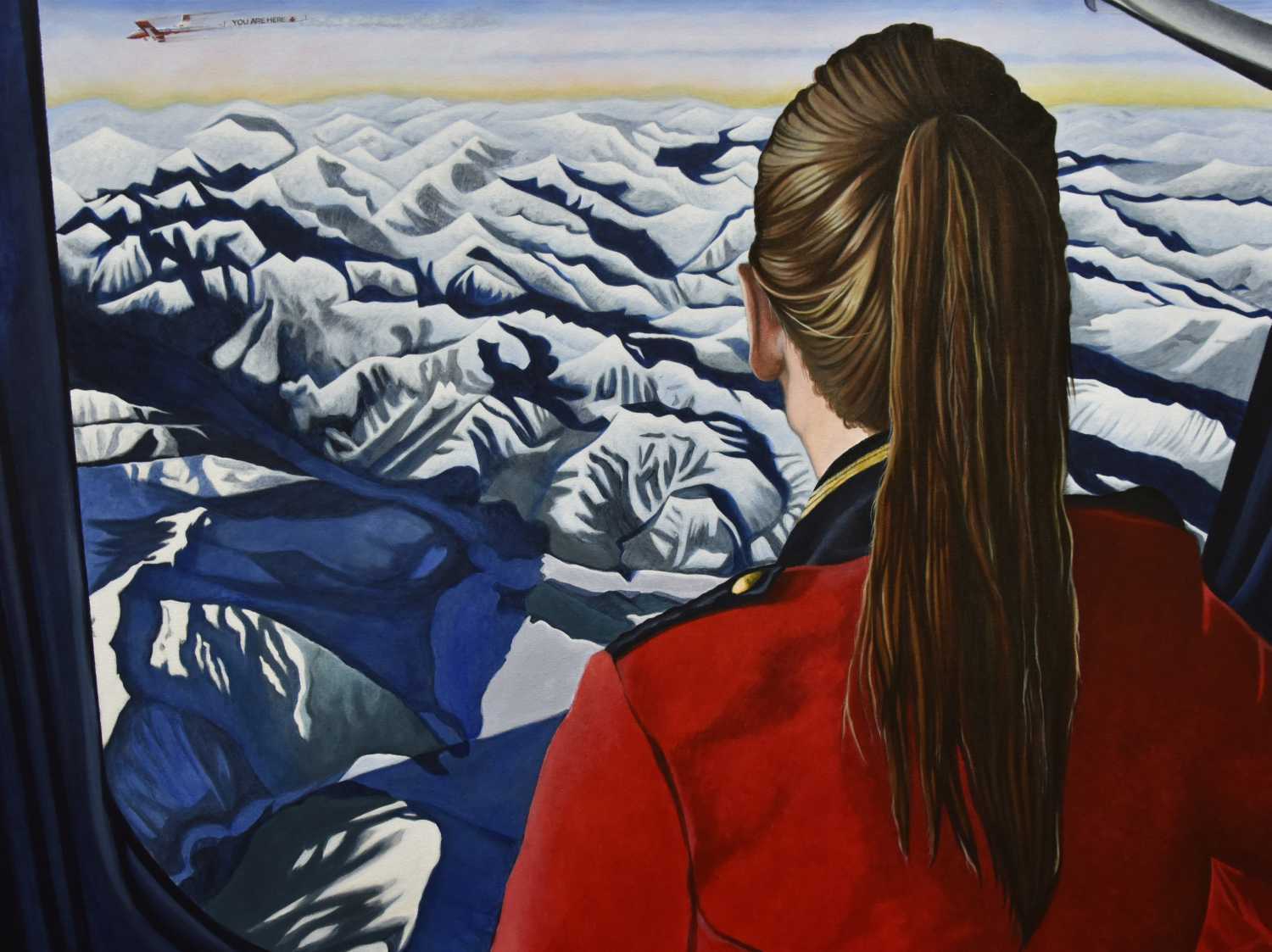
I have often said that I do not paint landscapes. I paint stories of the landscape through figures, icons, and myth. My work reimagines Canadian landscape art through a contemporary lens, where the human presence becomes central to how we experience place.

Canadian Landscape Art Reimagined

Rocky Mountains Higher, c. 2023 Acrylic 36 x 48 x 1.5 in – Brandy Saturley

There are two Canadian painters whose work I return to often, Prudence Heward and Alex Colville. Both placed the figure prominently within the landscape. This approach creates intrigue and draws the viewer in, inviting them to step into the scene and construct their own narrative.

Modern in its execution, this painting asks for your story.
Canadian Pop Art Painter

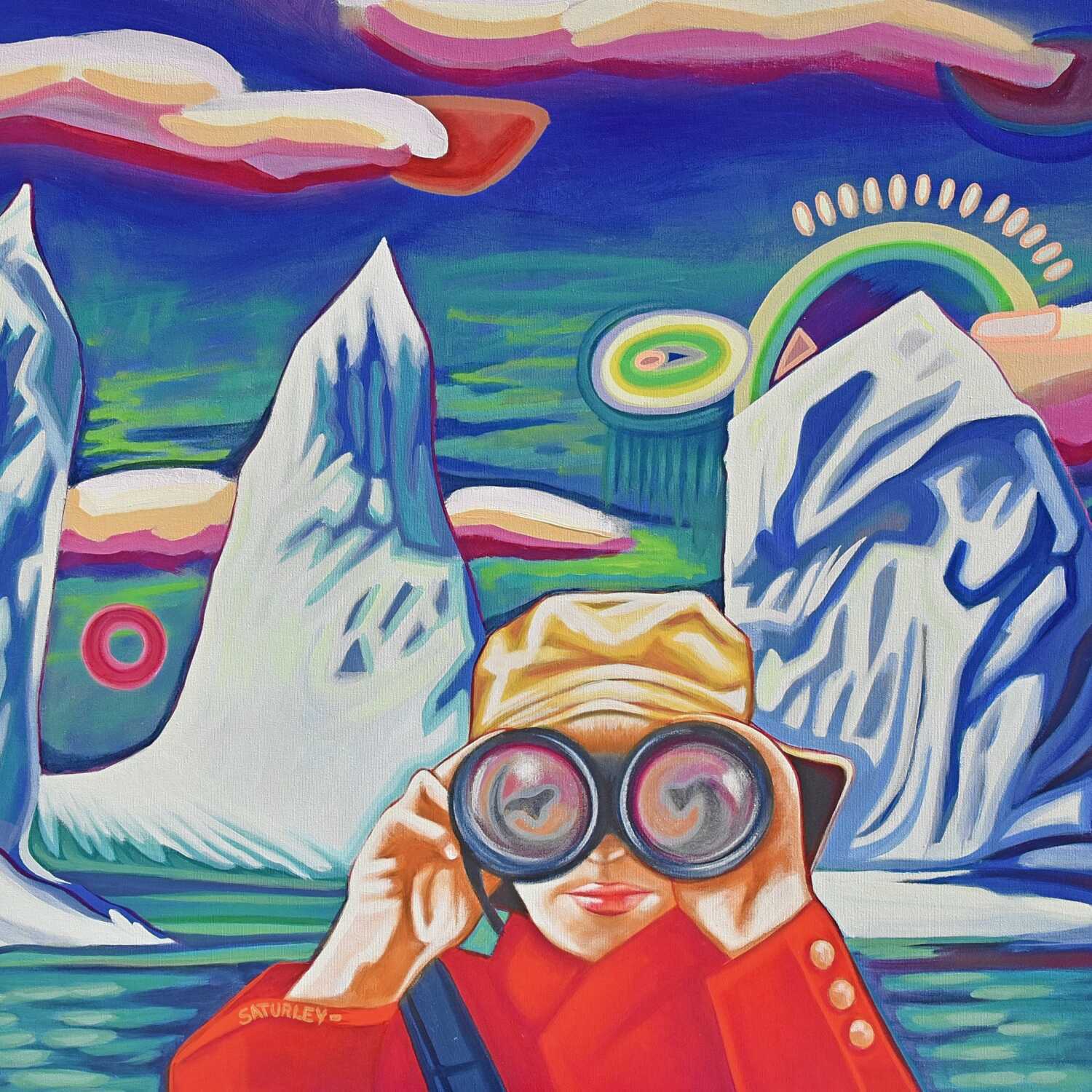
Detail, Looking for the Icebergs, 2022 Acrylic on Canvas 30 x 48 x 1.5 in – Brandy Saturley

Canadian Landscape Art Reimagined – New Painting

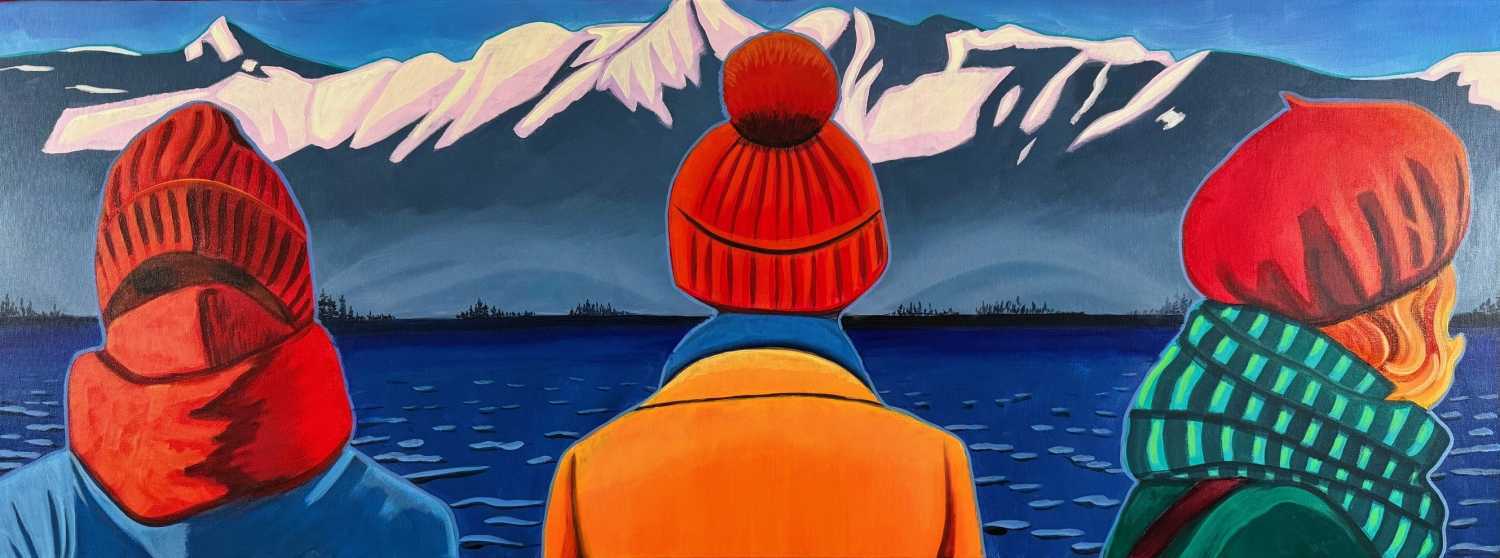
Three figures stand at the edge of something vast and quiet, their backs turned, their attention fixed on a horizon that feels both distant and familiar. The ocean stretches out in a deep, contemplative blue, flecked with ripples of light, like thoughts not yet settled. Beyond it, a procession of snow-capped mountains rises, steady, ancient, unmoved.

Each figure carries their own presence into the scene. Red hats act as anchors, small but powerful signals of warmth against the cool expanse, while their coats suggest individuality without distraction. They are together, but not entangled. Companions in stillness.

Canadian Landscape Art Reimagined

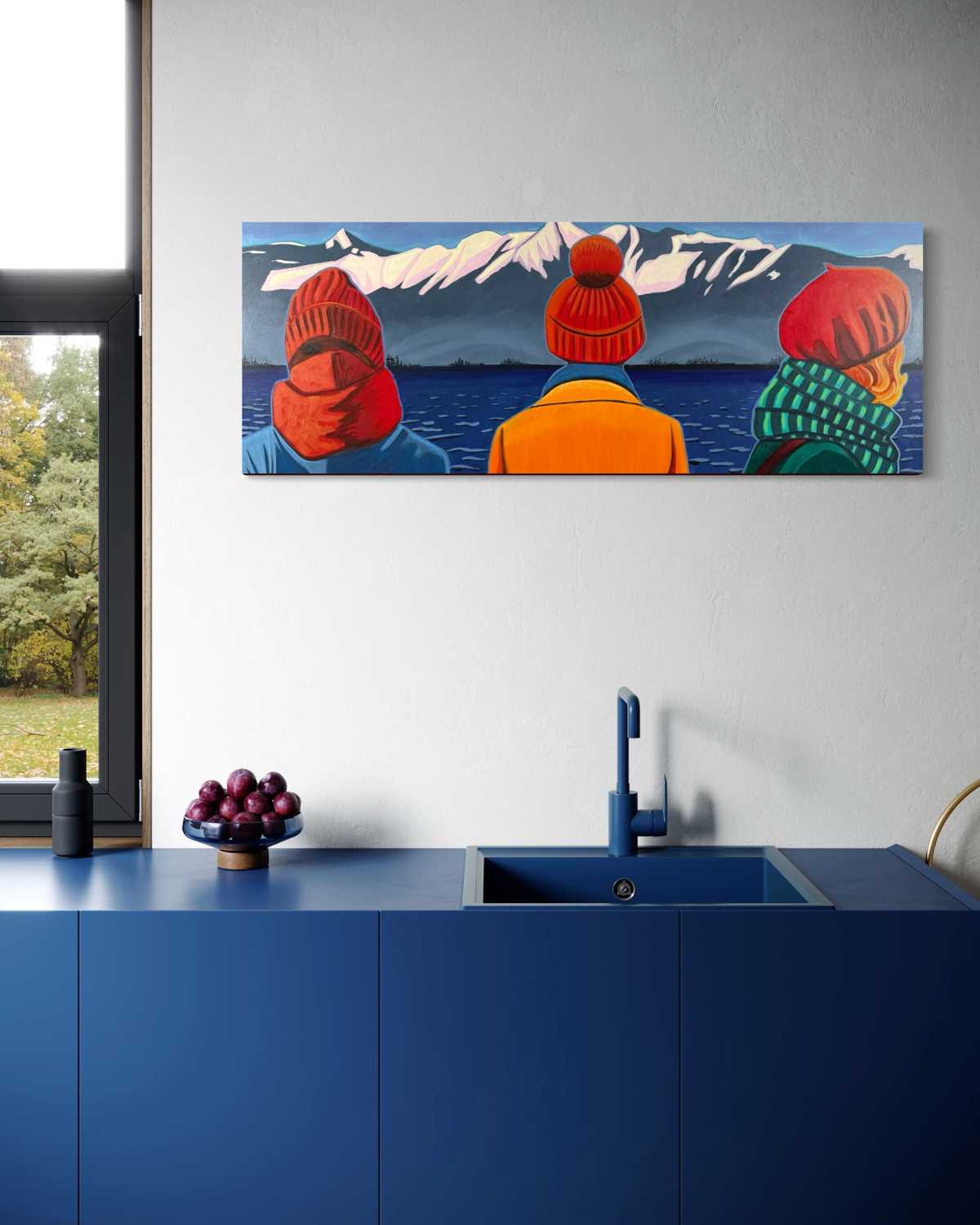
Gateway to The World, c. 2026 Acrylic On Canvas 18 x 48 x 1.5 in – Brandy Saturley

There is no fixed narrative here, only the suggestion of one. Are they witnessing, remembering, or waiting?

The composition holds a quiet tension between intimacy and immensity. The human scale is small against the landscape, yet emotionally central. The viewer is positioned just behind them, invited into that shared gaze and into that pause.

Canadian Landscape Art Reimagined

Gateway to The World, c. 2026 Acrylic On Canvas 18 x 48 x 1.5 in – Brandy Saturley

Colour carries the emotional weight of the painting. Red pulses with energy and immediacy, pulling the eye forward, while blue and white recede into a meditative calm. It becomes a conversation between warmth and distance, presence and reflection.

This is not just a landscape. It is a moment of collective looking, a pause long enough for place, memory, and identity to rise to the surface.

For collectors, this work offers more than an image. It offers an experience that evolves over time. The narrative is never fixed, shifting with light, mood, and memory. As with much of my work, it invites a personal connection, one that deepens the longer you live with it. In this way, the painting becomes not only a reflection of Canada, but a quiet mirror for the viewer themselves.

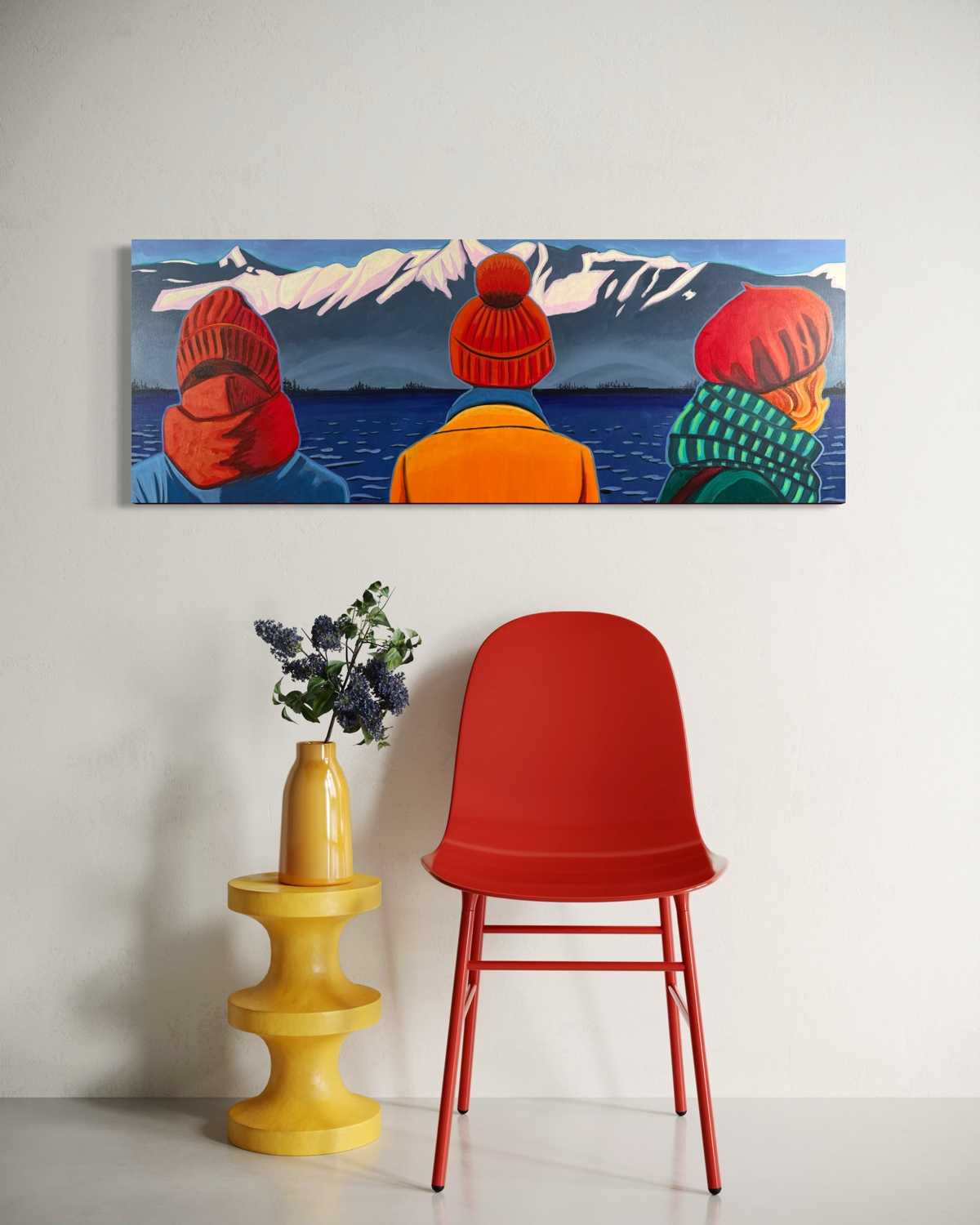
Gateway to The World, c. 2026 Acrylic On Canvas 18 x 48 x 1.5 in – Brandy Saturley

Contact us directly to purchase.

How to Start a Canadian Art Collection That Actually Means Something

Canada is a country of vast landscapes, layered histories, and quiet, powerful stories. From northern tundra to coastal forests, prairie skies to urban skylines, the Canadian experience is rich with imagery and meaning. Collecting Canadian art is one of the most personal ways to connect with that story.

But where does one begin?

Collecting Canadian Art

Start With What Feels Familiar

The most meaningful collections begin with connection. Perhaps it’s a landscape that reminds you of a place you love, a figure that reflects a shared experience, or a symbol that speaks to Canadian culture. Art that resonates emotionally will always have deeper value than simply choosing what is trending.

Canadian artists often draw inspiration from the places and identities that shape this country. When you collect work that reflects those stories, you are collecting more than an image. You are collecting a piece of lived experience.

Learn the Stories Behind the Work

A meaningful art collection is built on stories.

Who is the artist?
Where was the work created?
What inspired it?

Understanding the narrative behind a painting adds depth to the experience of living with it. Many Canadian artists travel extensively across the country gathering ideas, sketching landscapes, and documenting culture. That process becomes embedded in the finished work.

When you know the story, the painting becomes a window into a larger Canadian narrative.

Collecting Canadian Art

Buy From Living Canadian Artists

One of the most rewarding ways to begin collecting is by supporting artists who are actively creating today.

Purchasing work from a living artist directly or through reputable galleries not only supports the continuation of their practice, it also creates a connection between collector and creator. You become part of the artist’s journey as their work grows and evolves.

Across Canada there are outstanding galleries representing contemporary artists, and many artists also share work through their own studios and websites, offering collectors direct access to new pieces.

Build Your Collection Slowly

A meaningful collection is not built overnight. It develops over time as your taste evolves and your understanding deepens.

Start with a single piece that you truly love. Live with it. Let it become part of your space and daily life. Over time, you may find yourself drawn to other works that complement it or expand the story you are building.

Collections often grow organically, reflecting the places you’ve traveled, the artists you’ve discovered, and the moments that mattered.

Collecting Canadian Art: Collect Work That Reflects Canada

Canada’s artistic landscape is as diverse as its geography. From contemporary interpretations of northern wildlife to paintings inspired by Canadian music, winter culture, and everyday life, artists continue to interpret what it means to live here.

By collecting Canadian art, you are helping preserve and share those visual stories.

A strong collection does more than decorate a wall. It becomes a reflection of identity, culture, and personal history.

The Joy of Living With Art

At its core, collecting art should bring joy. A painting can transform a room, spark conversation, or remind you daily of a place, feeling, or memory.

When you begin collecting with intention and curiosity, your collection becomes something far more meaningful than a group of objects. It becomes a visual diary of your relationship with art and with Canada itself.

For those interested in exploring contemporary Canadian painting, you can view available works through my studio and through the galleries that represent my work in Banff, Newfoundland, and the United Kingdom. New works are also regularly released through my website.

Collecting Canadian art is a journey. The most important step is simply to begin.

Collecting Canadian Art

Genre Art and the Canadian Story: Everyday Life on Canvas

Genre art has long played a quiet but powerful role in the history of painting. Traditionally defined as scenes of everyday life, people at work, at leisure, or gathered in shared rituals, genre painting has always been about observation, empathy, and cultural record. In Canada, genre art carries a particular weight. Ours is a country often described through landscape, yet it is the people moving through those landscapes, skating, hiking, gathering, playing, that complete the story.

Contemporary Canadian Genre Art

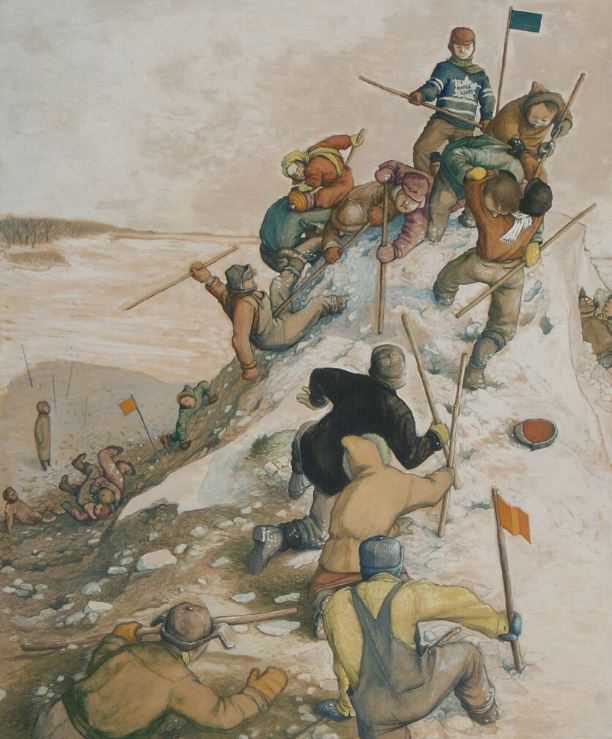
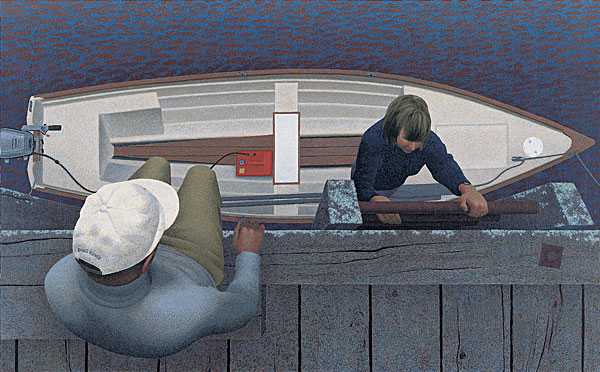
William Kurelek, King of the Castle, 1958–59 Gouache and watercolour on Masonite 53.9 x 45.7 cm

Contemporary Canadian genre art reflects how we live rather than how we mythologize ourselves. It captures moments that feel instantly familiar: winter breath hanging in the air at a frozen pond, families walking forest trails, friends gathered around a campfire, or skiers cutting across fresh snow. These are not grand historical events, but they are deeply shared experiences. Together, they form a collective portrait of Canadian life.

Contemporary Voices in Canadian Genre Painting

Brandy Saturley’s work exists within a wider resurgence of genre painting in Canada, where many contemporary artists are turning their attention to lived experience, community, and the everyday. Across the country, painters are documenting moments of ordinary life that speak quietly but powerfully to Canadian identity.

Contemporary Canadian Genre Art

Embarkation 1994 Acrylic polymer emulsion on hardboard 43.2 x 69.9 cm Beaverbrook Art Gallery – Alex Colville

Artists such as Colville-inspired realist Alex Colville helped establish the groundwork for this tradition, but today’s genre painters have expanded it into more personal, regional, and socially attuned territory. Kim Dorland, while often associated with landscape, frequently incorporates figures whose activities speak to youth culture, suburban life, and the tension between humans and the natural environment. David Blackwood’s narrative-driven scenes of Newfoundland life continue to influence contemporary approaches to storytelling through everyday labour and ritual.

Painters like Shary Boyle explore genre through a more symbolic and psychological lens, drawing from folklore and domestic life to reflect collective and personal narratives. Kent Monkman, though often working on a monumental scale, incorporates scenes of daily activity and social interaction to challenge historical narratives and reframe Indigenous presence within contemporary Canadian life. Meanwhile, Christopher Pratt’s quiet, restrained depictions of domestic and industrial spaces remain touchstones for artists interested in the poetry of the ordinary.

Together, these artists demonstrate the breadth of genre painting in Canada today, ranging from realism to symbolism, narrative to critique. Saturley’s paintings contribute to this lineage by focusing on shared recreational and social moments, offering a contemporary portrait of Canadians in motion, in nature, and in community.

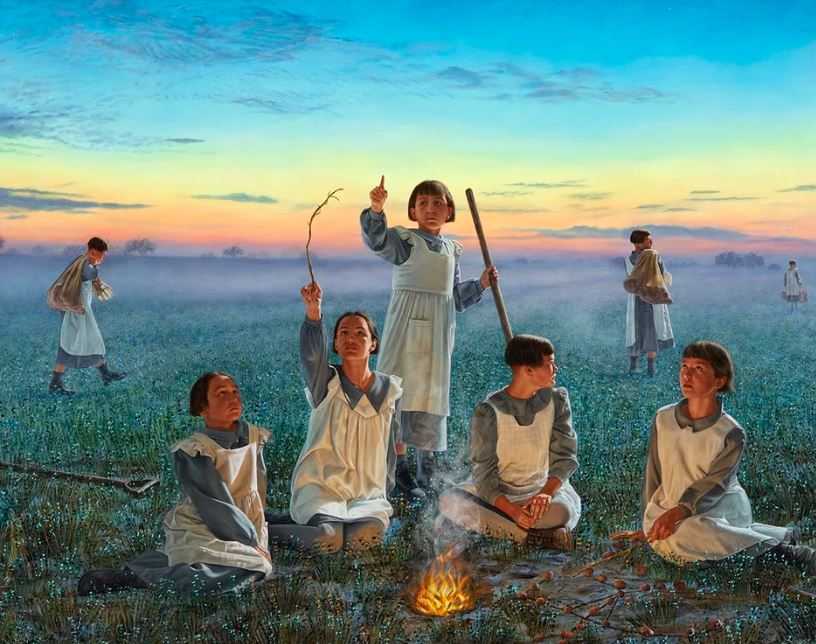
kîwêtin acâhkos (The North Star) 2025 Acrylic on canvas 80 × 120 in – Kent Monkman

Genre Art in Canada – Brandy Saturley

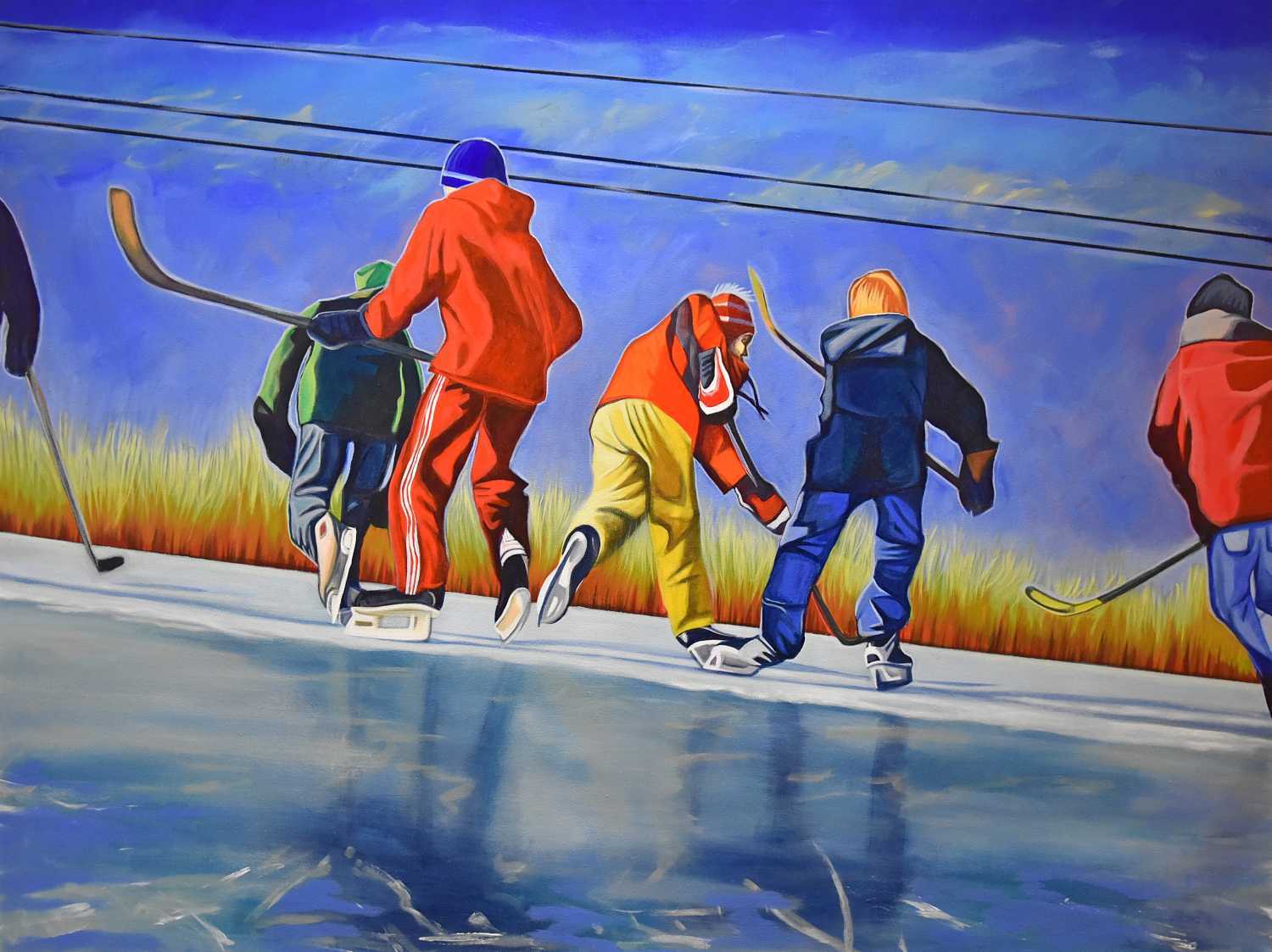
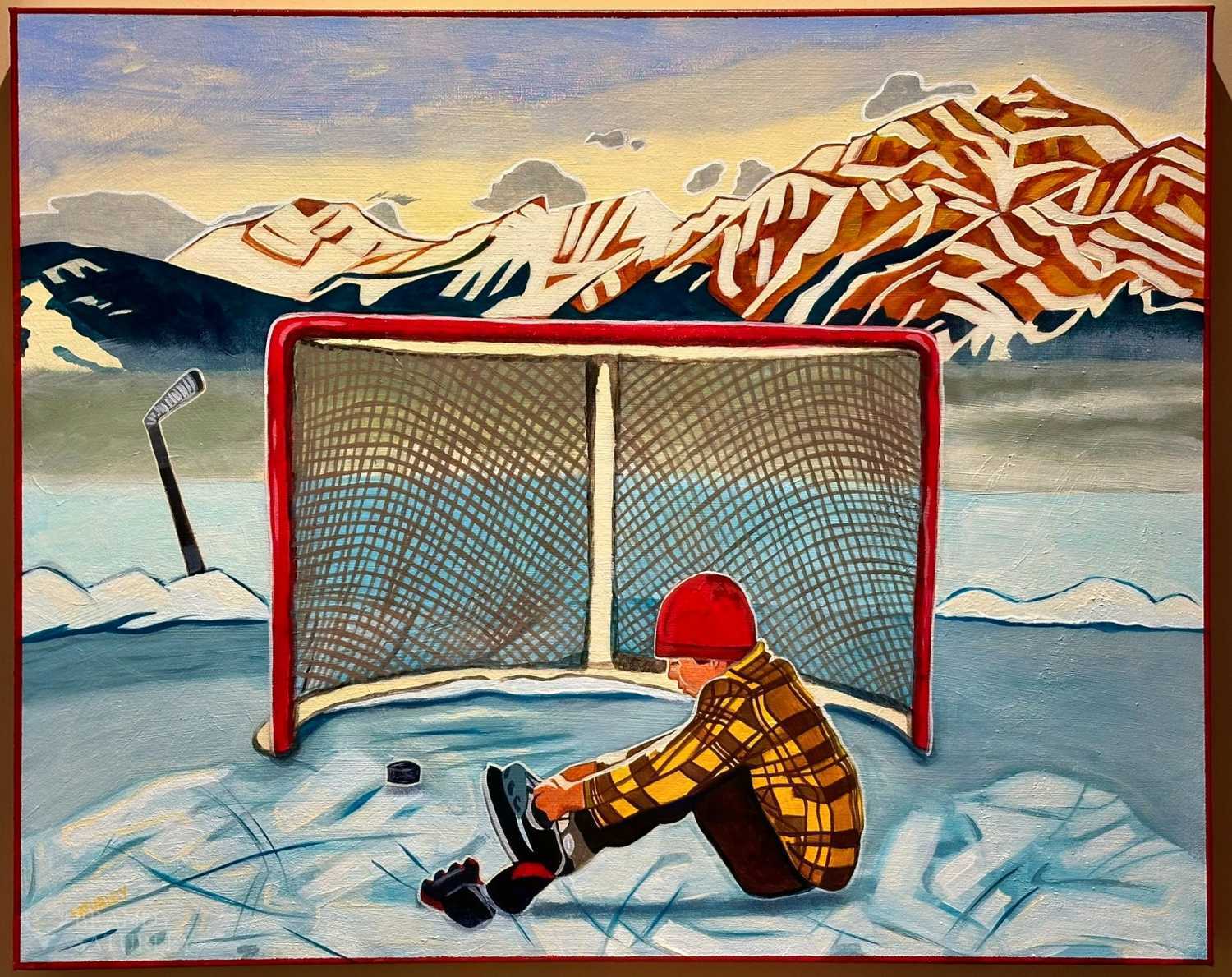
Brandy Saturley’s paintings explore this tradition through a distinctly modern lens. Her work focuses on everyday Canadian culture, often depicting people engaged in outdoor activities that are woven into the national psyche. Pond hockey scenes, figures enjoying nature together, and moments of sport and recreation become more than casual snapshots. They are visual touchstones, reminding viewers of the rhythms and rituals that quietly define life in this country.

Contemporary Canadian Genre Art

Pond Hockey Days, c. 2021 Acrylic On Canvas 36 x 48 x 1.5 in (91.44 x 121.92 x 3.81 cm) – Brandy Saturley

Rather than romanticizing the landscape alone, Saturley places people at the centre of it. Her figures are active participants in their environments, skating, hiking, skiing, or simply standing together against vast backdrops. This approach shifts the conversation from land as spectacle to land as lived space. The paintings become about connection: between people, between communities, and between Canadians and the places they inhabit.

There is also a subtle social dimension to this work. Group activities suggest cooperation, shared effort, and collective joy. In a time when much of life feels fragmented or digital, these painted scenes of togetherness feel grounding. They recall the simple, physical experiences that continue to shape Canadian identity across regions and generations.

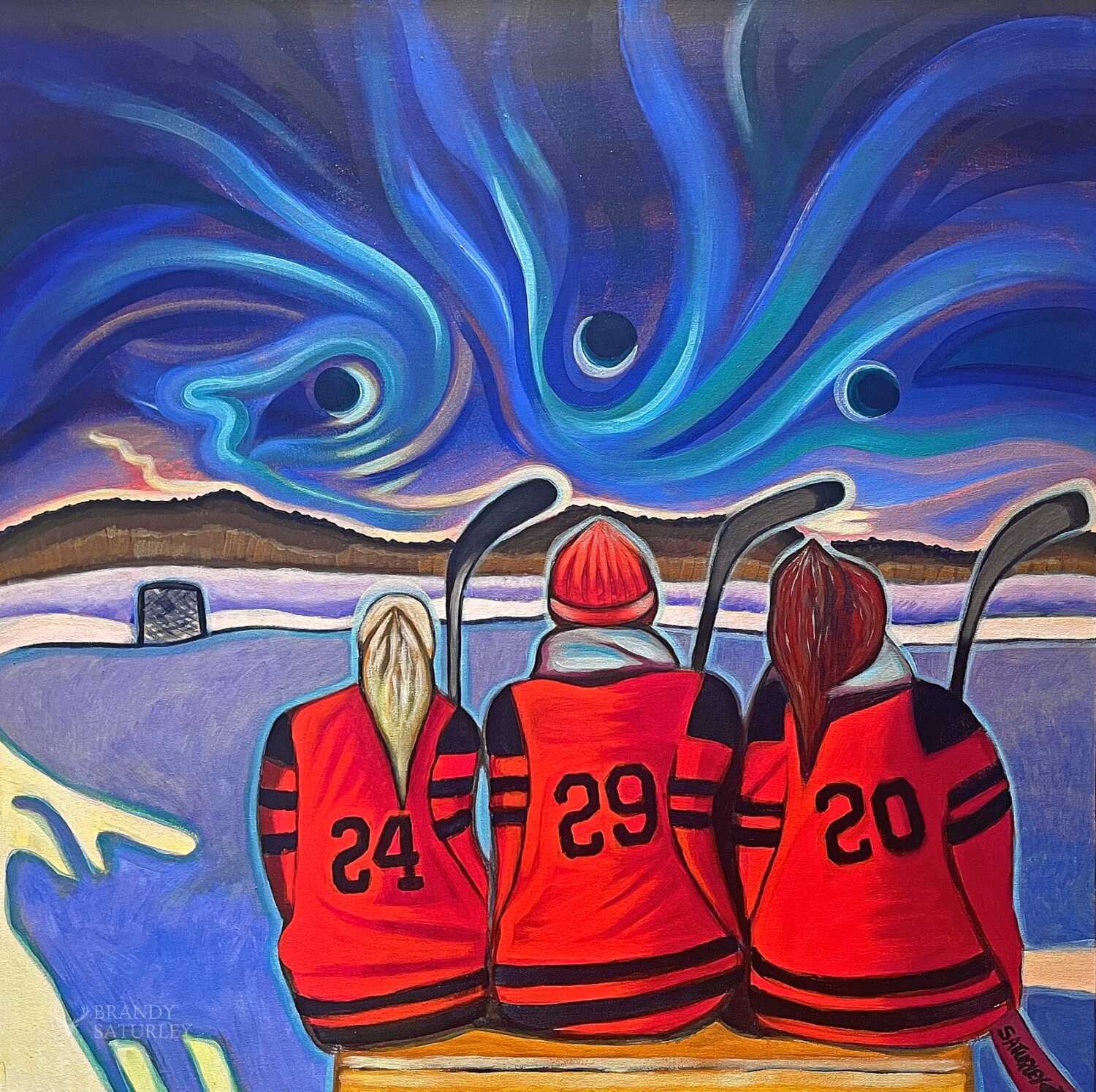
hockey players painting

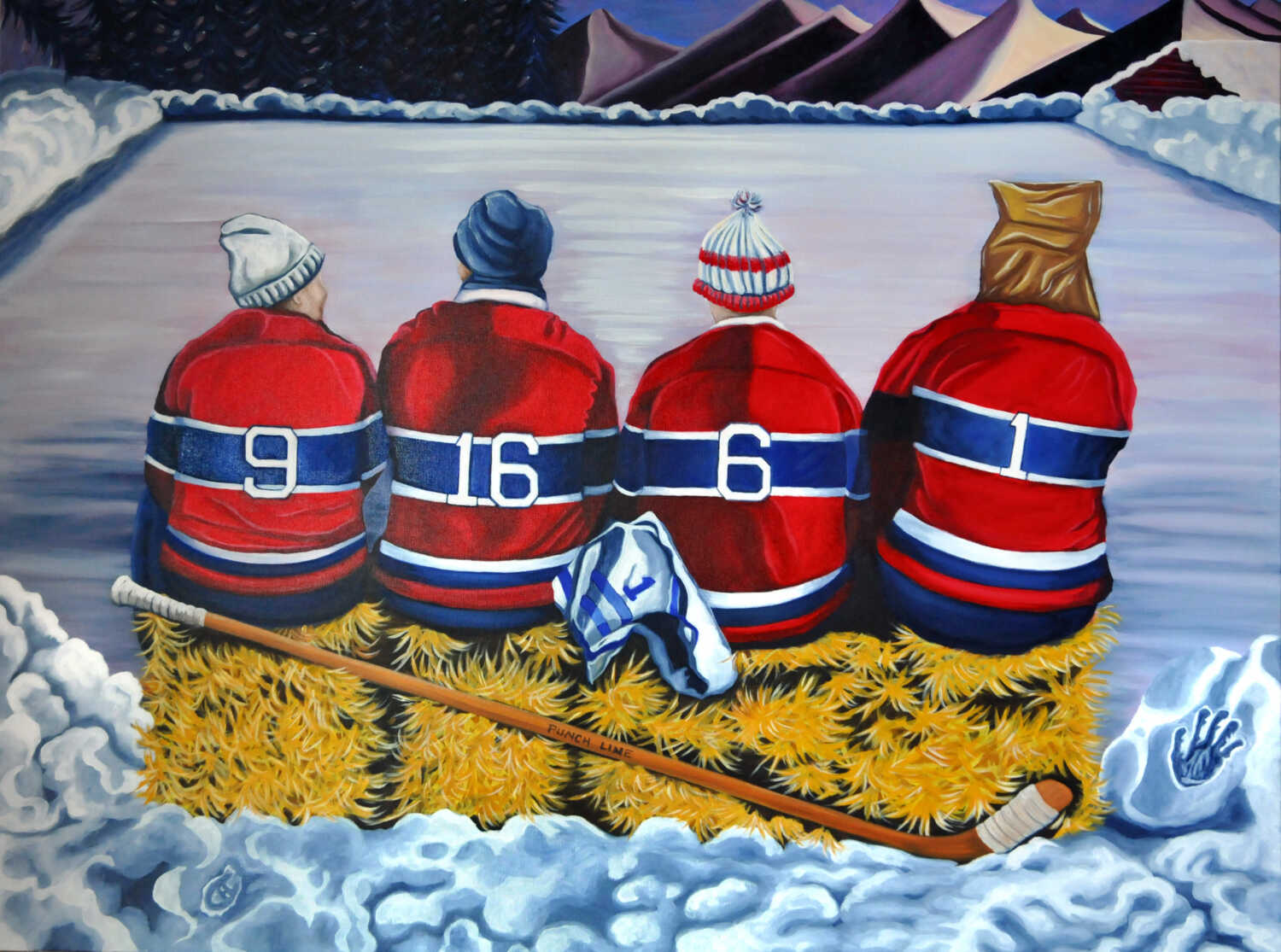
A Punch Line and An Unknown, c. 2013 Acrylic 36 x 24 x 1.5 in – Colart Collection, Quebec – Brandy Saturley

Genre art in Canada today is not nostalgic for its own sake. It is reflective, inclusive, and evolving. Through paintings of everyday moments and familiar activities, artists like Brandy Saturley contribute to an ongoing visual archive of who we are and how we live now. These works invite viewers to see their own experiences mirrored on the canvas and to recognize that the ordinary moments of Canadian life are, in fact, worth preserving.

In capturing people at play, at rest, and in relationship with the land, contemporary Canadian genre painting affirms a powerful idea: culture is not only built through monuments or milestones, but through shared moments that quietly repeat themselves, season after season, across the country.

Contemporary Canadian Genre Art

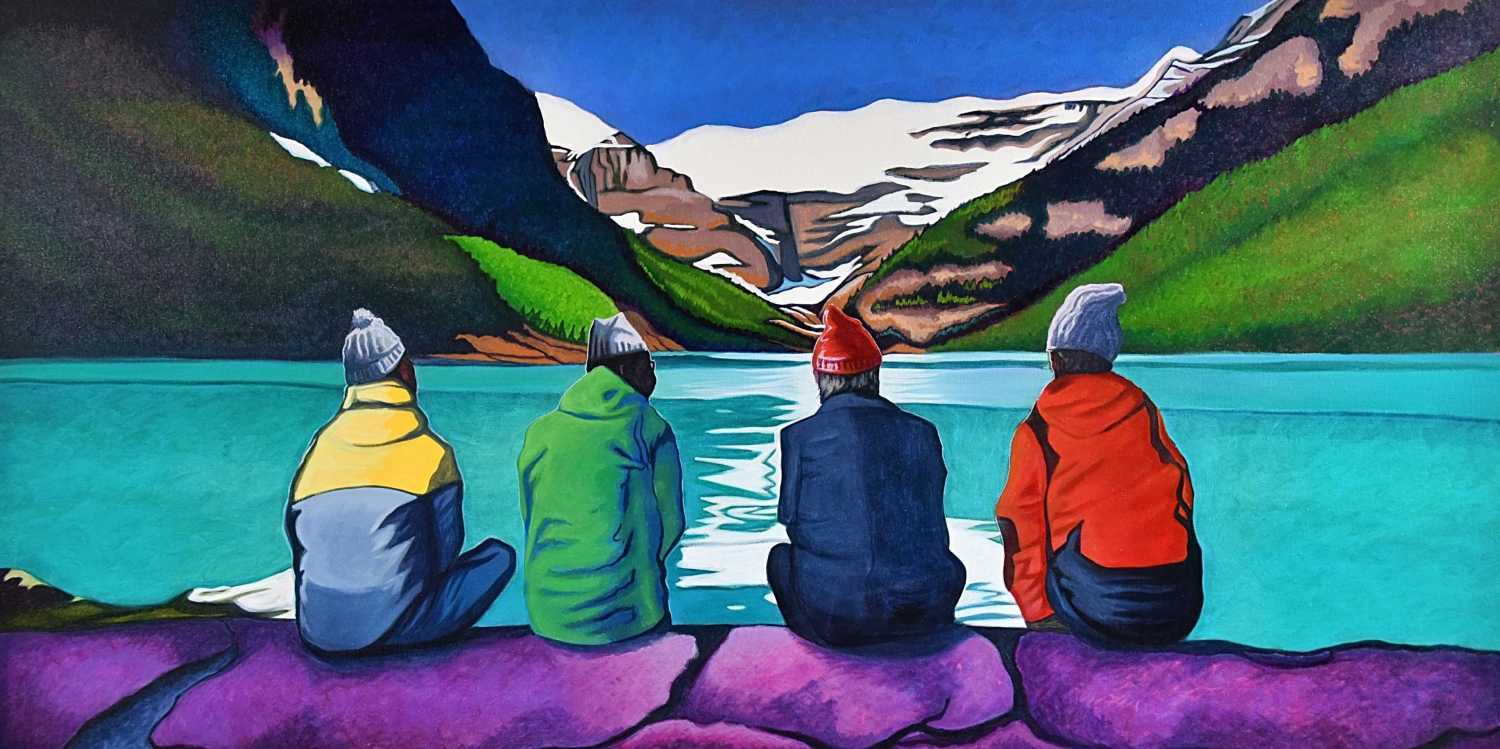
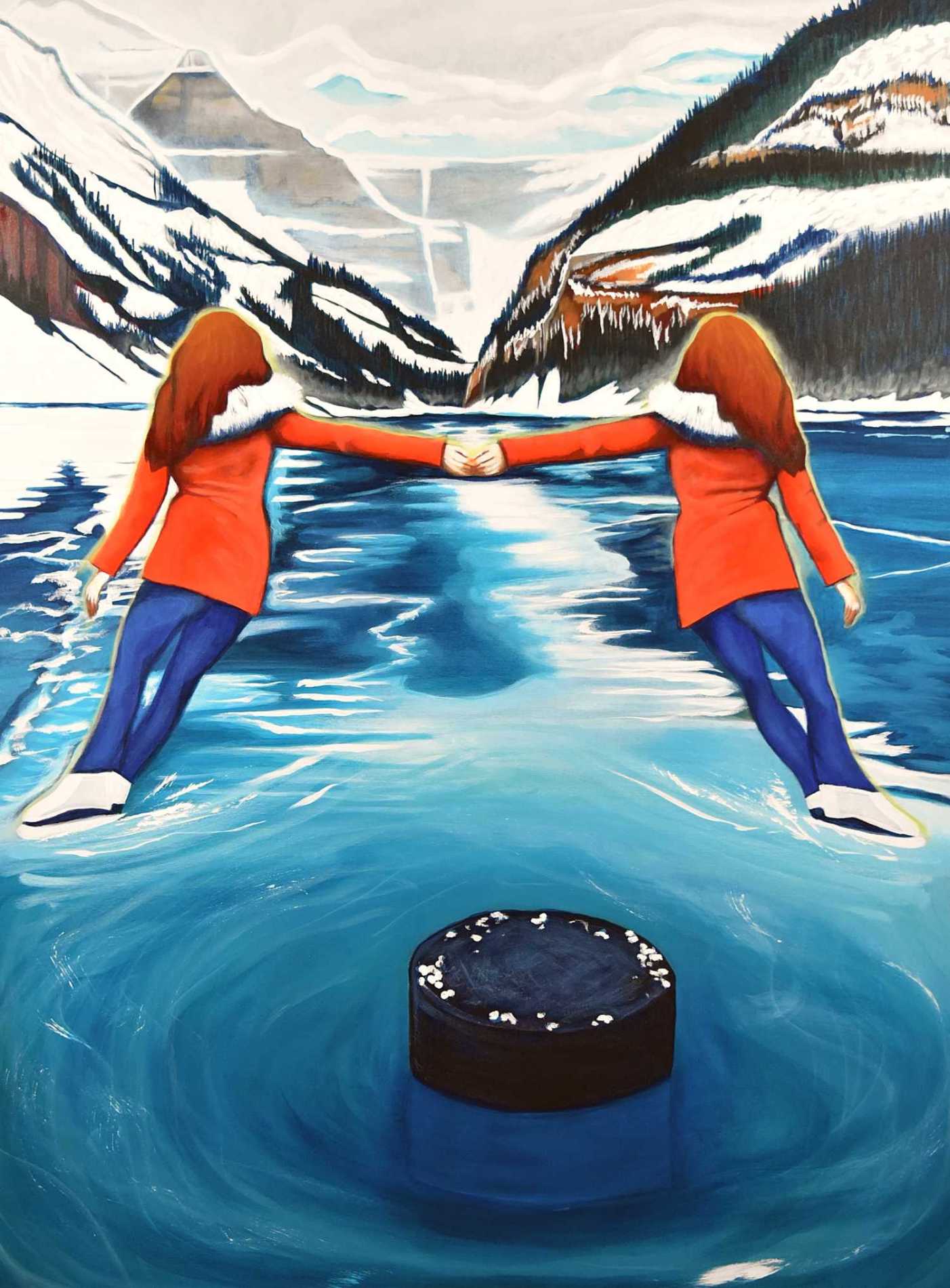
Stare Time at Lake Louise, c. 2018 Acrylic 30 x 48 x 1.5 in – Brandy Saturley

What Nearly 20 Years of Painting Canada Has Taught Me

After nearly two decades of painting my way across Canada, one thing has become abundantly clear: Canada is not one art scene. It never was. After nearly 20 years painting Canada one thing is clear – Regionalism is alive and well, quietly shaping subject matter, price points, conversations, and even how artists and collectors relate to one another.

Every province carries its own visual accent.

20 Years Painting Canada

The Wild Life – Miller Art Gallery, Edmonton AB – 2025 – Brandy Saturley

The landscapes change, yes, but so does the emotional temperature of the work. The West leans into space, light, and openness. The Prairies carry restraint, repetition, and horizon lines that stretch patience and perspective. Ontario often balances concept with commerce. Quebec moves confidently between tradition and experimentation. Atlantic Canada holds history close, with work that feels weathered, human, and deeply rooted. The North resists simplification altogether.

These regional differences still matter. They inform what gets painted and what gets collected.

The East Coast: Negotiation and Personal Connection

I’ve also learned that price points are not universal across the country. What feels reasonable in one region can feel ambitious in another. On the East Coast especially, there’s more conversation around price, more negotiation, and more relationship-building involved in the sale. This isn’t a criticism. It’s cultural. Art there is personal. It’s tied to community, story, and often survival. Sales are slower, but often deeper.

Newfoundland Paintings

Newfoundland Paintings – Brandy Saturley – 2024

Alberta: Decisive Collectors, Immediate Connection

One of the most striking collector cultures I’ve encountered is in Alberta. There’s a directness there that feels refreshing and unapologetic. Alberta collectors often buy on the spot. When the connection is made, the decision follows quickly, without prolonged hesitation or extended negotiation.

These collectors tend to trust their instincts. They respond to scale, confidence, and clarity of vision. There’s an appreciation for work that knows what it is and stands firmly behind it. Conversations happen, of course, but they’re efficient. The artwork either resonates, or it doesn’t.

This decisiveness doesn’t feel transactional. It feels practical. Art is valued as something to live with, not endlessly deliberate over. The result is a market that rewards artists who show up prepared, present their work clearly, and stand behind their pricing.

After years of painting and exhibiting across the country, Alberta remains one of the places where I’ve felt the least friction between artist and collector. When the work connects, the answer is often simply yes.

Alberta paintings – Brandy Saturley – 2025

Vancouver: Small, Abstract, and a Little Bit Shiny

Vancouver has long favoured a quieter kind of confidence. Collectors there tend to gravitate toward smaller-scale works, abstraction, and surfaces that carry a sense of refinement or subtle polish. There’s an attentiveness to finish, material, and atmosphere. The work doesn’t need to announce itself loudly. It needs to hum.

Abstraction plays well in Vancouver, especially when it leans contemplative rather than confrontational. Shifts in tone, light, and texture often matter more than overt narrative. There’s also an openness to work that feels elevated or luminous, pieces that reflect light, carry sheen, or reward close looking over time.

This collecting culture aligns closely with the city itself. Dense, design-aware, and visually restrained, Vancouver values art that integrates seamlessly into living spaces while still holding conceptual depth. The emphasis is less on declaration and more on resonance.

For an artist, Vancouver rewards precision. The work needs to be resolved, intentional, and confident in its quietness. When it is, collectors notice.

Vancouver Island Paintings – Brandy Saturley – 2025

20 Years Painting Canada

Across Canada, however, landscape painting continues to hold. Despite decades of predictions about its decline, collectors still respond to place. Not postcard versions of Canada, but lived-in ones. Weather, distance, memory, solitude. Landscape remains a shared language, even as the dialect changes from province to province.

20 Years Painting Canada

Rocky Mountains Higher – Brandy Saturley – 2017

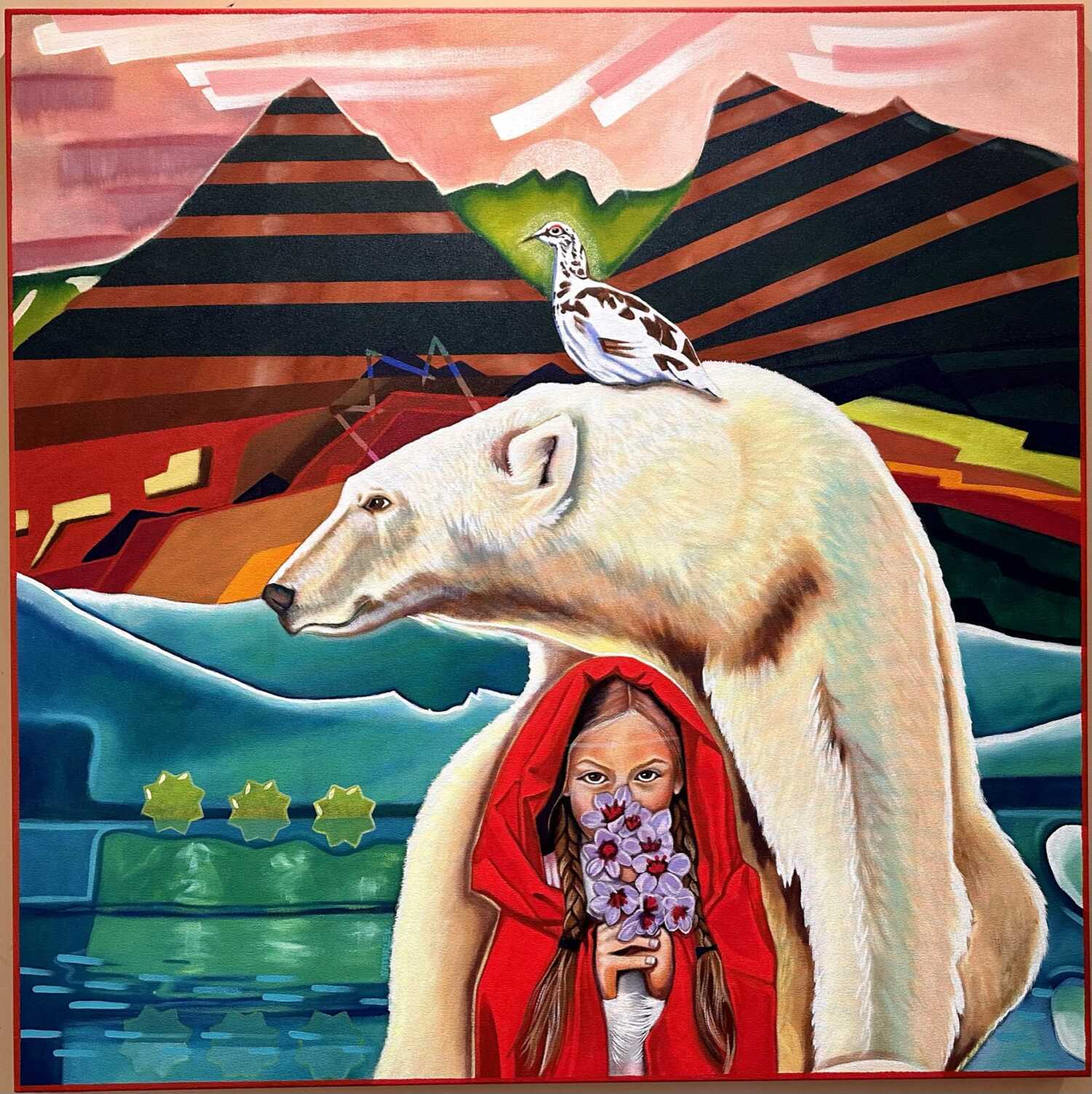
In recent years, I’ve witnessed Indigenous art command long-overdue attention and market strength. This visibility matters, though it also brings responsibility. Institutions, collectors, and artists alike must approach Indigenous work with care, context, and respect, not trend-chasing. The depth, diversity, and regional specificity within Indigenous art resists any single narrative, much like Canada itself.

Monarch of The Arctic Realms, Brandy Saturley, 2024

Another noticeable shift has been the increased visibility of women artists. There’s more space now, more recognition, and more leadership. While equity is still a work in progress, the conversation has changed. Women’s voices are no longer peripheral. They’re shaping the centre.

20 Years Painting Canada

With Hearts On Our Sleeves, Brandy Saturley, 2017

What painting Canada for nearly twenty years has taught me most is this: the country reveals itself slowly. It resists shortcuts. You have to show up, travel it, listen to it, and let the regions speak for themselves.

Canada isn’t one story. It’s many, told in different accents, under different skies, at different price points, with different expectations. Painting my way through it has been less about defining Canada and more about paying attention to its nuances.

And that, I think, is where the real work lives. See more Canadian Paintings here.

20 Years Painting Canada

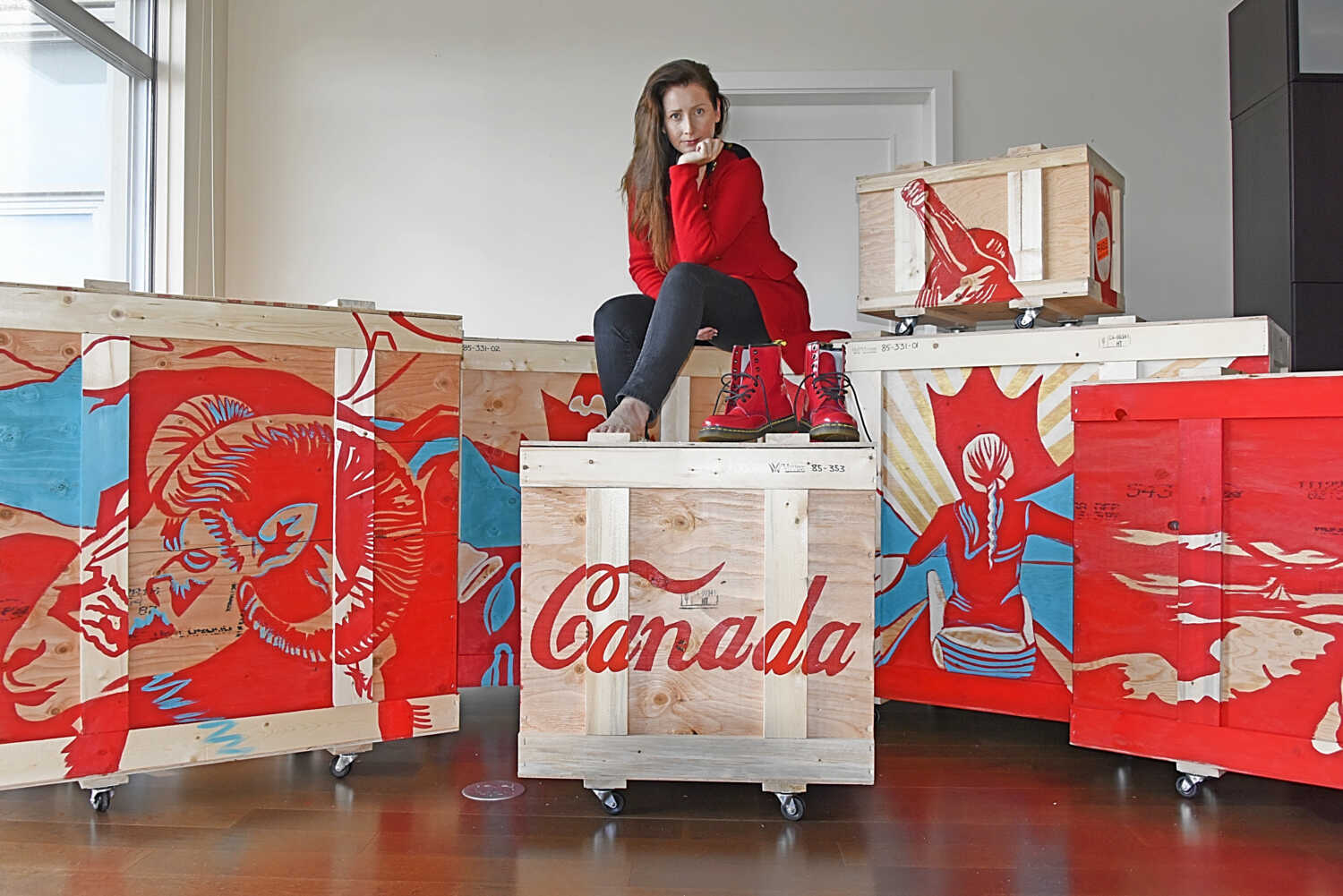
Brandy Saturley with her art shipping crates, 2017

We Spent the Holidays Exploring Beautiful Vancouver Island

Adventure is woven into my art practice. When I’m not in the studio, I’m out walking, wandering, and immersing myself in nature. Beautiful Vancouver Island offers an endless invitation to do just that.

Beautiful Vancouver Island

Parksville Beach, Fall 2025

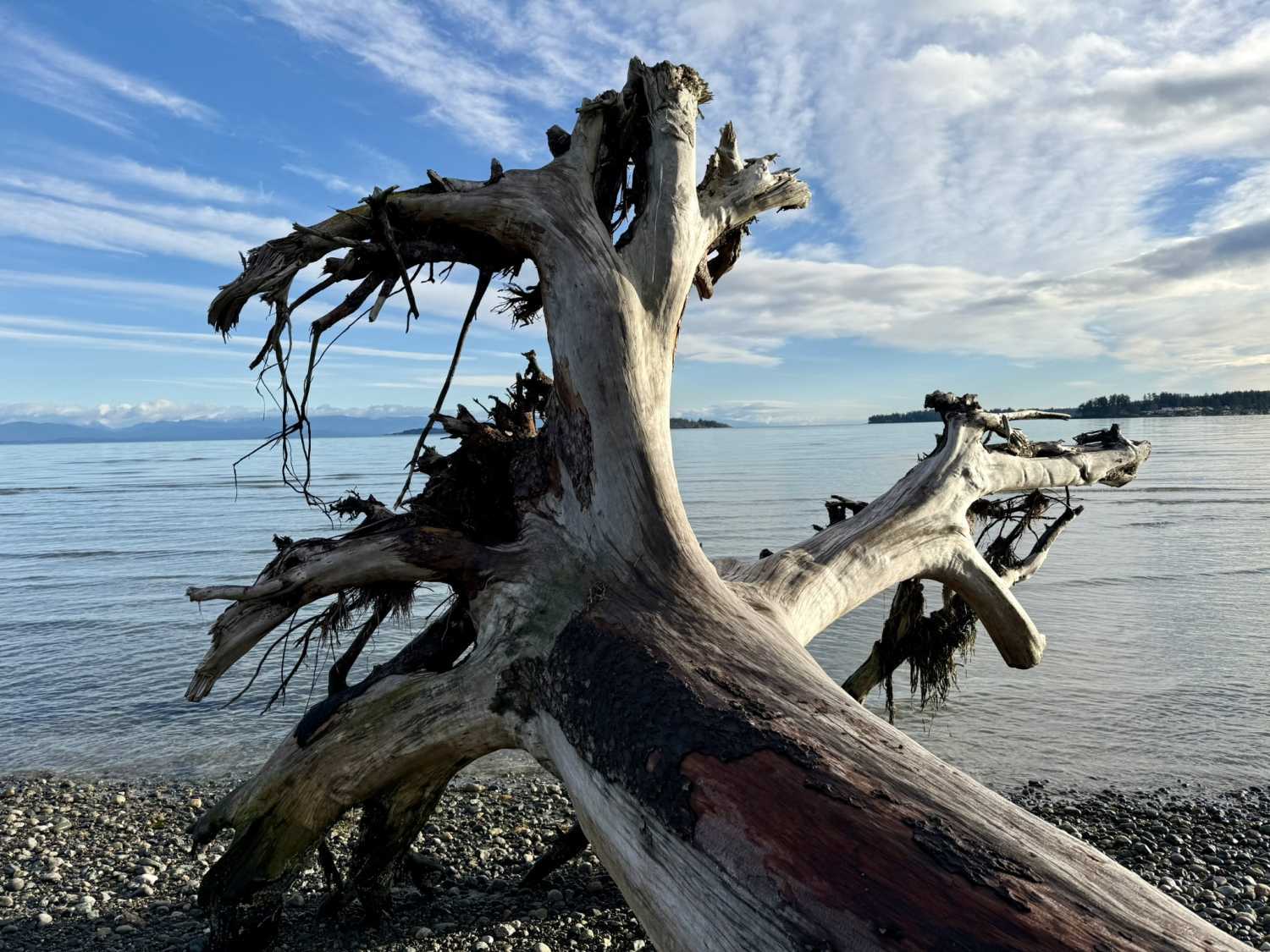
We moved from Victoria to Parksville this past fall and quickly found ourselves exploring the mid-island landscape. Those first months in Parksville were spent setting up my studio, and I treated the transition like an artist residency of sorts. Equal parts work and discovery. Fortunately, there is no shortage of places to explore here.

Rathtrevor Beach, Winter 2025

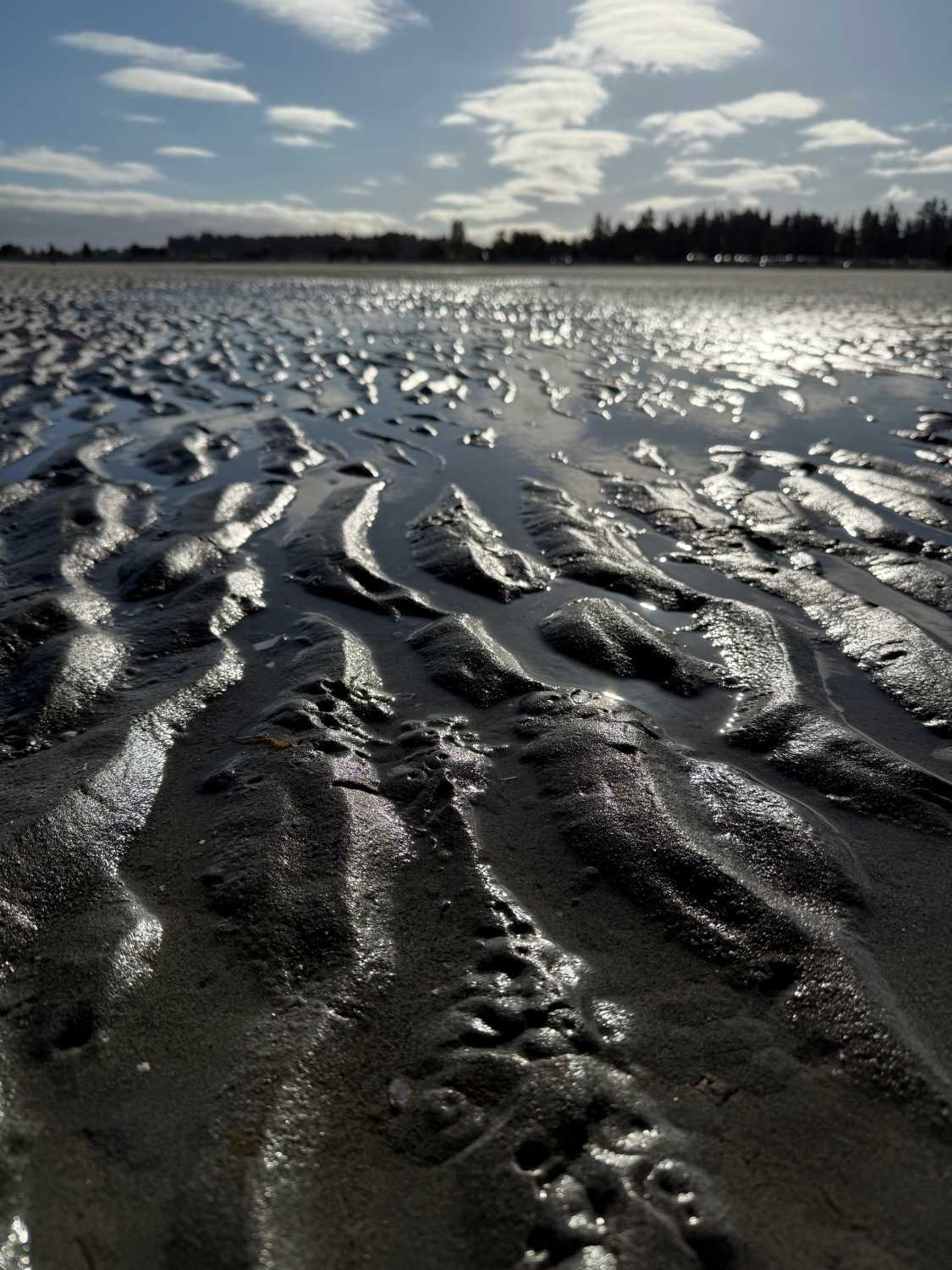
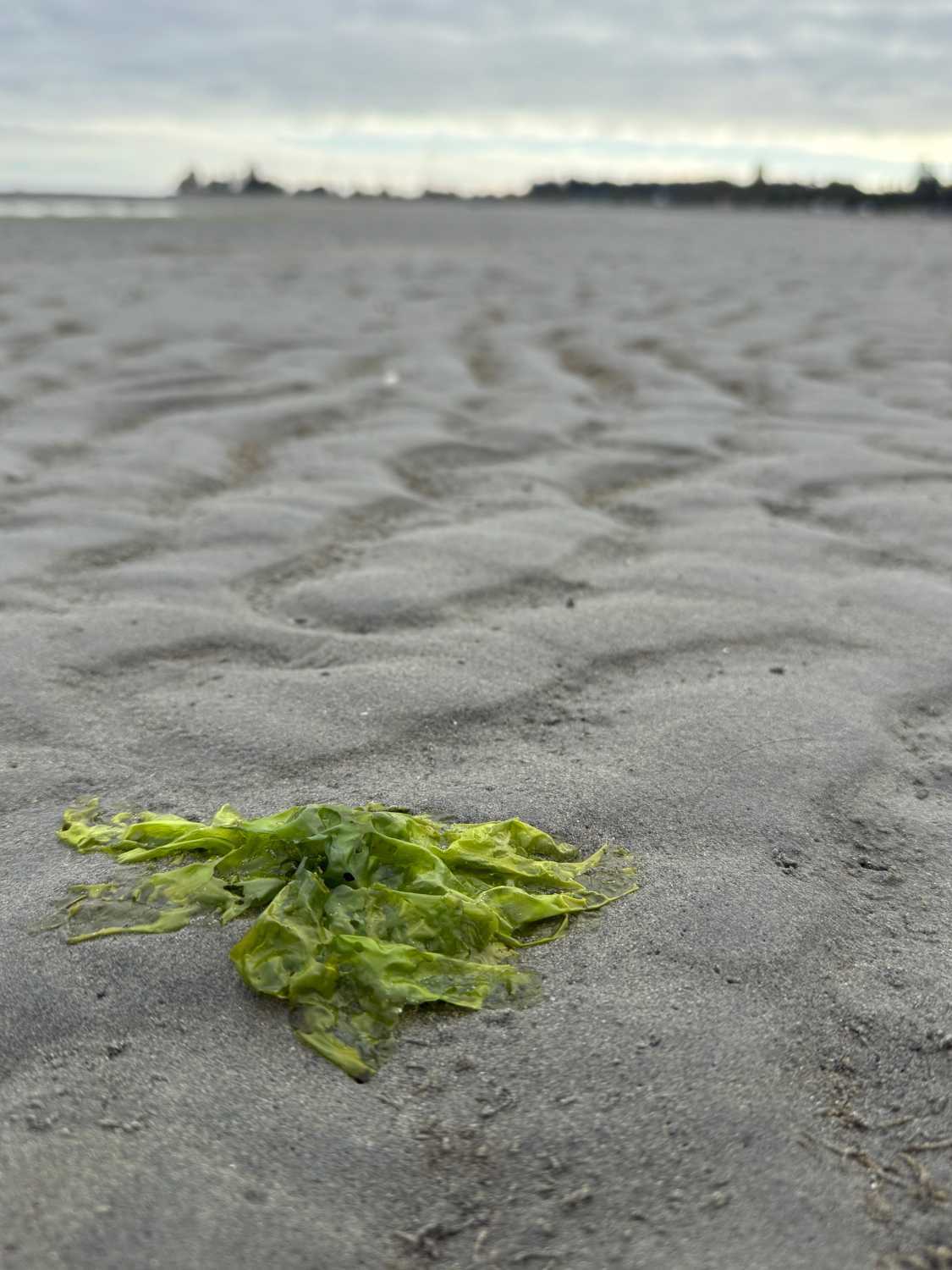
My wanderings began close to home, at the local beach just a ten-minute walk from the studio. When the tide is low, the shoreline opens wide. You can walk for yards, even miles, across smooth sand etched with the rippling patterns of retreating waves. Parksville Community Beach and the expansive Rathtrevor Beach stretch along the waterfront near downtown, offering ever-changing views shaped by light, tide, and season.

Rathtrevor Beach, Winter 2025

Beautiful Vancouver Island – Mid-Island Destinations

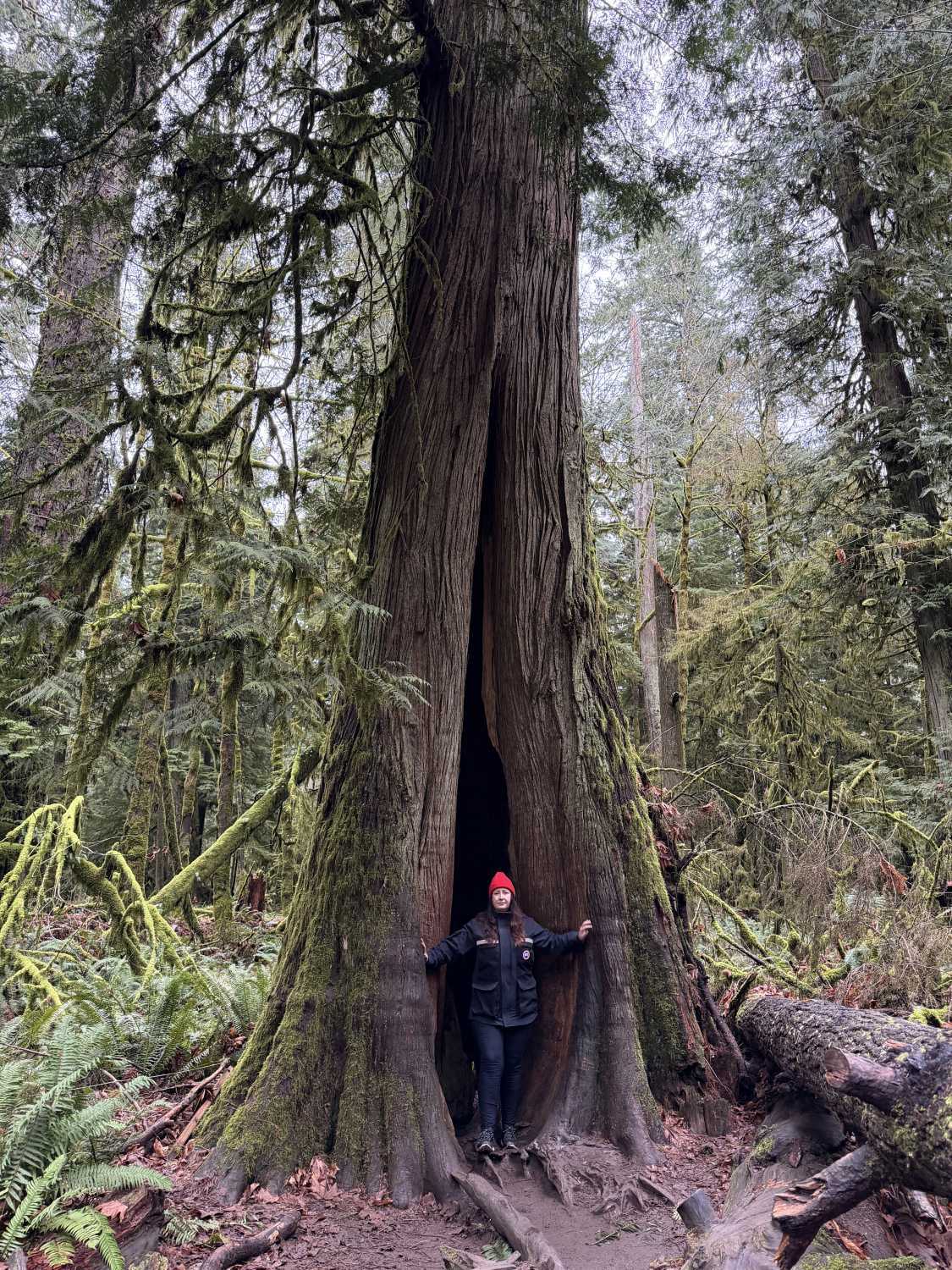
Venturing farther afield, both on foot and by car, reveals dozens of remarkable trails winding through thick rainforest. Cathedral Grove, located in MacMillan Provincial Park, is one of the most accessible stands of giant Douglas firs on Vancouver Island. The park protects an internationally significant example of old-growth forest within the Coastal Western Hemlock biogeoclimatic zone. Walking beneath these towering trees, some more than 800 years old, feels like stepping into another time. Massive trunks rise like ancient pillars, untouched by the rush of the modern world.

Beautiful Vancouver Island

Cathedral Grove, Winter 2026

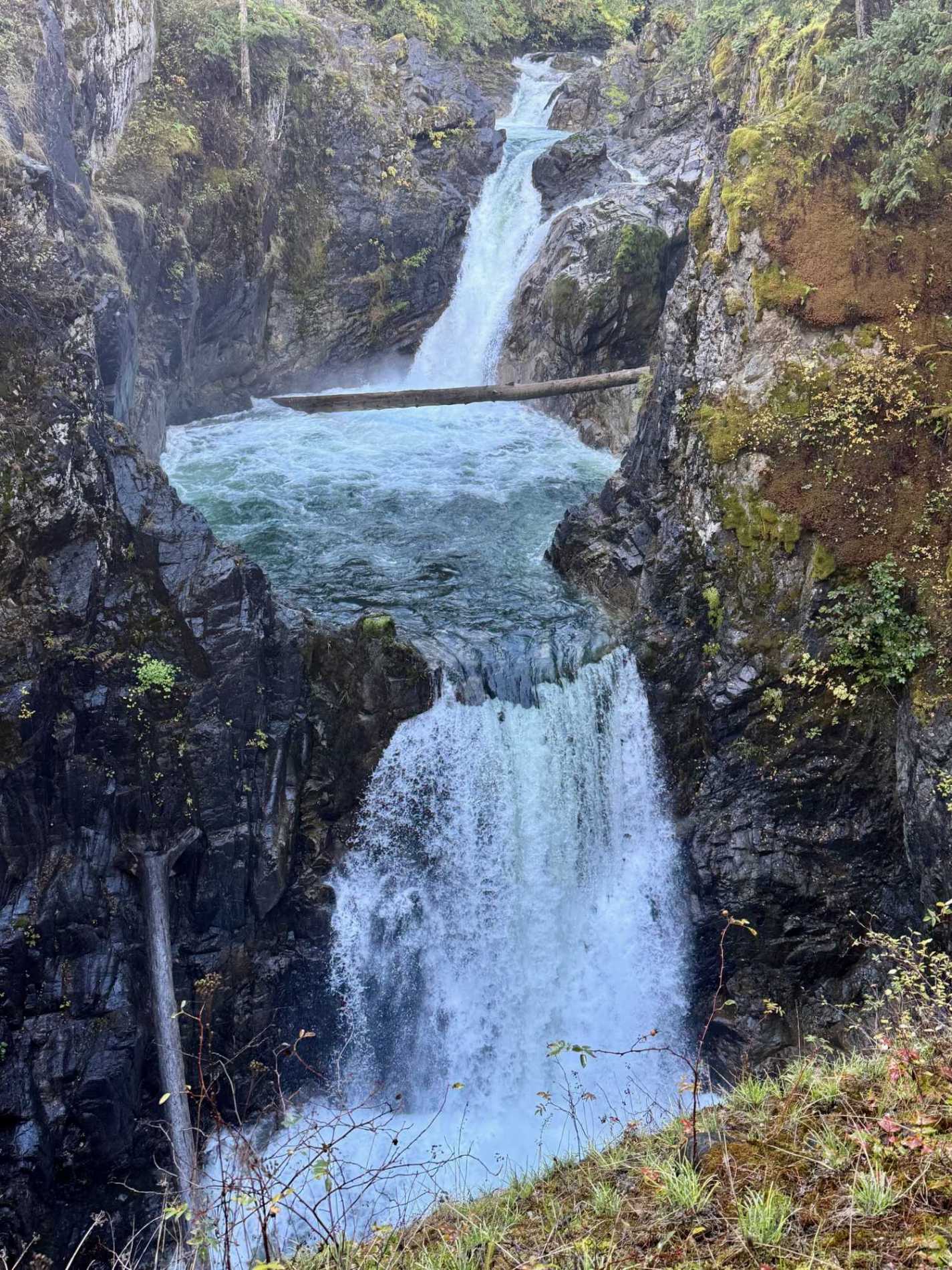
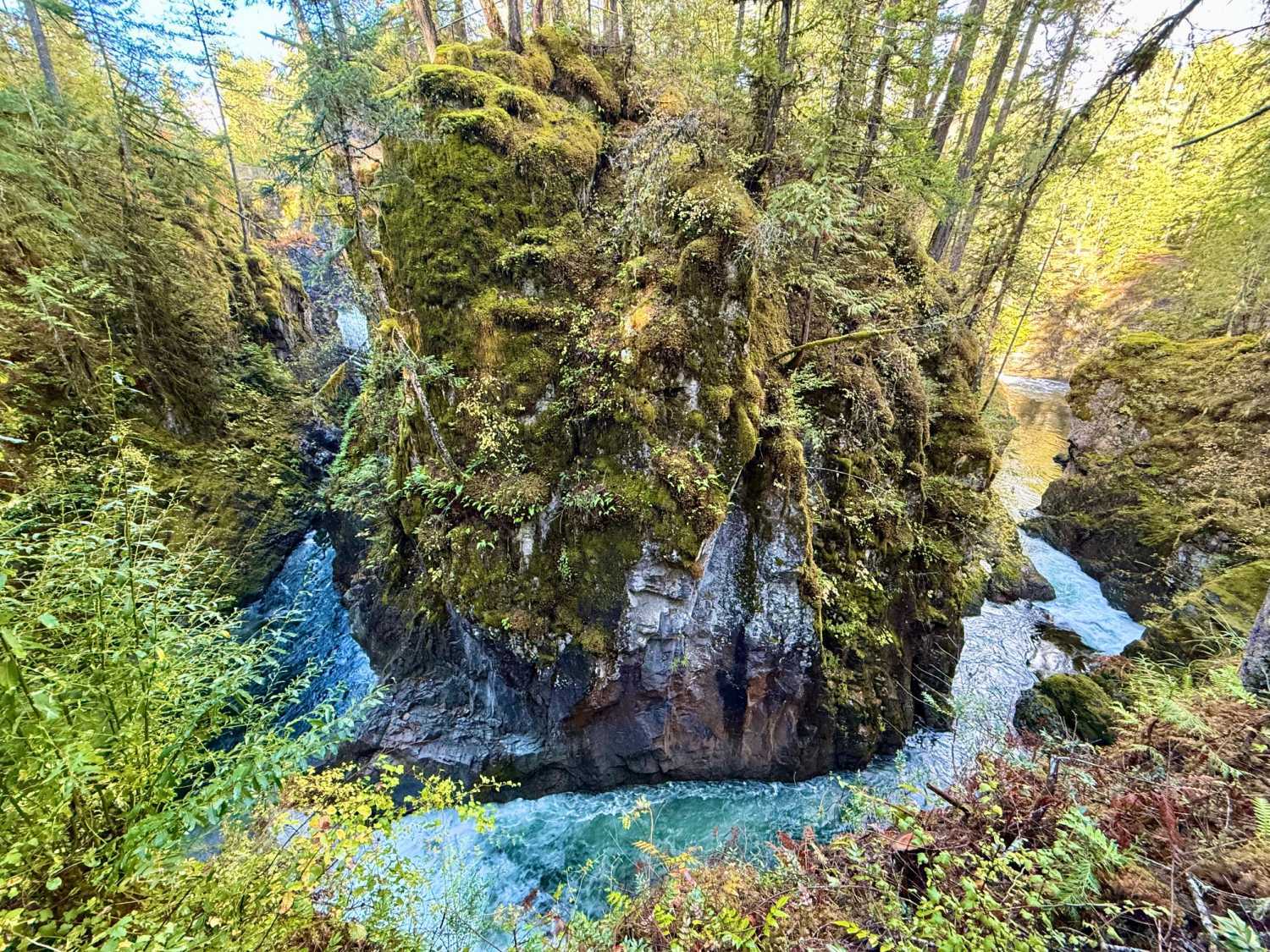
Little Qualicum Falls Provincial Park, in central Vancouver Island, is equally awe-inspiring. The park straddles the Little Qualicum River and includes the southern shore of Cameron Lake. Here, powerful waterfalls cascade through a rocky gorge surrounded by dense forest and framed by steep mountain peaks. It is a place of movement and sound, where water and land are in constant conversation.

Beautiful Vancouver Island

Little Qualicum Falls, Winter 2025

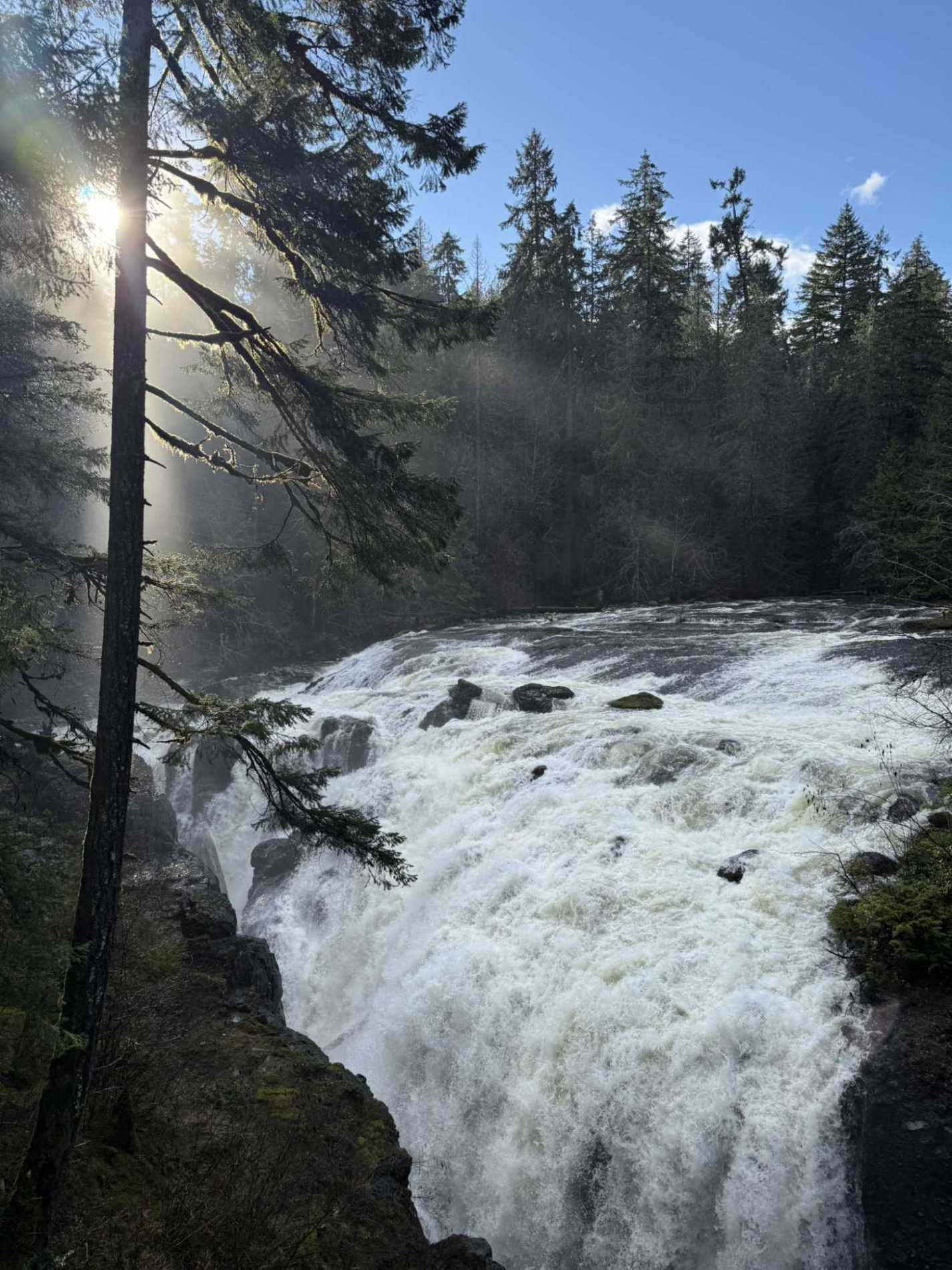
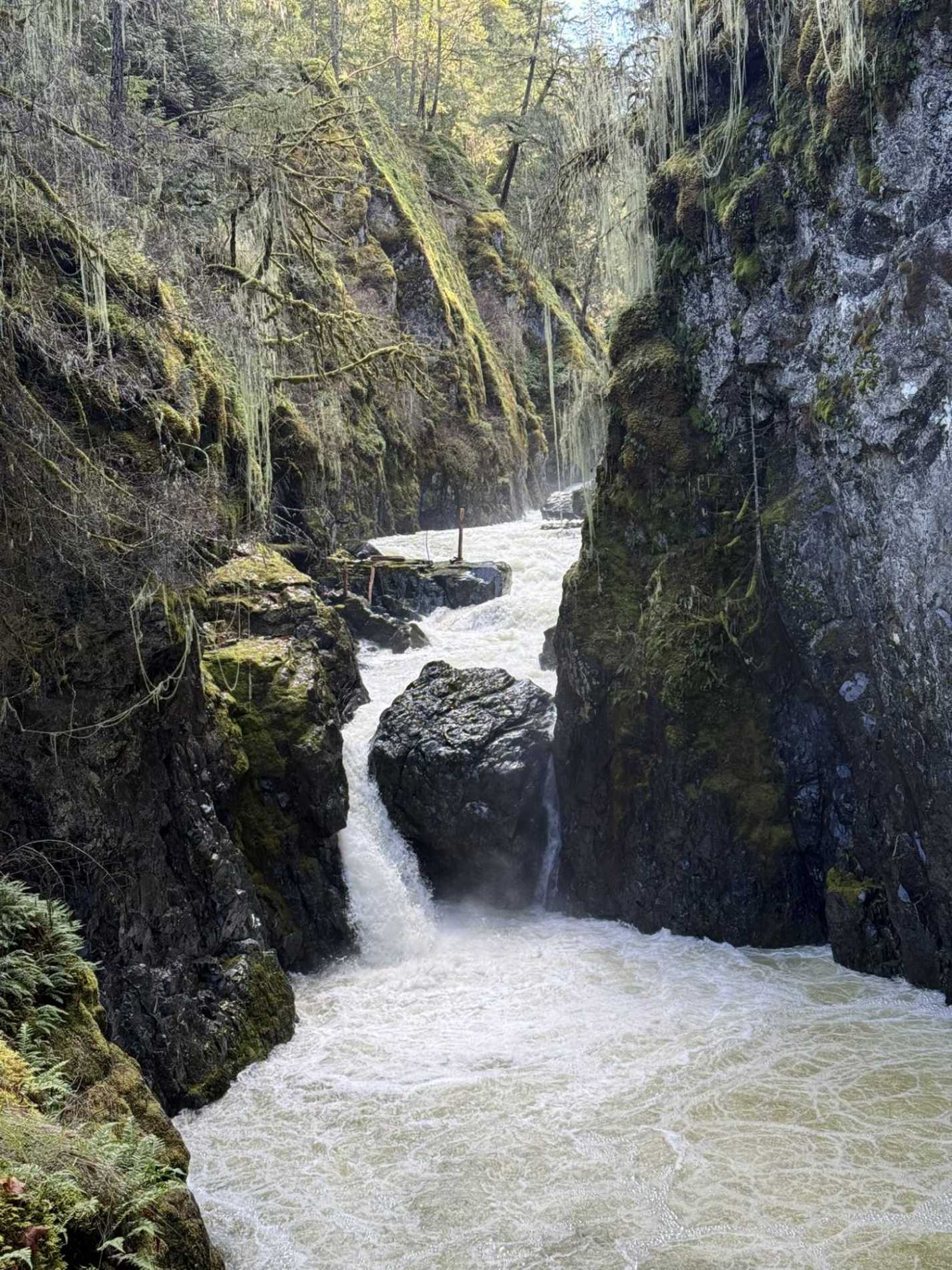
Englishman River Falls Provincial Park is especially striking in winter, when the volume and force of the water are at their peak. One of five BC Parks within the Mount Arrowsmith Biosphere Region, the park features two magnificent waterfalls set among old-growth and second-growth forest of Douglas fir, cedar, hemlock, and maple. Beyond the dramatic views and well-loved hiking trails, the park holds deep ecological importance. The Englishman River supports vital plant and fish habitats, provides a place to witness salmon spawning in the fall, and supplies drinking water to the surrounding community.

Englishman River Falls, Winter 2026

Exploring these places over the holidays reminded me why landscape continues to shape my work. Walking through forests, along beaches, and beside rivers is not separate from the studio practice. It feeds it. Vancouver Island is a generous place, offering beauty, scale, and quiet moments of wonder for those willing to step outside and wander.

Beautiful Vancouver Island

Little Qualicum Falls, Winter 2025

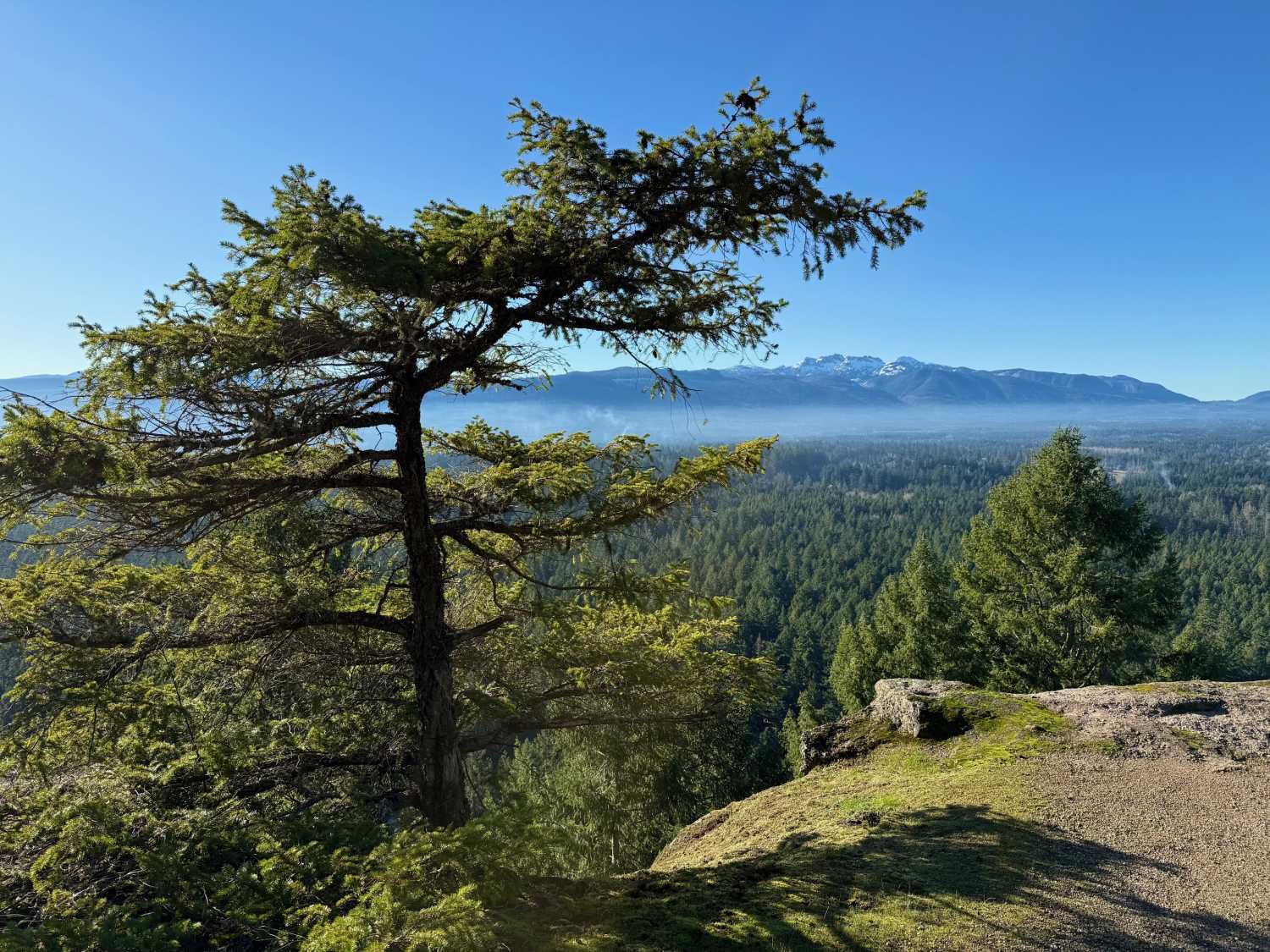
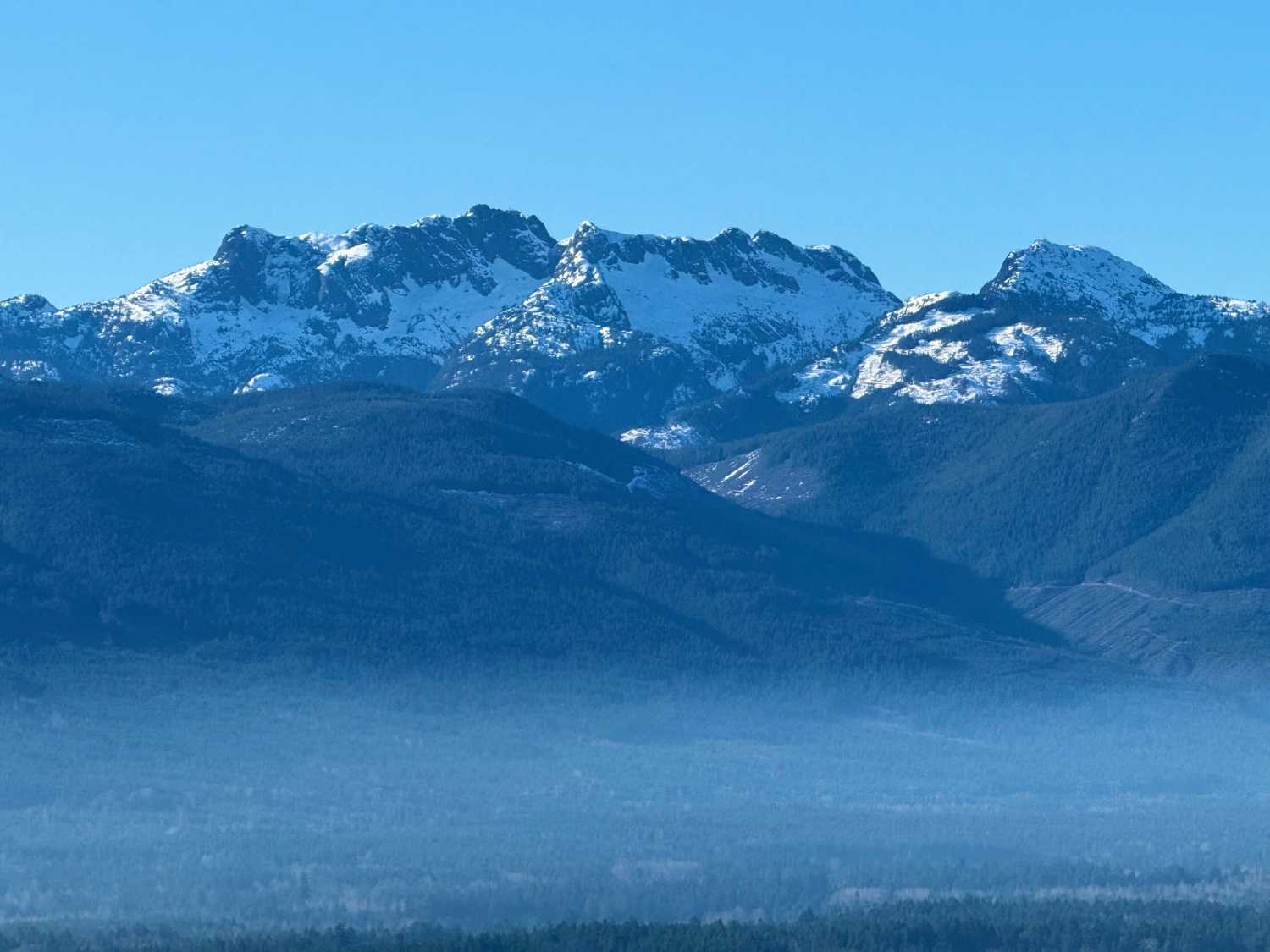
Little Mountain is an incredible lookout that offers panoramic views of green forests and towering mountains like Mount Arrowsmith.  This hike takes you through forests of Pacific Madrone or Arbutus trees with their vivid orange-red skin.

The View from Little Mountain Lookout, Parksville BC, 2026


The peak at Mt. Arrowsmith, Parksville BC, 2026

No matter where you end up in Parksville, you are sure to be close to the spectacle of nature.

Englishman River Falls, Winter 2026

Painting People on Outdoor Ponds – Ice Skating Art in Canada

Recently, The Canadian Art Junkie published a feature on The Art of Skating, highlighting Canadian artists who have celebrated outdoor skating through visual storytelling on canvas. It is a subject deeply woven into the fabric of Canadian art history. From Alex Colville to Ken Danby, many painters before me have been drawn to skating as both image and metaphor. Whether it’s an outdoor hockey rink, a game of shinny, families circling a frozen pond, or the quiet focus of a lone figure skater, skating offers endless material to keep a painter’s brush in motion.

Ice Skating Art

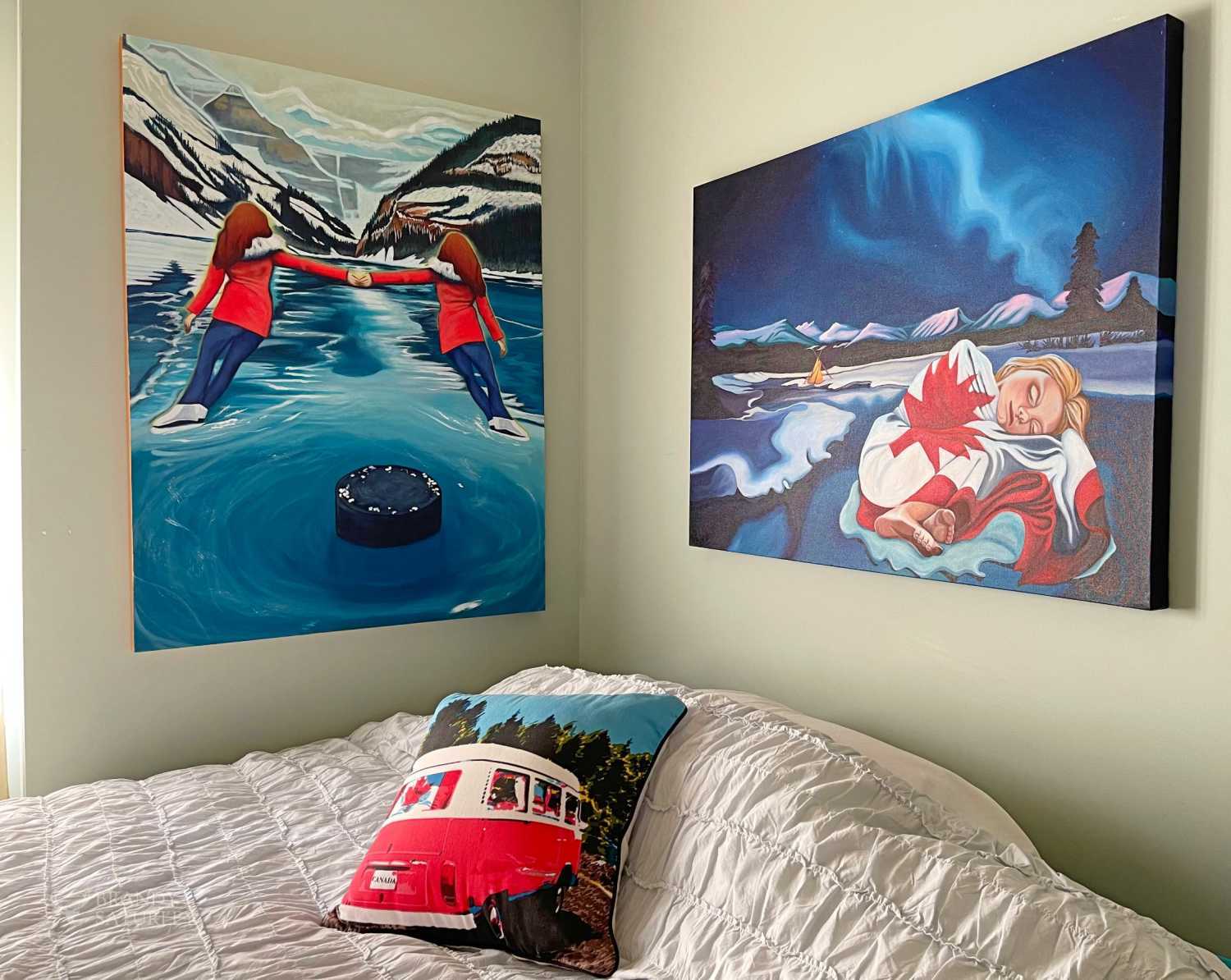
The Prodigy, Acrylic On Canvas, 36 x 48 x 1.5 in, 2021 – Brandy Saturley

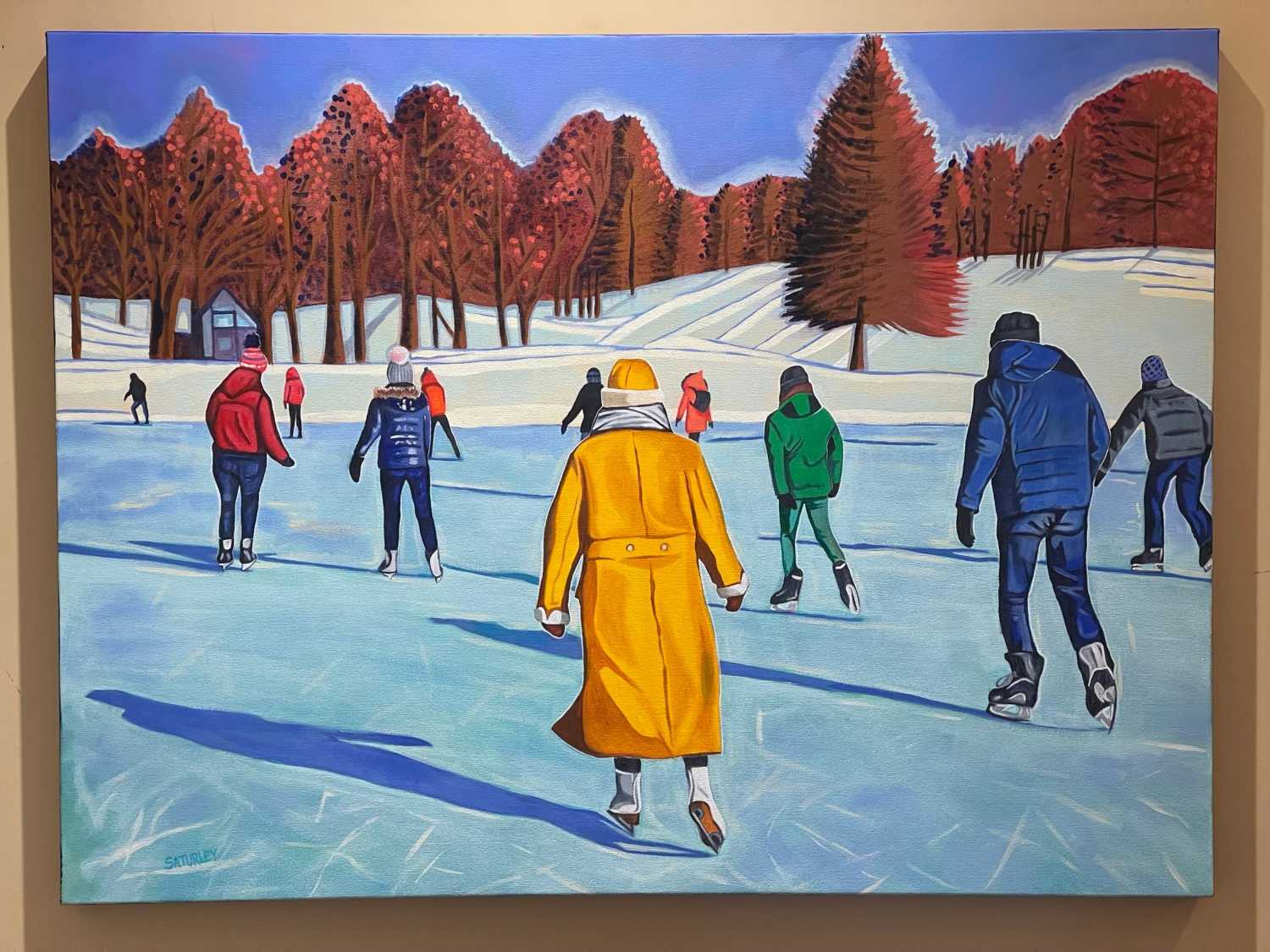
Over the years, the theme of ice skating has surfaced again and again in my own work. That feels fitting, as Canadian winter is not merely endured, it is actively lived on ice. From farmers’ fields flooded and frozen on the Prairies, to glassy mountain lakes in Alberta, from the Great Lakes to small backyard ponds, skating is one of the most democratic and joyful ways Canadians meet winter head-on. It turns cold into community.

Ice Skating Art

Pond Hockey Days, Acrylic On Canvas, 36 x 48 x 1.5 in, 2021 – Brandy Saturley

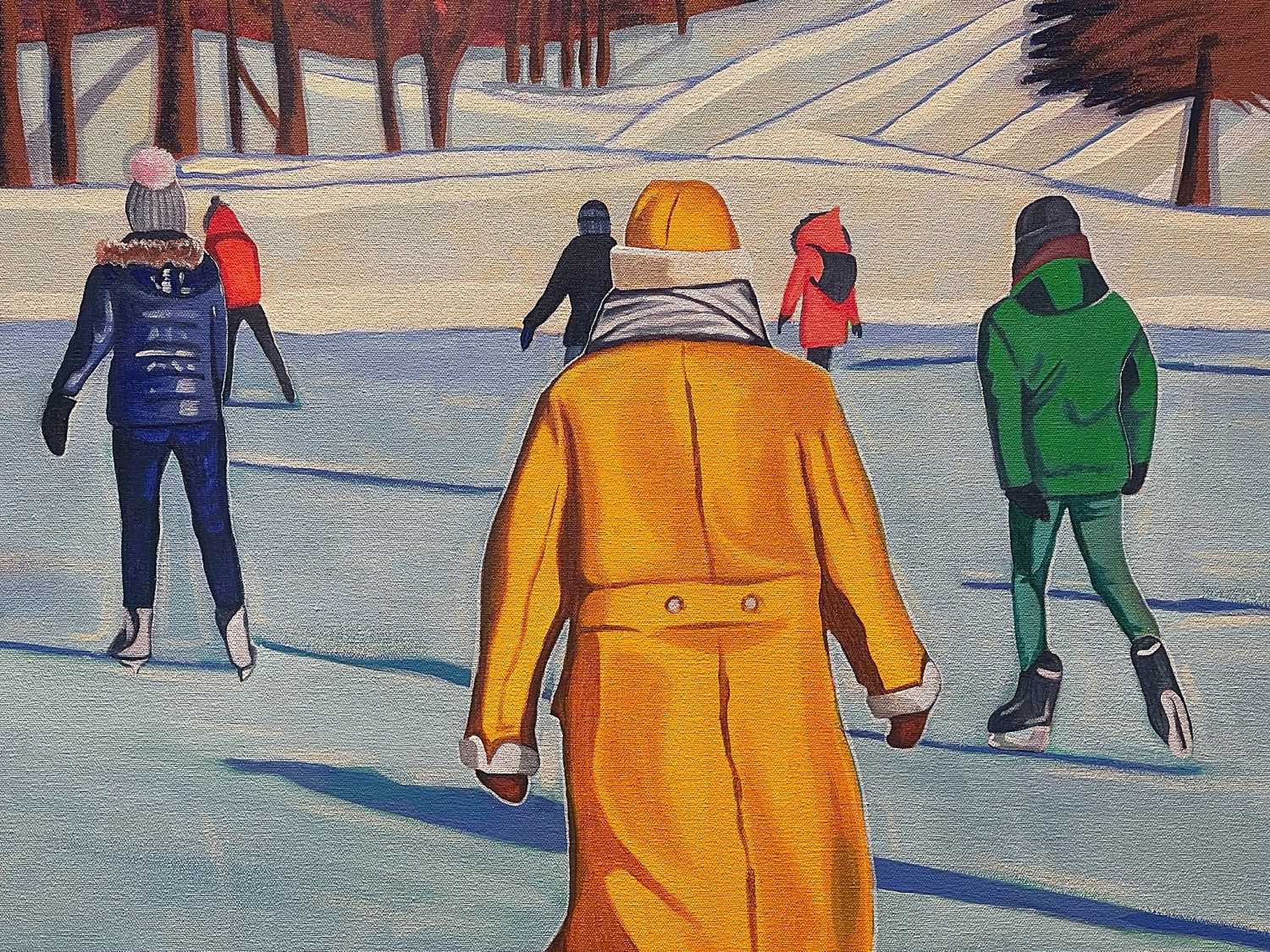
Painting skaters outdoors allows me to explore more than motion. It’s about atmosphere, breath in the air, the scrape of blades against ice, the muted soundscape that comes with snow-covered land. Skaters become small but essential figures within vast winter landscapes, reminding us of our scale in nature and our resilience within it. Often bundled in parkas, scarves, and knit hats, they carry a distinctly Canadian silhouette, recognizable even without faces.

Detail view – Glide Away, Acrylic On Canvas, 36 x 48 x 1.5 in, 2021 – Brandy Saturley

There is also a quiet nostalgia embedded in these scenes. Outdoor skating often exists outside of structured time. It happens at dusk after school, on weekends, during holidays, or in those fleeting moments when the ice is just right. Painting these scenes becomes a way of preserving a shared memory. Many viewers tell me they can feel themselves back on the ice when they encounter these works, toes numb, cheeks burning, laughter echoing across a frozen surface.

Ice Skating Art

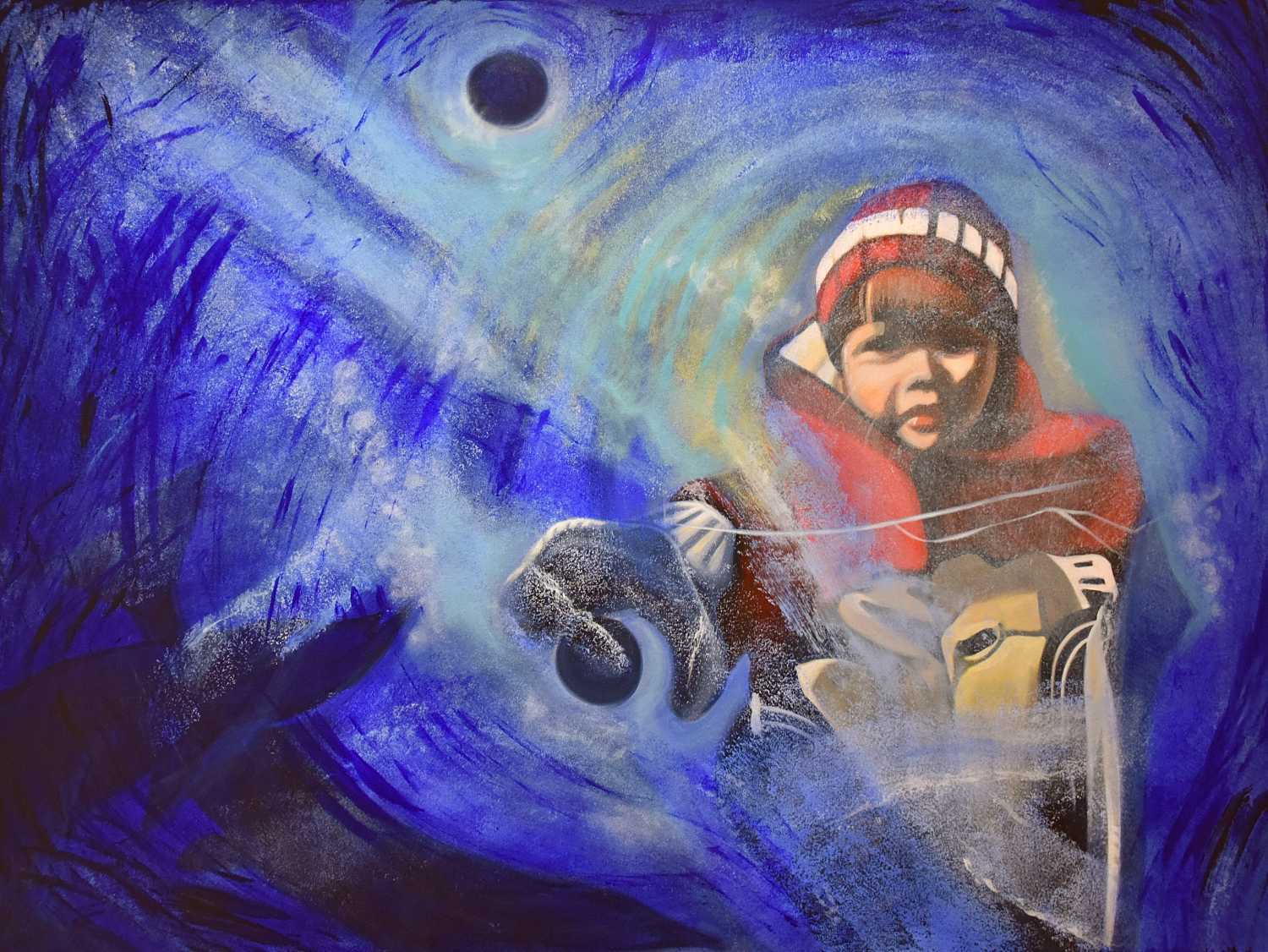
Vortex, Acrylic on canvas, 48×36, 2021 – Brandy Saturley

Historically, skating in Canadian painting has often been used to speak about balance, discipline, and grace, but also about play. It sits at the intersection of sport and leisure, survival and joy. That duality continues to interest me. A frozen pond can be both serene and energetic, expansive yet intimate. It’s a stage where stories unfold without spectacle, where everyday life quietly becomes worthy of paint.

girls hockey painting

We Dream, Acrylic On Canvas, 30 x 30 x 1.5 in, 2022 – Brandy Saturley

In a country where winter defines so much of our rhythm, skating remains one of the most poetic expressions of how we adapt, celebrate, and gather. To paint people skating outdoors is to paint a very particular Canadian way of being in the world. One where cold sharpens awareness, community forms organically, and the landscape is never just a backdrop, but an active participant in the story.

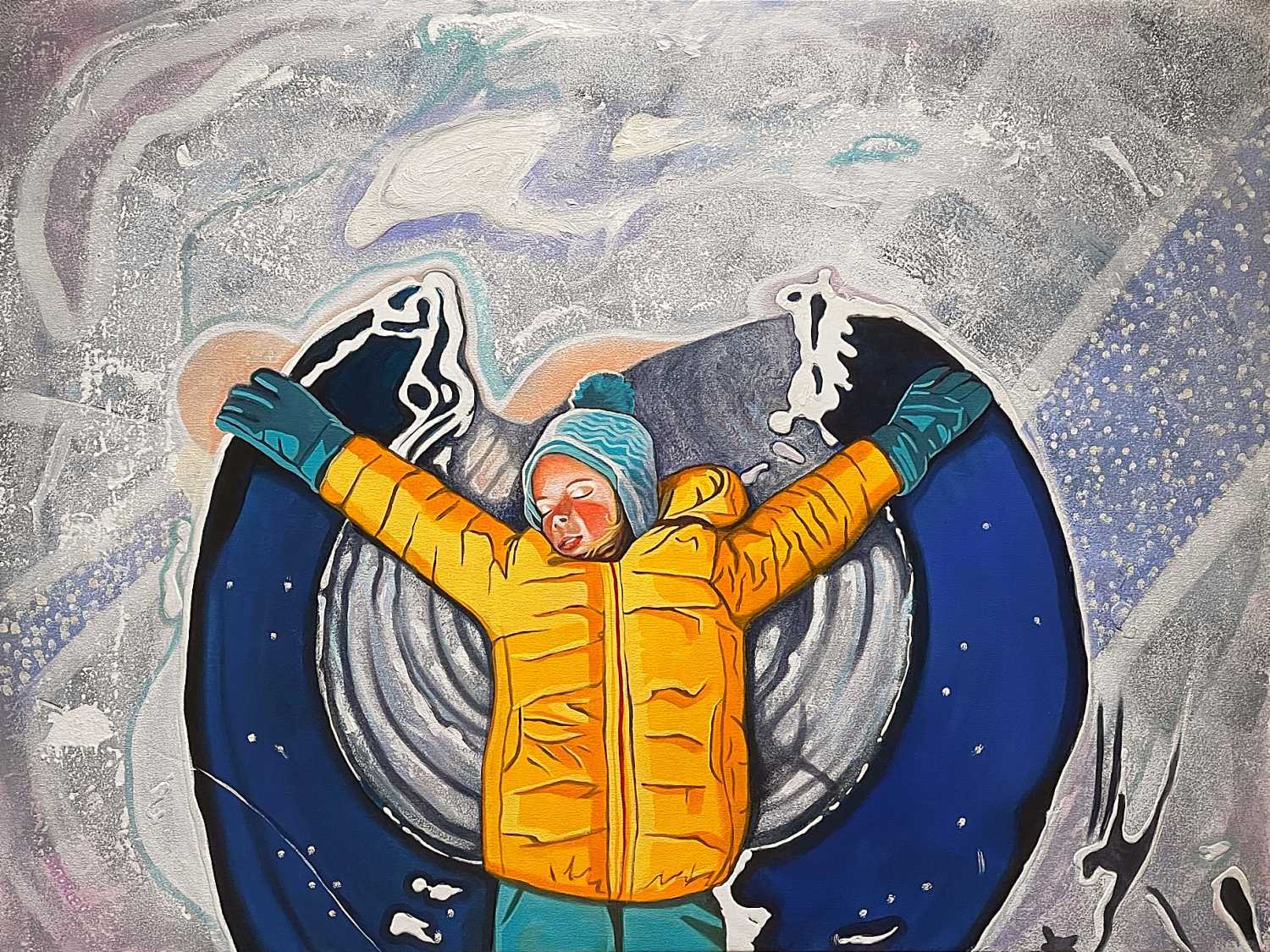
Angel of Snow & Ice, Acrylic On Canvas, 36 x 48 x 1.5 in, 2023 – Brandy Saturley

Ice, after all, is never still. And neither are we.


A Messenger From The North – A Painting About a Canada Goose

When I look back at the paintings I’ve made over the past two decades, a few things rise to the surface like landmarks on a familiar map. I return again and again to the stories of my Canadian experience as seen through the eyes of a woman travelling, observing, and painting her way across the country. I’m drawn to figurative landscapes where people anchor the land and the land shapes them in return. And woven through this long journey is one recurring companion: the Canada Goose.

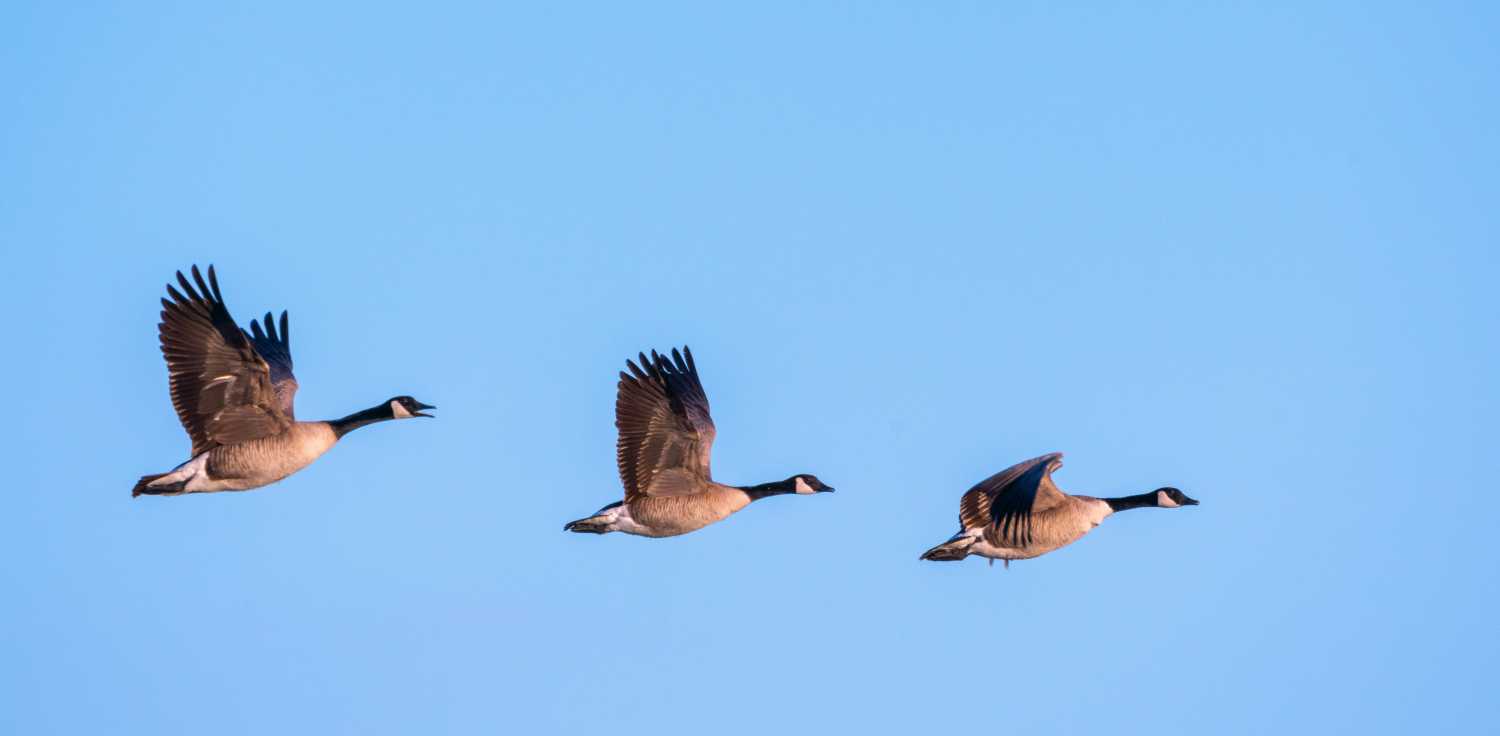
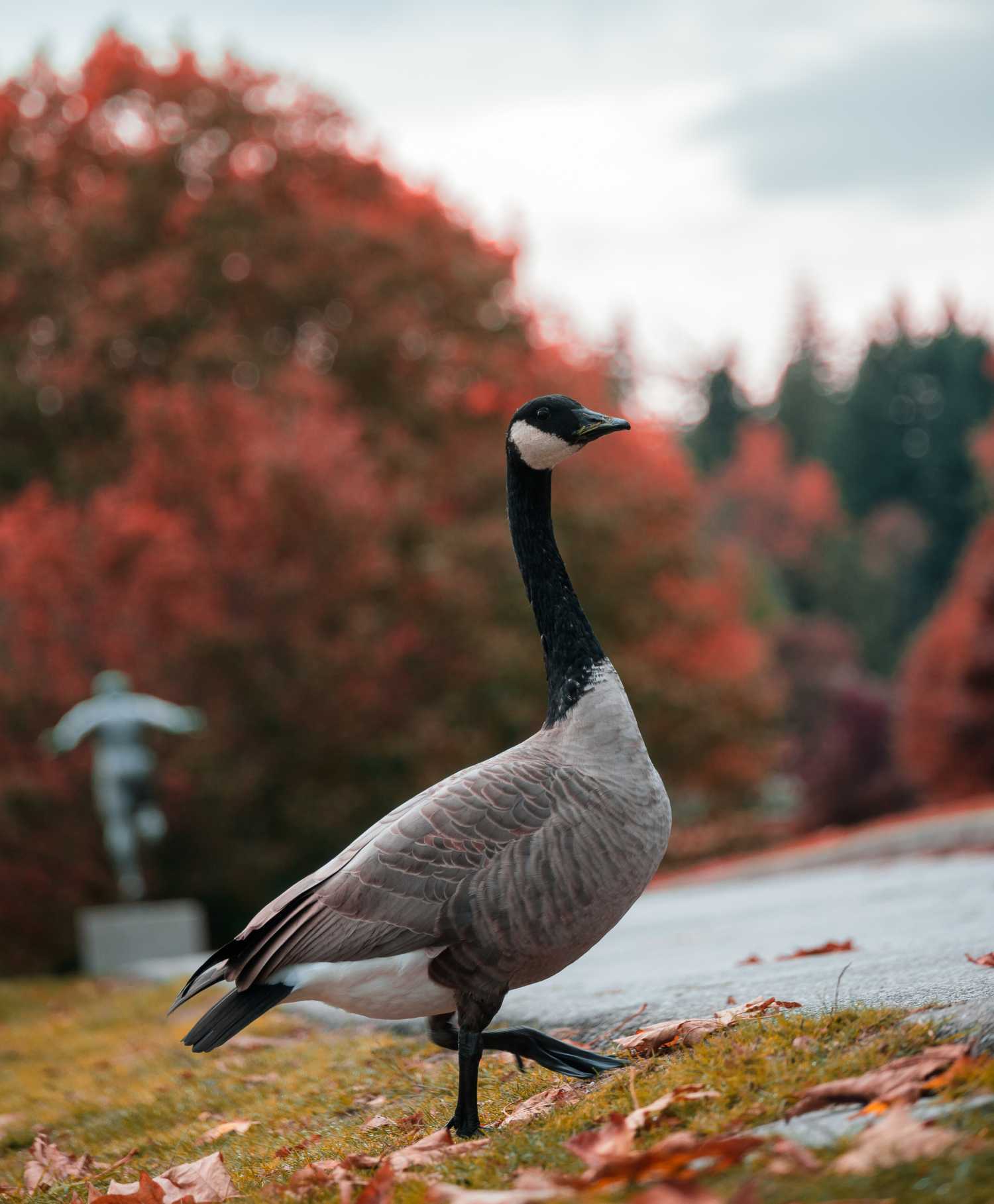
The goose has appeared in many of my narratives about Canada. Sometimes it stands at the centre, a full-bodied protagonist. Other times it moves along the edges, framing the story with its quiet authority. No matter its position, it carries its own weight of meaning.

To many, the Canada Goose is more than a bird. Its steadfast flight speaks of loyalty, cooperation, communication, and endurance. Its V-formation is a testament to shared leadership. Its lifelong bonds echo the resilience of relationships built through weather and time. Across Indigenous cultures, the goose is a sacred seasonal marker, a signal of change and continuity. In folklore, it can move between worlds, a guide or a wandering soul. It is a creature stitched deeply into the cycles of nature and into our collective sense of the North.

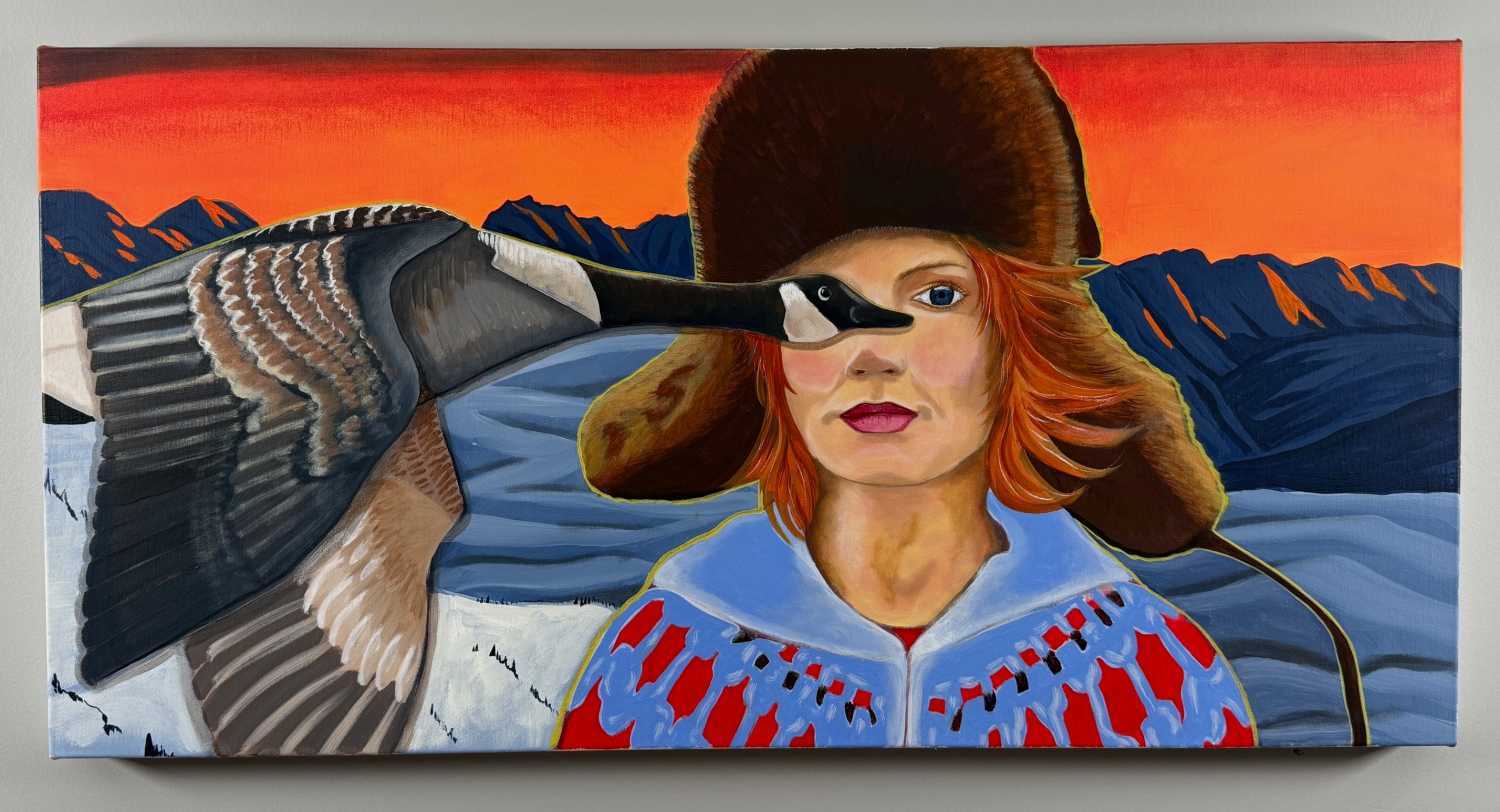
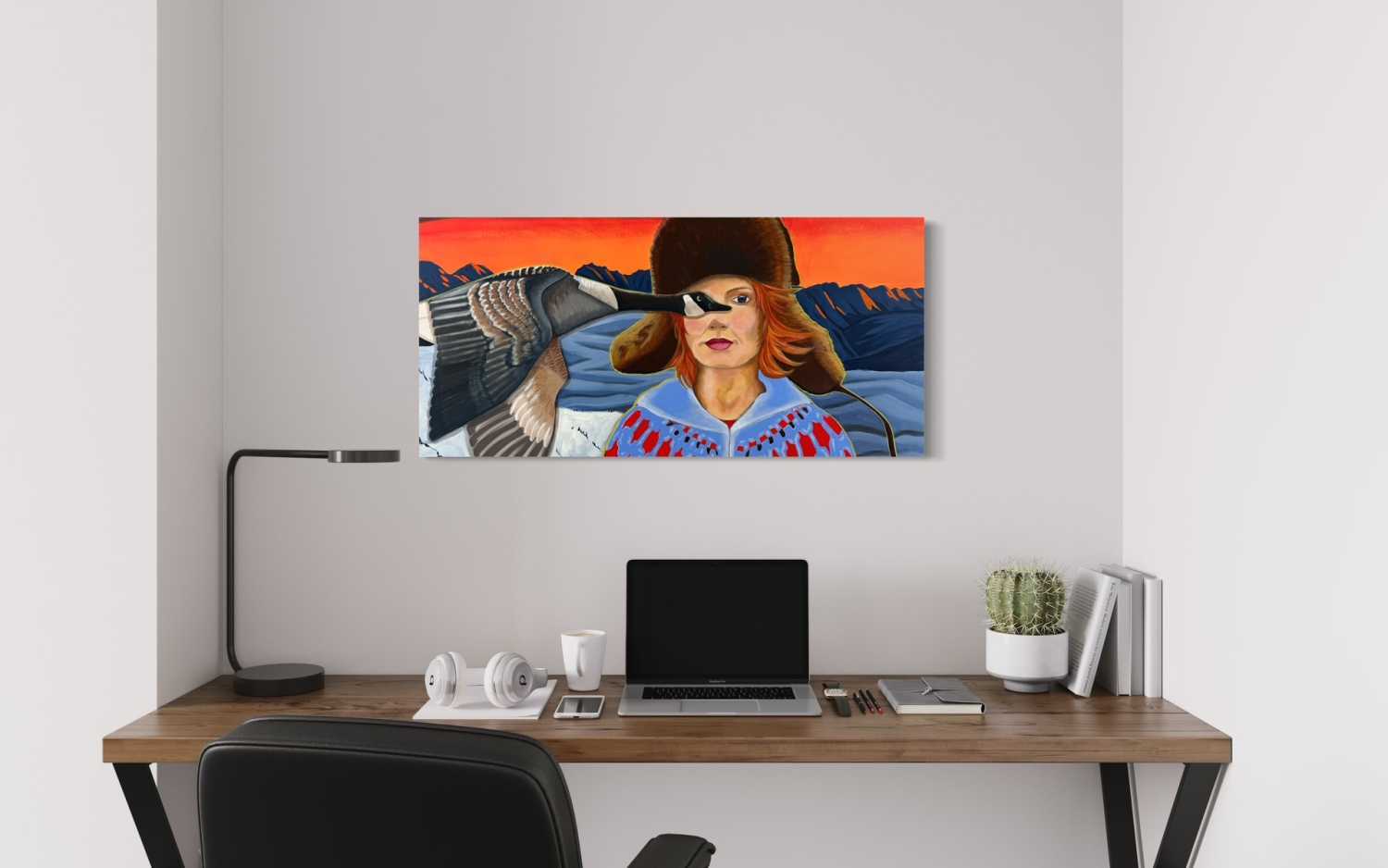
In this new painting, a woman stands in the open hush of a snow-covered landscape, her gaze steady beneath the warm shelter of a fur hat. Behind her, the sky burns in a late-day flare of orange, as if the sun has cracked the horizon and spilled its final breath of light across a ridge of deep blue mountains.

Canada Goose Painting

Northern Messenger – 18×36 inches, acrylic on canvas, 2025 – Brandy Saturley

A Canada Goose cuts across her face in full flight, its wing sweeping through the scene like a living brushstroke. It becomes an envoy, sliding the wild world directly into her line of sight, binding her to the land and to the long migratory stories carried on beating wings. Her embroidered coat glows with reds and blues, a pulse of northern life against the winter quiet.

Canada Goose Painting

The painting settles into something part portrait and part vision: a moment where human presence and the instinctive rhythm of nature align in brief, luminous agreement. The goose becomes the messenger, the woman the witness, and the landscape a silent accomplice to their shared moment of connection.

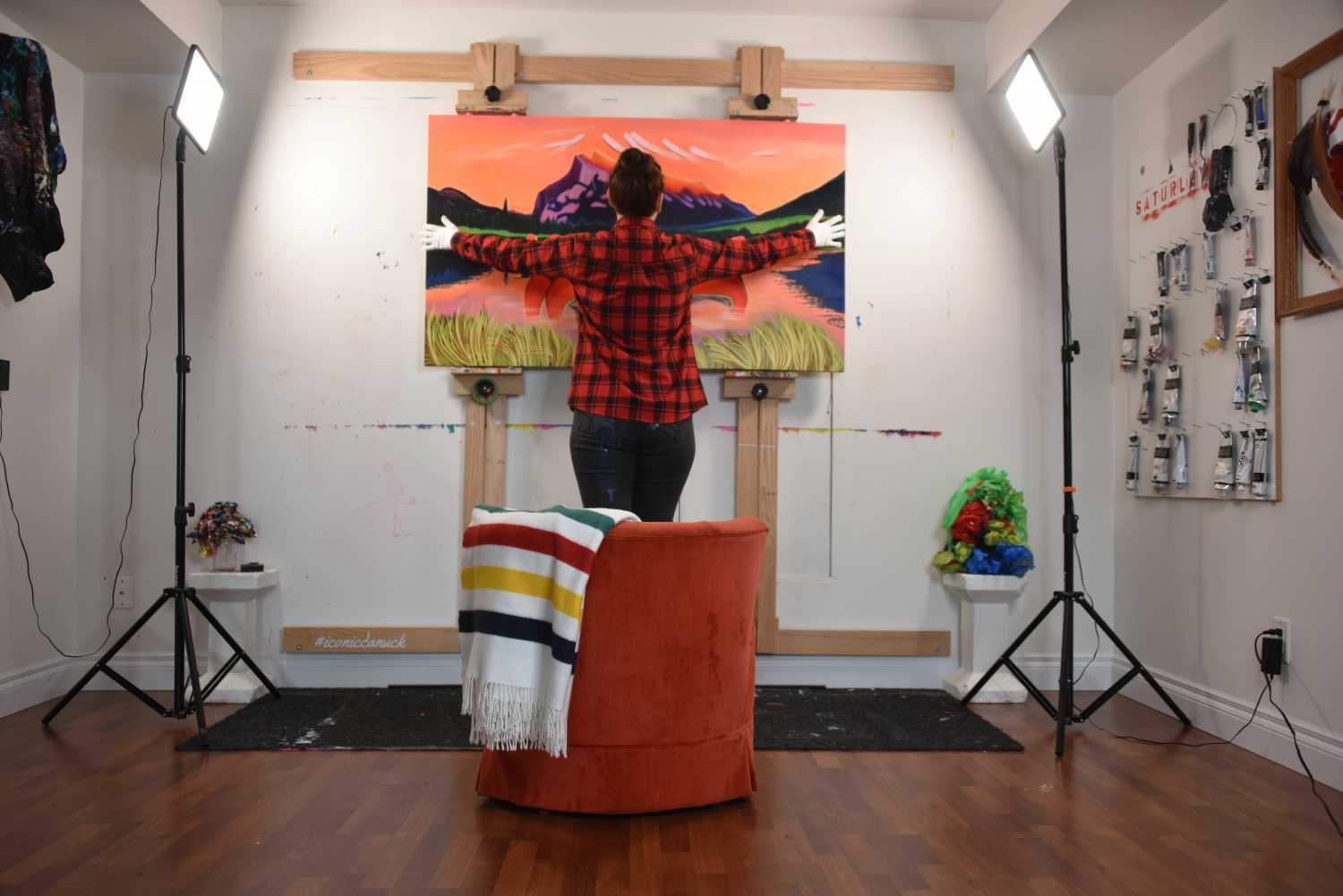
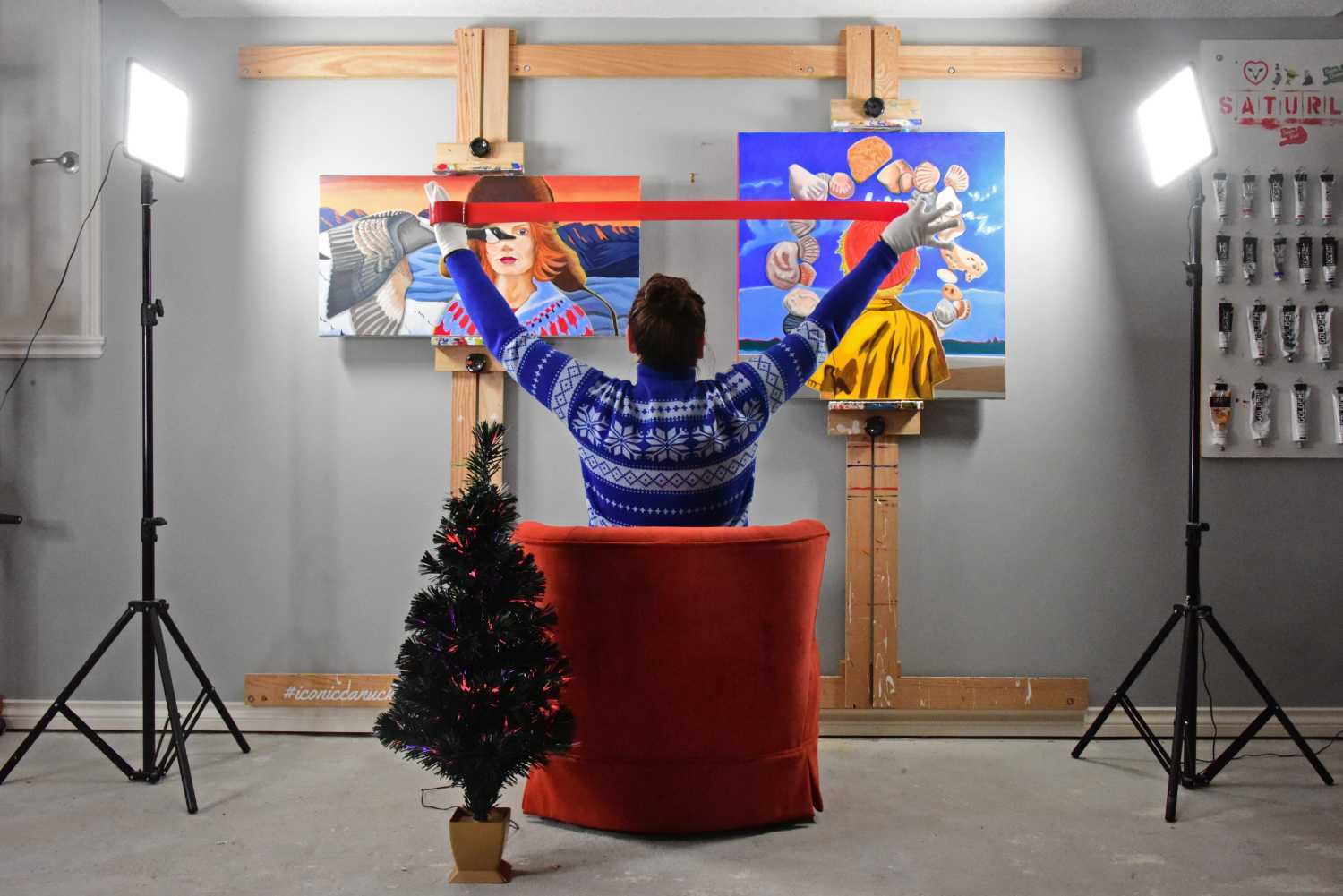
Inside Brandy Saturley Studio – Parksville, Canada

The Art of Winter: Why Canadian Winter Paintings Matter

Winter is more than a season in Canada, it is a defining force, a shared experience, and a kind of national language spoken through crisp breath, long shadows, and the sound of snow underfoot. For generations, Canadian artists have looked to winter not merely as subject matter, but as a mirror of who we are. From the Group of Seven’s frozen lakes to contemporary landscapes shaped by climate shifts and personal memory, winter paintings occupy a central place in the story of Canadian art.

Over the years, I have returned to winter again and again in my own paintings; quiet days dusted with snow, children skating on ponds, the muffled hush of a trail after a fresh snowfall, that feeling of being held by nature and humbled by it at the same time. These works are not simply depictions of cold weather; they are meditations on solitude, community, resilience, and joy.

The Art of Winter

Glide Away – 36×48, acrylic on canvas, 2023 – Brandy Saturley

Winter as Identity – The Art of Winter

In Canada, winter doesn’t just arrive – it settles in, shapes schedules, alters moods, and reshapes the world around us for months at a time. It has a way of making us more introspective. It tests our patience and rewards our willingness to slow down. It heightens our sense of resourcefulness and reminds us of our instinct to gather close, whether around a fire, at a rink, or with a cup of something warm.

It’s no surprise, then, that winter has become one of the strongest visual archetypes in Canadian art. Winter scenes allow artists to explore:

  • Light and shadow: the blue hour stretching across a snowy field, the warm glow of windows against a dark night.

  • Texture: the softness of fresh snowfall versus the sharp, crystalline edges of ice.

  • Colour: subtle pinks, purples, greys, and blues that only appear when the landscape is covered in white.

  • Emotion: the peacefulness of snowfall, the energy of a skating pond, the quiet of early mornings.

The Art of Winter

Last One Out – 24×30, acrylic on canvas, 2024 – Brandy Saturley

A Tradition Carried Forward

Historically, Canadian winter paintings have served as a way to document the realities of life in a northern climate. Today, they also capture nostalgia – a longing for the simplicity of childhood winters – and record the changing nature of our relationship to the land as seasons shift.

My own winter paintings are often rooted in memory. The scratch of blades on pond ice. A red toque against a snow-laden sky. The rhythmic movement of children skating in arcs. A single figure walking through a landscape softened by snowfall. These images carry a distinctly Canadian rhythm, one that feels universal across provinces and generations.

By painting winter, I’m contributing to a legacy that speaks to place, identity, and belonging – an ongoing conversation about what it means to love and endure the season that so profoundly shapes our lives.

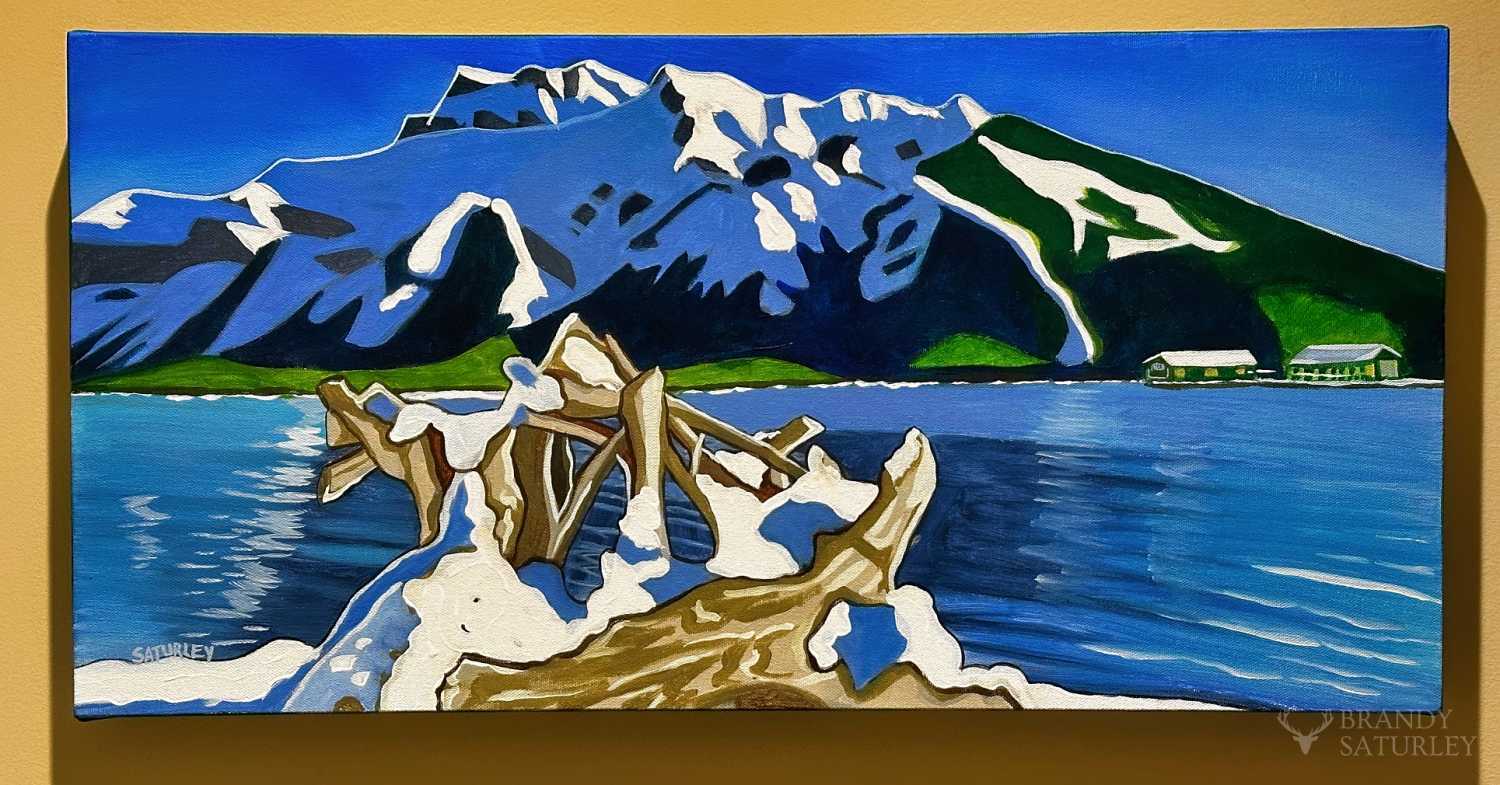
Minnewanka Muse – 12×24, acrylic on canvas, 2024 – Brandy Saturley

Why Winter Paintings Matter Now

In a time when the climate is changing and winters are becoming less predictable, winter paintings also take on new meaning. They become records. They become reminders. They become tributes to a season that has shaped our collective imagination.

For many viewers, winter art evokes feelings of comfort, nostalgia, and connection. It invites people to pause and remember the beauty in what can often feel heavy or challenging. It acknowledges the emotional landscape of winter as much as the physical one.

The Art of Winter

Under A Borealis Sky – 24×36, acrylic on canvas, 2011 – Brandy Saturley

A Celebration of the Season

Painting winter allows us to see the extraordinary in the ordinary; the way snow transforms familiar streets, the beauty of a frozen lake, the sense of community gathered at a local rink, the quiet magic of a snowfall at dusk.

Canadian winter paintings endure because they capture something essential: our ongoing relationship with the land, our resilience, and our capacity to find beauty even in the coldest of seasons.

As I continue to explore winter in my work, I’m reminded that these paintings are, in many ways, love letters to Canada, to memory, and to the small moments that define our experiences of winter.

Rocky Mountains Higher – 36×48, acrylic on canvas, 2023 – Brandy Saturley

A Totem to The Stars – An Inukshuk Painting

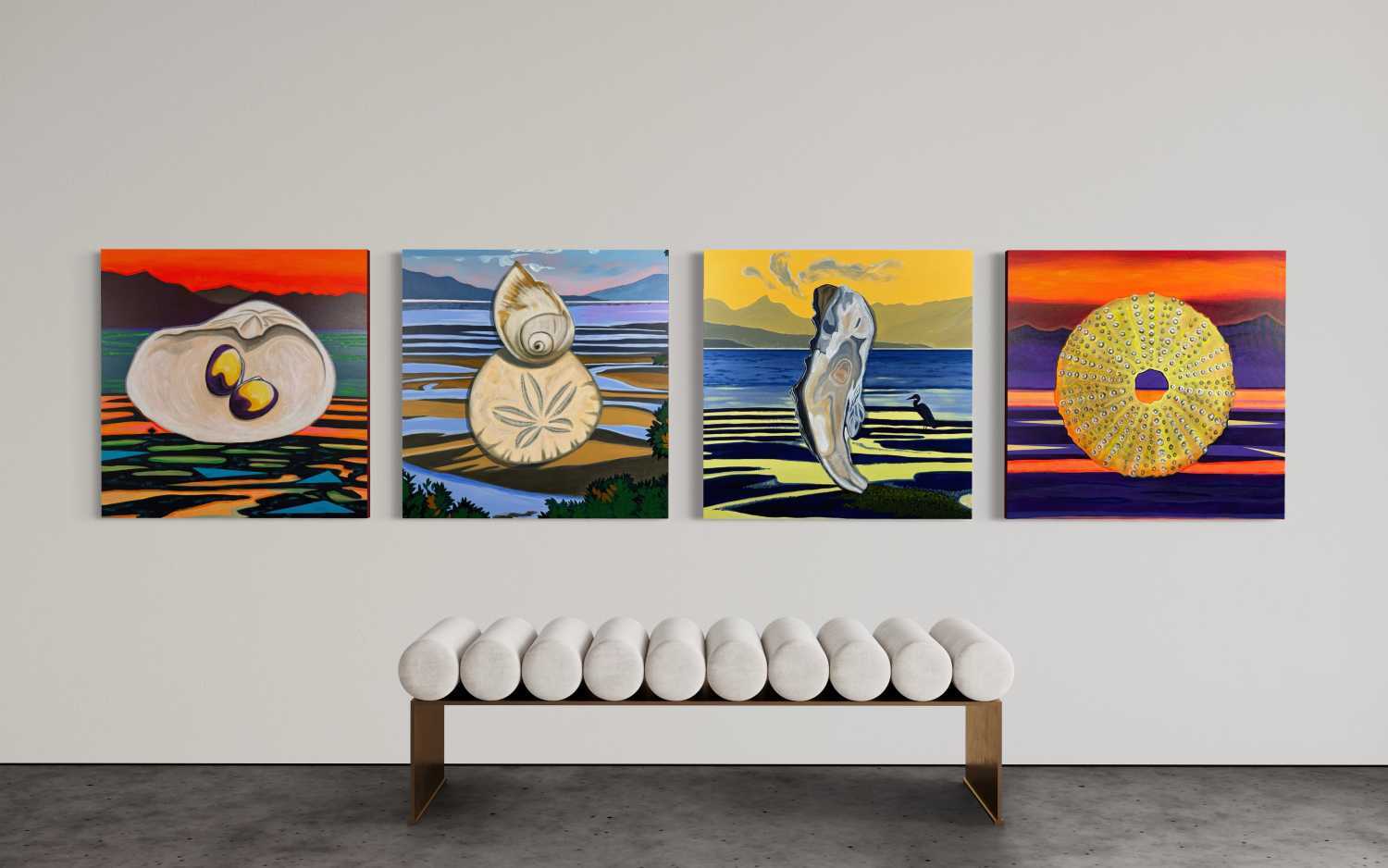
It is no secret by now that I have been painting stories of west coast beaches this Autumn. The treasures that line the sand and the structures built from beach things by human hands. I have been making paintings about shells, beach huts, Inukshuk and being in these landscapes.

Shell Still Life Paintings – Brandy Saturley – 2025

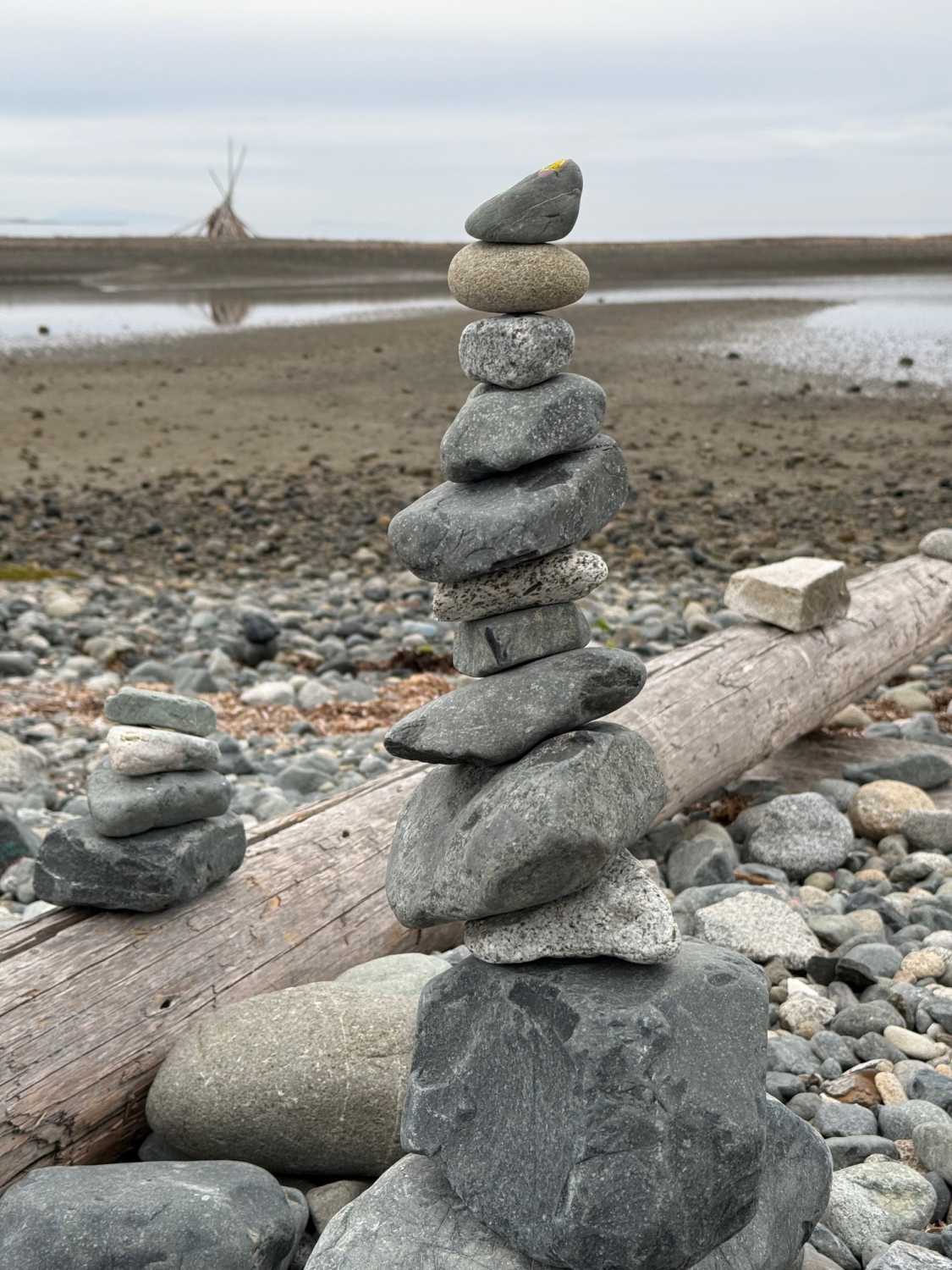
With this most recent painting I wanted to capture the aura of the rock stacks seen on the beaches. Here on Vancouver Island you will see these totems of balanced rocks at the corners of the beaches. Sometimes balanced on rock and other times balanced on logs. Know as Inukshuk, these towers come with rocks of various sizes and shapes and are skillfully built into delicately balanced towers to the sky.  Inukshuk is a figure made of piled stones or boulders constructed to communicate with humans throughout the Arctic. Traditionally constructed by the Inuit, inuksuit are integral to Inuit culture and are often intertwined with representations of Canada and the North.

Inukshuk in Parksville, BC – 2025

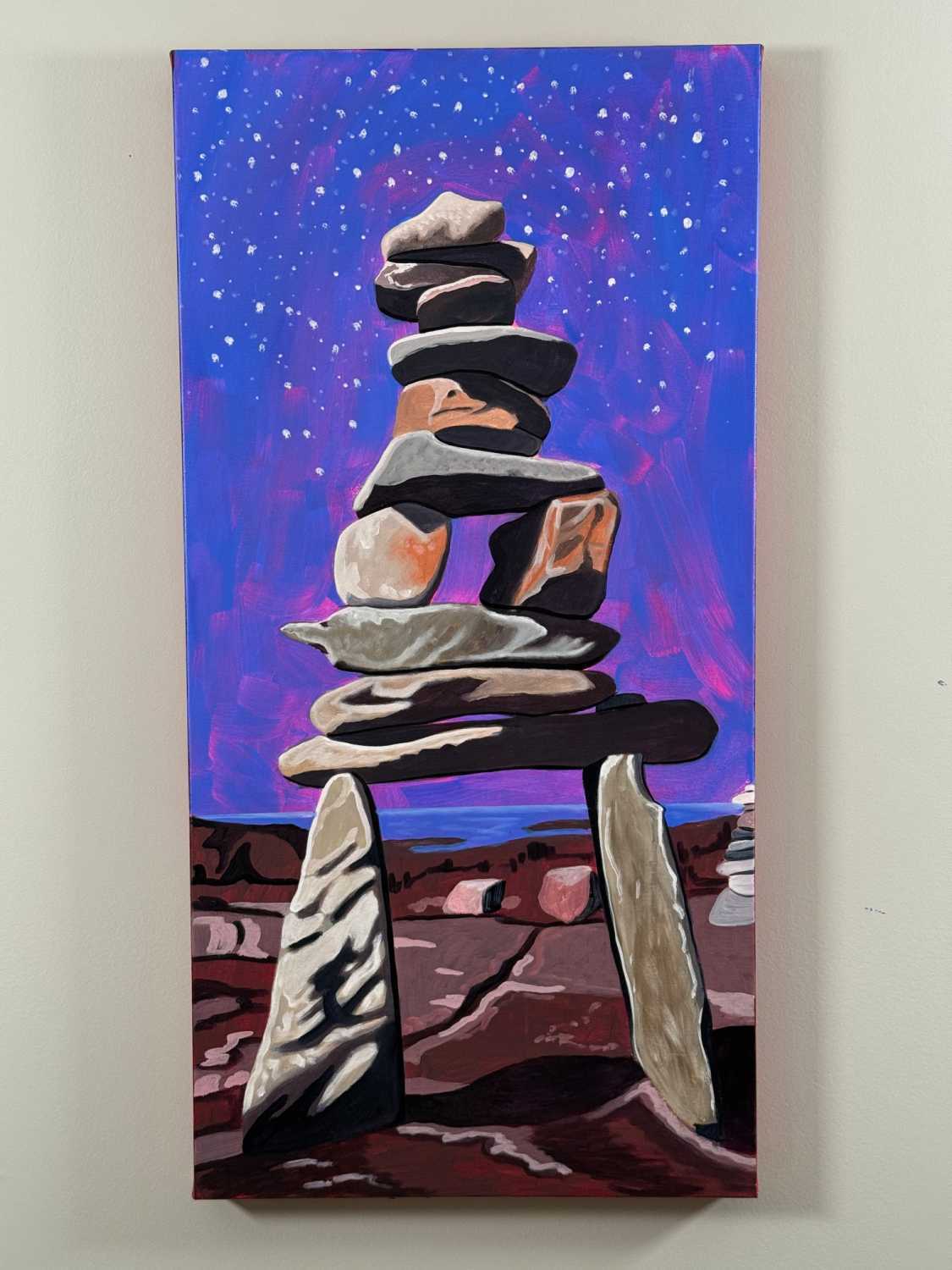
This vibrant acrylic painting features an inuksuk rendered in bold, sculptural layers of stone, each shape carefully balanced to form a vertical figure rising from a rugged landscape. The stones are painted in warm earth tones – soft creams, deep charcoals, russet reds, and weathered greys – giving the structure a grounded, tactile presence. Behind it, the sky glows with a rich blend of ultramarine, violet, and magenta, creating a luminous twilight atmosphere. Flecks of white stars scatter across the sky, lending a sense of vastness and quiet northern magic.

Inukshuk Painting

Totem Song, 36×18, acrylic on canvas, 2025 – Brandy Saturley

The foreground suggests rocky terrain, its textures and contours echoing the layered forms of the inuksuk itself. The contrast between the solid, ancient stones and the dreamlike celestial backdrop creates a powerful tension between earth and sky, permanence and wonder. The painting captures the symbolism of the inuksuk as both a guide and a marker of presence – a beacon of human connection within the expansive Canadian landscape.

Inukshuk Painting

Inukshuk painting on an entry wall.