The Art of Brandy SaturleyIconic Canadian Pop Art to Collect #iconiccanuck
  • Home
  • Paintings by Series
  • Paintings
  • About
  • Testimonials
  • Buying Art
  • Contact
  • News
  • Menu Menu

Archive for category: Advice for Artists

Handmade Art Still Matters

Advice for Art Collectors, Advice for Artists

Why Handmade Art Still Matters in the Age of AI

About a year ago, an interviewer asked me how I thought artificial intelligence would affect my life as an artist. At the time, I didn’t have much to say. I understood very little about its capabilities, and my initial reaction was straightforward: here comes another tool I might use in my creative process, handmade art still matters.

I thought of AI as something like a paintbrush or a camera. I wasn’t especially worried about it ending my career. My understanding has changed since that conversation. I can see the potential pressure on people who earn their living through graphic design, copywriting, illustration, and other creative services. I can also see possibilities for artists who want to experiment with ideas.

Yet I remain confident that handmade art has a place in our lives. As a Canadian painter approaching two decades of full-time practice, I still believe people will want original paintings, physical objects, and a connection to the person who made them.
Handmade Art Still Matters

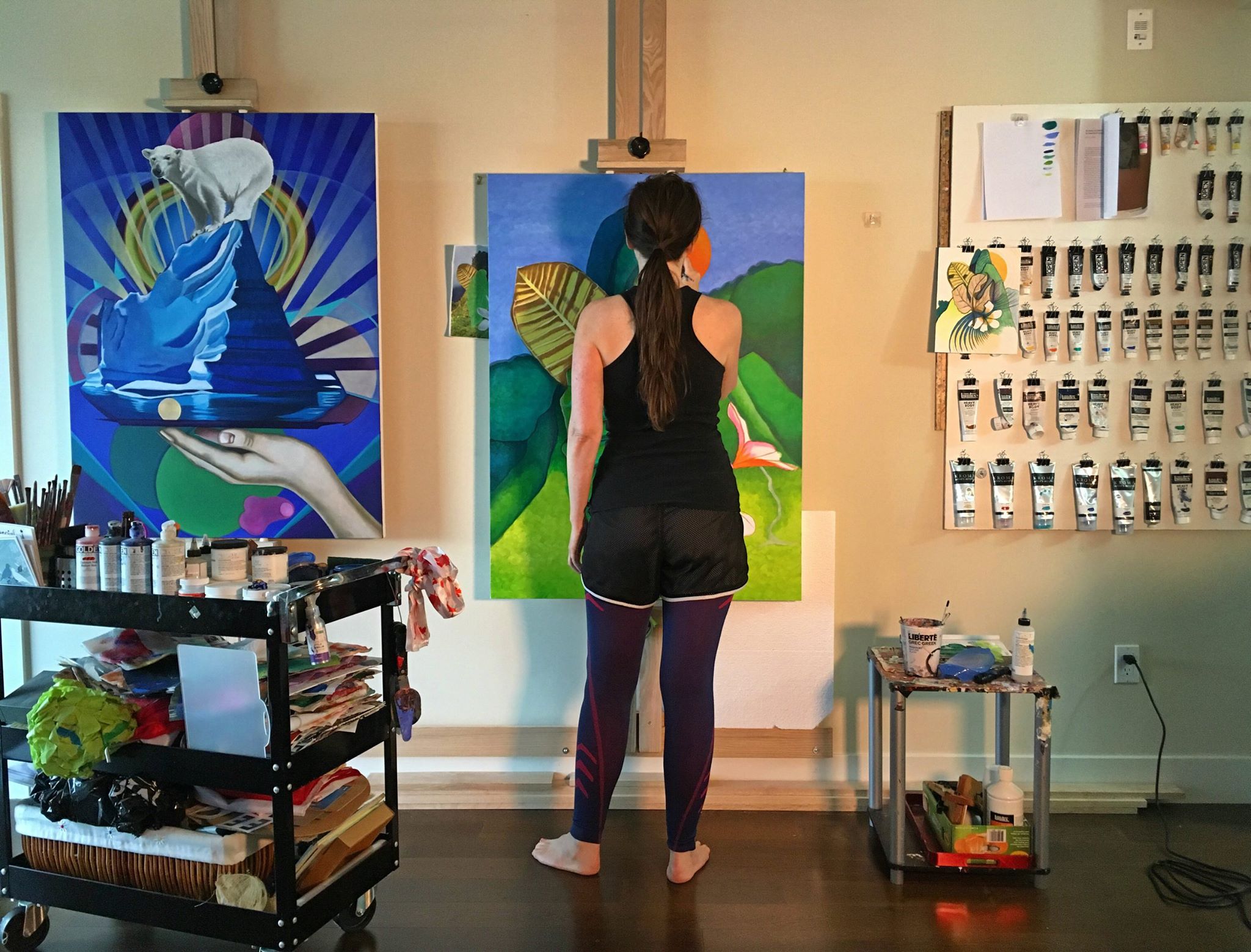
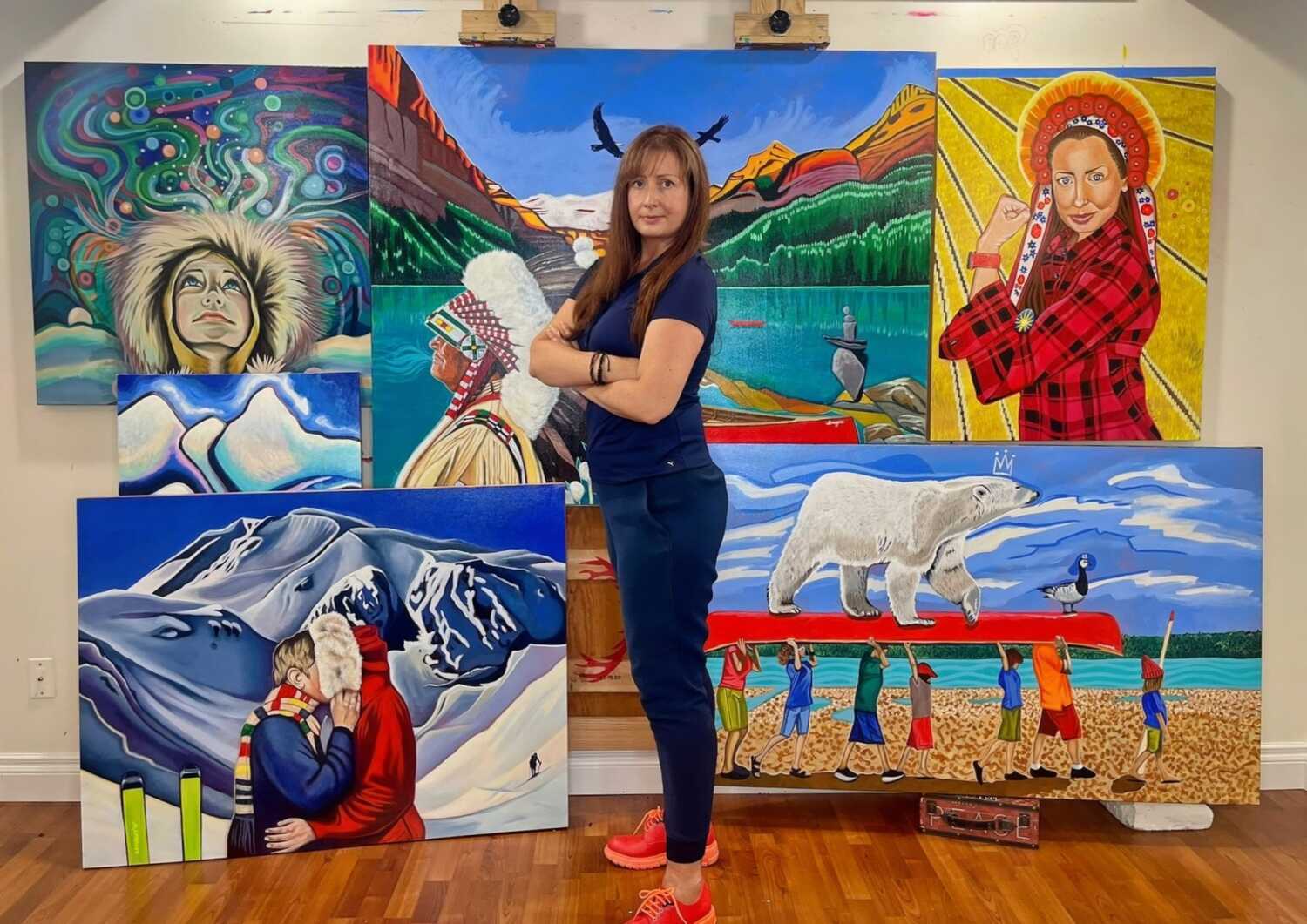
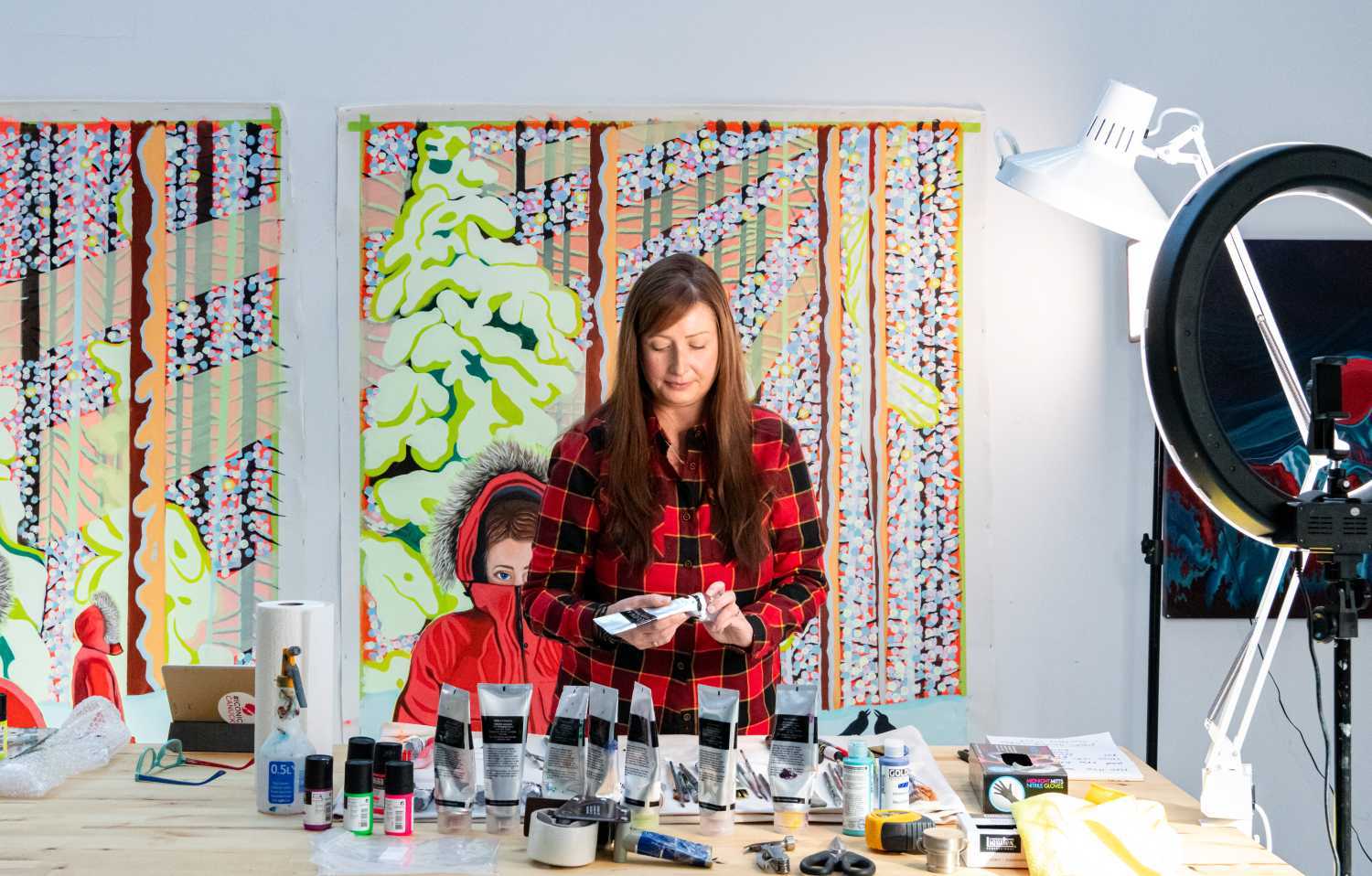
Brandy Saturley in Leighton Studios at Banff Centre for Arts & Creativity, 2022

AI and the Creative Process

My original comparison between AI and a paintbrush now feels incomplete. A brush requires my hand for every mark. AI can produce an image from written instructions, which gives it a different role in the creative process and potentially in the market for creative work. For a painter, it might offer ways to explore a composition or consider different directions. But the development of a painting continues long after the initial idea. When I paint, each decision affects the next. A colour changes the feeling of a scene. A figure shifts the balance of a landscape. Something unexpected happens on the canvas, and I have to decide whether to keep it, change it, or follow it somewhere new. My paintings emerge through that sustained attention. The finished work carries decisions made over days and weeks, informed by years of painting.

The Physical Experience of an Original Painting

We discover so much art through screens that it is easy to forget how much a photograph leaves out. An original painting has scale, texture, and a surface that responds to light. Standing in front of it, you can move closer to examine a brushstroke or step back to experience the whole composition. Its presence changes as you move through the room. For collectors, living with a painting offers opportunities to notice something new. A colour becomes more apparent in morning light. A detail catches your attention months after you first hung the work. Your relationship with it develops over time. That physical experience is one reason I believe handmade art will continue to matter in the age of AI. There is lasting pleasure in living with something another person has made.
Handmade Art Still Matters

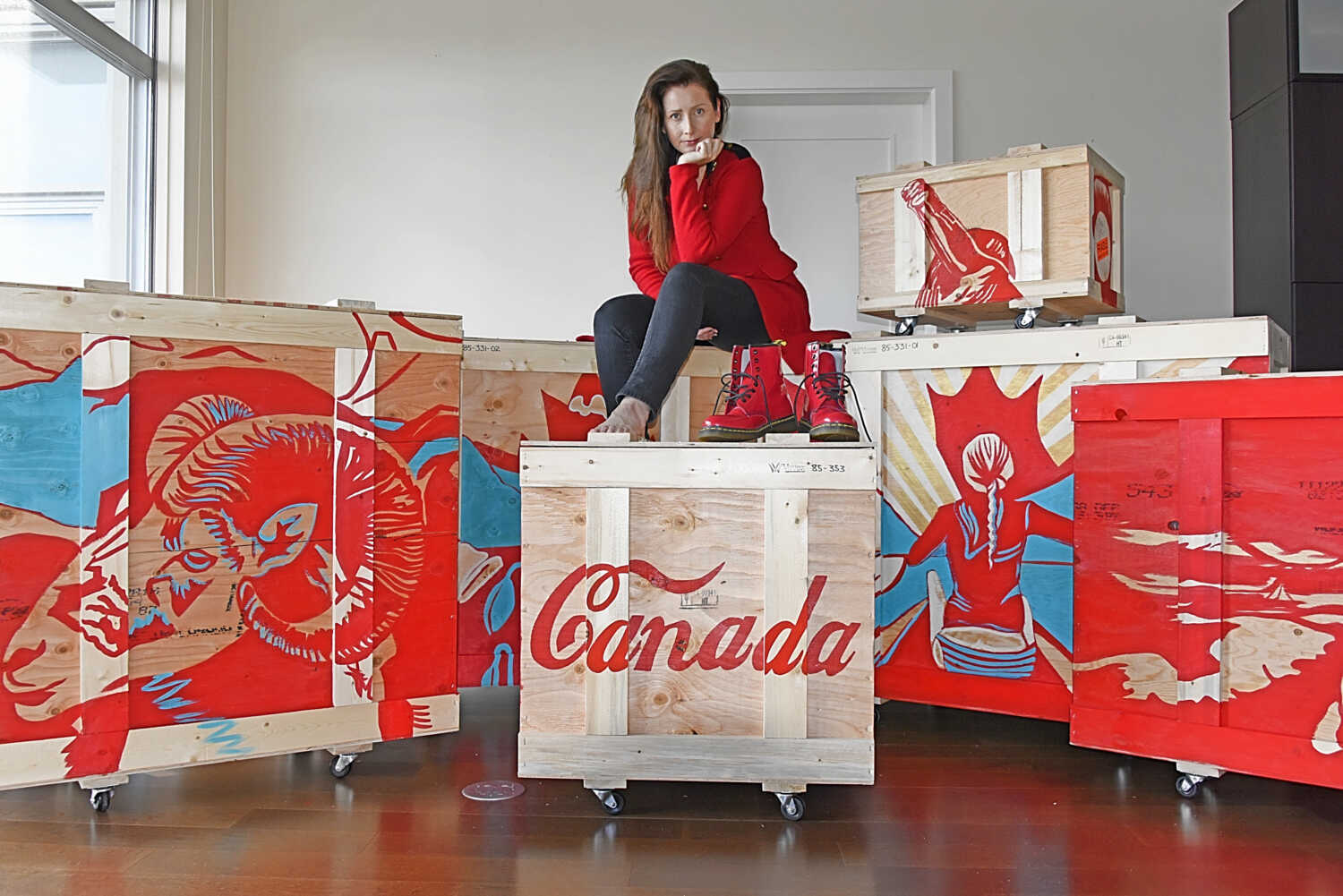
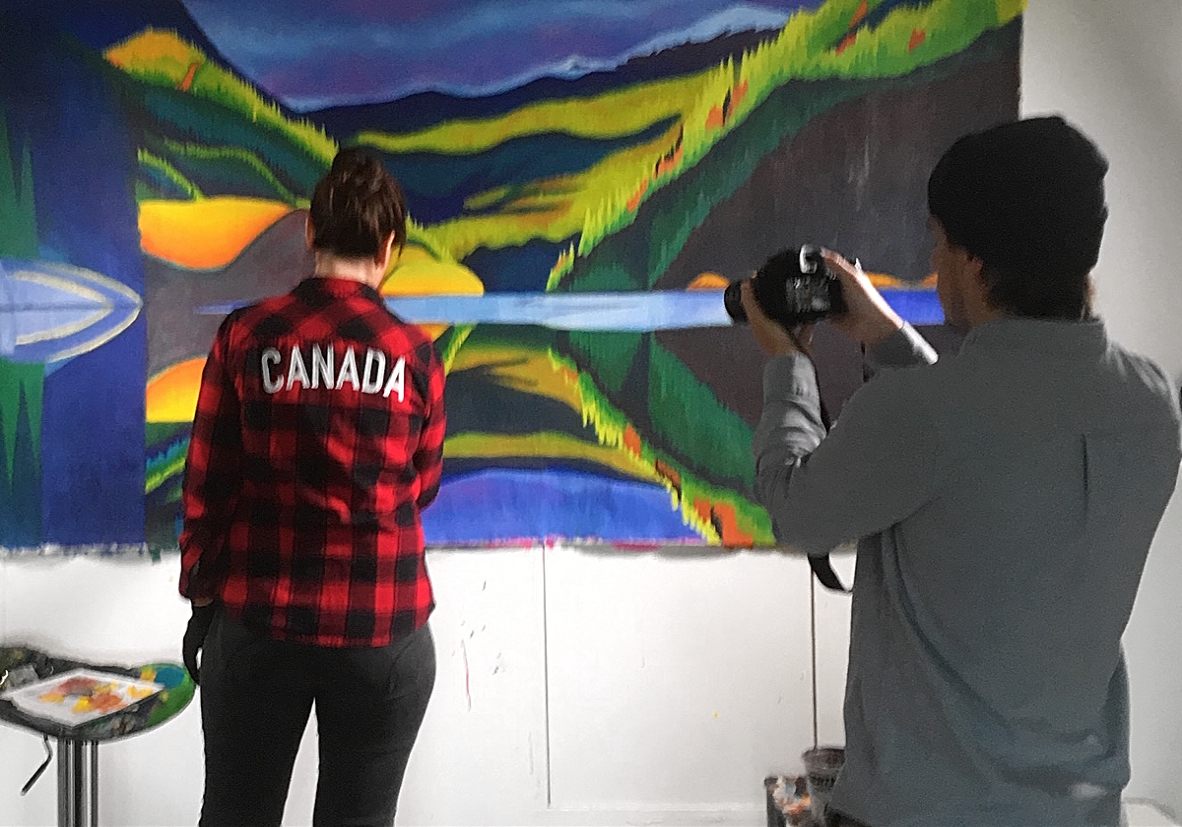
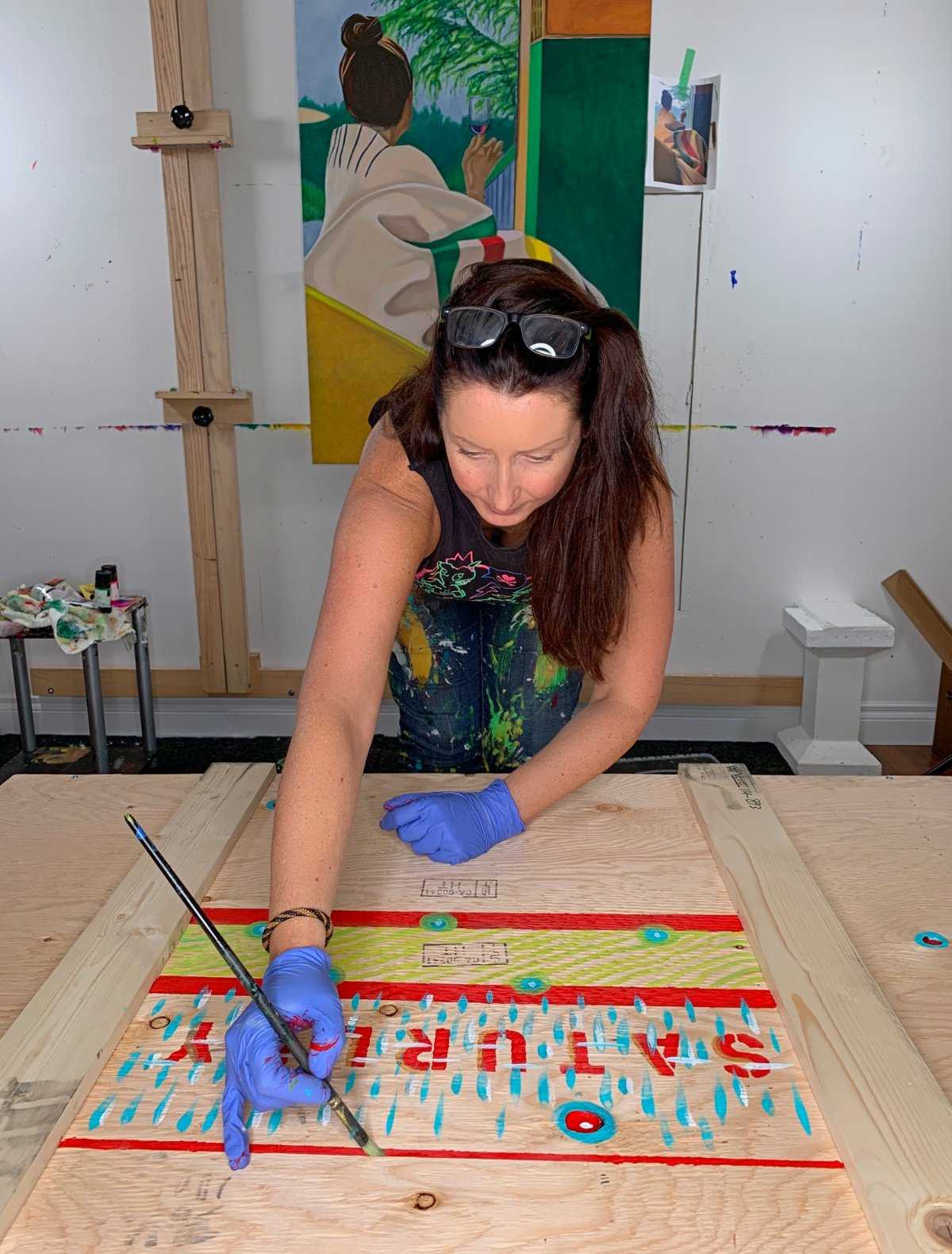
Brandy Saturley painting her handmade wooden art shipping crate

Why Collectors Connect With Handmade Art

Over the years, collectors have shown me how personal the experience of buying original art can be. A landscape might remind someone of a meaningful journey. A painting of mountains might come to represent members of their family. A familiar Canadian symbol might bring forward a memory I knew nothing about when I painted it. I begin with my own experiences and intentions, but viewers bring their lives to the work. The painting becomes a meeting place for those different perspectives. Knowing the artist can add another dimension. Collectors may follow a series as it develops, meet me at an exhibition, or learn about the place that inspired a painting. Those encounters become part of the story they carry home with the artwork. For my practice, that relationship between artist, painting, and collector remains deeply meaningful.

The Future of Artists’ Livelihoods

Believing in the value of handmade art does not mean dismissing concerns about AI. Many artists support their studio work through other creative occupations. If commissions for design, writing, or illustration become harder to secure, that pressure can affect their ability to keep making art. I would like to think that an abundance of generated images could encourage people to appreciate original artwork more deeply. But appreciation alone does not sustain a studio. Artists need purchases, commissions, exhibition opportunities, and people willing to support their work. The future of art also depends on the practical conditions that allow artists to continue. Buying an original painting, visiting a gallery, or commissioning an artist helps sustain the people whose work we value.
Handmade Art Still Matters

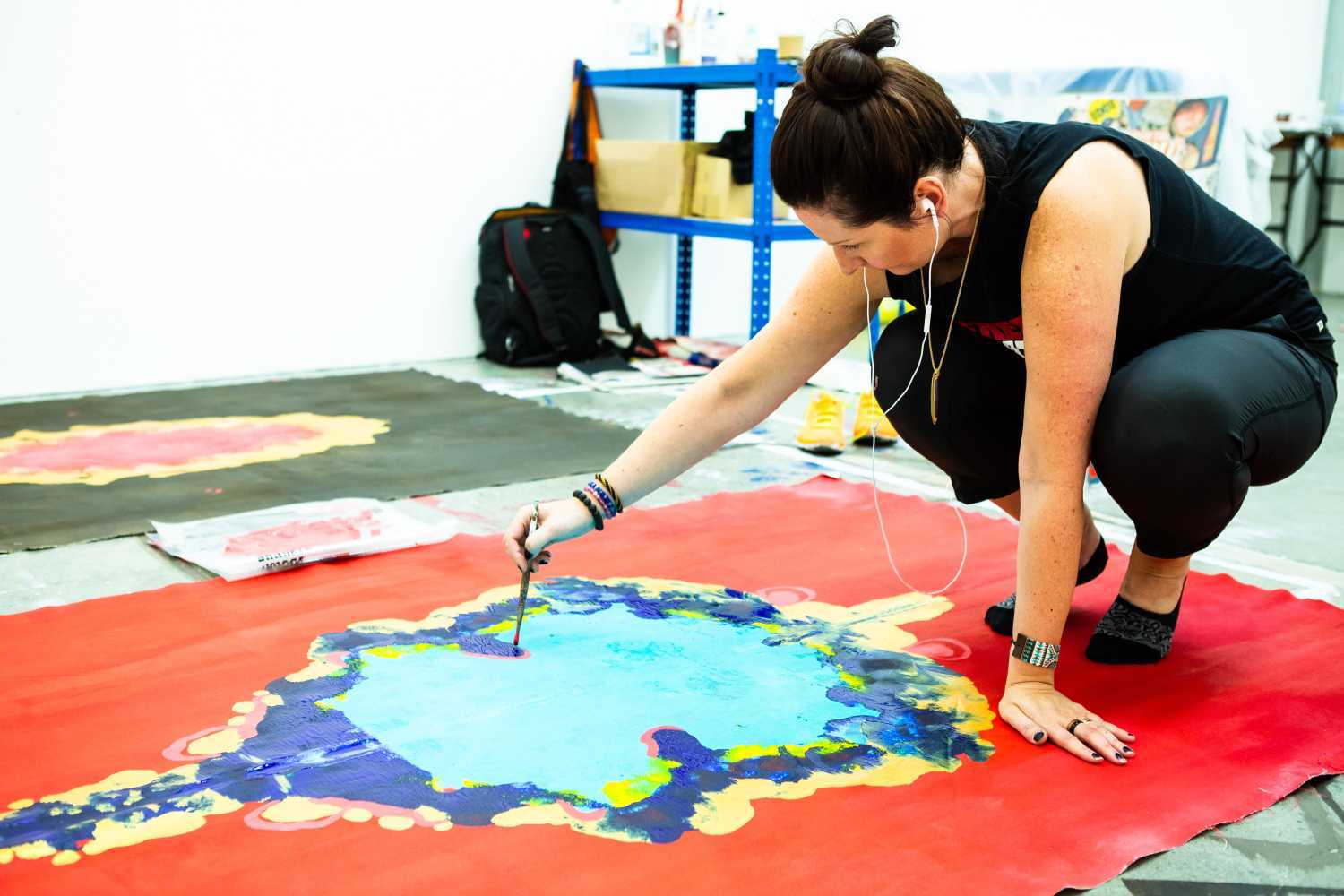
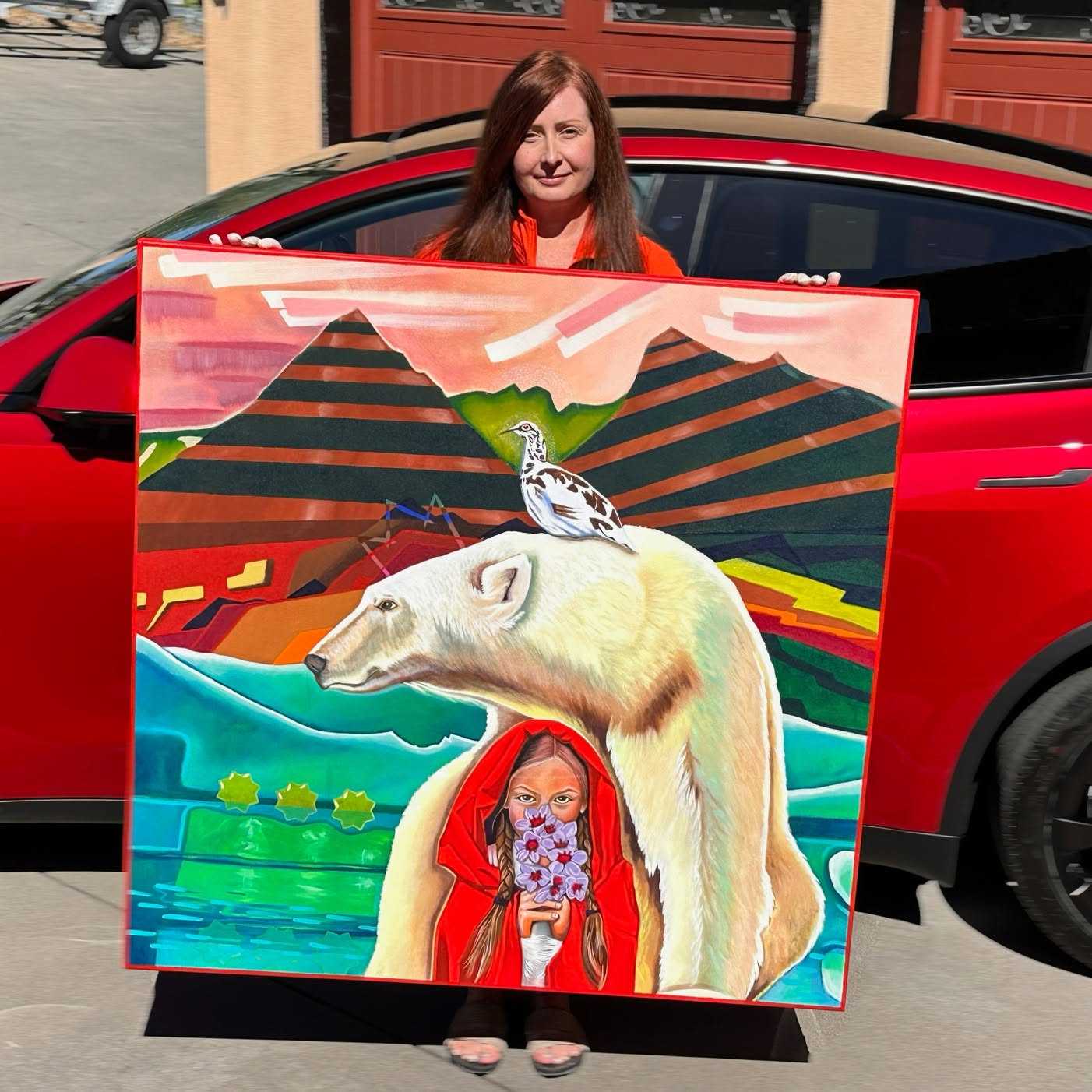
Brandy Saturley with her handmade original acrylic painting, 2023

Handmade Art Still Matters: Why I Will Keep Painting

My own work grows from the places I visit, the symbols that interest me, and the stories I want to tell about Canada. Those experiences continue to give me reasons to paint. I want to discover what happens when a particular blue meets a particular red. I want to explore how a figure changes a landscape. I want to turn something I have observed or imagined into an object someone else can encounter. AI will continue to give me things to consider. My opinion of it will likely evolve, just as it has over the past year. But I still return to the studio with the desire to make something with my hands. There is a canvas waiting, an idea forming, and work to be done. I believe there will continue to be people who want to live with the results.


Brandy Saturley is a Vancouver Island–based Canadian painter exploring Canadian identity through landscape, people, wildlife, and symbolism. Discover her original paintings and the stories behind them.
Beyond the painting

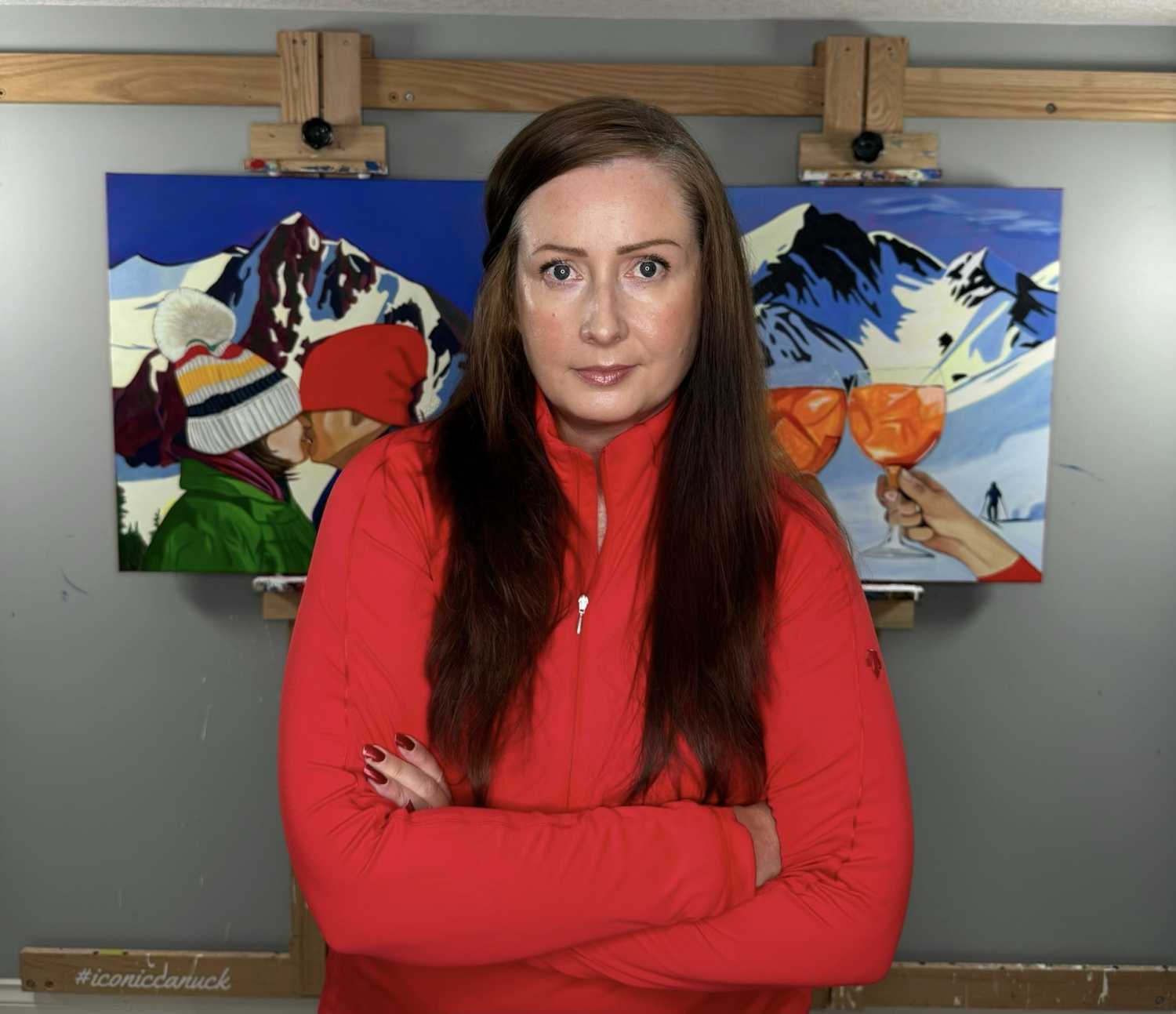
Brandy Saturley in her Parksville art studio, 2026
November 6, 2026
https://www.brandysaturley.com/wp-content/uploads/2026/08/DSC_8572.jpg 958 1500 Brandy Saturley https://www.brandysaturley.com/wp-content/uploads/2020/10/brandysaturley_logo.png Brandy Saturley2026-11-06 10:07:222026-11-06 10:07:22Handmade Art Still Matters

Do We Really Need D-Rings?

Advice for Artists

Do Paintings Really Need D-Rings? Rethinking the Standard for Hanging Art

If you have exhibited your paintings in Canadian galleries, you have probably encountered the rule: D-rings and wire required.

For many galleries and art organizations, this has become a standard condition of exhibiting. Artwork must arrive wired a certain distance from the top, using D-rings of an appropriate size and picture-hanging wire. Some galleries will even charge artists to replace hardware that does not meet their requirements.

But here is a question worth asking: Does every painting actually need D-rings?

I have been thinking about this because the majority of my paintings are unframed gallery-wrapped canvases. When I sell a painting to a collector, it is usually going directly from my studio into someone’s home, office or private collection. In most of those spaces, there is no museum-style hanging system waiting for the painting. There is simply a wall, a suitable wall anchor and a desire to get the painting safely onto the wall.

For this situation, I believe there is a strong case for properly installed screw eyes and picture wire.

D-Rings Became a Gallery Standard

D-rings are not a bad invention. In fact, they have several advantages. They sit relatively flat against the back of a frame, they are available in different sizes and weight ratings, and they provide a standardized attachment point. They are particularly useful in environments where artworks are repeatedly moved, stored, transported and installed. That last point is important.

A public gallery may handle hundreds of artworks in a year. Paintings may be unloaded from trucks, carried through doorways, stacked temporarily, placed into storage, installed on walls, removed, transported again and installed somewhere else. In that environment, standardized hardware makes the work of installers and art handlers more predictable.

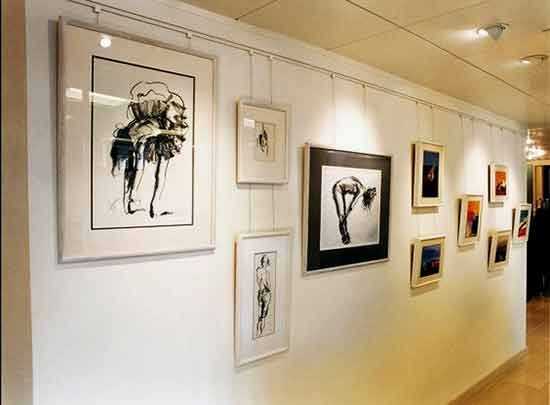
Canadian galleries and arts organizations have increasingly adopted D-rings as part of these standardized procedures. The Federation of Canadian Artists, for example, currently requires D-rings and plastic-coated wire for submitted works, while some galleries explicitly state that D-rings are required because they fit their particular hanging systems.

But there is an important distinction:

A gallery’s preferred hanging system is not necessarily the same thing as the only professionally appropriate way to hang a painting.

The Canadian Conservation Institute, part of the Government of Canada, recognizes both D-rings and screw eyes as hanging hardware.  The appropriate hardware depends on the size, weight and construction of the artwork.

In other words, the conversation should be about appropriate hanging hardware, not simply about whether the hardware is shaped like a D.

Do We Really Need D-Rings?

Screw Eyes Are Not the Same as Cheap Eyelets

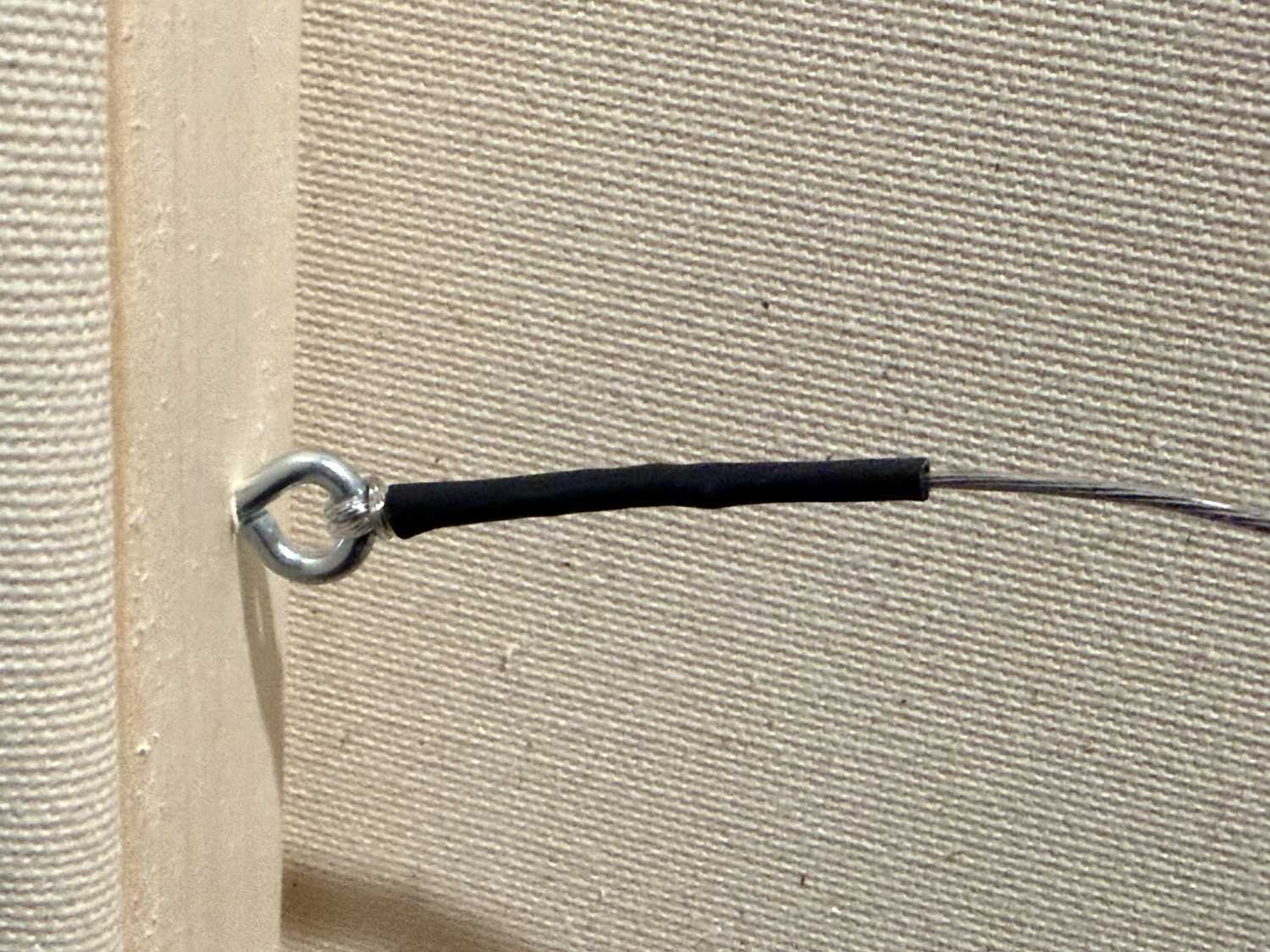
There is also some confusion around terminology. When artists hear that “eye hooks” or “eyelets” are not acceptable, they may assume that all screw eyes are inferior hardware. They are not. A properly selected, properly installed screw eye is a substantial piece of hardware with a threaded shank that anchors into the wood of the stretcher or frame. It can be used with appropriately rated picture wire to create a secure two-point hanging system. This is very different from using a lightweight decorative eyelet, a tiny hardware-store hook or an improvised piece of wire.

The Canadian Conservation Institute has long recognized screw eyes as a legitimate hanging solution. Interestingly, an earlier CCI publication stated that screw eyes were a safer way to attach a framed painting to a wall, while noting that D-rings protruded less from the back of the frame and were therefore less likely to interfere with other works in storage. That historical detail is worth remembering.

D-rings did not suddenly make screw eyes unsafe.

Rather, D-rings offered practical advantages in professional handling environments.

Do We Really Need D-Rings?

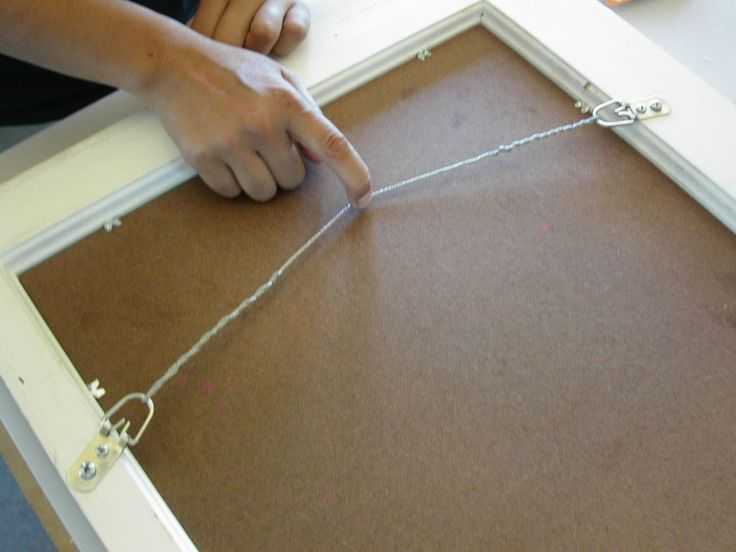
Screw eye and rubber shrink wrap on coated hanging wire – The Art of Brandy Saturley

Why D-Rings Make Sense in a Gallery

If I were preparing a painting for a large public exhibition where the gallery specifically requires D-rings, I would use D-rings.

Why?

Because the gallery has established a system.

A standardized hanging point means the installation team knows what to expect. They also work well with gallery hanging systems and are easy for installers to identify and handle.

But it is a gallery-handling reason, not necessarily a reason that every painting sold to every collector needs D-rings.

Do We Really Need D-Rings? What Happens When the Painting Leaves the Gallery?

This is where I think the conversation gets interesting. Most collectors do not live in galleries. Most homes do not have professional art hanging systems. Most offices do not have museum track systems. A collector purchasing a painting may simply have a stud, a suitable wall anchor, a picture hook or another appropriately rated hanging point.

Once a painting leaves the gallery, its hanging hardware needs to make sense for its actual environment. For a properly constructed, unframed gallery-wrapped canvas, two appropriately sized screw eyes installed securely into the stretcher bars, combined with properly rated picture wire, can provide a straightforward hanging solution.

And there is another advantage: simplicity.

The hardware can be unobtrusive, inexpensive, easily replaced and familiar to framers, artists and homeowners. There is no requirement that the collector own or install a specialized gallery hanging system simply because the painting happened to be exhibited in one.

The Real Question Is Not D-Rings vs. Screw Eyes

The better question is:

Is the artwork properly engineered for its weight, construction and intended environment?

That means considering:

  • the weight of the painting
  • the strength and depth of the stretcher or frame
  • the quality and gauge of the hanging wire
  • the size and load rating of the hardware
  • where the hardware is installed
  • how securely it is fastened
  • the type of wall and wall anchor being used
  • whether the artwork will be repeatedly handled or transported
  • whether it is being installed in a gallery, institution, commercial space or private home

The Canadian Conservation Institute emphasizes exactly this principle: hanging hardware needs to be appropriate for the weight of the painting and frame, and different hanging solutions have different advantages and limitations.

In fact, for heavier works, neither a generic screw eye nor a small D-ring should automatically be considered sufficient. Larger or specialized hardware, cleats or other systems may be appropriate.

Hardware should be selected according to the artwork, not according to a universal shape preference.

What About Unframed Paintings?

This is particularly relevant to contemporary painting. A gallery-wrapped canvas is fundamentally different from a traditional framed painting. With a traditional frame, D-rings have a long history of being used as part of the framing and hanging system. With a contemporary gallery-wrapped canvas, however, the artwork itself may have a deep wooden stretcher, no frame and a relatively clean reverse.

There is no decorative frame to protect from contact with a protruding piece of hardware. For a painting that will ultimately hang in a private home, the goal is simply to create two secure attachment points and a reliable hanging system that allows the painting to sit correctly against the wall. That can be accomplished with screw eyes and appropriately rated picture wire.

The Collector’s Experience Matters Too

There is another part of this discussion that artists and galleries sometimes overlook.

The artwork has a life after the exhibition.

An artist may spend weeks or months creating a painting. A gallery may spend several days installing an exhibition. But the collector may live with that painting for decades. The hardware on the back should make sense for the collector’s reality. A painting should arrive ready to hang, with secure hardware appropriate to its size and weight. The collector should not have to become an art installer simply because a gallery has a particular exhibition standard.

With screw eyes a painting hangs flat to the wall, unlike with D-rings. If you prefer a flush mount look, screw eyes are the best solution.

This does not mean galleries should abandon D-rings. Quite the opposite.

Gallery systems exist for good reasons. Standardization makes exhibitions safer and more efficient. Some hanging systems genuinely require D-rings, and artists exhibiting in those spaces should follow the gallery’s requirements.

But there is a difference between saying:

“Our gallery requires D-rings because our hanging system is designed for them.”

and saying:

“D-rings are the only professional way to wire a painting.”

Those are two very different statements.

Perhaps It Is Time for a More Flexible Standard

The Canadian art world has developed many excellent standards around the care, handling and presentation of artwork. Standardization is valuable, particularly when many artists, installers, galleries and institutions are working together. But standards should also evolve with contemporary art practices. Today’s paintings are not all traditionally framed oil paintings. Artists work on gallery-wrapped canvas, wood panels, aluminum, mixed-media supports and unconventional substrates. Works vary enormously in size, weight and construction.

Perhaps the better standard is not:

D-rings required.

Perhaps it should be:

Artwork must be professionally wired or equipped with hanging hardware appropriate to its construction, weight and intended method of display.

That leaves room for D-rings where D-rings make sense. It also leaves room for properly installed screw eyes where screw eyes make sense. And ultimately, that is what professional art handling should be about: not following a rule simply because it has become a rule, but choosing the safest and most appropriate solution for the artwork in front of you.

A D-ring is not a badge of professionalism. Good craftsmanship is. Good judgment is.

And making sure the painting stays securely on the wall is probably the most important part of all.

September 29, 2026
https://www.brandysaturley.com/wp-content/uploads/2026/09/railsystem.jpg 405 550 Brandy Saturley https://www.brandysaturley.com/wp-content/uploads/2020/10/brandysaturley_logo.png Brandy Saturley2026-09-29 13:45:442026-09-29 13:49:42Do We Really Need D-Rings?

Successful Artist

Advice for Art Collectors, Advice for Artists

The Habits That Make Me a Successful Artist

It has been said that what you do repeatedly shapes who you become and what you excel at in life. There is a quiet truth in that idea. Success, even in something as abstract as art, is often built on very concrete habits.

Successful Artist

Brandy Saturley in her Victoria BC studio, 2021

In my personal life, I have developed routines that support my health, and these translate directly into my work as an artist. I wake at the same time each day, exercise, eat well, take my supplements, make space for connection, and go to bed at a consistent hour. Some days shift slightly, a different workout, a longer lunch, a glass of wine, but the overall rhythm holds. That consistency creates a foundation.

Successful Artist

Brandy Saturley in her Langford BC studio, 2017

I approach my art practice in much the same way. There are so many variables in a creative life that it becomes essential to anchor what you can. Structure, for me, is not restrictive. It is supportive. It allows the work to unfold within a reliable framework. Each day includes time spent answering emails, writing, updating platforms, and making art. Most days I am painting. Other days are devoted to gathering reference material. The key is consistency. Even within that structure, I leave room for play, for observation, for reading, and for experimentation. Creativity needs space, but it also needs to show up regularly.

Successful Artist

Brandy Saturley in her studio at the Royal College of Art, London UK, 2019

It is impossible for an artist to fully switch off. We are always absorbing or producing, often without realizing it. Having a structure around that constant motion helps direct it. If I were to draw it, it would look like a large rectangle divided into seven smaller ones for each day of the week, with circles moving between them, overlapping, connecting, carrying ideas forward. In the studio, there is a clear distinction between office work and art-making. Digital versus analog. When I am at the computer, I follow rules. I respond to emails within a few hours, whether it is a collector, a supplier, another artist, or a personal inquiry. Responsiveness is a habit, and it builds trust.

What is Canada?

Brandy Saturley on her hand painted art shipping crates, 2017

My writing practice is equally structured. I publish two blog posts per week, maintain a regular cadence across my platforms, and contribute to magazine work monthly. These rhythms keep the conversation around the work active and evolving.

Administrative tasks are handled as they arise. Sales are invoiced promptly, artwork is shipped without delay, and bills are paid on time. I do not let things linger. There is a certain satisfaction in clearing the list, which I reset every Monday morning. A clean slate is its own kind of momentum.

Successful Artist

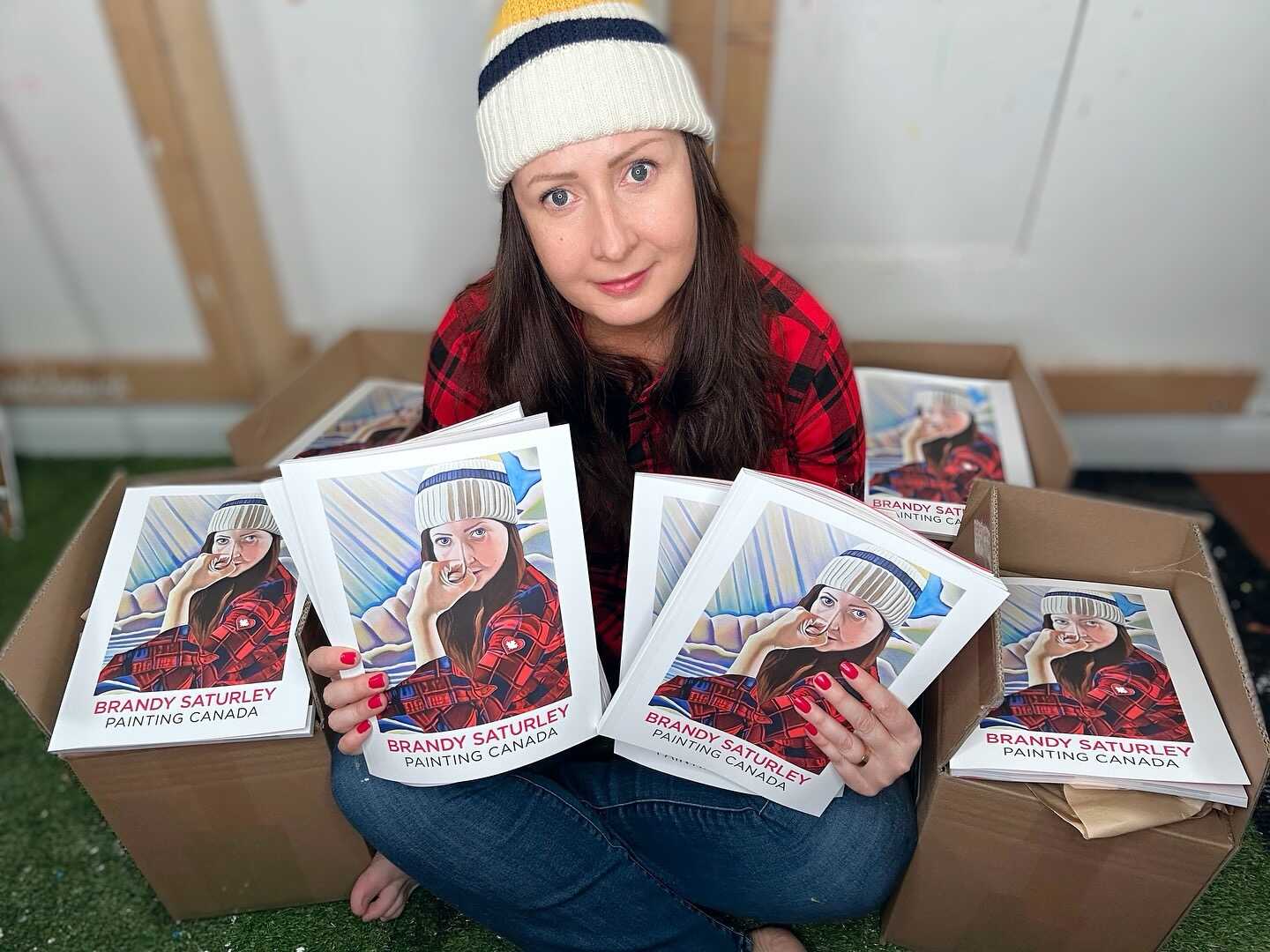
Brandy Saturley with her book, ‘Painting Canada’ – January 2025

Successful Artist: The Art of Thank You

Every interaction carries an opportunity for appreciation. I am deeply grateful for the relationships that support my work, whether with collectors, curators, suppliers, or fellow artists. I express that gratitude often through emails, messages, and especially handwritten notes.

Brandy Saturley with Alberta artist, Gordon Milne

It is a simple act, but a meaningful one. A well-considered thank you has had a lasting impact on my career and my life. Gratitude, when practiced consistently, becomes a powerful force.

These are some of the habits that shape my success as an artist. Not grand gestures, but steady ones. Repeated, refined, and carried forward, day after day.

Why It Matters to Collect from a Committed Artist

For collectors, choosing a work of art is often an emotional decision, a connection to an image, a story, or a feeling that lingers. But behind that moment is the artist’s practice, and that matters more than many realize.

brandy saturley at dyson gallery london

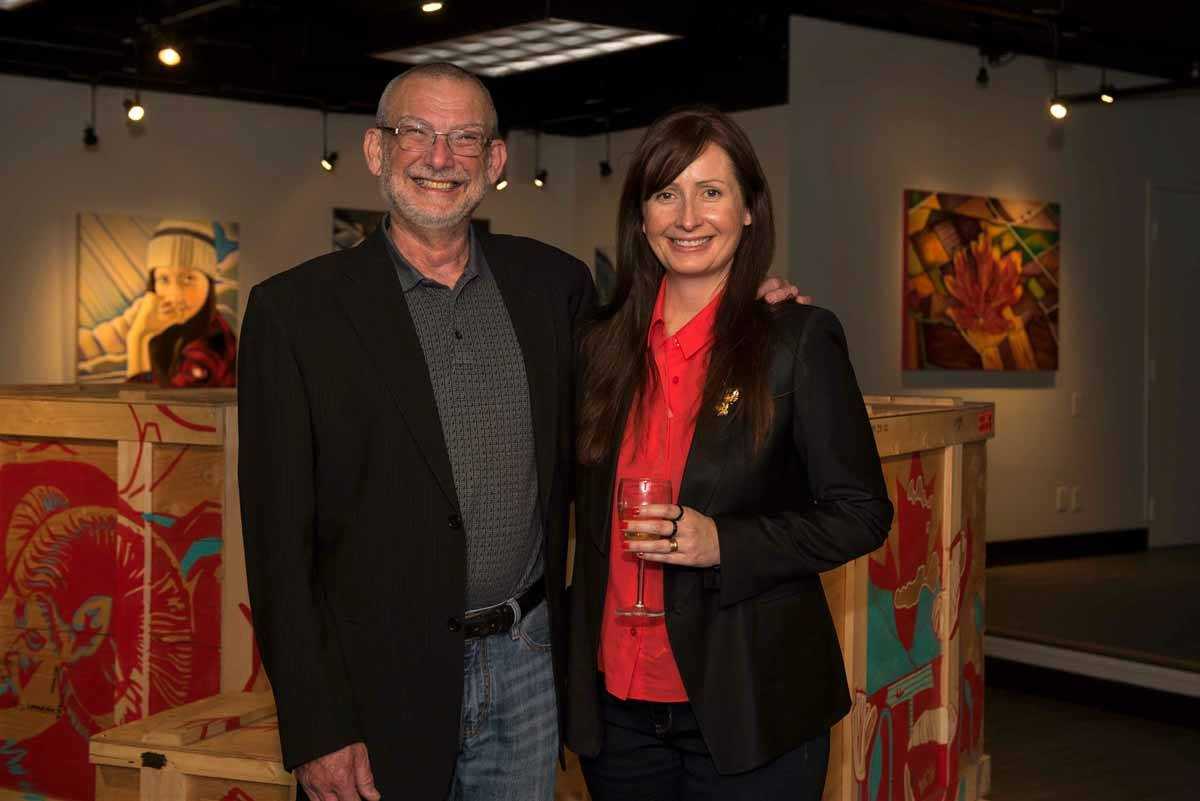
Brandy Saturley and art collectors – Dyson Gallery at Royal College of Art – London UK, 2019

A committed artist brings consistency, not just in output, but in vision. The work evolves, deepens, and builds upon itself over time. Each painting becomes part of a larger conversation, a body of work that holds together with intention and clarity. When you collect from an artist with an established and disciplined practice, you are stepping into that ongoing narrative. There is also a level of professionalism that supports the experience. Timely communication, careful handling of the work, thoughtful presentation, and follow-through are not small details. They shape the relationship between artist and collector and ensure that the acquisition feels as considered as the work itself.

How to Invest in Art

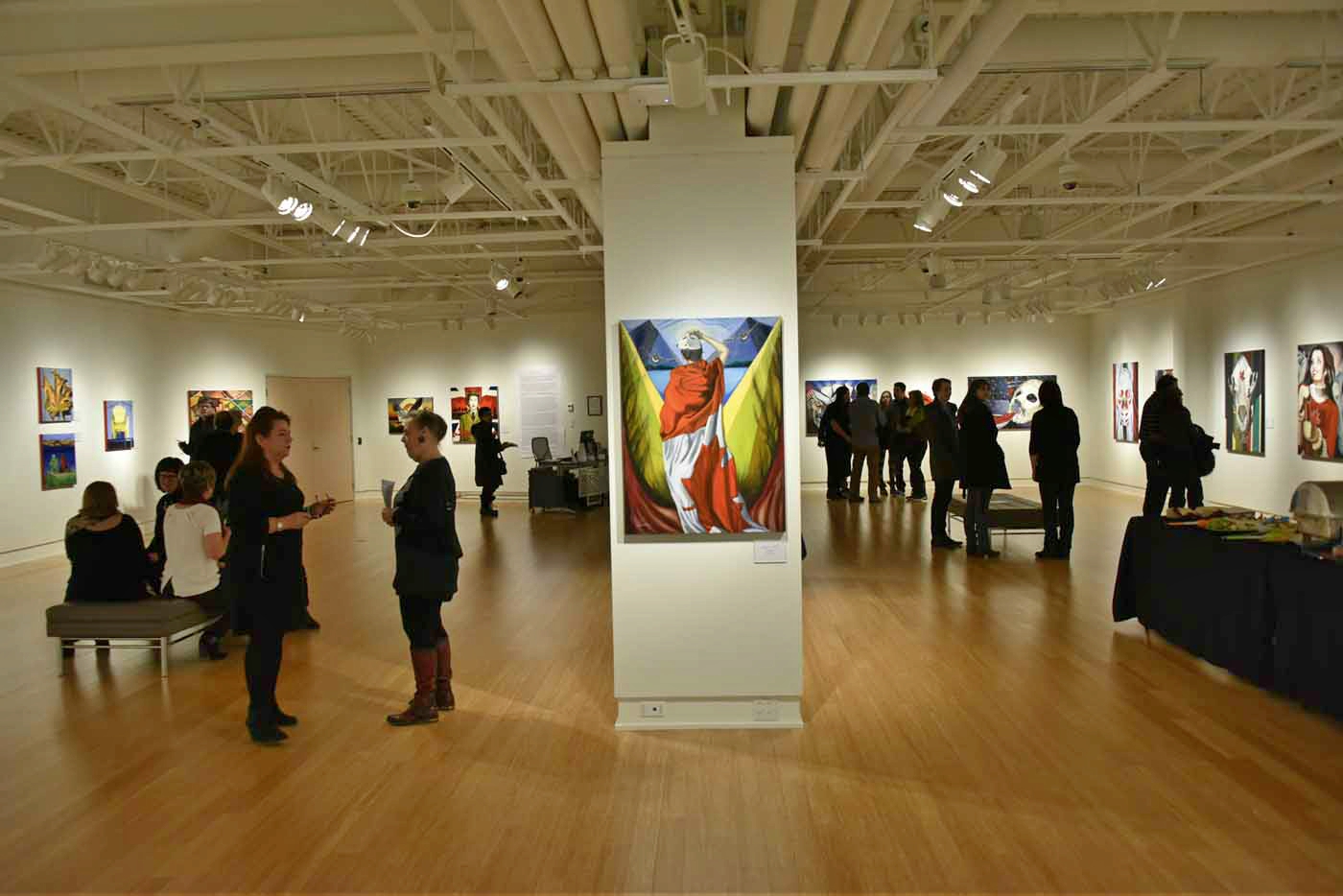
Brandy Saturley exhibition at Gallery@501 – Edmonton, AB, 2017

Perhaps most importantly, a successful and committed artist continues. They show up, they produce, they refine. The work you collect today is part of a trajectory, not an isolated moment. Over time, that trajectory adds context, depth, and often increased significance to the work.

To collect in this way is to invest not only in a single piece, but in a practice, a point of view, and a sustained creative life.

Behind The Scenes – The Iconic Canuck – by Randy Frykas

For a deeper look into my practice, process, and the ideas behind the work, I invite you to watch the documentary, The Iconic Canuck, 2020.

April 21, 2026
https://www.brandysaturley.com/wp-content/uploads/2026/04/photo21.jpg 332 1500 Brandy Saturley https://www.brandysaturley.com/wp-content/uploads/2020/10/brandysaturley_logo.png Brandy Saturley2026-04-21 11:24:452026-04-21 11:35:31Successful Artist

Misconceptions About Self-Representing Artists

Advice for Art Collectors, Advice for Artists

Biggest Misconceptions About Self-Representing Visual Artists

For art collectors, part of collecting is navigating the experience of buying work from galleries and from artists directly. There are several common misconceptions about purchasing art straight from self-representing Artists, along with a few things collectors should understand before assuming how these transactions work. Below are five persistent myths about self-representing artists and why they simply aren’t true.

Misconceptions About Self-Representing Artists

Brandy Saturley exhibition Okotoks Art Gallery 2017

Myth #1: Buying art directly from an artist is cheaper

False.
If an artist is professional and established, purchasing directly from them will not automatically mean a lower price. This myth comes from the assumption that gallery commissions equal instant savings for collectors. While galleries typically take a commission, often around 50 percent, this does not mean an artist will reduce their price by that amount when selling direct.

Many self-representing artists also work with galleries and do not undercut their dealers by offering large discounts. Doing so would damage professional relationships and devalue their work. While negotiation can happen with both galleries and artists, it is usually tied to specific circumstances such as purchasing multiple works or a limited-time promotion. Going direct does not mean saving 50 percent on an artwork.

Brandy Saturley at Miller Art Gallery

Brandy Saturley at Miller Art Gallery 2025

Myth #2: Self-representing artists don’t have art dealers

False.
Today’s self-representing artists often work alongside art dealers rather than instead of them. With modern tools for self-promotion, artists and dealers can act as allies, creating broader reach and stronger visibility.

I built my career through self-promotion, but in recent years I have strategically partnered with dealers in key locations to expand my audience. Whether a piece is being sold through a gallery or directly by me, I actively promote the work wherever it lives. The result is amplified exposure rather than competition.

Misconceptions About Self-Representing Artists

Myth #3: Artists can only sell work in their local market

False.
Websites, social media, and international shipping have made it easier than ever for artists to reach collectors around the world. In fact, many artists build careers in markets where their work resonates most, which may not be their local region.

I developed my career by showing and selling in places where my subject matter was best received, not necessarily where I lived. While some landscape painters may rely more heavily on regional markets, staying local can significantly limit opportunities for many contemporary artists.

Myth #4: Artists must choose between public galleries or commercial galleries

False.
While it’s important for artists to understand their niche and choose venues that align with their work, it is entirely possible to show in multiple contexts. With enough drive, planning, and resources, artists can move fluidly between public and commercial spaces.

My own path began with juried exhibitions, followed by group gallery shows, installations in retail environments, public galleries and museums, and eventually commercial gallery representation. Public galleries prioritize education, engagement, and cultural dialogue, often paying artists exhibition fees. Commercial galleries focus on sales and the art market. The work shown in each context may differ, but most professional artists are already making more than one type of work.

Misconceptions About Self-Representing Artists

Brandy Saturley at Gallery@501 2017

Myth #5: Licensing your work is “selling out”

False.
For full-time artists without a secondary income, creating multiple revenue streams is essential. Licensing artwork is one of the most effective and sustainable ways to monetize creative output without sacrificing originality.

When I create a painting, I archive a high-resolution image. The original may sell once, but the image can be licensed repeatedly to businesses and brands for uses such as magazine covers, packaging, or advertising. From fine spirits to editorial features, licensing creates recurring and passive income that supports a long-term studio practice.

Misconceptions About Self-Representing Artists

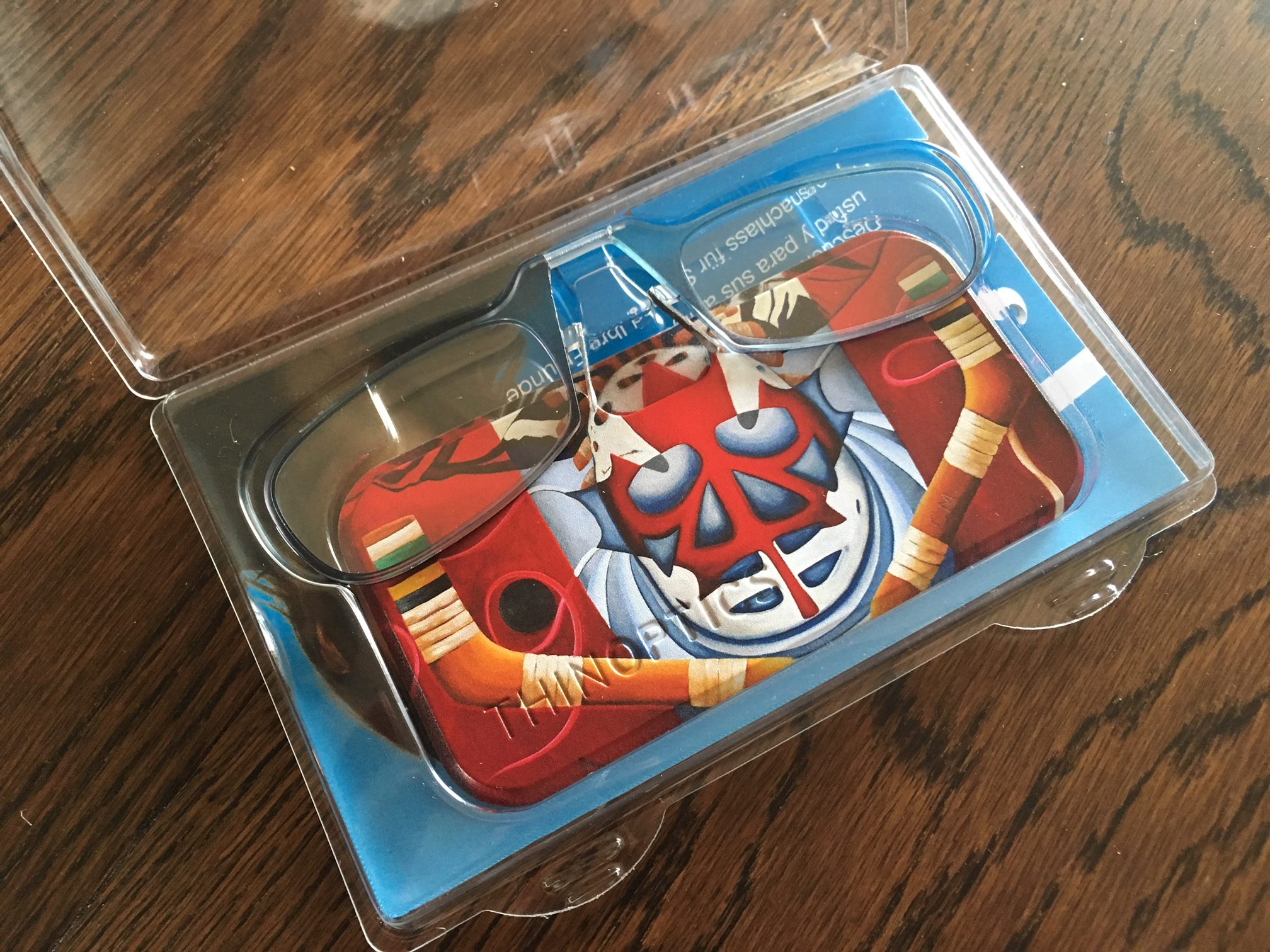
The Art of Brandy Saturley on ThinOptics

Brandy Saturley has been a full-time self-representing professional artist for nearly two decades, learn more about her and her work on her website .

January 26, 2026
https://www.brandysaturley.com/wp-content/uploads/2026/01/male-artist-showing-his-painting-female-client-interested-buying-some-artwork-from-exihibiton-art-gallery.jpg 1001 1500 Brandy Saturley https://www.brandysaturley.com/wp-content/uploads/2020/10/brandysaturley_logo.png Brandy Saturley2026-01-26 14:43:492026-01-26 14:43:49Misconceptions About Self-Representing Artists
The Art of Wellbeing

Advice for Artists

Finding and Maintaining Balance as an Artist

The Art of Wellbeing

As we leave another holiday season behind and return to full workloads, I find myself thinking about health. The final days of the holidays were spent in a very comfortable reclining chair, watching films and enjoying those last lingering treats and beverages. When I woke to begin my New Year, it arrived with a stiff neck and radiating shoulder pain. Normally, this kind of pain comes from long days painting. This time, it came from doing the opposite. Too much sitting, too much stillness. The Art of Wellbeing takes balance.

As I get older, I’m far more aware of how my body responds to my habits, and how important it is to keep everything moving. As a full-time painter, my work involves repetitive motions and long stretches alone in the studio. Over time, I’ve learned that walking alone isn’t enough to keep me well. Health, much like art, requires balance.

The Art of Wellbeing

For the Back, Neck, and Balance

After nearly twenty years away from the gym, I recently rejoined one in my new hometown. I still walk regularly, but I’ve added something essential to my routine: weights. Strength training not only builds muscle, it stretches the body in ways that painting never does.

As a right-handed painter, my right side is both stronger and more injury-prone. Using weight machines that work both sides of the body simultaneously has helped me rebuild balance. I’ve also focused on strengthening my lower body. Even though I stand while painting, I sit for long periods when working on the business side of art. A supportive ergonomic chair makes a difference, and years ago I invested in a Spinalis chair, which continues to serve me well.

The Art of Wellbeing

For Mental Health

Walking and hiking offer invaluable time in nature, but they don’t always provide social connection. Artists often work in deep solitude, and it’s not unusual for me to go weeks without seeing or speaking to anyone in person. With so much communication happening digitally, I found myself needing more real-world interaction.

Living in a walkable city has helped. I now run errands in person rather than online whenever possible. Rejoining the gym added a layer of casual social contact I didn’t realize I was missing. Volunteering locally within the arts community has also been meaningful. It keeps me engaged, connected, and still immersed in conversations about art.

Balance Is the Work – The Art of Wellbeing

We talk about balance often when discussing health, but achieving it is one thing, maintaining it is another. Sometimes we drift off course. The important thing is learning how to gently correct and continue forward. This isn’t about perfection. It’s about slow, steady progress.

Consistency matters. There are days when I have to talk myself into stepping foot in the gym, but I’ve never left feeling worse than when I arrived. Movement shifts my mood, clears my head, and supports the work I return to in the studio.

The Art of Wellbeing

Lose Yourself, But Surface

Losing yourself in your work for weeks at a time is part of the artistic process. That deep focus is often where the best ideas live. But it’s just as important to surface regularly. It’s easy to stay submerged until your tank is empty, then scramble back for air. That kind of cycle takes a toll.

Come up for air before you’re depleted. Your body, your mind, and your work will all benefit.

More About Creativity and Mental Health

January 6, 2026
https://www.brandysaturley.com/wp-content/uploads/2026/01/jump3.jpg 1522 1500 Brandy Saturley https://www.brandysaturley.com/wp-content/uploads/2020/10/brandysaturley_logo.png Brandy Saturley2026-01-06 11:12:282026-01-06 11:18:41The Art of Wellbeing

Risk Taking Canadian Artists

Advice for Artists

Are Canadian Artists Taking Risks? Or Is the Canadian Art Scene Complacent?

Earlier this week, I received a question that struck a chord: “Is risk-taking top of mind for Canadian artists? And is the Canadian art scene, as a whole, supporting those artists who take risks?”

As a professional Canadian artist with over two decades of experience, I understand why these questions arise and where they come from.

Risk Taking Canadian Artists

Are Artists Risk Takers?

To be an artist is, by nature, to be a risk taker.

I don’t know a single artist who isn’t putting something deeply personal on the line by choosing to share their work with the world. Whether you’re revealing internal landscapes, personal experiences, or observations about society – making art is a courageous act of vulnerability. In my case, painting is my language. Through it, I tell stories rooted in Canadian culture, landscape, and identity.

Mid-career artists, in particular, often find themselves walking a fine line. It’s a point in their practice where skill, vision, and recognition begin to align, but the desire to stay fresh, relevant, and engaged with their audience pushes them to continue evolving. This stage can be both creatively fertile and risky.

Risk Taking Canadian Artists

Risk-Taking in Technique

Risk in art doesn’t always mean controversy or provocation, it can also be technical. Artists push themselves with every new canvas, seeking growth, challenge, and renewal in their process. For me, it’s about pushing the paint: trying new surfaces, simplifying strokes, altering scale, and refining colour language.

I often say, “My best painting is my next painting.” That mindset drives me forward and keeps the work honest.

Over the years, I’ve found that as the ideas behind my work become more focused, the execution becomes more refined. The message gets stronger, even as the brushwork becomes more economical.

Canadian Pop Art Painter

Risk-Taking in Subject Matter

When we think of risk in subject matter, names like Damien Hirst and Jeff Koons often come to mind – artists whose work is grand in scale, budget, and ambition. These are risks taken on a level akin to stock market speculation.

But what about here in Canada?

Are Canadian artists pushing boundaries with subject matter? Or are we growing too comfortable with our rolling hills, picturesque landscapes, and soothing abstracts that don’t challenge the viewer or the interior designer?

A snapshot of the commercial gallery scene in Canada reveals a safe pattern: brightly coloured landscapes, generally sized 20×30 inches, priced under $2,000. These works sell. And there’s absolutely nothing wrong with that, especially if the artist is making work that’s aligned with their voice and vision.

The key here is authenticity. If you’re creating work you truly believe in whether it’s a prairie skyline or a pop-art political commentary the right audience will find you. The issue arises when market demand becomes a muzzle.

Higher-end galleries in Canada’s major city centres tend to take more curatorial risks, showcasing provocative or socially engaged work. But these are the exception, not the rule.

Ahead of Their Time

Artist Residencies as Catalysts for Risk

One of the greatest gifts I’ve received as an artist is the opportunity to attend artist residencies. These spaces allow time, solitude, and the freedom to create away from daily responsibilities. They offer a unique kind of risk: the chance to experiment, to fail, to discover something new.

Residencies often bring artists of different backgrounds together, enabling collaboration and the cross-pollination of ideas. These experiences can shift an artist’s entire practice, if you let them.

Risk Taking Canadian Artists

Banff Centre of the Arts & Creativity – Brandy Saturley in Thom Studio 2022

Risk-Taking in the Business of Art

I began my career as a self-representing artist, managing every aspect of my business from sales and marketing to logistics and inventory. It’s a full-time job in itself, layered atop the time spent in the studio.

In Canada, many artists choose the academic route: earning a BFA, then teaching to support their practice. I chose the entrepreneurial path. And while that road comes with financial risk and uncertainty, it’s also full of opportunity. You learn fast, you build resilience, and you gain the freedom to create the kind of art that resonates with you without waiting for permission.

Brandy Saturley Canadian Artist

Risk Taking Canadian Artists – Final Thoughts

So, are Canadian artists taking risks?

Absolutely. But those risks take many forms, from pushing paint and subject matter, to experimenting abroad, to running your art practice like a startup. The Canadian art scene supports some of this risk, but not all of it. Much of it still leans toward the safe and the saleable.

The question we should ask ourselves isn’t just “Are artists taking risks?” we should also be asking “Are we, as a culture, willing to support and celebrate risk-takers?”

Because in the end, risk is where the breakthroughs happen.

No Dress Rehearsal

See more paintings by Canadian Contemporary Artist, Brandy Saturley.

July 8, 2025
https://www.brandysaturley.com/wp-content/uploads/2022/11/IMG_0875.jpeg 1125 1500 Brandy Saturley https://www.brandysaturley.com/wp-content/uploads/2020/10/brandysaturley_logo.png Brandy Saturley2025-07-08 10:41:032025-07-09 10:08:36Risk Taking Canadian Artists

Creativity and Mental Health

Advice for Artists, Art Career

Breaking the Myth: Mental Illness and Creativity Unraveled

The widely held belief that mental illness and creativity are inextricably linked has become a romanticized notion ingrained in our collective consciousness. However, it’s crucial to dispel this myth from the outset: mental illness is neither a necessary nor a sufficient condition for creativity. As we explore this intriguing topic, we uncover the nuances that challenge this prevailing belief and shed light on the complex relationship between mental health and creative expression.

“There is only one difference between a madman and me. I am not mad.”  —Salvador Dali

Creativity and Mental Health

Exploring the Connection:
While researchers emphasize that mental illness doesn’t guarantee creativity, recent findings reveal intriguing patterns. Siblings of individuals with autism and first-degree relatives of those with schizophrenia, bipolar disorder, and anorexia nervosa are disproportionately represented in creative professions. This raises questions about the potential inheritance of traits conducive to creativity while avoiding the debilitating aspects of mental illness.

Personal Reflection:
Growing up as the eldest child in a family where one parent navigated artistic pursuits and mental health challenges, I witnessed firsthand the impact of these dynamics. The global pandemic further brought to light the prevalence of less debilitating forms of mental illness, particularly affecting teenagers facing disruptions in their crucial stages of growth and learning.

Creativity and Mental Health

Dreaming Under Northern Lights, 36×36 acrylic on canvas, 2022 – Brandy Saturley

Silver Linings: Mental Health and Creativity

A big positive of this time was it brought to light many things, all at once, and got us all talking, sharing, and expressing ourselves. As we continue to share and learn about what makes us all tick, we continue to evolve as humans living together on this planet. I too learned that I’m not impervious to the effects of stress and anxiety, which ultimately landed me burned out in a hospital bed for a month during the pandemic, it was quite the experience and something that I will write about at some point, but for now I’ll just say, it was another reminder from the universe to ‘slow down’ and take care.

art quotes norval morisseau

Brandy Saturley in her studio at Royal College of Art, London, England, 2019

Today, I am looking back at a short documentary that was filmed just months before the pandemic broke out around the world. It is a cool trip back to a moment in time when I was just coming off a month in London, England at the Royal College of Art, my confidence was at an all-time high and I was ready to take on this next chapter of my career as a professional Artist.

Now having experienced what is one of the most prolific periods of my career, which has resulted in tremendous growth both personally and professionally. It is a period where ‘imposter syndrome’ has now largely disappeared and I am open to everything in a way I have never been before. I am also enjoying the ride much more, not putting the same pressures on myself, though my expectations will always be ‘A-type personality high’.

I want to share with you this short documentary film (about 25 minutes) by the very talented Canadian filmmaker, Randy Frykas. Although filmed at the end of 2019, this new version includes an epilogue updated for 2024.

In embracing the complexities of mental health and creativity, we challenge stereotypes and foster a deeper understanding of the human experience. As we navigate the ever-evolving landscape of our lives, let us approach challenges with resilience and, in the words of my chiropractor, “Just, Keep, Moving”.

With gratitude,
Brandy Saturley

January 24, 2024
https://www.brandysaturley.com/wp-content/uploads/2023/03/IMG_3354.jpg 940 1500 Brandy Saturley https://www.brandysaturley.com/wp-content/uploads/2020/10/brandysaturley_logo.png Brandy Saturley2024-01-24 11:52:542024-01-24 11:58:49Creativity and Mental Health

Artist’s Block Explained

Advice for Artists

In a recent promotional talk for my upcoming mentorship group with Mastrius, I was asked about experiencing Artist’s Block, and my response has consistently been, “No.” Do a Google search for strategies on dealing with Artist’s Block and you will find hundreds of websites and therapists offering techniques to dealing with it, but I have yet to find it explained as what it truly is, fear.

Artist’s block refers to a creative obstacle or mental barrier that prevents an artist from generating new ideas or producing work. It is a condition of creative stagnation, where the individual may struggle to find inspiration or motivation to create art. Overcoming artist’s block often involves finding new sources of inspiration, experimenting with different techniques, or taking a break to refresh the mind.

Ahead of Their Time

I have never suffered from finding ideas (inspiration), and I begin every new painting by adding a new challenge, this helps to keep me interested and motivated and moving forward. Technical stagnation can happen, but this is only because of fear. Since I began painting, I have never gone longer than a month without making a new painting, that makes more than twenty years of making new original paintings.

Artist's Block Explained

What I have experienced as an artist is the opposite of artist’s block, and that is burn out. I touched on it briefly in my talk, and I did experience a work stoppage in 2021 brought on by the pandemic and working too much and having limited social connection. This mental burn out landed me in hospital for a month. It was a wild month and an experience I have written about, privately. What was most fascinating to me is, that even though I couldn’t paint, I found myself healing through making art. I was drawing every day, in that month in hospital I did 100 drawings, and they are completely different than anything I paint, and I love them dearly. Perhaps someday they will accompany my writings from that time and become a roadmap for others experiencing something similar.

Artist's Block Explained

So going back to Artist’s Block. I think we need to rebrand this term and start calling it what it is, ‘fear’. It is the number one thing that keeps us alive, but also causes us to freeze in our tracks and not move forward in life. BE it art making or anything else in life, it is fear that truly stops us from realizing that which could transform us into our ideal selves.

A favourite quote of mine from ‘Chuck Close’ speaks to artist’s block or waiting for inspiration statement, and it is a favourite because it addresses fear head on.

“Inspiration is for amateurs. The rest of us show up and get to work. If you wait around for the clouds to part and a bolt of lightning to strike you in the brain, you are not going to make an awful lot of work. All the best ideas come out of the process; they come out of the work itself.”

To navigate through creative challenges, the most effective technique is simply to work through it. Whether on canvas, paper, or a digital medium, persistence is crucial. Instead of discarding incomplete work, keep pushing forward, allowing the process to guide the evolution of ideas.

JUST. KEEP. GOING.

re-framing landscape painting

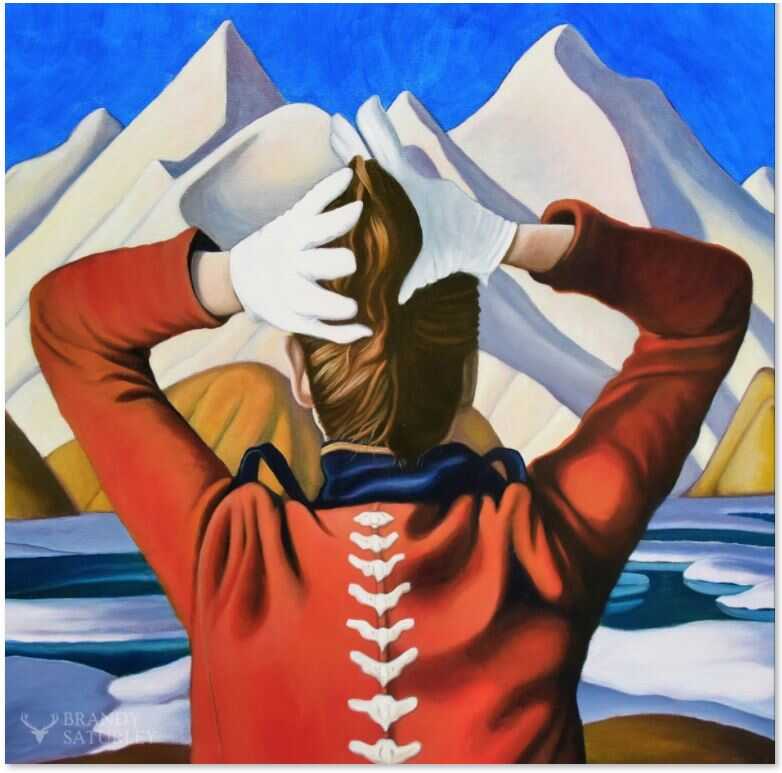
Let Your Backbone Rise, Acrylic, 36 x 36 inches, 2016, Brandy Saturley

December 5, 2023
https://www.brandysaturley.com/wp-content/uploads/2023/12/The-problem-is-never-what-to-paint.-The-problem-is-always-what-not-to-paint.-1.jpg 1500 1500 Brandy Saturley https://www.brandysaturley.com/wp-content/uploads/2020/10/brandysaturley_logo.png Brandy Saturley2023-12-05 12:06:172023-12-05 12:10:16Artist’s Block Explained

Mentorship for Emerging Artists

Advice for Artists

What is mentorship? How adding a ‘guru’ can help emerging artists.

When I began looking at taking my art career to the next level, and making it my full-time career, I sought out the advice of a ‘gurus’ in my field and parallel businesses that support the art business. Mentorship for emerging artists is key to helping you move, with purpose, towards a fulfilling full-time career as a professional artist. I connected with painters, photographers, writers, gallery directors, bloggers and many more using nothing but my email account and some well written emails. Fast-forward two decades later and I am now being asked for my advice as an Artist mentor.

Mentorship for Emerging Artists

Brandy Saturley in her Victoria BC, Canada studio.

As my art practice and catalogue of work has grown, so have I, as a painter and as an Arts business professional. When I came up more of us grew our careers through reaching out to those who came before, our learning was organic and through guru’s. For some reaching out to another Artist you admire can be daunting, but more often than not I find it to be an incredibly rewarding experience. In today’s world with Zoom, Facetime and even WhatsApp, reaching out to others in your field is much easier and can be even more personal than standing next to them in their studio. It takes away that nervousness that comes with being in someone’s space and offers me as a mentor the opportunity to schedule visits during times that suit my practice. Learning in your own space is more casual and allows you to relax into the session, and really focus on the content being provided.

Mentorship for Emerging Artists

Come join me at Mastrius.

When Mastrius approached me about coming on board as a mentor, I responded with open arms and an open mind, with endless opportunities to share, learn and give back to a community bonded by Art. I like the ‘group’ approach where you can join in with fellow Artists at your level, offering support and opportunities for future collaborations. As a Master Mentor I am looking forward to talking with emerging artists at the beginning of their careers, and of all ages. Emerging and aspiring artists does not necessarily mean young, you can be emerging at any age, all you need is the time and drive to make and pursue your Art, a good place to start.

Join me in ART MENTORSHIP!

I’m hosting a small group (no more than 8 artists) with Mastrius, where I’ll be supporting you on your art journey. Mastrius is an online platform that connects Master & Professional Artists with those who want to learn from them.

ARTISTS, this is an opportunity to BOOST YOUR SKILLS & CONFIDENCE in a trusted group designed to share ideas, practical information, and receive feedback about your work.

The group meets ONLINE monthly to help you achieve your specific goals! You’ll also get access to our online community to connect with others on a similar journey.

I’ll Help You:
🔥 Find your signature style
🔥 Explore technique, color and composition
🔥 Design + achieve goals for your creative practice

You’ll Also Get:
💥 Critiques on your work
💥 Learn how to self-critique
💥 Demos of my process + expertise
💥 Guidance to avoid mistakes I’ve made

This Group is for You if:
✅ You feel you haven’t found your style
✅ You’re painting for friends and family
✅ You want to learn better technique
✅ You want to improve skills + quality of your art
✅ You need some ENCOURAGEMENT

Over the years, I’ve learned a lot as a Master Artist. It’s my honour to have this opportunity to walk alongside you on the next stage of your creative journey!
ONLY 8 SPOTS & Groups Fill Fast!

Don’t worry, you’re not locked in & you can cancel at any time… but we’re sure you’ll want to stick around and reap the rewards of mentorship!

JOIN ME & REGISTER TODAY!
Registration Link: https://www.mastrius.com/brandy-saturley-mentorship/

📅 Starting Wednesday, January 17th at 5 PM MST (7 PM EST) Or..Thursday, January 18th at 11 AM AEDT (1 PM NZDT).

November 6, 2023
https://www.brandysaturley.com/wp-content/uploads/2023/11/Master-Badge-2023.png 604 604 Brandy Saturley https://www.brandysaturley.com/wp-content/uploads/2020/10/brandysaturley_logo.png Brandy Saturley2023-11-06 14:56:252023-12-19 16:14:14Mentorship for Emerging Artists

Modern Autodidact I AM

Advice for Artists, Art Career

Becoming a professional Artist – A Modern Autodidact I AM

Modern Autodidact I AM

Canadian Artist Brandy Saturley in studio 2022.

There have been a few stories made about how I became the professional Artist I am today. A modern autodidact I am, self-taught in most areas of Art and the business of representing myself as an independent Canadian artist. My learning has always been hands on, through doing a bit of the thing I wanted to learn about, something that would help me evolve as an Artist and realize a professional level career in the Arts. Along the way I have signed on for short programs in educational Art institutions, but I have no BFA or MFA or PhD, and it has not stopped me from succeeding as an Artist on all levels. From public and commercial galleries to selling my work online through my website. Creating public art, licensing my artwork and custom art commissions. From presenting artist talks, art fairs, and writing articles and interviewing other artists, to developing my own website and network of associates and suppliers. Producing art publications and process videos, to making art on location in self-directed and awarded residencies. I am a professional Canadian artist creating in ALL realms of the Art business in Canada and beyond.

Modern Autodidact I AM

Brandy Saturley and mother in Sooke News Mirror 1972

When did you become an Artist?

The question I get most often from young artists and future collectors is, when did I become an Artist? To really answer this question I have to go back to childhood and growing up with an artist mother, who was influenced by her artist mother. Who we are early on has much to do with who and what we grow up around, and my mom was always making things with me, mostly drawing painting, and crafting. I knew what I liked most at an early age and that was creating my own world from a solitary space. I enjoyed magazines, music, films, the outdoors and making art in the midst of all these influences. I learned from glossy advertising in Vogue magazine, and listened to the Beatles, Billie Holiday, Herb Alpert and the hard rock of AC/DC. I read the European Newspaper and wrote to pen pals in London, England. I grew up in a very small town on a large island, on the western-most tip of Canada. I had a hunger for information about the places, people and cities of the world.

In my senior years of high school I connected intensely with two influential educators, one was my History teacher and one my Art teacher. They both encouraged and influenced my path of the coming years. I knew I wanted to pursue an art career somehow, but found it hard committing to a formal education, largely because I did not have the means. Instead I took shorter courses in Visual Arts and filmmaking giving me a few years of educational appetizers in these areas. Art History, 2D, 3D, pottery, graphic design and filmmaking (from camera to scriptwriting) Three years of education offering a sampling and just enough experience in these areas. During film school I attended a talk by the Oscar winning Director of Photography for Close Encounters of The Third Kind, Vilmos Szigmond. I was captivated by his talk and found myself finishing the program and working in the Victoria and Vancouver film industry for a short couple years.

I left film as a career behind, though to this day I consume cinema just as voraciously as I did when I was younger. I made the decision that painting and photography were the things for me. I continued making Art part-time, as I worked full-time jobs in businesses that would teach me skills that could be useful down the line. During this time I moved from job to job as I learned new skills, each time working my way up until I had nowhere to go (in my mind) but move on to a new job. I worked in real estate sales, interior design retail (tile and natural stone) publishing (advertising coordinator + proofreader) and then I found myself wanting to learn more about computers, during the dot-com boom.

A Modern Autodidact I AM

As I was working these full-time *jobs* I was making Art in the evenings and on weekends. Art was keeping me interested in life. I met someone who was working for an Internet Service Provider

Modern Autodidact I AM

Paintings by Brandy Saturley at Victoria Premium Automobiles

and he would talk about all the exciting things going on with the Internet and websites. It was 1999 and I did not own a computer. Most people I know had one and worked on one, and I decided it was time for me to find out more about this Internet thing. I opened the phone book to the yellow pages, where all the businesses advertise. I flipped to the Internet service provider section and we had four at the time in Victoria, BC. I found the one with the biggest advertisement, which was a double page spread, and I called the number and asked for the manager. Of course the manager was not available, but I left a message and waited a couple days. I then called again, and left another message. I waited a few more days and called again, this time I got through to the manager directly and we had a quick chat and he told me to stop by with my resume. Keep in mind I had NO computer experience and wanted to sell dial-up Internet to people. A couple interviews later I found myself with a job in the Internet business and I had to learn very quickly. I was hired to work sales and customer service in person and over the phone.

My manager at the ISP was creating his own website and learning to write html to create his website. I asked if he could teach me, and he obliged. I began learning how to write html to create my own webpage, instead of eating lunch. In 2020, I created my first website and I posted some of my artwork on that page. This was before Facebook and even MySpace (which I became an early adopter of as an artist)  I think if we were to look at our lives in ‘Internet’ years, it would be more than dog years. I finally got a home computer a year after starting my Internet job. I worked with the ISP for two years, the longest non-Art job I held. I learned so much here; from dial-up to fibre connections and html to domains.

Modern Autodidact I AM

Strathcona County Gallery @501

Fast-forward to Full-Time Artist

The modern autodidact in me found a way to write a business plan for being a fulltime artist, the artist in me found a way to sell my art to a patron who became an investor in my passion and dream. In 2007, I left my day job to pursue my Art with full intensity, energy and from this autodidact approach. Really the self-taught life is the Artist life, it is the true way of the Artist. The thing that makes the title Artist a profession and not a hobby is, I run it like a business and my artwork supports my life. Artist is my full-time career. What also makes me a ‘professional Artist’ is the way in which I pay attention to all the details of the artmaking process; from making the work, to finishing the canvasses that will hang in galleries, museums, and private collections. What I learned in all my jobs over the years provided me with a degree in being a professional self-representing Artist. From managing my website, to writing this blog, I taught myself to do it all. I have also relied on the expertise of others, to help get me where I am. Through sharing skills and supporting one another, I have been very fortunate to make money while I was learning the skills I needed for this career. Now when I look back on the business plan, in many ways it was laughable, as with this career it is ever changing like the ocean tides. Being a professional artist is like being a professional surfer. Sometimes you get the good one (wave) and other times the water is flat. In this profession you have to be ready enough to know how to spot those waves and ride them to the shore. You have to be open, honest and focused on your ride. Over the years I have moved to task lists, goal lists and idea lists to keep me moving between waves.

But you can’t rely on Internet alone
art exhibitions Okotoks

Okotoks Art Gallery

The other part of my autodidact adventures was getting out there in front of people and the Art itself. I have used the Internet to reach out to those people and places I wanted to go to expand my career and learning in the Arts. I wanted to learn more about what the commercial galleries, museums and artist-run centers of Canada were doing and I travel across Canada every chance I get. In the early days of my career it was to see art and meet people working in the Arts. I flew out to Calgary, Edmonton, Winnipeg and Toronto to connect with mentor artists (Andrew Valko, Charles Pachter, Gordon Milne, Robert Genn, Chris Cran) who had built great careers in the Arts. I did studio visits, interviewed artists for blog and magazine articles I would write. My first solo show was presented by Visual Arts Alberta (now CARFAC Alberta) at the end of 2013, this is when #ICONICCANUCK was born.  As my paintings about Canadian culture, icons and landscapes developed I began to travel the country more often. Then in 2016 when I was preparing for my 2017 solo shows, I traveled across the country and up into the Northern Territories to make art and capture these places through photography and video, returning home to write about my experiences and make paintings. In 2017 I was invited to present solo shows of my ‘Pop Canadianisms’ at Strathcona County Gallery @501 in Edmonton and The Okotoks Art Gallery in Calgary.

In 2019, I found myself on a new type of adventure as I continued my contemporary art education at the Royal College of Art in London, England – at the time the #1 post-graduate arts institution in the world. A place that David Hockney spent some of his education in Art.

I pushed myself to collaborate with the public through my ‘People of Canada Portrait Project’ and through a painting collaboration with an artist in Calgary, Alberta. I created the first artist in residence at Canada’s Sports Hall of Fame, painting on site at the museum.

Interview Banff Centre

Brandy Saturley at Banff Centre for Arts & Creativity

In 2021 I joined the artist roster at Adele Campbell Fine Art, a fine art gallery in Whistler, Canada. My first foray into having a gallery represent my work. In 2022, I was invited to do a residency in the Leighton Studios at The Banff Centre for Arts and Creativity through the Paul D. Fleck Fellowships in the Arts Endowment. I joined my second commercial gallery, this time in Banff, Canada with Willock & Sax.

This year I have been invited to the Pouch Cove Foundation residency in Newfoundland and will be spending a month this fall creating on the very eastern tip of Canada.

I have sold and exhibited my work across Canada, in the USA and London, England.

These are just of few of the highlights from a now 17 year career as a full-time professional artist.

In conclusion, being a modern autodidact has offered me the adventure of a lifetime and a life lived in Art, that is Art itself. Being a professional artist in this day and age, means being prepared for those waves when they come in. I wouldn’t change a thing, here’s to the continuing journey. See all my artwork on my website.

Sincerely Yours,

Brandy Saturley a.k.a #ICONICCANUCK

#ICONICCANUCK at #HAPPYWALL in Edmonton, Alberta

March 13, 2023
https://www.brandysaturley.com/wp-content/uploads/2020/01/edmontonart.jpg 926 1400 Brandy Saturley https://www.brandysaturley.com/wp-content/uploads/2020/10/brandysaturley_logo.png Brandy Saturley2023-03-13 14:58:542023-03-14 09:24:05Modern Autodidact I AM
Page 1 of 212

BLOG archive

Search Posts

Search Search
© Copyright 2024 - The Art of Brandy Saturley
  • Link to X
  • Link to Youtube
  • Link to Facebook
  • Link to Vimeo
  • Link to Instagram
Scroll to top Scroll to top Scroll to top