Painting The Salish Sea
A New Series Evolves – Painting The Salish Sea
If there is one constant in my work, it is this: every fourth or fifth painting seems to open a door. One image leads to another and suddenly a series is born, fuelled by fascination, repetition, and the need to stay with a subject long enough to really understand it. Painting The Salish Sea.
A new series is now unfolding in my studio. Its point of origin was a commission, a painting about sea lions on the Salish Sea. I live on the west coast, on Vancouver Island, yet I had not fully immersed my painting practice in this coastline until recently. A move from Victoria to Parksville, mid-island on the eastern shore, shifted my daily rhythm toward the tide line. Now my days are shaped by beach walks, shifting light, and close encounters with marine life.
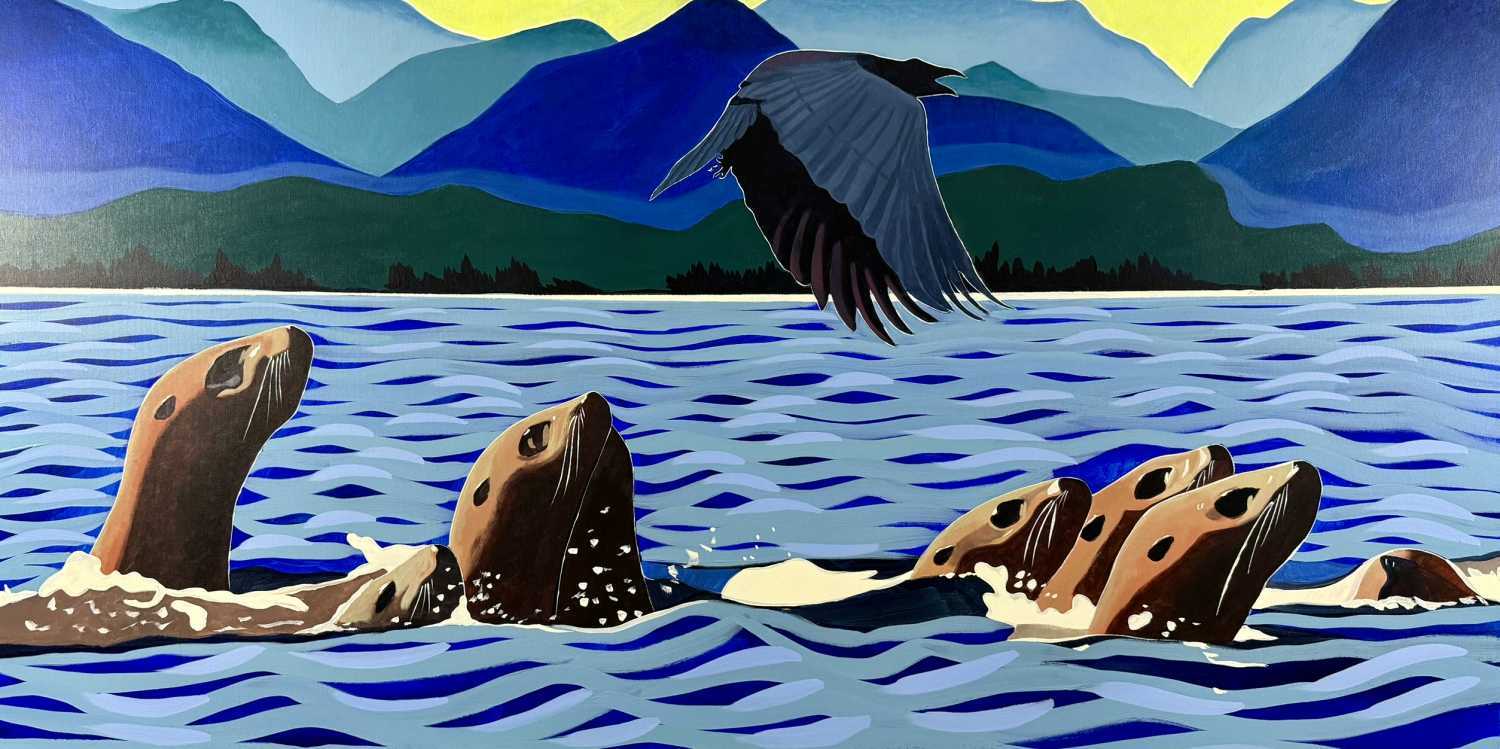
Sealions Song Sealions Song, c. 2026 Acrylic On Canvas 30 x 60 x 1.5 in – Brandy Saturley
Not long ago, we watched a school of dolphins moving through shallow water near Qualicum Beach, briefly caught in the choreography of a low tide. Moments like this stay with me. They accumulate.
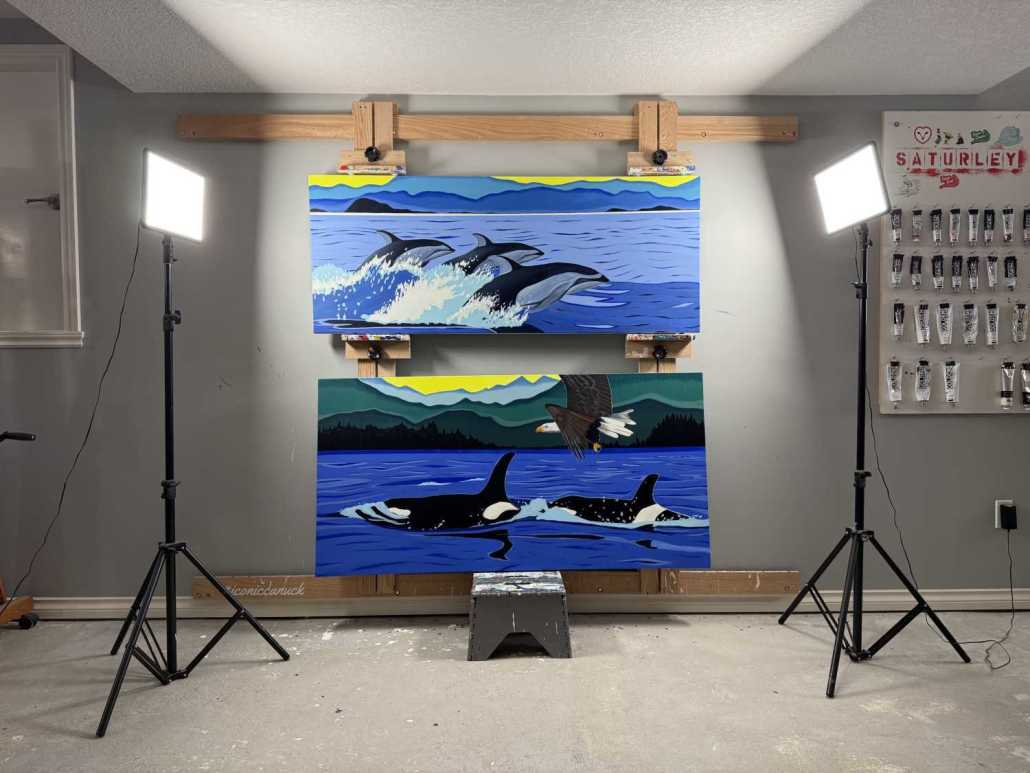
What began with sea lions and a raven has now expanded into a growing cast of coastal presences: orcas moving through deep channels, bald eagles tracking the shoreline, and dolphins racing the tide’s edge with effortless play.
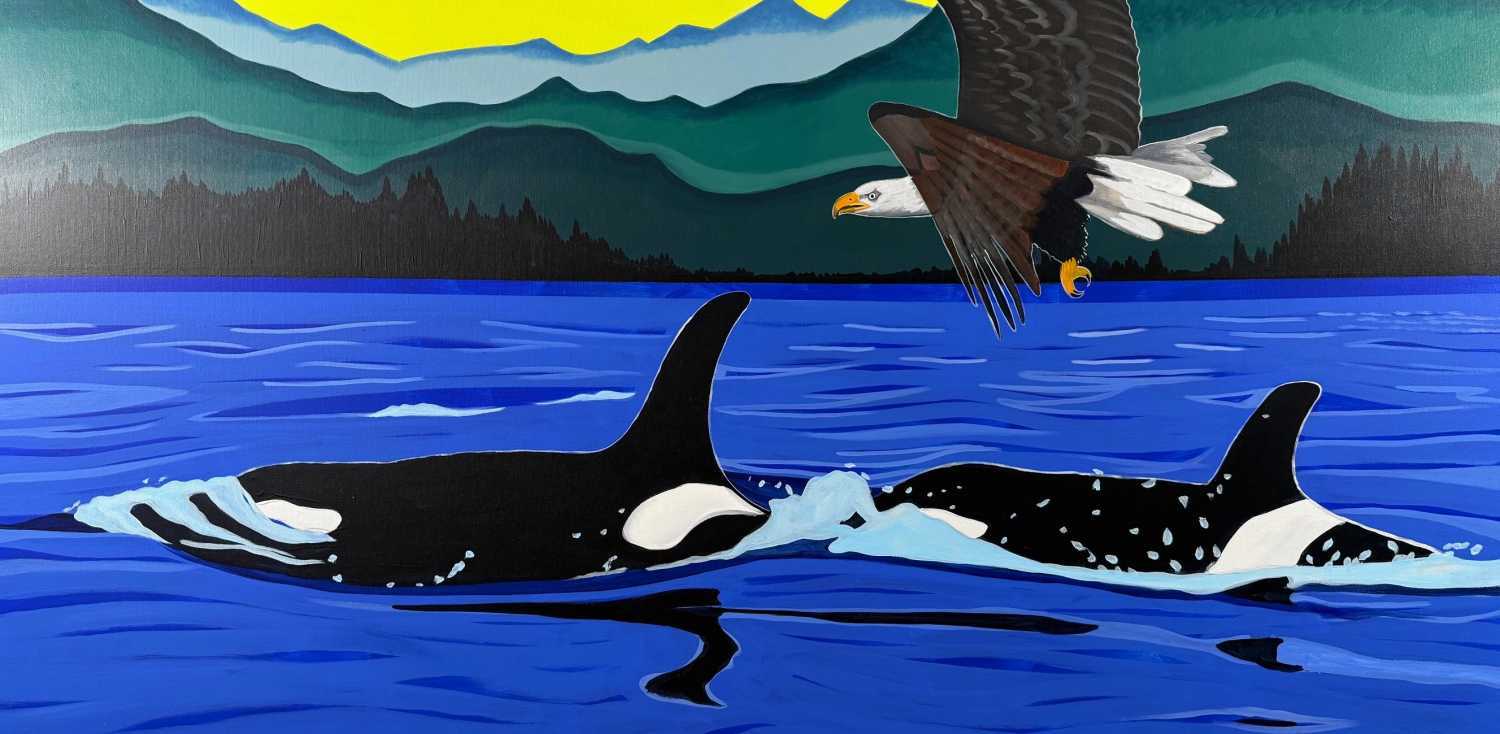
Guardians of The Salish Sea, c. 2026 Acrylic On Canvas 30 x 60 x 1.5 in – Brandy Saturley
Each painting in this series carries a palette drawn from the West Coast itself, deep blues, softened greys, and sudden bursts of neon yellow sky. The compositions are held from a low vantage point, where coastal mountains and dense forest hover in the distance like quiet witnesses.
In this most recent work, Ultramarine Jazz, I have simplified and distilled form even further. Shapes become almost symbolic, pared back to their essential energy. There is a sense of flow and rhythm here, echoing the pulse of the ocean itself, unpredictable, musical, alive.
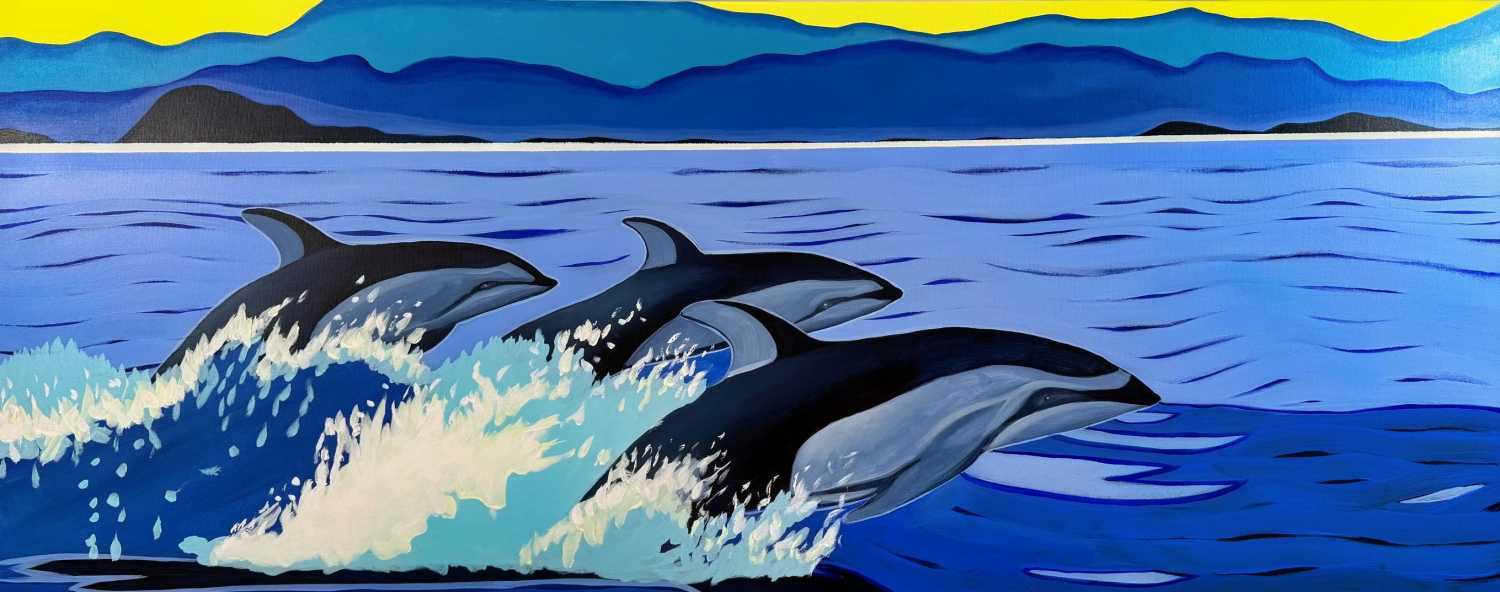
Ultramarine Jazz, c. 2026 Acrylic On Canvas 24 x 60 x 1.5 in – Brandy Saturley
The Salish Sea, Place and Myth
The Salish Sea is the inland network of coastal waters that stretches between Vancouver Island, the mainland of British Columbia, and the state of Washington. It is not a single oceanic expanse, but a living system of straits, inlets, and channels, including the Strait of Georgia, the Strait of Juan de Fuca, and Puget Sound. It is a place of constant movement where tides, wind, and freshwater rivers meet and reshape one another daily.
Long before it was named on contemporary maps, these waters were home to Indigenous nations whose relationships with the sea are foundational and ongoing. The name “Salish Sea” itself is a modern designation that honours the Coast Salish peoples whose cultures, languages, and lifeways are deeply tied to these waters.
Within these coastal traditions, the sea is not only geography but presence. It is understood as a sentient space where land, water, and spirit are interwoven. Stories of transformation, animal kinship, and ecological balance are carried through generations, often expressed through oral histories, carving, weaving, and song. Orcas, eagles, salmon, and dolphins are not simply wildlife, but beings with agency, memory, and meaning within the fabric of the world.
This layered mythology continues to echo through the region today. Even in contemporary life, there is a sense that the Salish Sea holds more than surface reality. It carries story as much as saltwater, a depth of narrative that is both ancient and immediate. For me, painting within this environment means engaging not only with its visible forms but with this deeper field of presence and meaning.
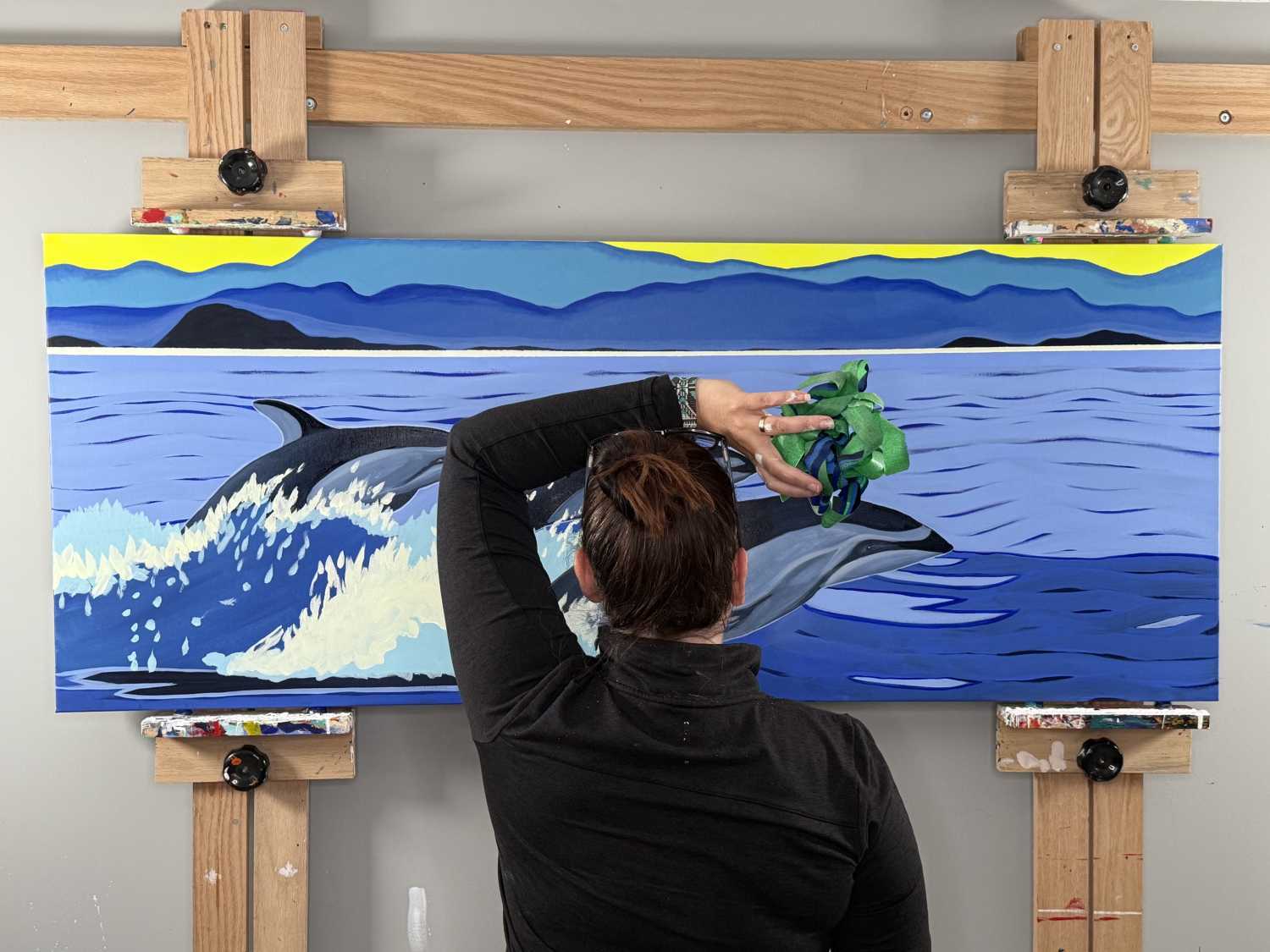
Painting in progress.
Working in Series, Painting The Salish Sea
Working in series allows the work to breathe and evolve rather than resolve too quickly. Each painting becomes a chapter rather than a conclusion, and each encounter on the shoreline offers another thread to follow. Over time, these threads weave together into something larger, a visual narrative shaped by place, memory, and repetition.
My practice has always been rooted in storytelling. I am not only painting animals, coastlines, or atmospheric moments, I am building a language of experience drawn from living within these environments. The Salish Sea becomes both subject and storyteller, holding movement, mood, and myth within its shifting surface.
In this way, each series functions like a journal of attention. It records what lingers, what returns, and what insists on being seen again. The story is never fixed. It moves like tidewater, carrying fragments of observation into new forms and new paintings.
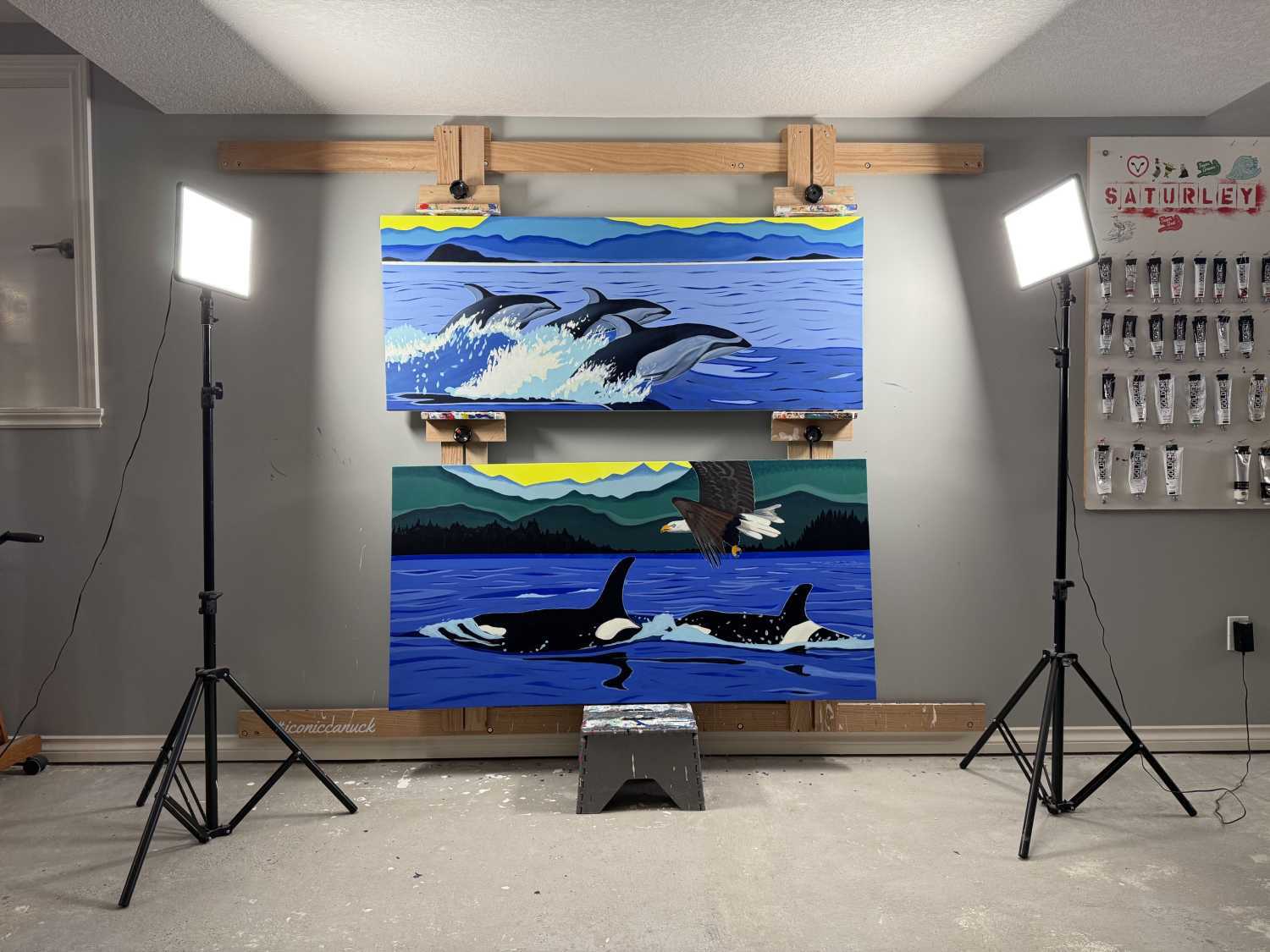
Inside Brandy Saturley studio in Parksville, Canada – 2026