Making An Acrylic Painting

Behind The Scenes: The Evolution of an Acrylic Painting
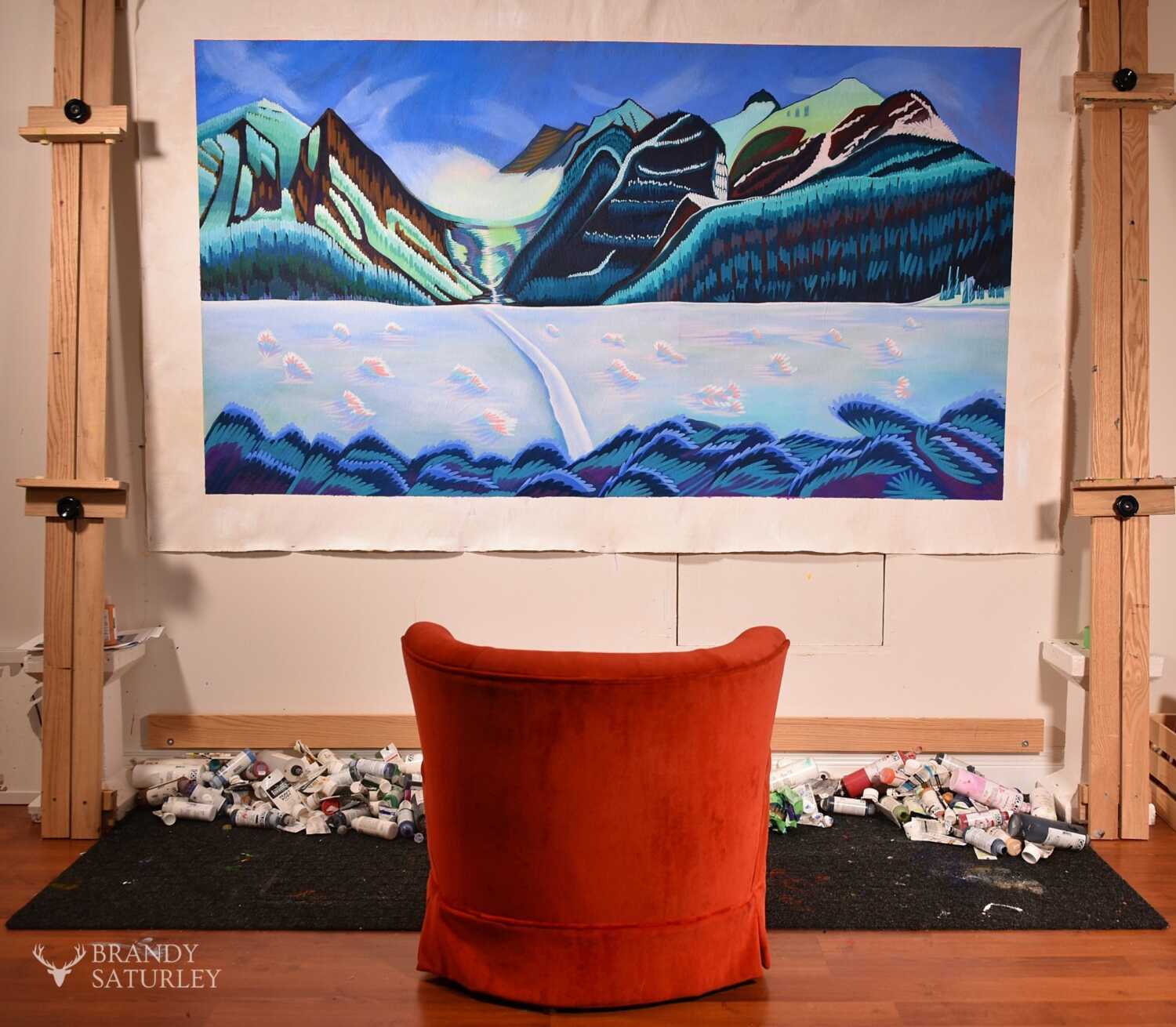
Making an acrylic painting on canvas comes from years of developing a process unique to the result I am seeking. My artist voice plays out in it’s own unique way not unlike every other artist. Part of an artists’ signature is the way they apply the paint.
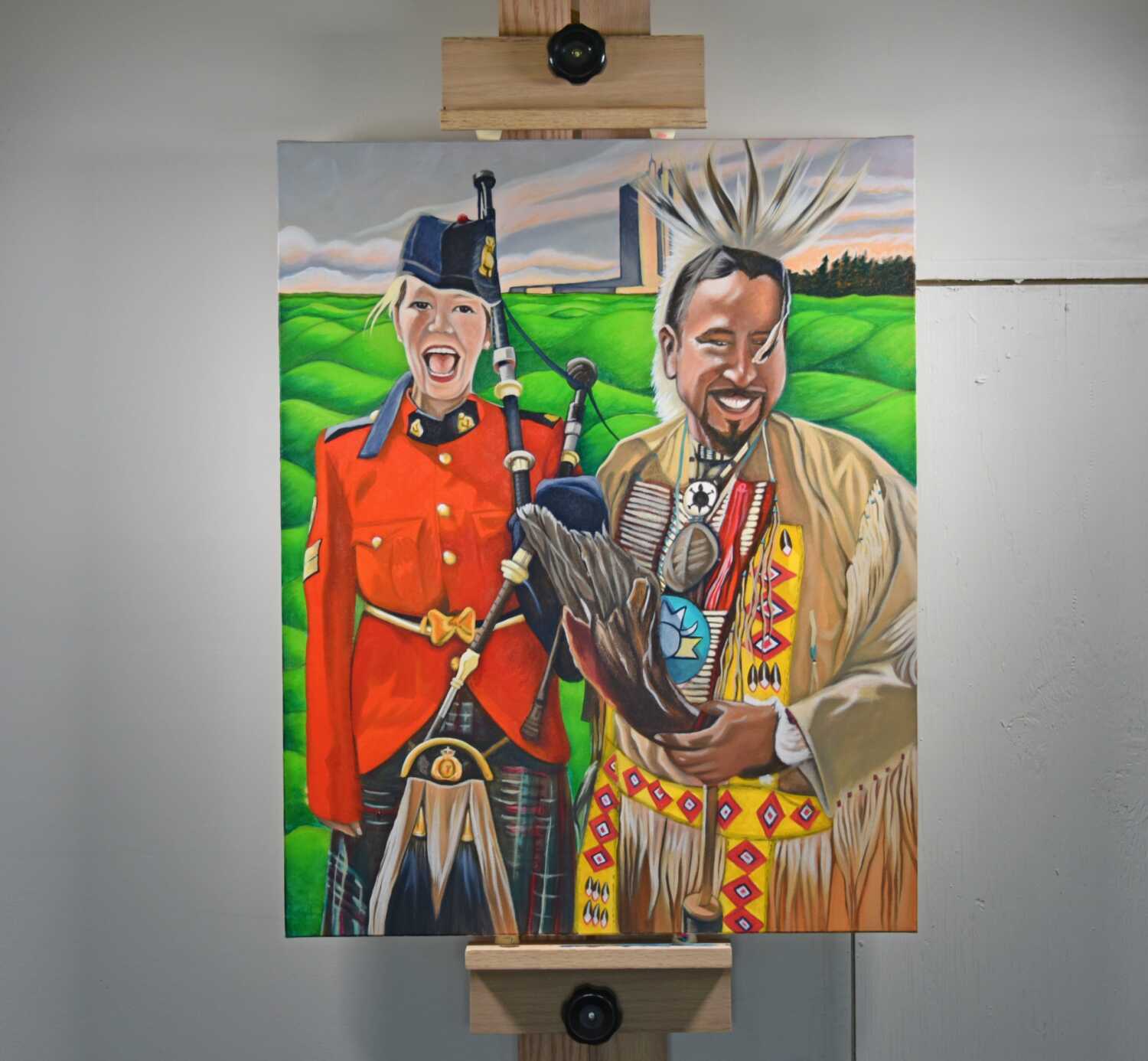
I paint with pop art sensibilities, hard edges and bold strokes, but that doesn’t mean my work doesn’t come with fine details, it does. These fine details balance the broader bolder strokes and the interplay of supersaturated hues. These details could be in the underpainting, small marks made nearing the completion of a painting or the signature itself.
Here I am sharing my process from first strokes to completion.
The Blueprint
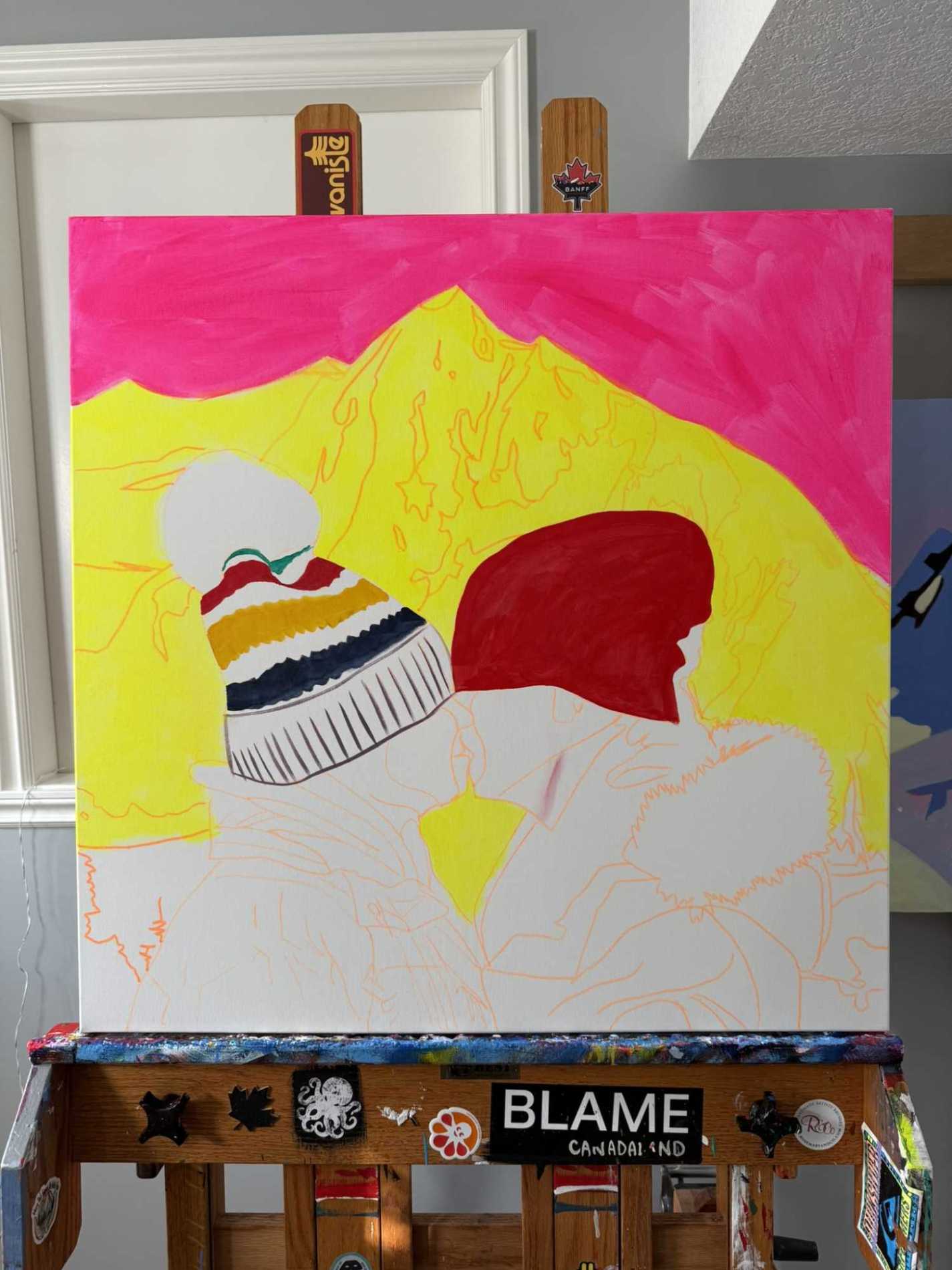
Every painting has a starting point like a blueprint, it is the cones of the piece, the framework for where colour, texture and tone will transform a flat surface into a 3D rendering. I begin with a sketch on the canvas in chalk pen, this sketch comes from a compilation of photographs I collage together digitally to mock-up what I want the painting to look like. After the initial outline sketch is laid down, I begin colour-blocking different areas of the composition sometimes with florescent underpainting and sometimes complimentary colours of what the final colours will become.
From Back To Front
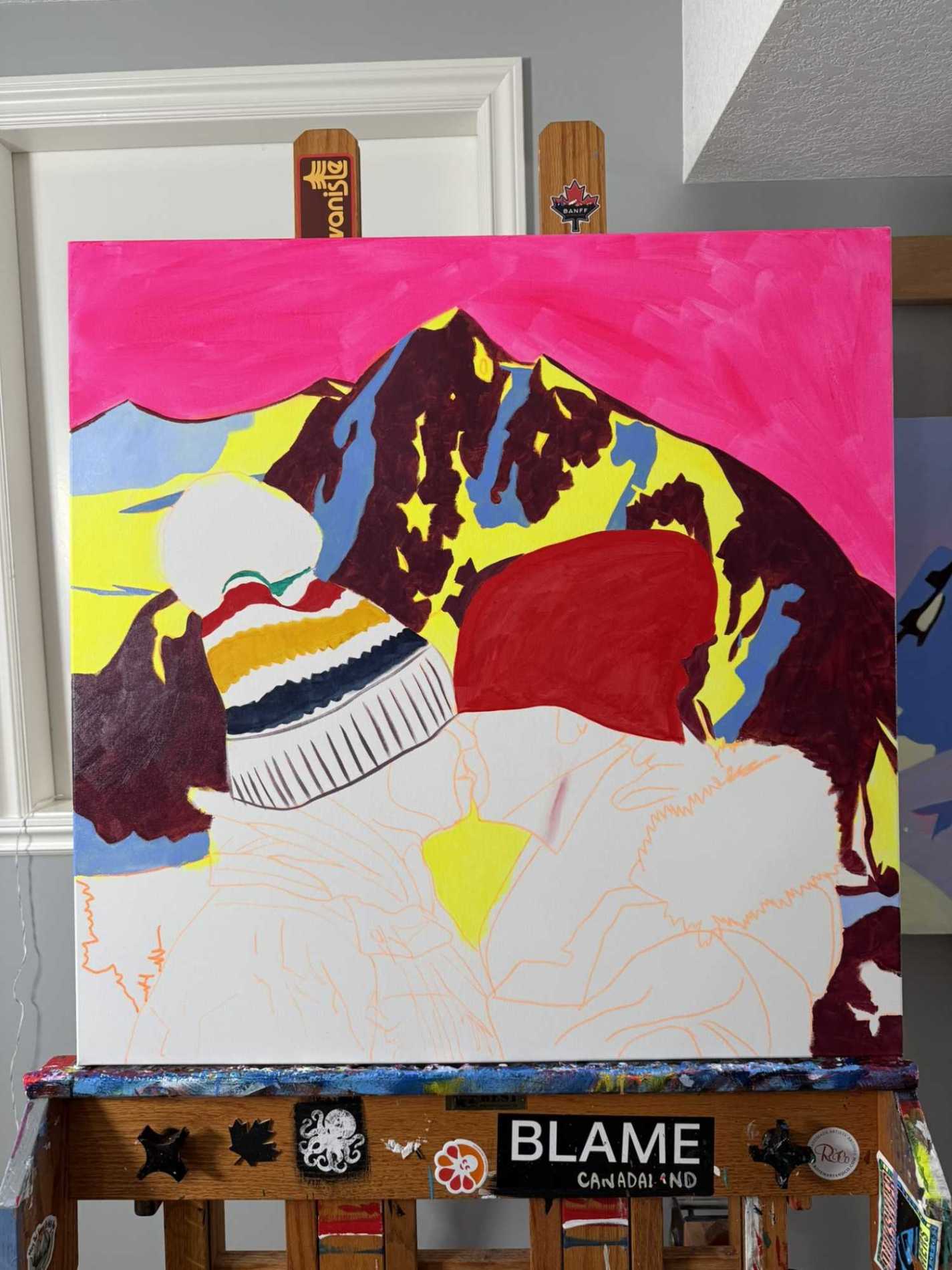
I paint from the objects furthest away to the foreground, often fully rendering the background before I work on the foreground focal point of the piece. In this case I painted the sky and mountains first leaving the clothing of the subjects to the final strokes.
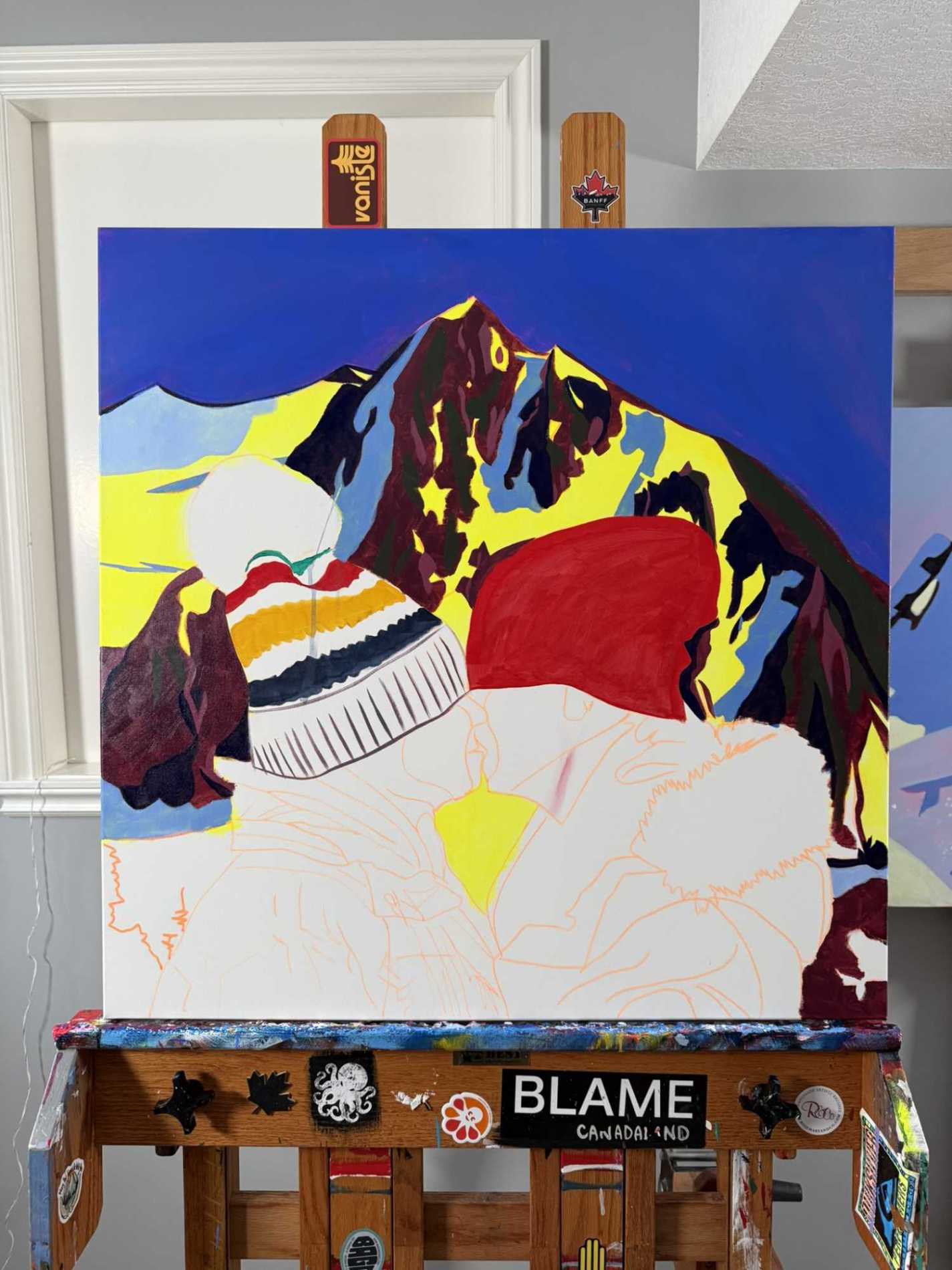
The Finite Details
In this painting I am working on a story of two people standing in front of a mountain, kissing. I always leave faces to the end as the palette for skin tones is so different from the rest of the piece. The I go into finite details such as strands of hair and fur trim on the hat and fur collar. I almost always finish with outlining the foreground subjects in a very fine line of either highlight or complimentary colour – this gently separates the subjects from the background and makes them pop forward even more – pop art outlines that deliver punch and crispness.
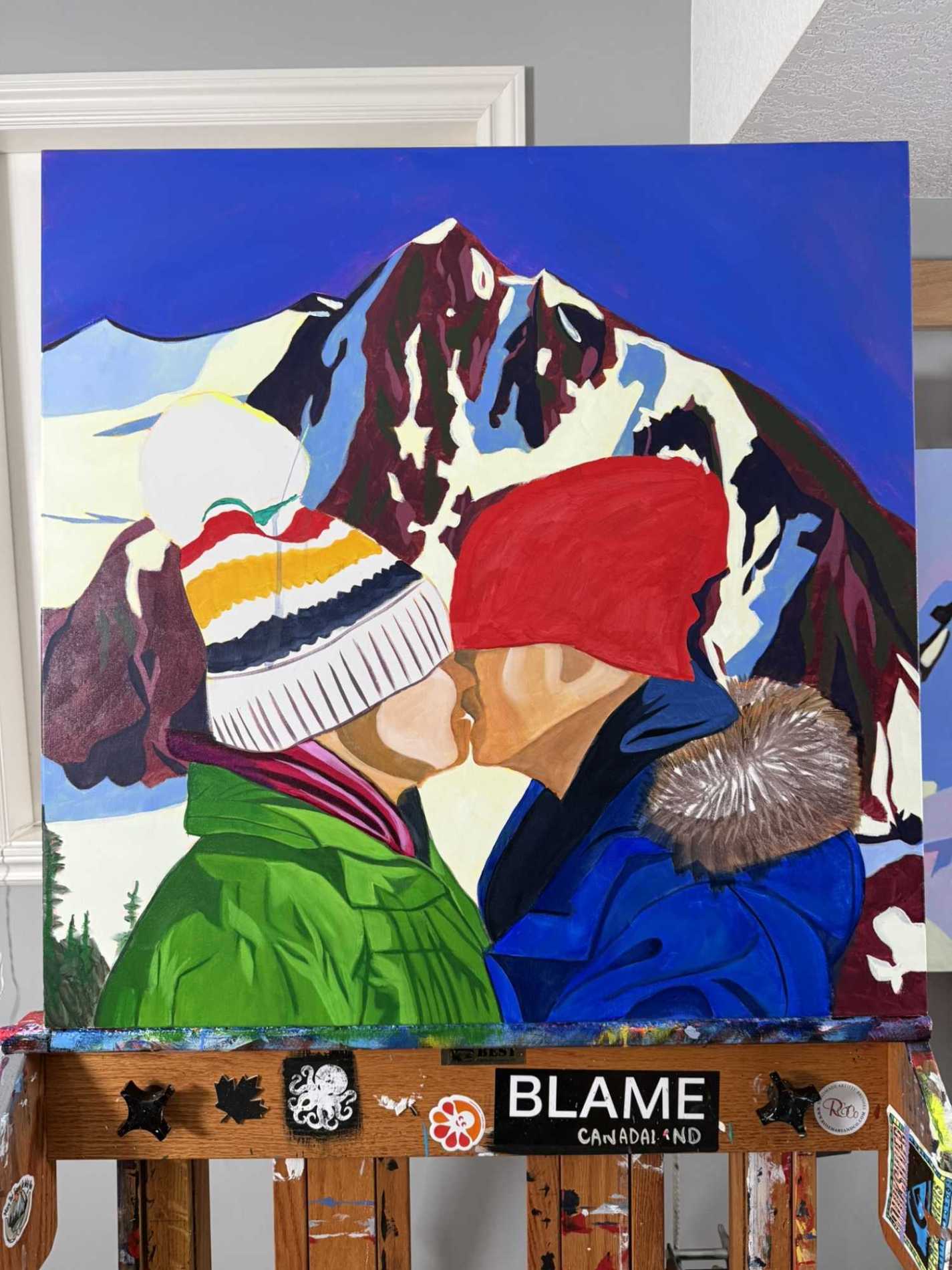
Making An Acrylic Painting: Finishing the Painting
The final details of every painting come down to a few things, signing the painting, painting the edges of the canvas in a bold contrasting colour and applying a gloss finishing varnish for protection and to make the colours richer.

This is how I make my acrylic paintings. You can see more of my work here.