Mountain Paintings in Canada
Painting Mountains is a Tradition in Canada – From Historical to Contemporary
There is something about a mountain in Canada that refuses to sit quietly. It insists on being painted. These are Mountain Paintings in Canada.
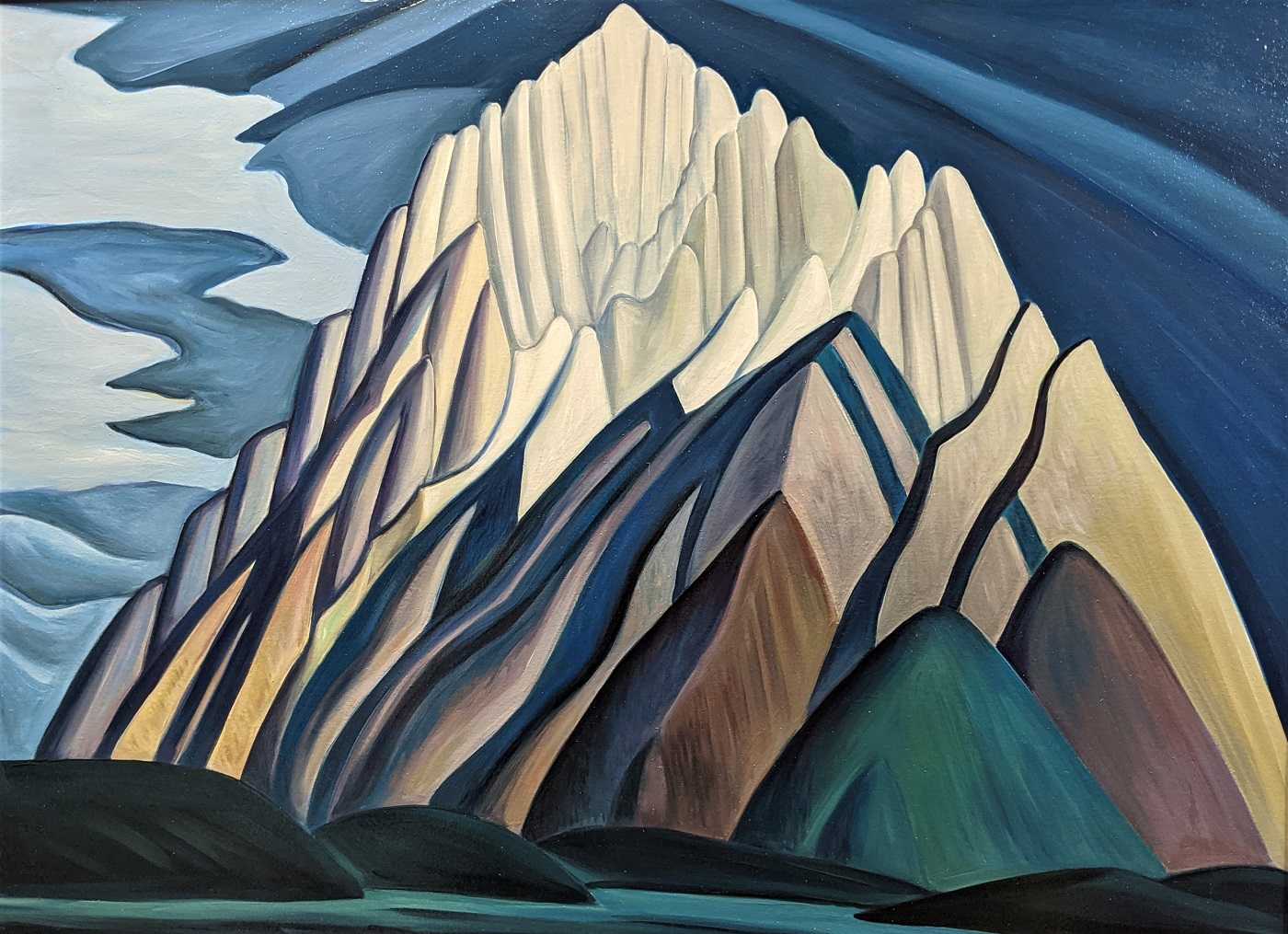
Mountain Forms – Lawren Harris – 1926
The First Cathedral Painters: The Group of Seven
In the early 20th century, a small band of painters ventured into the northern wilderness with sketchbooks, oil paints, and a kind of devotional intensity. The Group of Seven believed that Canada’s identity could be found not in parlours or portraits, but in granite, snow, and wind-bent pine.
Mountains became their cathedrals.
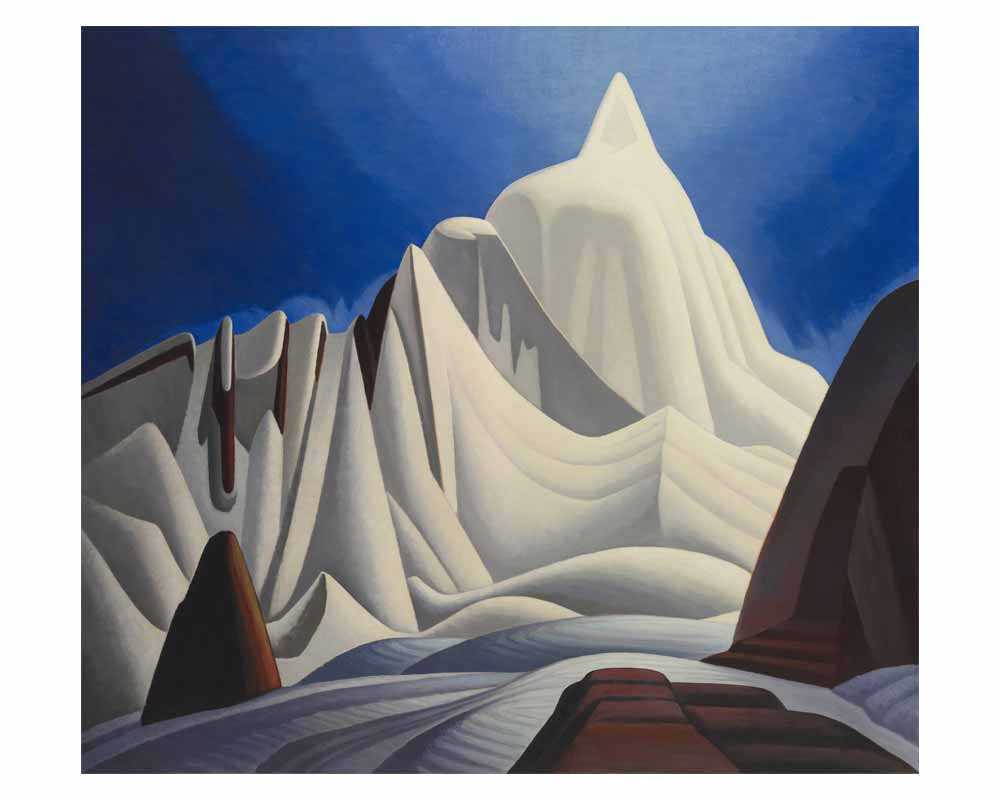
In places like the Rockies and Algoma, they painted peaks not as postcards, but as presences. Vast. Spiritual. Uncompromising. The land was not background. It was protagonist. Among them, Lawren Harris took mountain painting into rarefied air. His canvases distilled peaks into sculptural forms, stripped of anecdote, reduced to luminous geometry. Snow glowed. Skies vibrated. Mountains stood in monastic stillness, hovering somewhere between landscape and revelation. Harris was not simply painting terrain. He was painting transcendence.
The early mountain paintings in Canada helped shape a national myth: that the land itself was our defining character. Rugged. Expansive. Sublime. And that myth has had a long afterlife.
Enter Brandy Saturley: Mountains in Pop Key
Fast forward a century. The mountains remain, but the voice shifts.
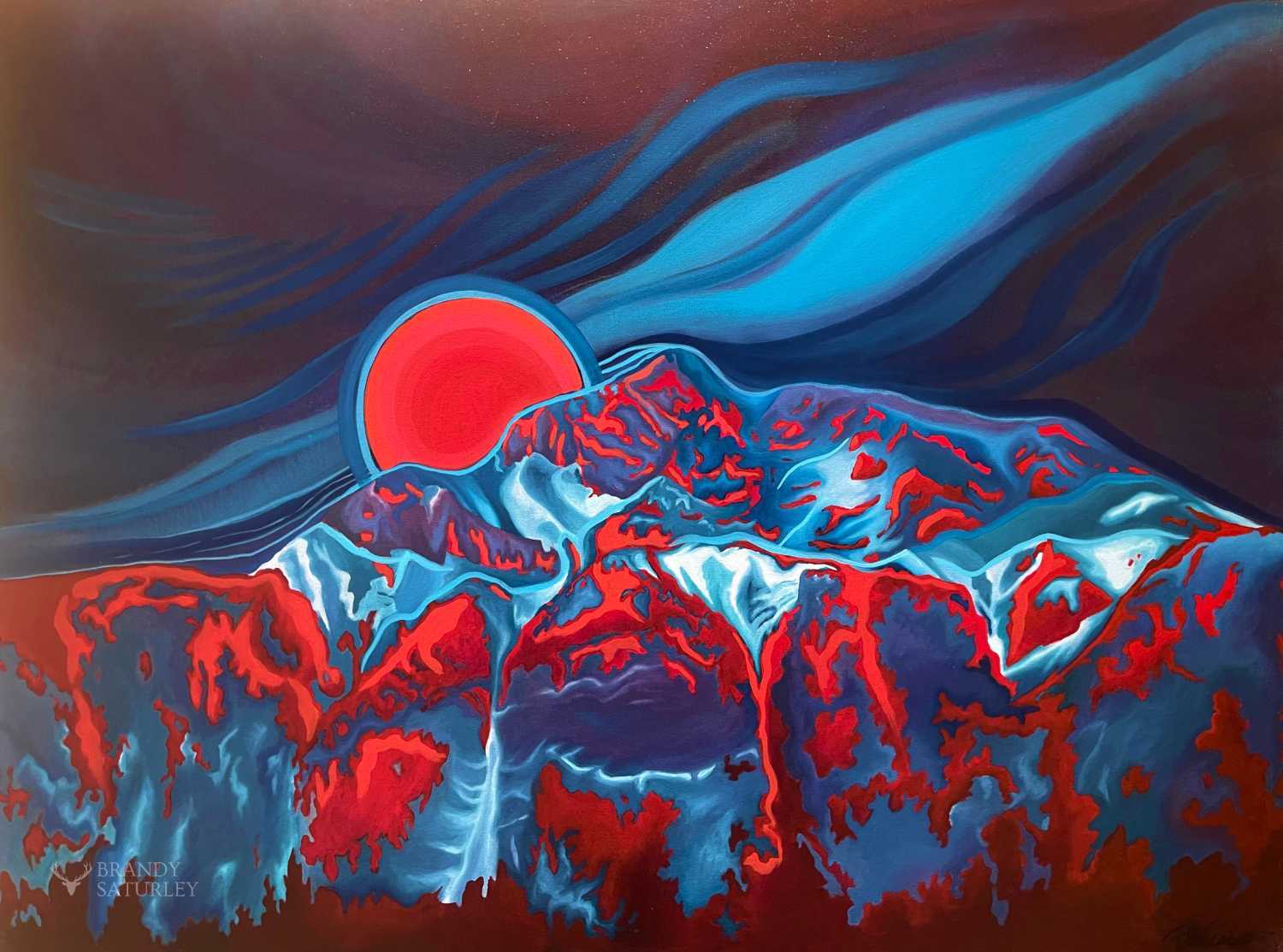
Cascade Mountain, 2011, Brandy Saturley
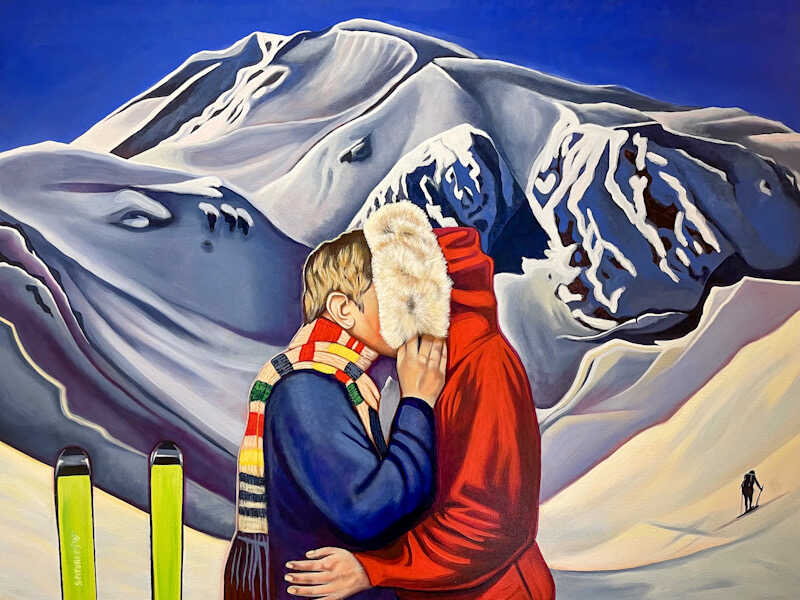
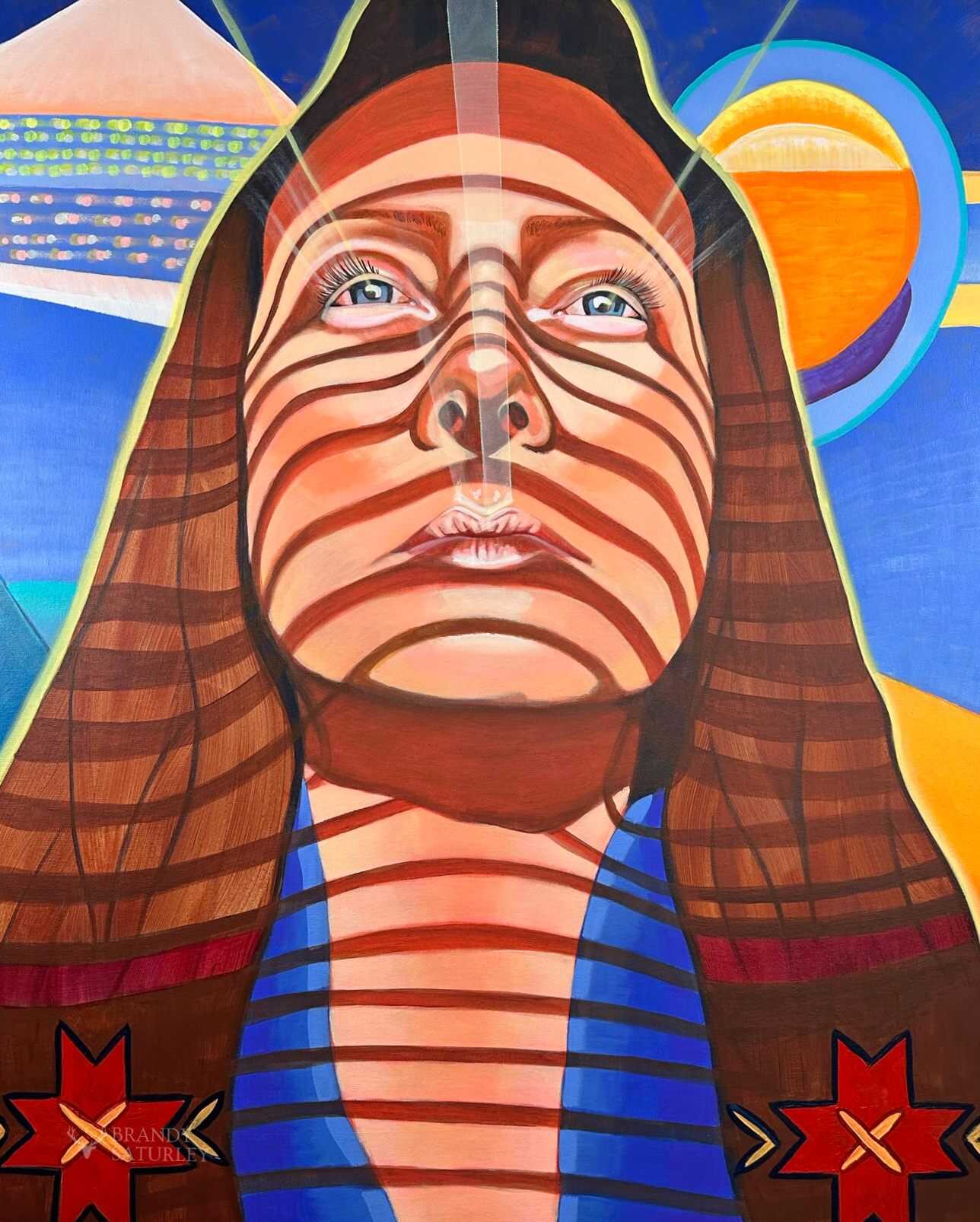
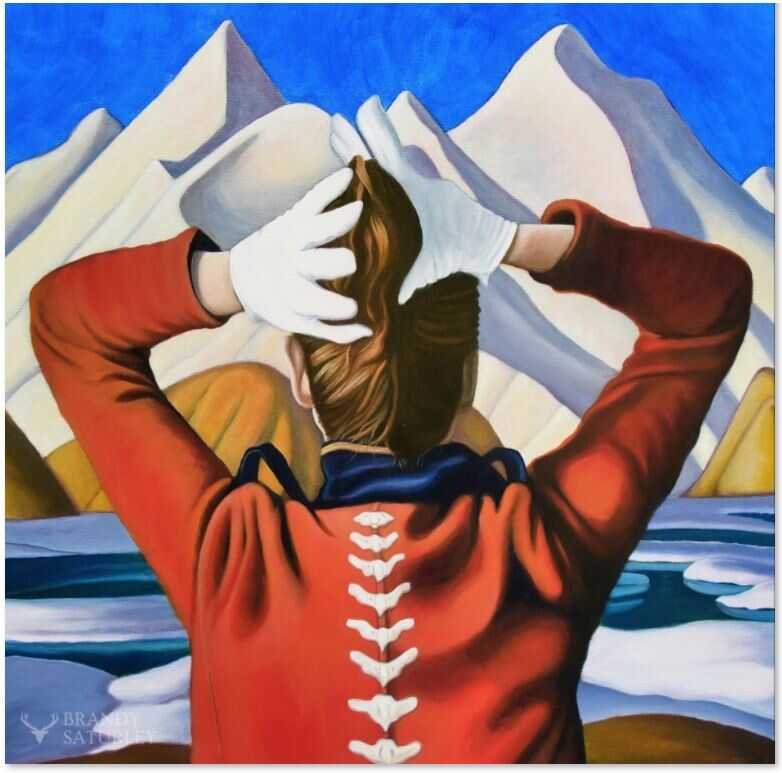
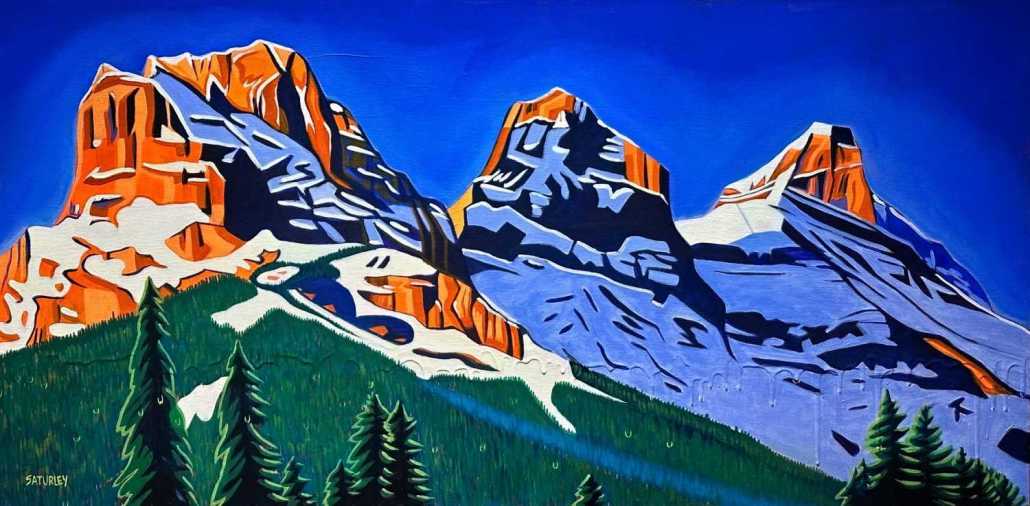
Where Harris sought spiritual ascension, Brandy Saturley approaches the peaks with a contemporary pulse. Her mountains are not hushed altars. They are bold declarations. Graphic. Immediate. Alive with colour that hums against the canvas.
If the Group of Seven carved mountains from ice and silence, Saturley paints them with rhythm. Her practice is rooted in travel across Canada, absorbing not only landscape but culture. The mountains in her work are often framed through a distinctly modern lens, one that acknowledges history while refusing to be bound by it. She engages with Canadian iconography, popular culture, and lived experience, folding the landscape into a broader narrative of national identity.
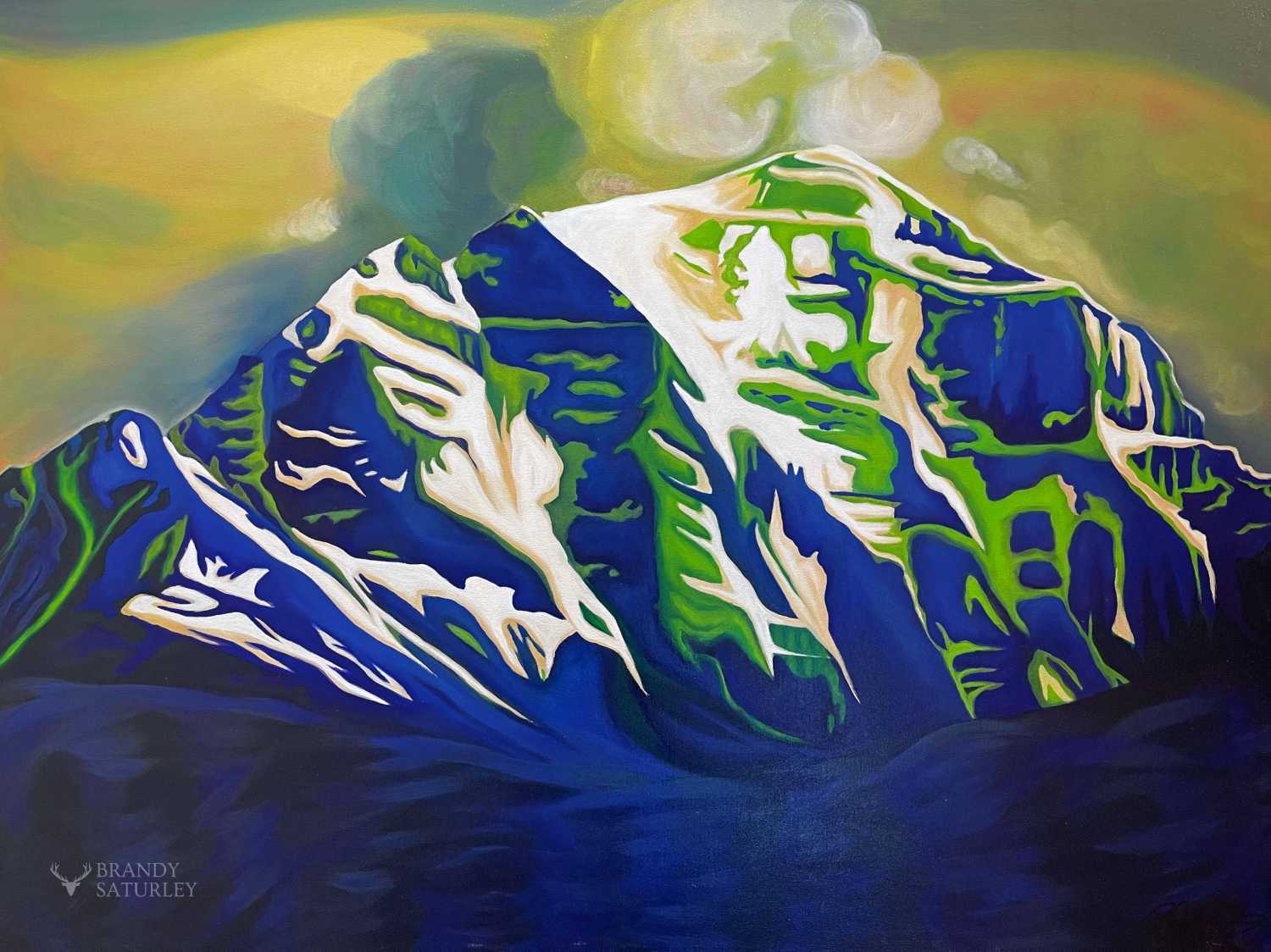
Temple Mountain, 2011 – Brandy Saturley
In Saturley’s paintings, mountains can feel cinematic. They coexist with symbols, with human traces, with the energy of the present day. The wilderness is no longer an untouched frontier. It is inhabited, interpreted, reimagined.
Where Harris reduced the mountain to a spiritual emblem, Saturley reclaims it as a cultural one.
Mountain Paintings in Canada: Then and Now
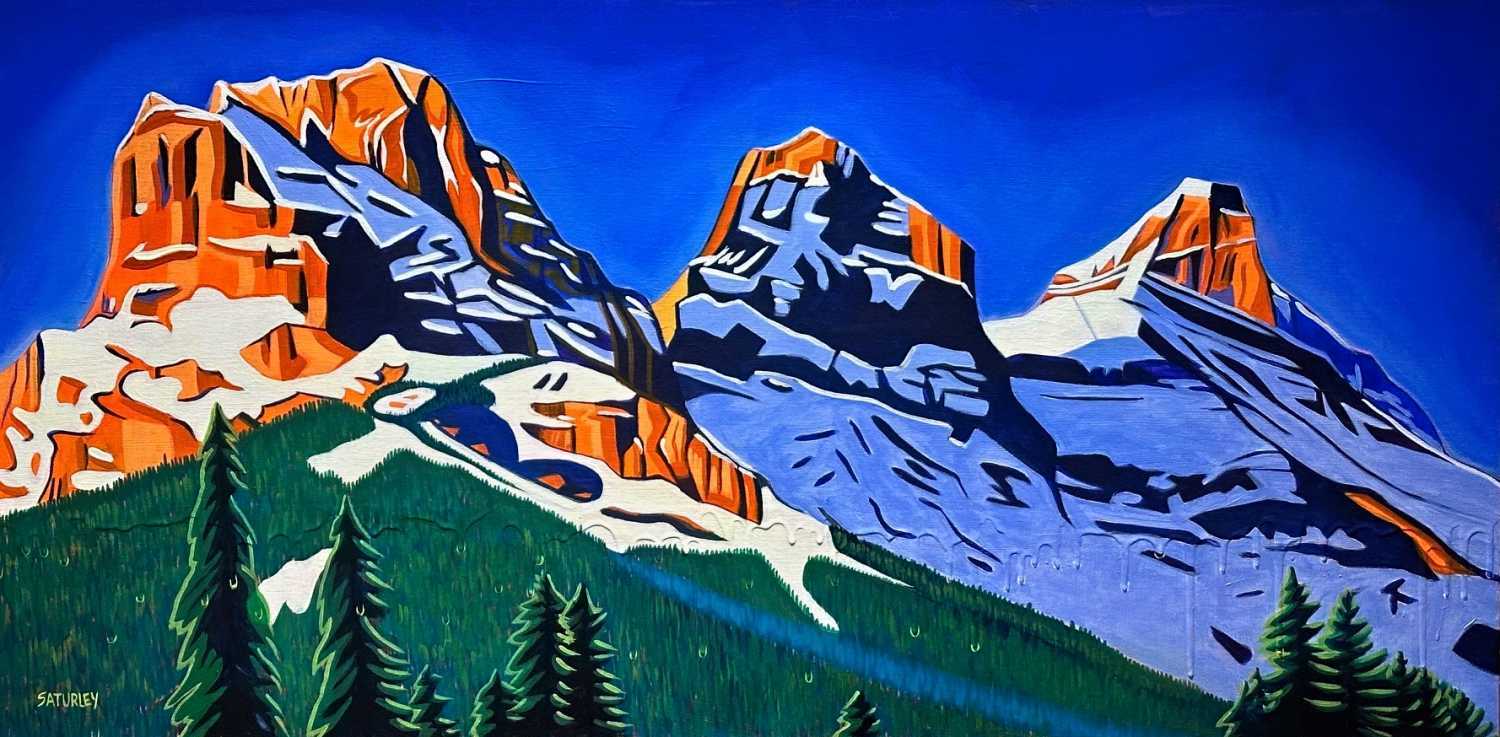
Three Sisters, 2024 – Brandy Saturley
The early mountain painters sought to define Canada through awe. Their canvases speak of isolation, purity, and the power of nature untouched.
Saturley’s mountains speak of engagement.
They acknowledge that Canada is not only wilderness but story. Not only silence but conversation. Her bold palette and pop modernist approach transform the mountain from distant monument into something immediate and accessible. The peaks feel less like distant gods and more like companions in the shared narrative of being Canadian.
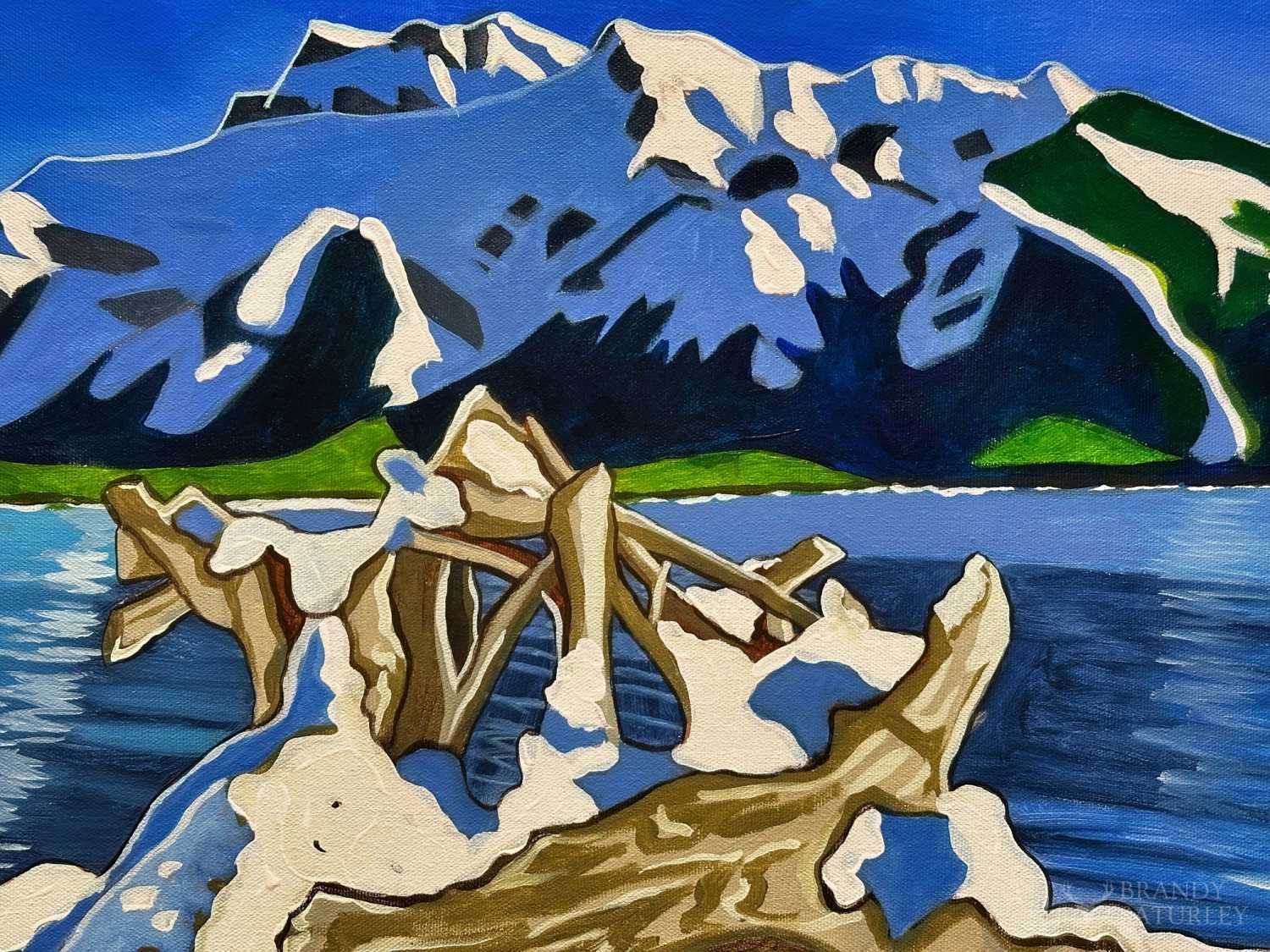
Minnewanka Muse (detail), 2024 – Brandy Saturley
Both approaches are acts of love.
The Group of Seven helped invent the visual language of Canadian landscape painting. Lawren Harris purified the mountain into a spiritual symbol. Brandy Saturley carries that lineage forward, but with a contemporary voice that reflects a layered, media-saturated, culturally complex Canada.
The mountain remains. But the story we tell about it continues to evolve. And perhaps that is the true tradition of mountain painting in Canada, not imitation, but reinterpretation.
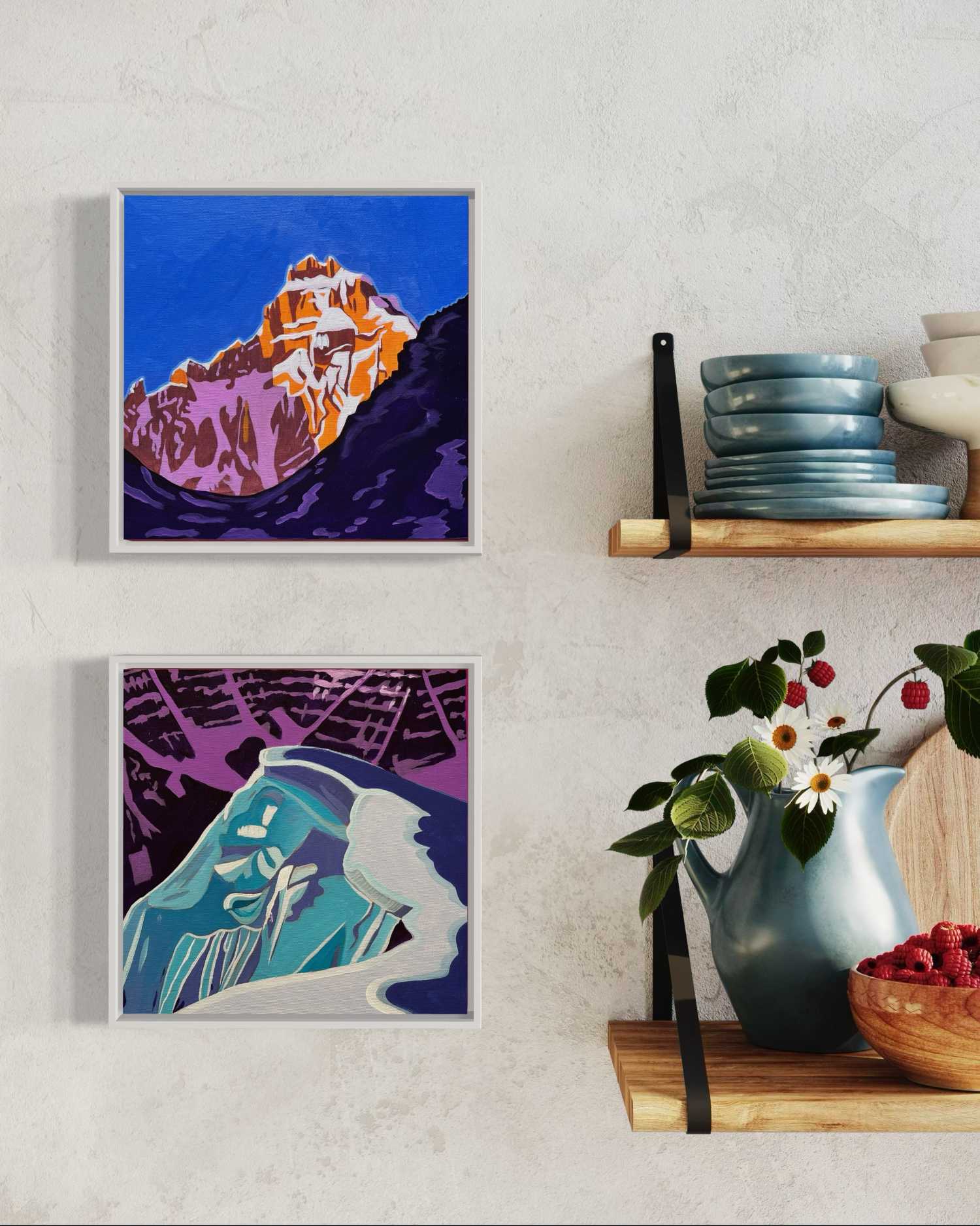
Paradise (top) Temple Top (bottom), 2024 – Brandy Saturley