Spirit of David Hockney
The Momentous Spirit of David Hockney: A Painter’s Painter
When I was a young artist making drawings in my bedroom, I dreamed of big things for my art. I imagined large canvases, distant galleries, and the possibility that painting could become a way of seeing the world more clearly. As I grew older and found my way to art college, I discovered the spirit of British artist David Hockney and something shifted in me.
Hockney was born in Bradford, England, in 1937 and became one of the defining artists of the 20th century. Associated with the Pop Art movement of the 1960s, he quickly stood apart from many of his contemporaries. While others leaned into irony and commercial imagery, Hockney brought warmth, observation, and deep affection for everyday life into his work. His portraits, California swimming pool paintings, stage designs, and later monumental landscapes all carried the same unmistakable energy: a vivid curiosity about how we see and experience the world.
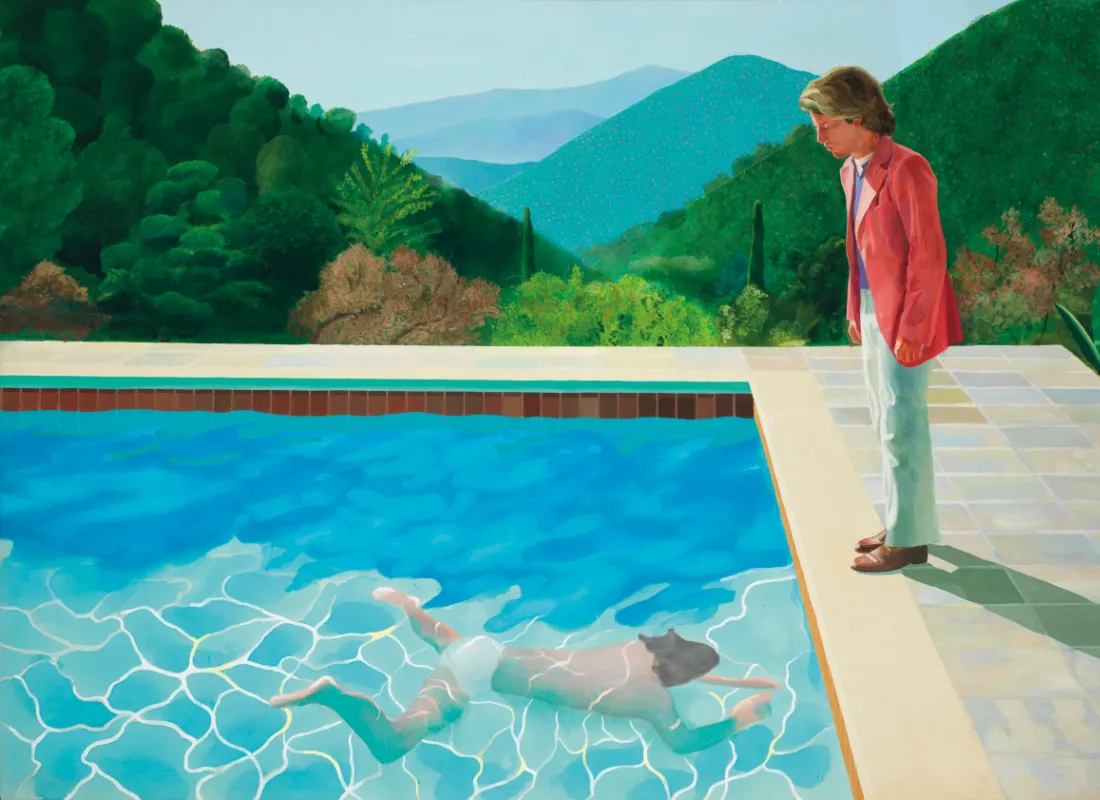
One of the most famous paintings of David Hockney is this double portrait from the swimming pool series. (Image: Christie’s)
What struck me first was the sense of wonder in his paintings. Hockney’s work feels open-hearted and alive. His portraits are intimate without becoming sentimental, and his landscapes transform familiar scenes into something almost dreamlike. Over time I became especially drawn to those immense, near-abstract landscapes where colour and rhythm seem to pulse across the canvas. The spirit in the work kept expanding, radiating outward from the paintings themselves.
The first time I saw Hockney’s work in person was at the Vancouver Art Gallery, during an exhibition of his portraits and later digital works. Even though he was already regarded as a master painter, he never stopped evolving. Hockney embraced new technology with the same curiosity he brought to oil paint and drawing. He understood that the tool is secondary to the artist using it. Standing in front of those digital portraits, I could still feel his painterly touch, his vibrant palette, and his sharp observational eye.
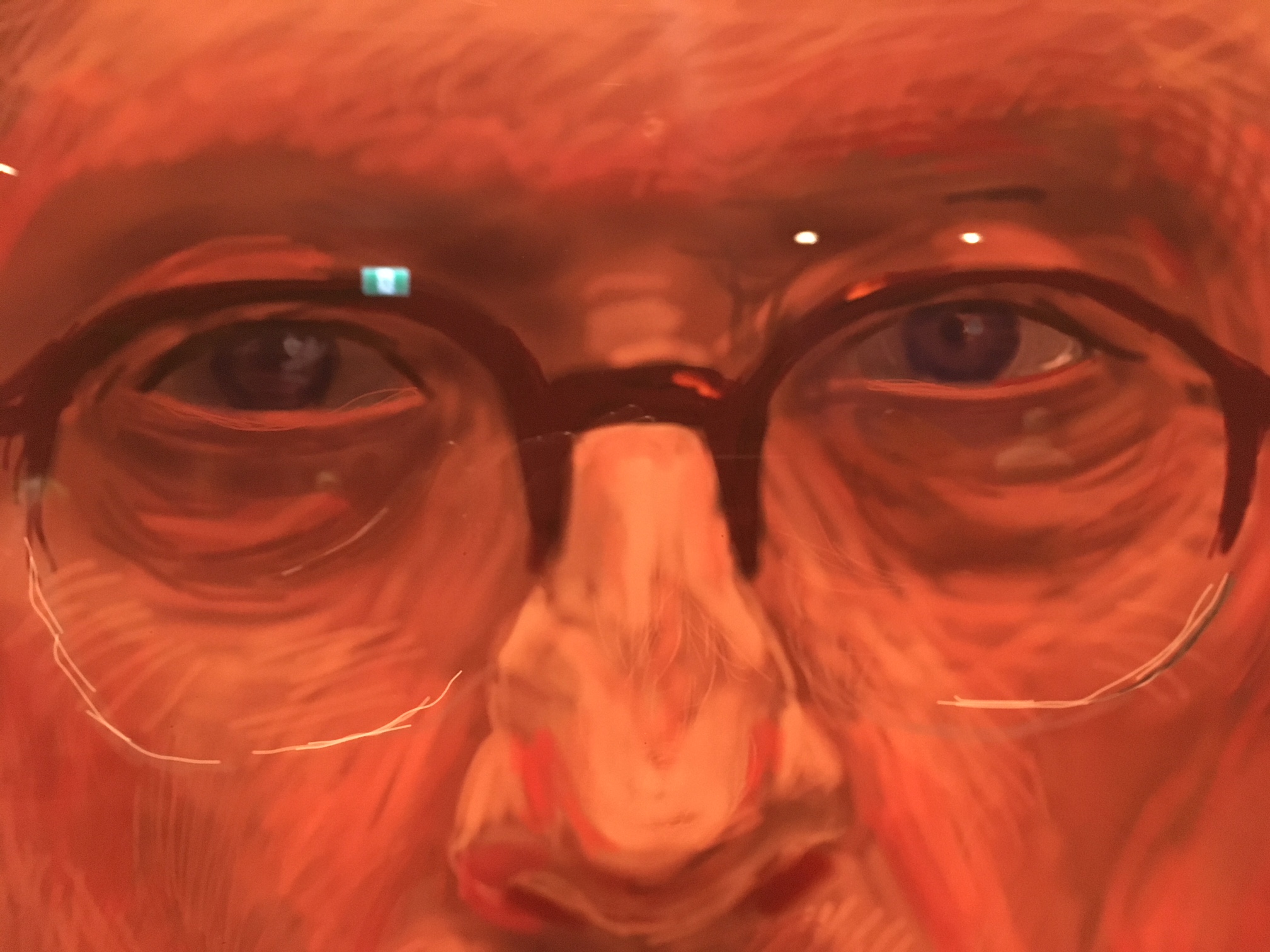
Self-Portrait on iPad, 2012 – David Hockney
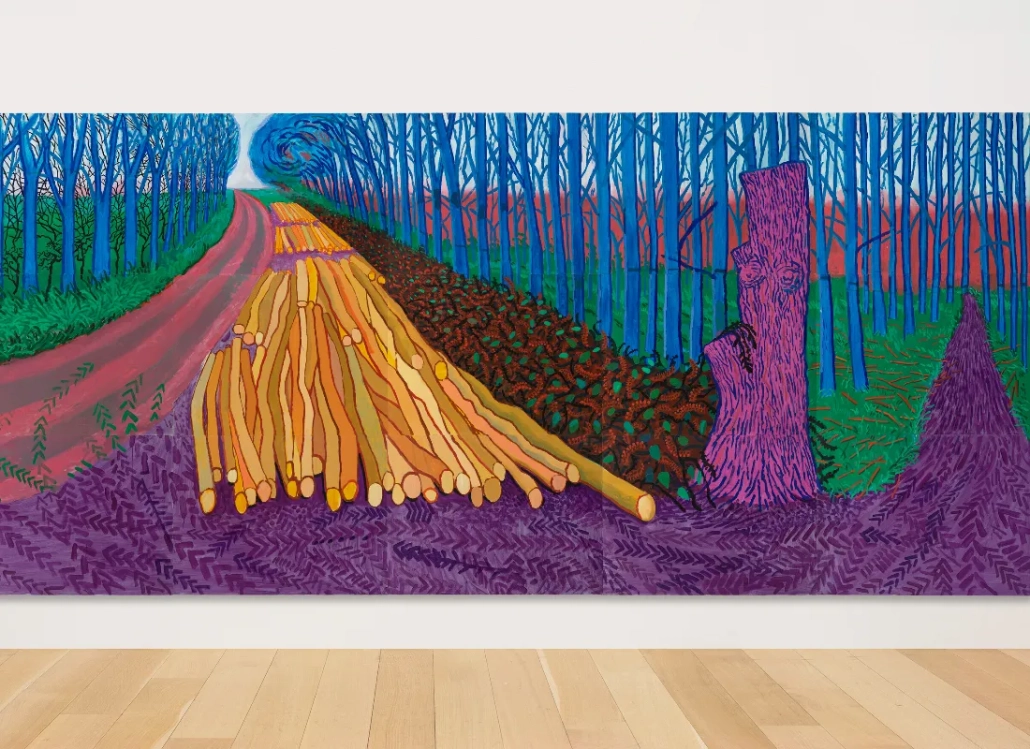
A few years later, I visited the Seattle Art Fair and was invited to view part of Paul Allen’s private collection. There, filling an entire wall like a towering window into another world, was Hockney’s monumental multi-panel landscape Winter Timber (2009). The scale was overwhelming in the best possible way. It wasn’t just a landscape painting; it was an environment, a rhythm of colour and structure that seemed to pull the viewer inside.
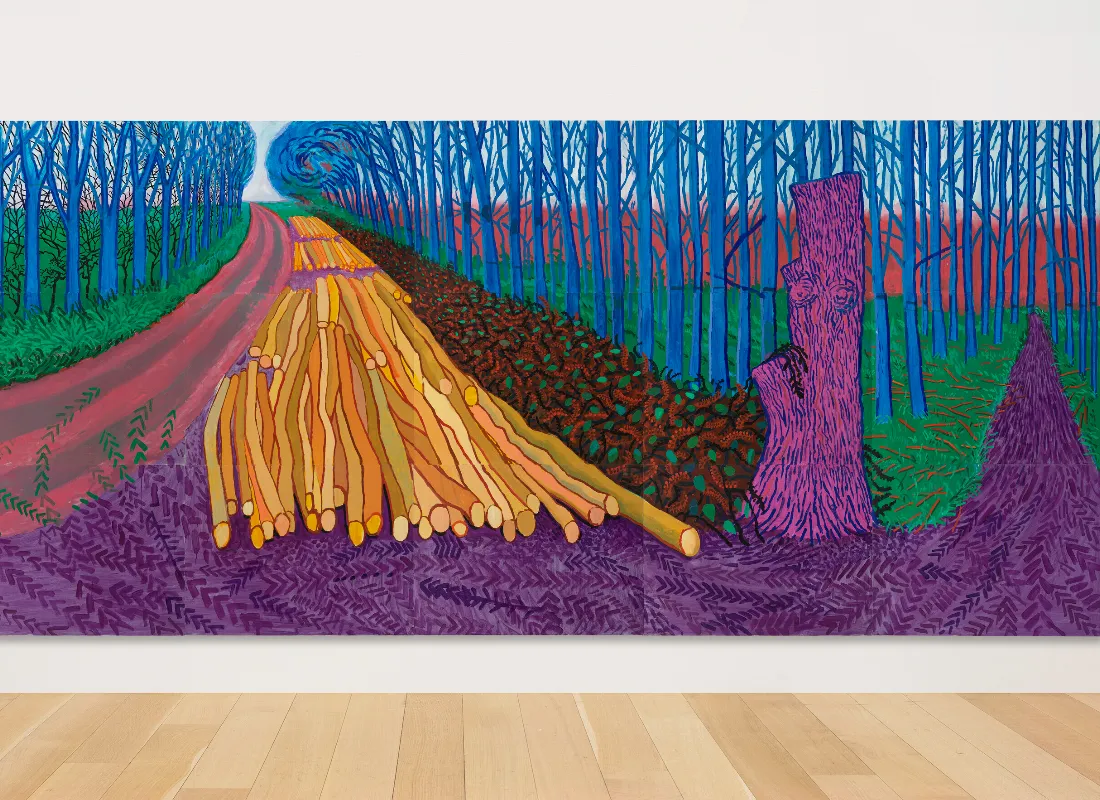
In Winter Timber, Hockney captured the Yorkshire countryside. (Image: Christie’s)
By the end of 2018, I was searching for a way to disrupt my own studio practice. I felt caught in a creative rut and wanted to challenge the habits I had built around my work. At the time, I was known primarily for a pop realism aesthetic and had been described as “The Voice of Canadian Pop Art.” I began researching short programs and art schools, eventually discovering a summer contemporary art program in London, UK, at the Royal College of Art — the same institution where Hockney had once studied.
Spirit of David Hockney: In 2019, I went to London.
The experience was transformative. At the RCA, I was pushed to make work in ways that felt unfamiliar and risky. I was encouraged to move beyond polished narrative painting and toward experimentation, gesture, and abstraction. My vivid colour palette remained, but the structure of the work began to loosen and expand.
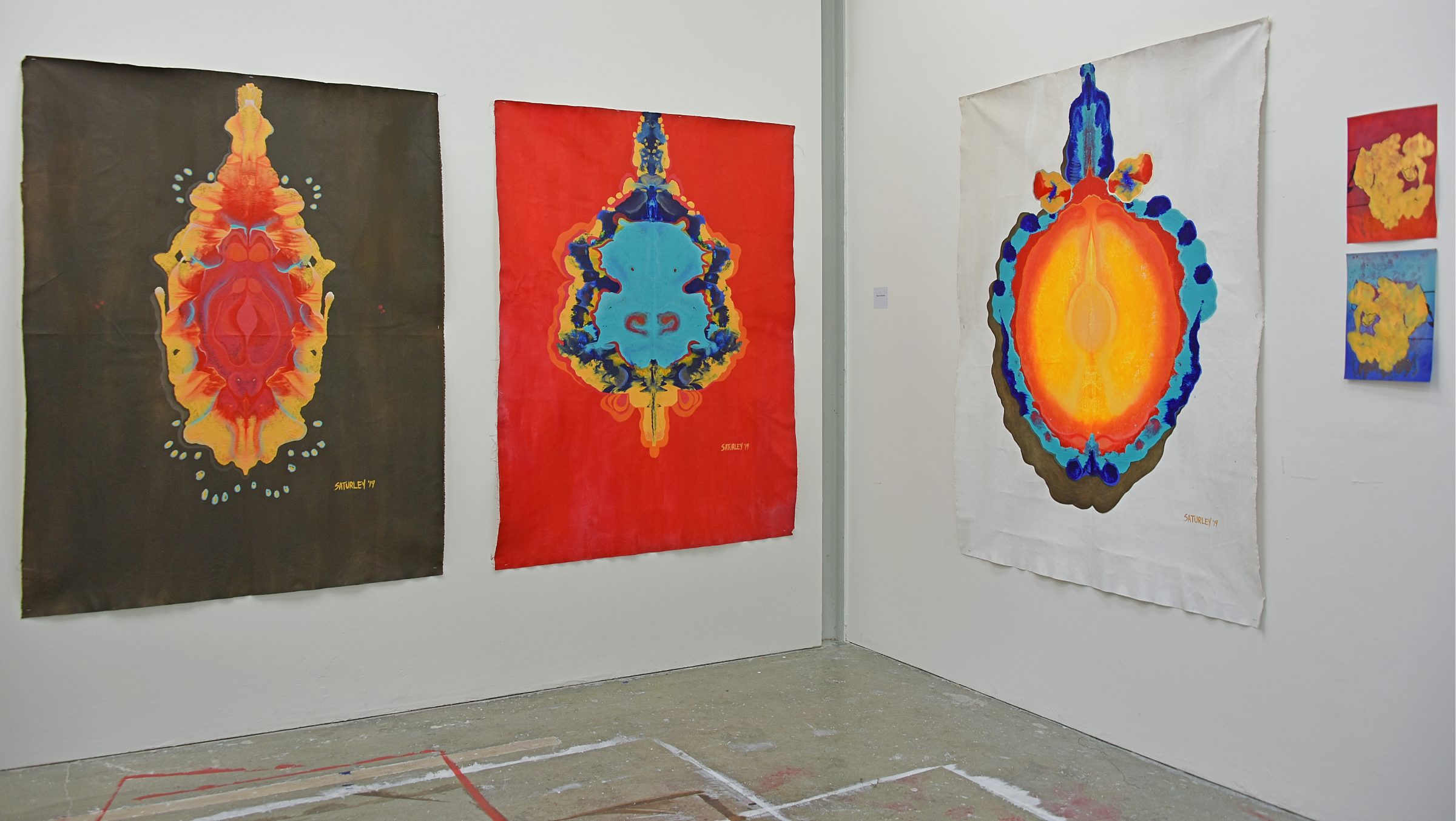
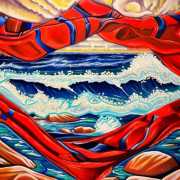
Spirit Mirror paintings by Brandy Saturley, Royal College of Art, 2019
When I returned to Canada, I felt creatively unsettled — in a productive way. I was surrounded again by the pop-art narratives and Canadian iconography that had defined my practice, but I no longer wanted to approach them in the same manner. I kept thinking about that enormous Hockney landscape in Seattle and the freedom it embodied.
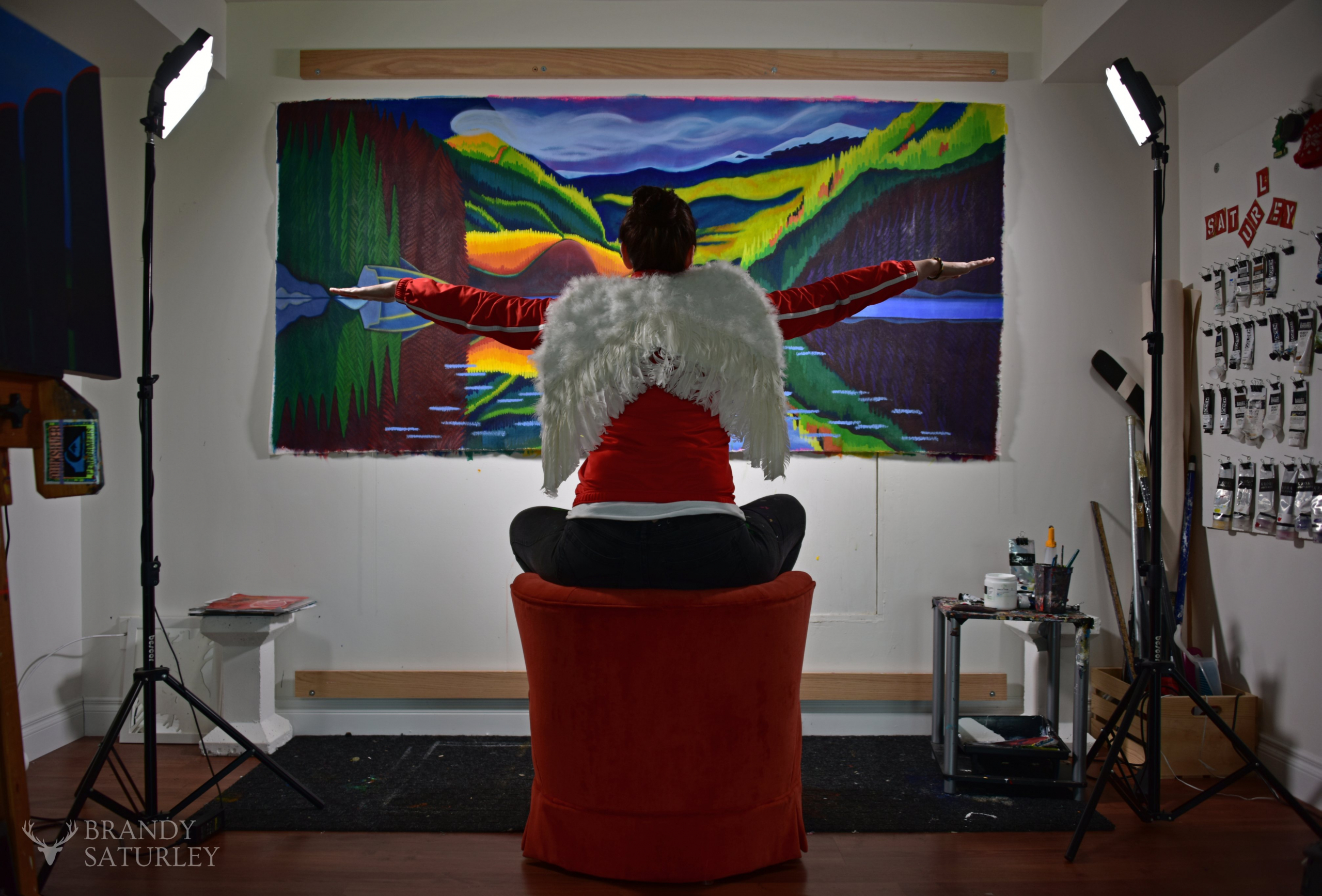
I chose Princess Louisa Inlet in British Columbia as the subject for a new painting. On a huge expanse of unstretched duck canvas stapled directly to the wall, I began sketching the landscape in paint. I had worked this way in London, and I wanted to preserve that sense of immediacy and physical engagement. As I painted, the work opened up. Marks became bolder, layers of colour accumulated, forms dissolved and re-emerged. The painting grew into the largest work I had made at that point, and with it came a flood of new ideas. It felt less like illustrating a place and more like building an atmosphere, a memory, a rhythm of looking.
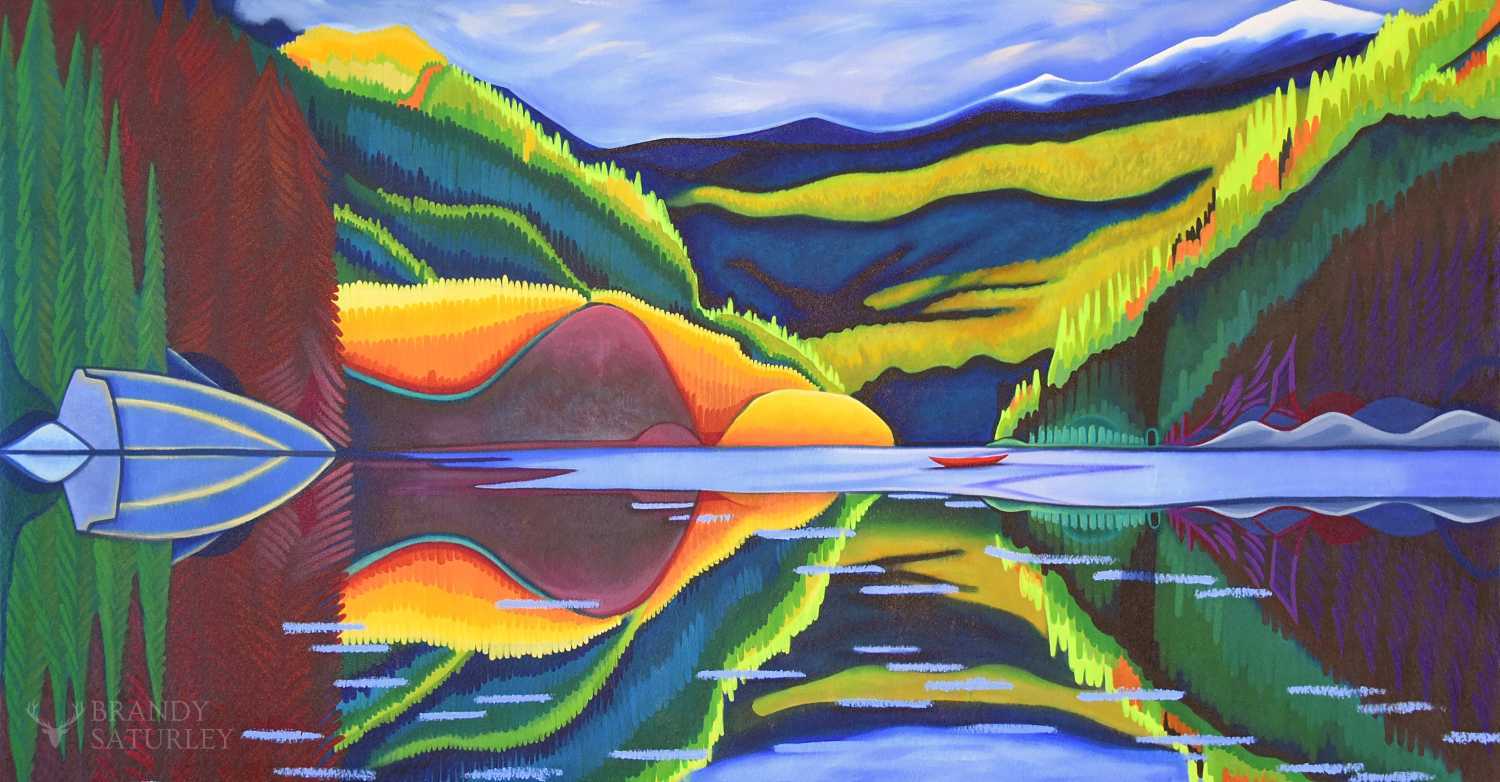
Sound of a Landscape, 42 x 80 x 2 in, 2019, Brandy Saturley
Today, I woke to social media feeds filled with tributes to David Hockney. At 88 years old, this icon of contemporary art has passed away.
Hockney was more than a celebrated painter; he was a reminder that artistic curiosity never has to harden into certainty. He kept experimenting, kept looking closely, kept finding joy in colour, technology, landscape, and human connection. For many artists of my generation, he was a painter’s painter — someone whose influence extended beyond style into the very attitude of making art.
Godspeed, Mr. Hockney. Your spirit continues to live on through your paintings, and through the countless artists you encouraged simply by showing us how fearlessly alive art can be.