Contemporary Canadian Landscape Paintings
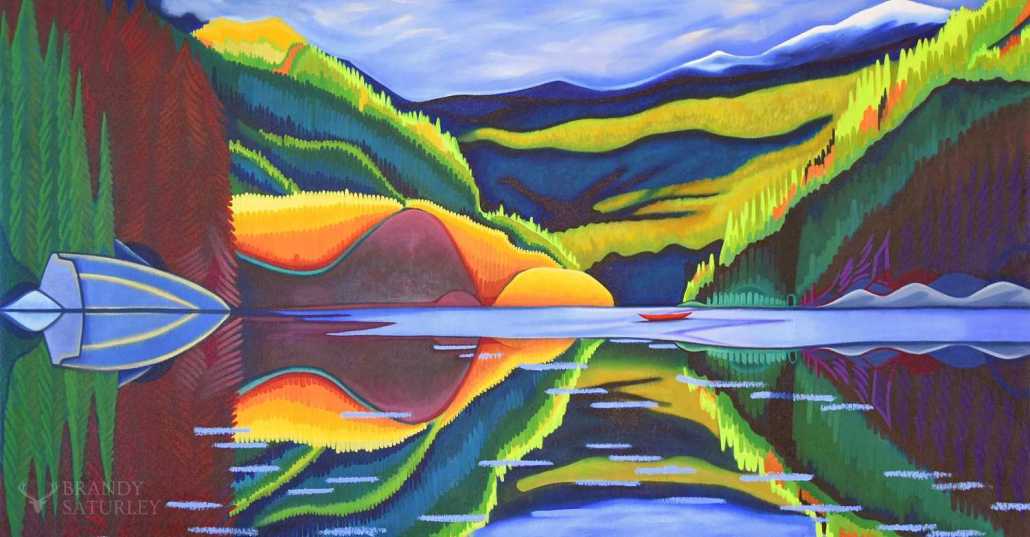
Stories Written Across the Land: Contemporary Canadian Landscape Paintings
Contemporary Canadian landscape paintings have a long and important place in the story of Canadian art. From the mountains of the Rockies and the vast prairie skies to the rugged Atlantic coastline and the forests and beaches of the West Coast, the Canadian landscape has inspired generations of artists.
As a contemporary Canadian landscape painter, I am drawn to these places not simply because they are beautiful, but because they carry stories. For me, painting the landscape is a way of exploring our relationship with place, memory and Canadian identity. Over the years, I have created paintings of mountains, oceans, beaches, forests, wildlife and the distinctive places I have encountered while travelling across Canada.
But my approach to Canadian landscape art is not always traditional. I often bring a Pop Art sensibility to the landscape, using vivid colour, bold shapes and graphic details to transform familiar Canadian places into something fresh and contemporary.
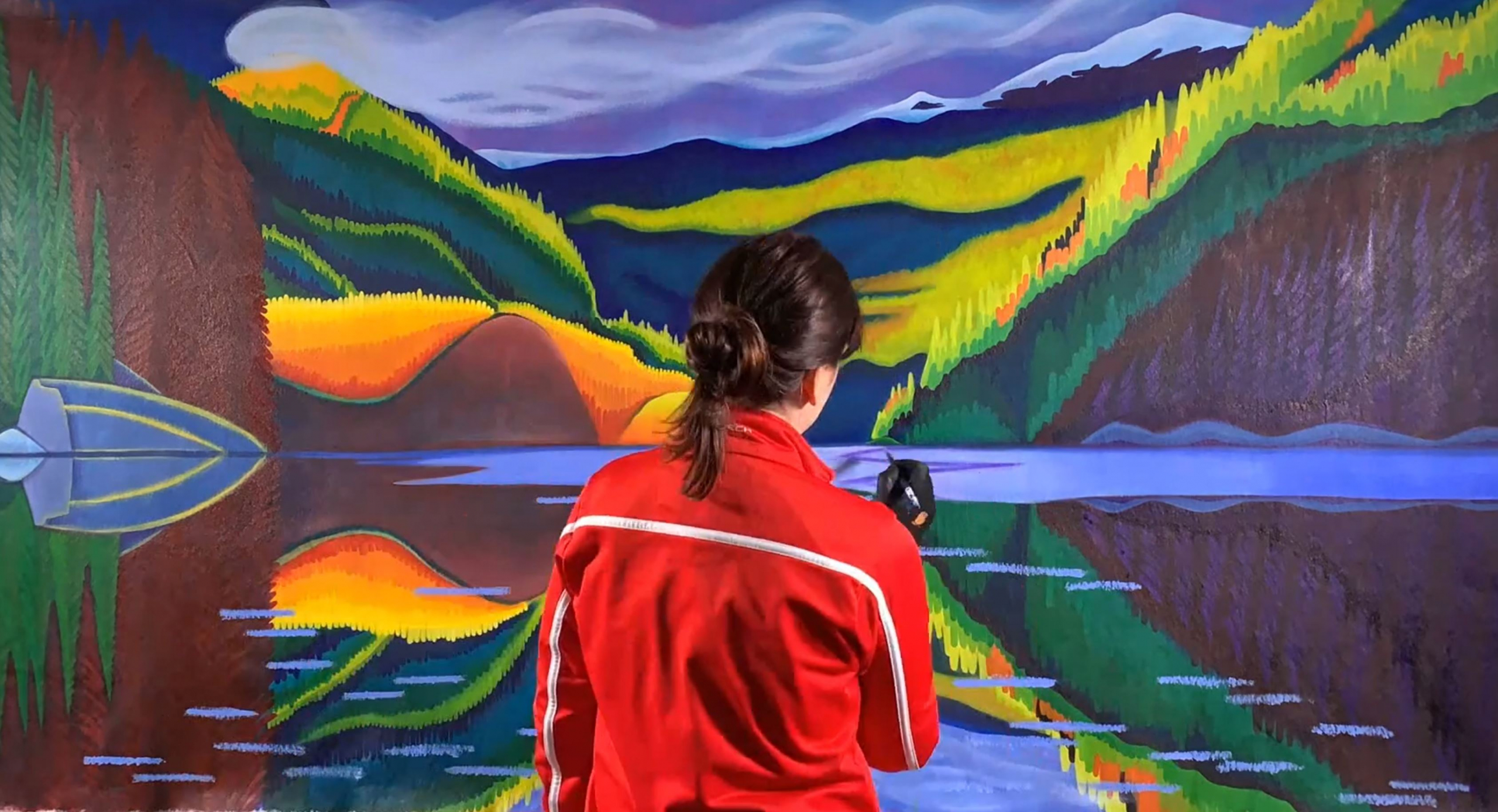
Canadian landscape painter Brandy Saturley making an oversized landscape painting, 2019
What makes a Canadian landscape painting?
When we think about Canadian landscape paintings, we might immediately picture mountains, lakes, forests or expansive skies. These are certainly important elements of Canadian art, but I believe the Canadian landscape is about more than scenery. It is about experience.
A landscape can hold the memory of a journey, the feeling of standing beside the ocean, the quiet of a mountain lake or the exhilaration of seeing wildlife in its natural environment. A painting of a Canadian landscape can therefore become a visual record of both place and experience. That is what interests me.
I am less interested in simply reproducing what I see and more interested in capturing what it feels like to be there.
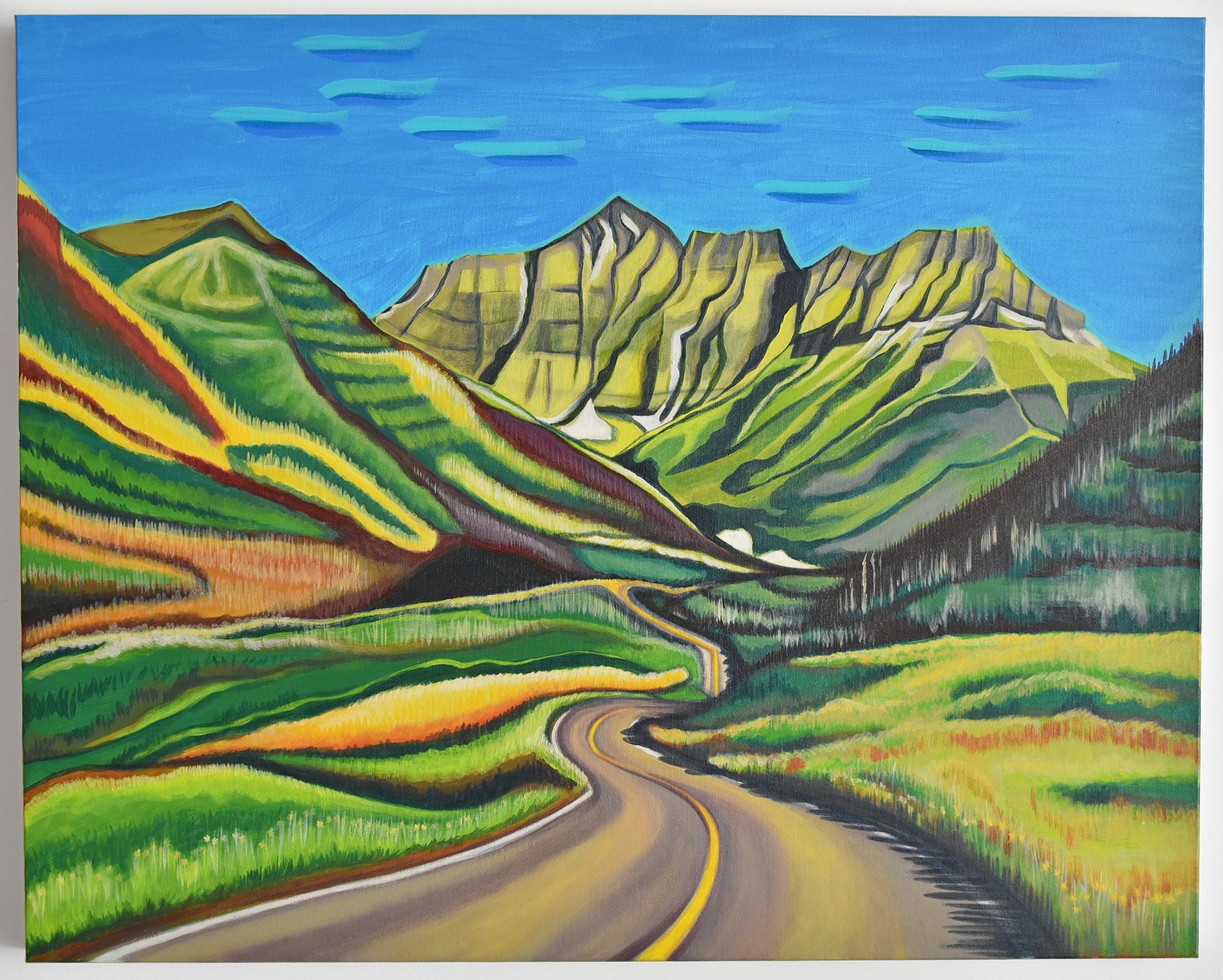
A Long and Winding Road, acrylic on canvas, 24 x 30 x 1.5 Brandy Saturley
My approach to Canadian landscape art
Much of my work begins with observation. I travel with a camera, sketchbook and a painter’s curiosity, collecting visual impressions of the places I encounter. A mountain range might catch my attention because of its shape. A beach might stay with me because of its colours. A particular stretch of coastline might become memorable because of the weather, light or something unexpected that happened there.
Back in the studio, those experiences become paintings. This is where my interest in Pop Art and contemporary Canadian landscape painting comes into play. I might intensify the colours, simplify the forms or emphasize particular shapes. A familiar landscape can become almost graphic. I want the viewer to recognize the place while also seeing it differently.
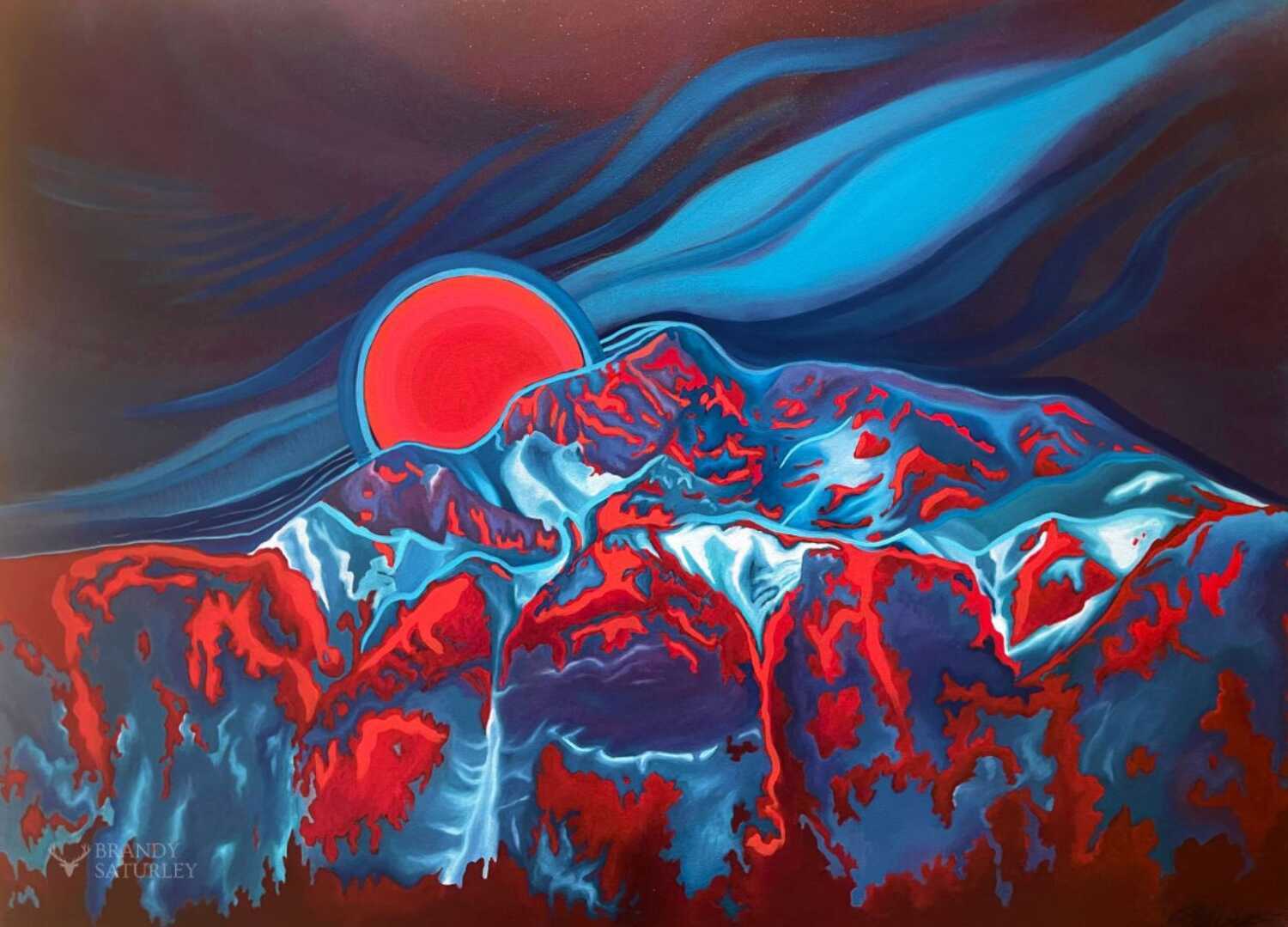
Cascade, acrylic on canvas, 36x48x1.5 inches Brandy Saturley
A Pop Art take on the Canadian landscape
Over the years, I have created a number of contemporary Canadian landscape paintings that combine recognizable Canadian scenery with the bold visual language of Pop Art.
For me, colour is particularly important. The deep blues of the Pacific Ocean, the turquoise of a Rocky Mountain lake, the greens of a coastal forest or the bright colours of Newfoundland fishing villages can become starting points for a painting. I am interested in taking those colours and pushing them further.
The result is a landscape that may be recognizable, but it is not necessarily a literal representation of the place. A mountain can become a bold geometric shape. An ocean can become an expanse of saturated colour. A forest can become a rhythmic pattern of trunks, branches and shapes. Wildlife can move from being simply part of the landscape to becoming an iconic Canadian subject.
This is one of the ways I connect my work to Canadian Pop Art and contemporary Canadian art.
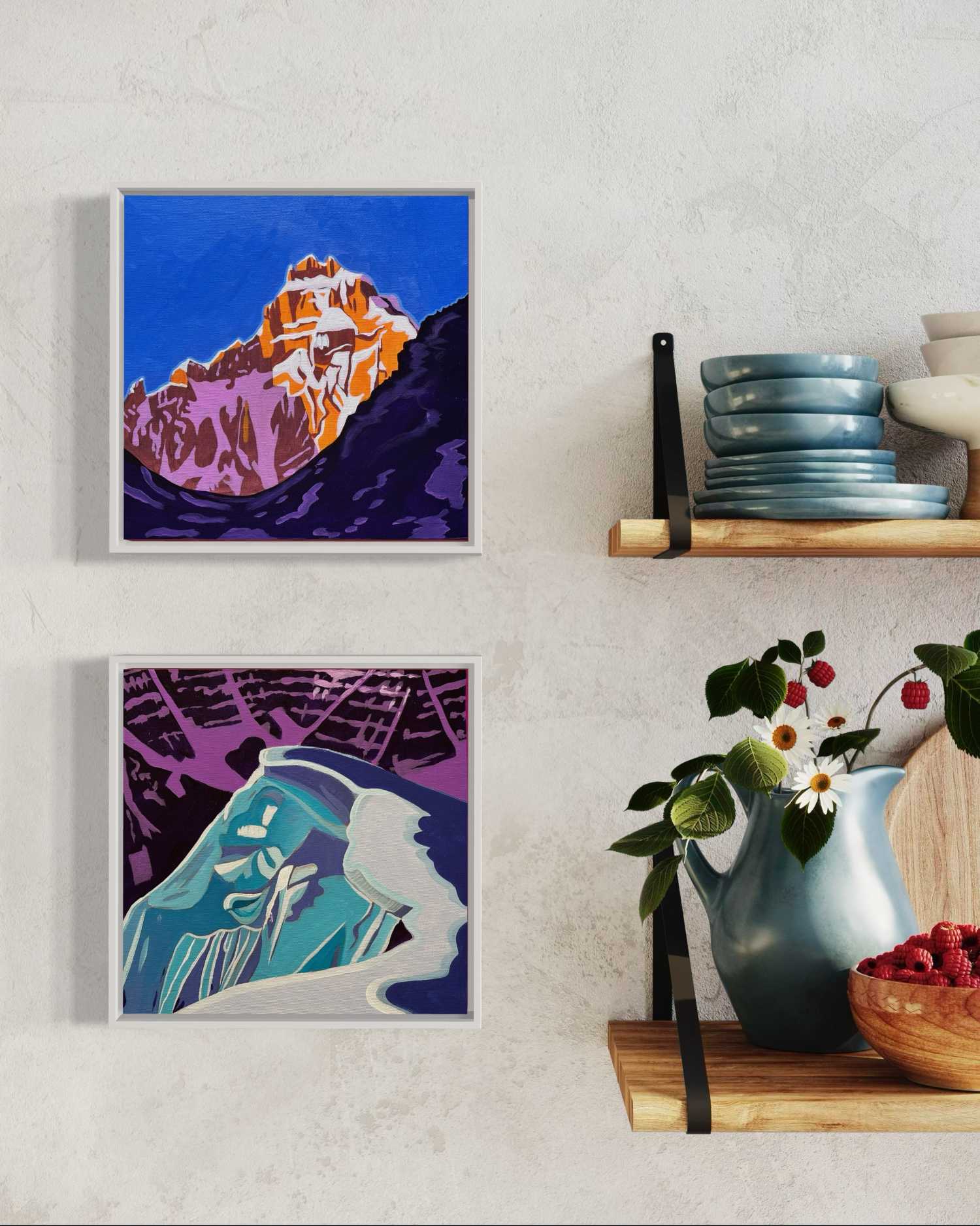
Contemporary Canadian Landscape Paintings: Canada from coast to coast
Travel has played an enormous role in my development as a Canadian landscape artist. My paintings have taken me from the West Coast to the East Coast, through the Rocky Mountains, across the Prairies and into Newfoundland. Every region has given me something different to paint.
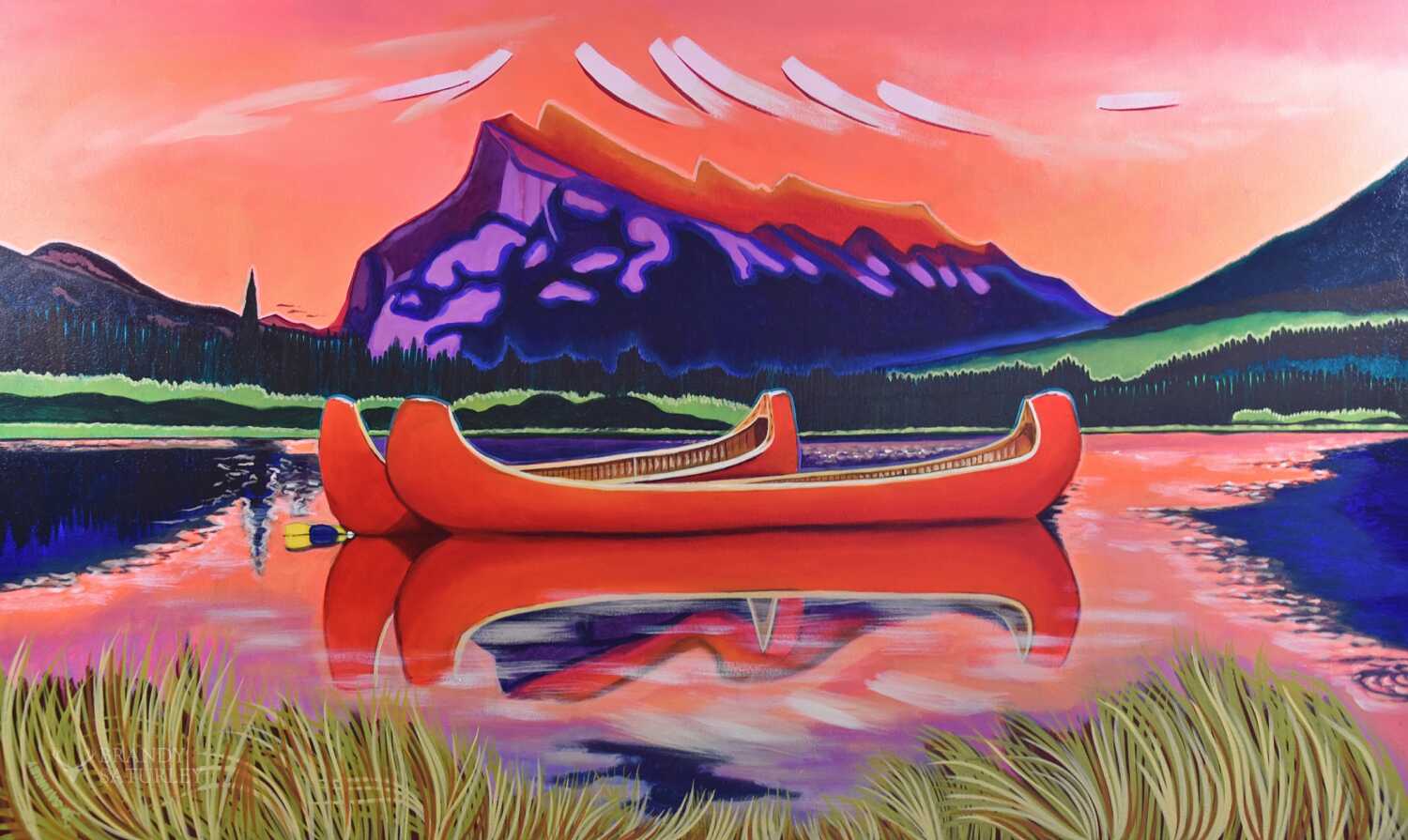
The Canadian Rockies
The Rocky Mountains offer some of the most recognizable landscapes in Canada. Mountains, lakes, glaciers and enormous skies create a visual language that is almost impossible to ignore. But rather than simply painting a postcard version of the Rockies, I am interested in the shapes, colours and emotional experience of being there. The mountains become both subject and symbol.
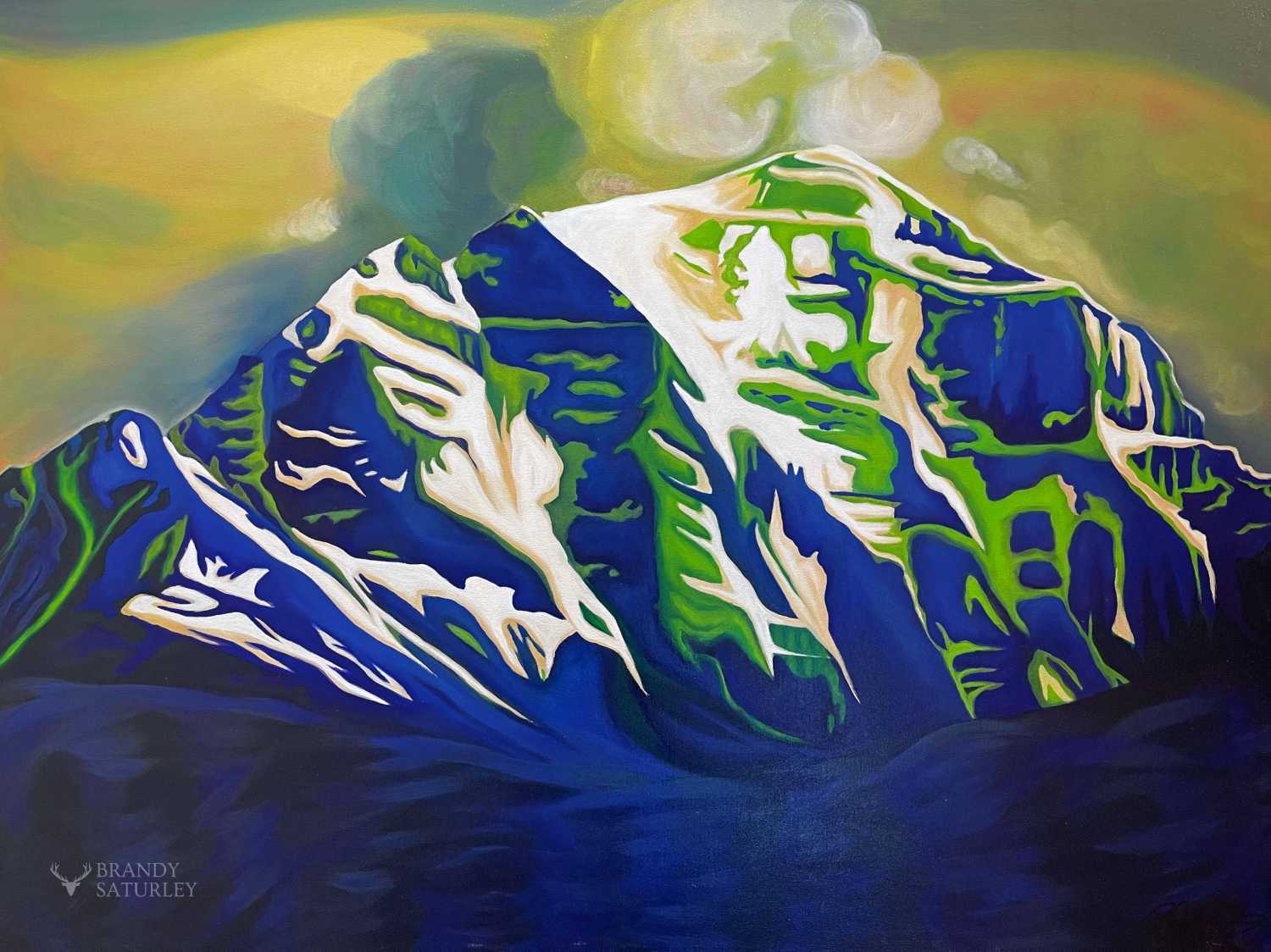
Mount Temple, acrylic on canvas, 36x48x1.5 inches Brandy Saturley
Newfoundland landscapes
Newfoundland has become another important part of my painting practice. The colourful houses, fishing boats, rocky coastline and deep Atlantic blues offer an extraordinary palette for a painter. My Newfoundland landscape paintings are rooted in my experiences of spending time on the island, including artist residencies and time spent painting in coastal communities.
Newfoundland has a visual personality all its own. It is colourful, rugged, dramatic and deeply connected to the sea.
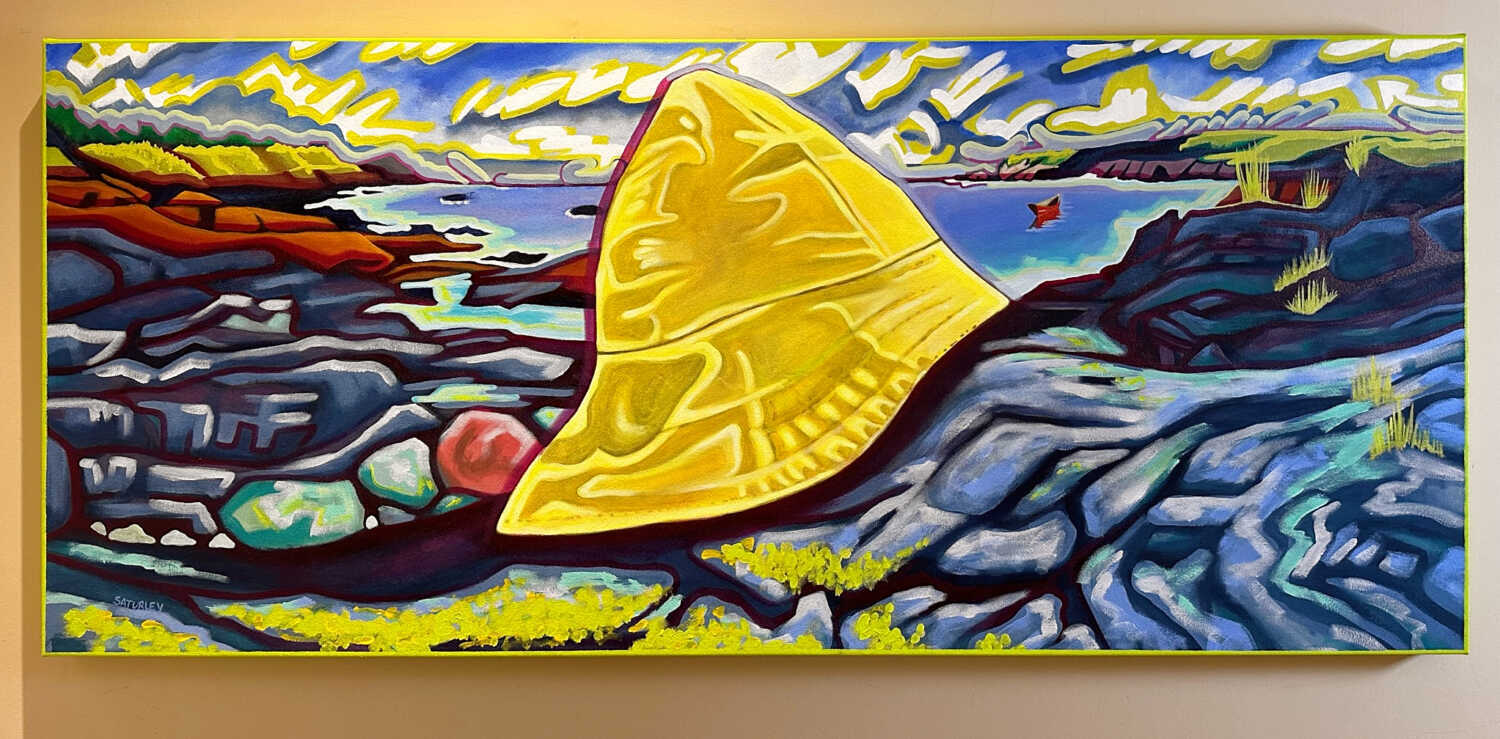
I Lost My Souwester in Pouch Cove, 2023 Acrylic on Canvas 28 x 64 in Brandy Saturley
The West Coast and Vancouver Island
Today, my attention is increasingly focused on the landscape close to home. Living on Vancouver Island has opened up an entirely new chapter in my painting practice. The beaches, forests, mountains and marine life of the West Coast have become an important source of inspiration.
I am particularly interested in the landscape around the Salish Sea, where the ocean, islands, forests and wildlife create an ever-changing visual environment. Sea lions, orcas, bald eagles, beaches and coastal forests have all begun finding their way into my recent paintings. After years of travelling across Canada to find subjects, I am discovering that there is still an enormous landscape waiting to be explored close to home.
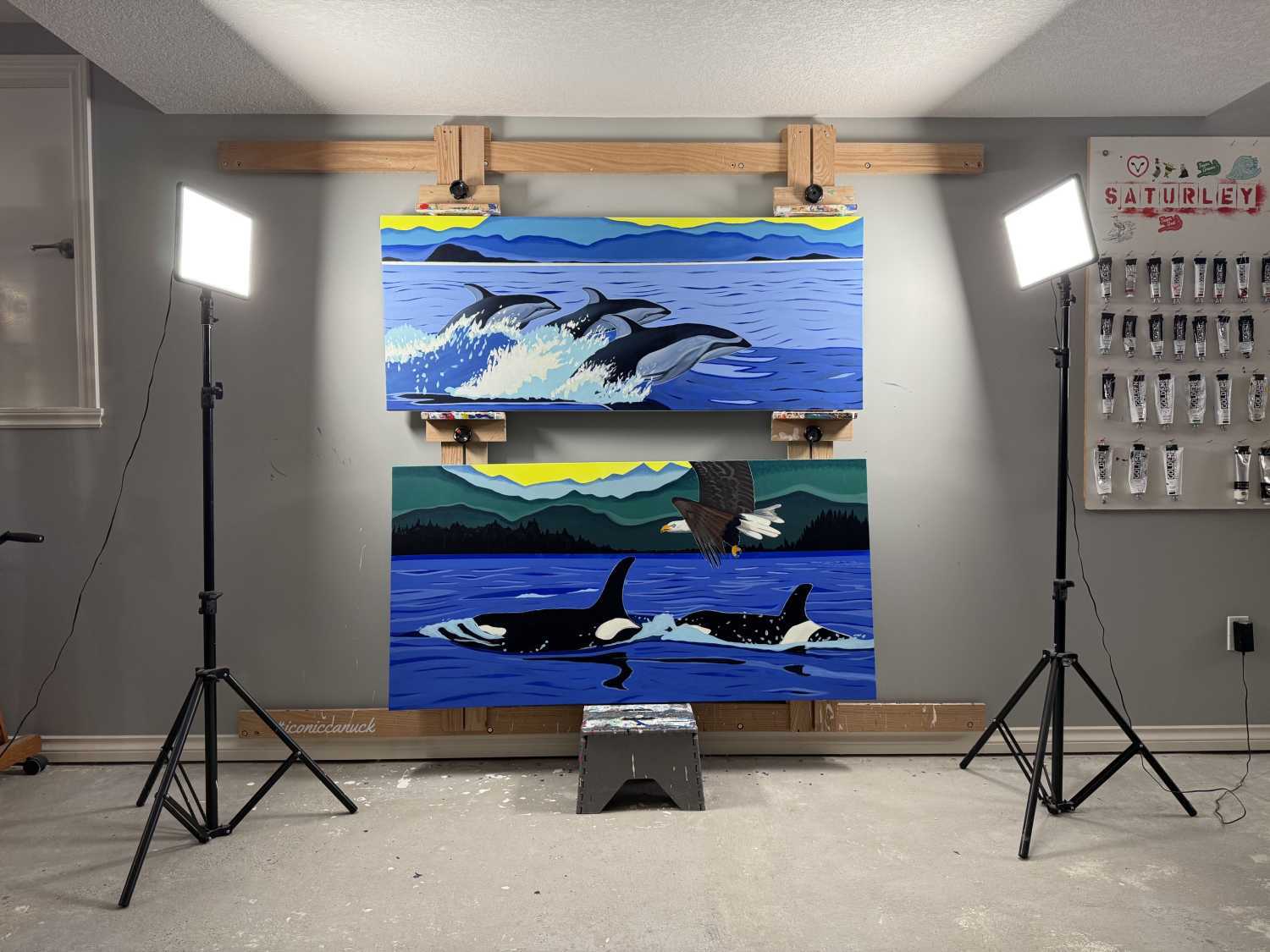
Two paintings of the Salish Sea by Brandy Saturley
Canadian landscape paintings are also about memory
One of the things I love most about painting landscapes is that a painting can mean something different to every viewer. I may paint a particular beach because of an experience I had there. Someone looking at the painting may remember a family holiday.
Another person may be reminded of the landscape where they grew up. Someone else may simply experience the colours and shapes as an emotional response. This is what makes Canadian landscape art so compelling. The artist brings one story to the painting. The viewer brings another.
The landscape becomes the place where those stories meet.
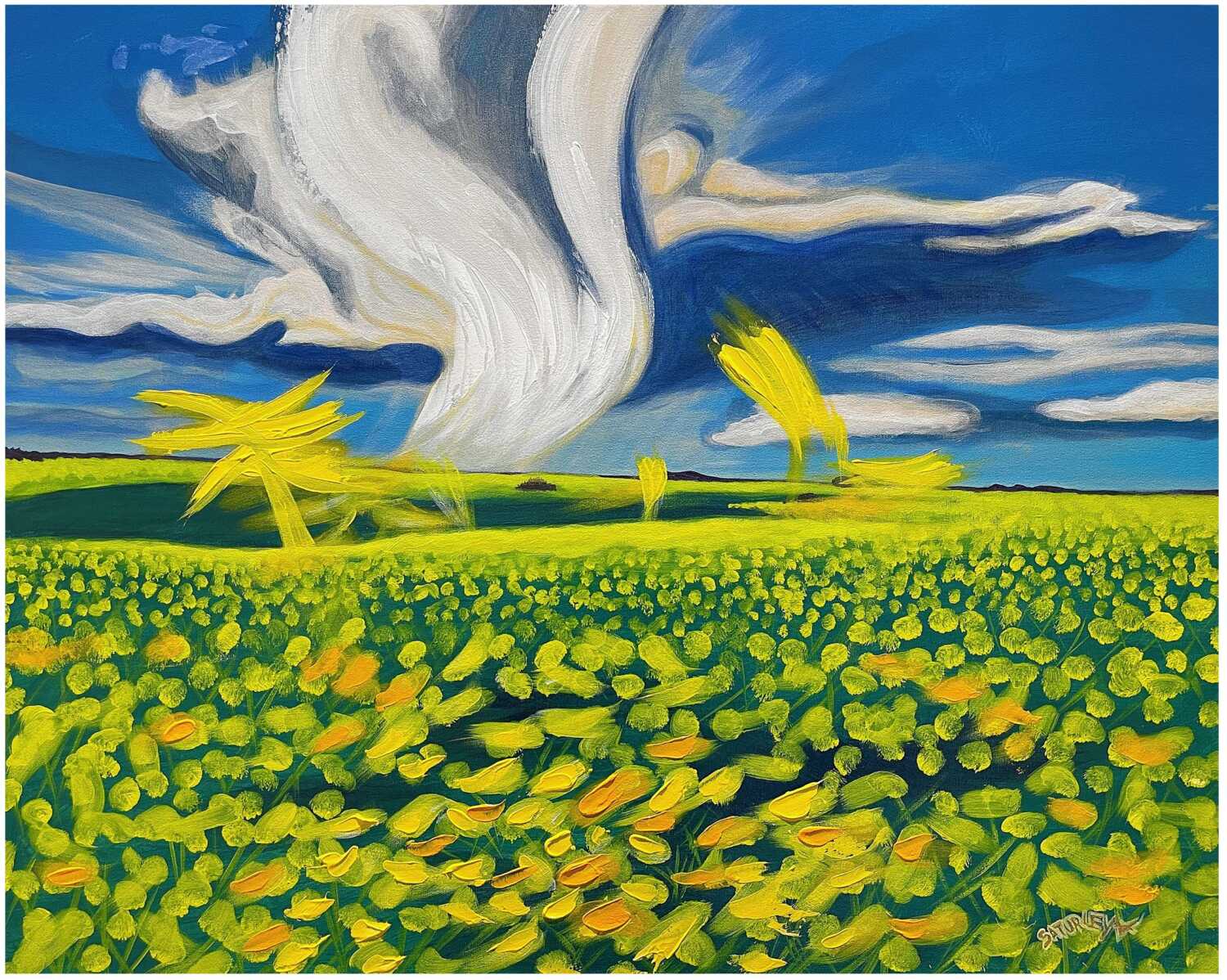
Prairie Flight, c. 2020 Acrylic 24 x 30 x 1.5 in Brandy Saturley
Contemporary Canadian landscape painting
Canadian landscape painting does not have to look a certain way. There is an important history of landscape painting in Canada, but contemporary Canadian artists continue to reinterpret the land through new materials, styles, ideas and perspectives. My own approach combines my fascination with Canadian iconography with the visual energy of Pop Art.
I am interested in the familiar Canadian symbols and landscapes that surround us, but I want to see what happens when they are pushed, simplified, amplified and reimagined. The result is my own form of contemporary Canadian landscape art. It is colourful. It is graphic. It is distinctly Canadian.
And sometimes, it is a little unexpected.
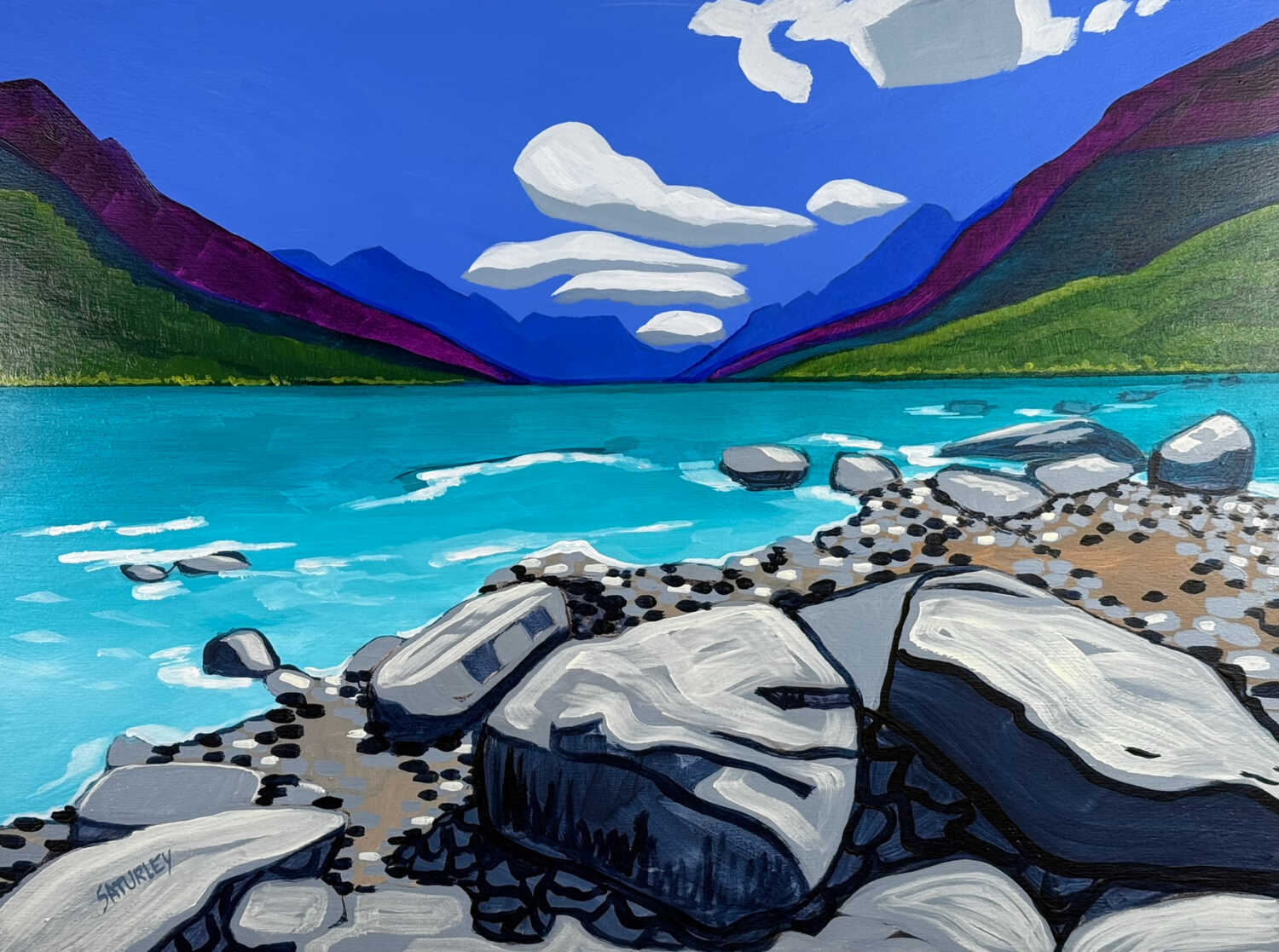
The Beach, c. 2025 Acrylic on wood panel 18 x 24 x 2 in Brandy Saturley
Painting the stories of Canada
Canada is an enormous country, and there will never be a shortage of landscapes to paint. There will always be another coastline, another mountain, another forest, another road leading somewhere I have never been. But after twenty years of painting professionally, I have learned that I am not really painting places.
I am painting stories of places. The landscape is the starting point. The colour, shape, memory and experience become the painting. From Newfoundland to Vancouver Island, from the Atlantic Ocean to the Pacific, my Canadian landscape paintings are an ongoing visual record of my experience of this country. I paint Canada because I am endlessly curious about it.
And I suspect I will never run out of Canada to paint.
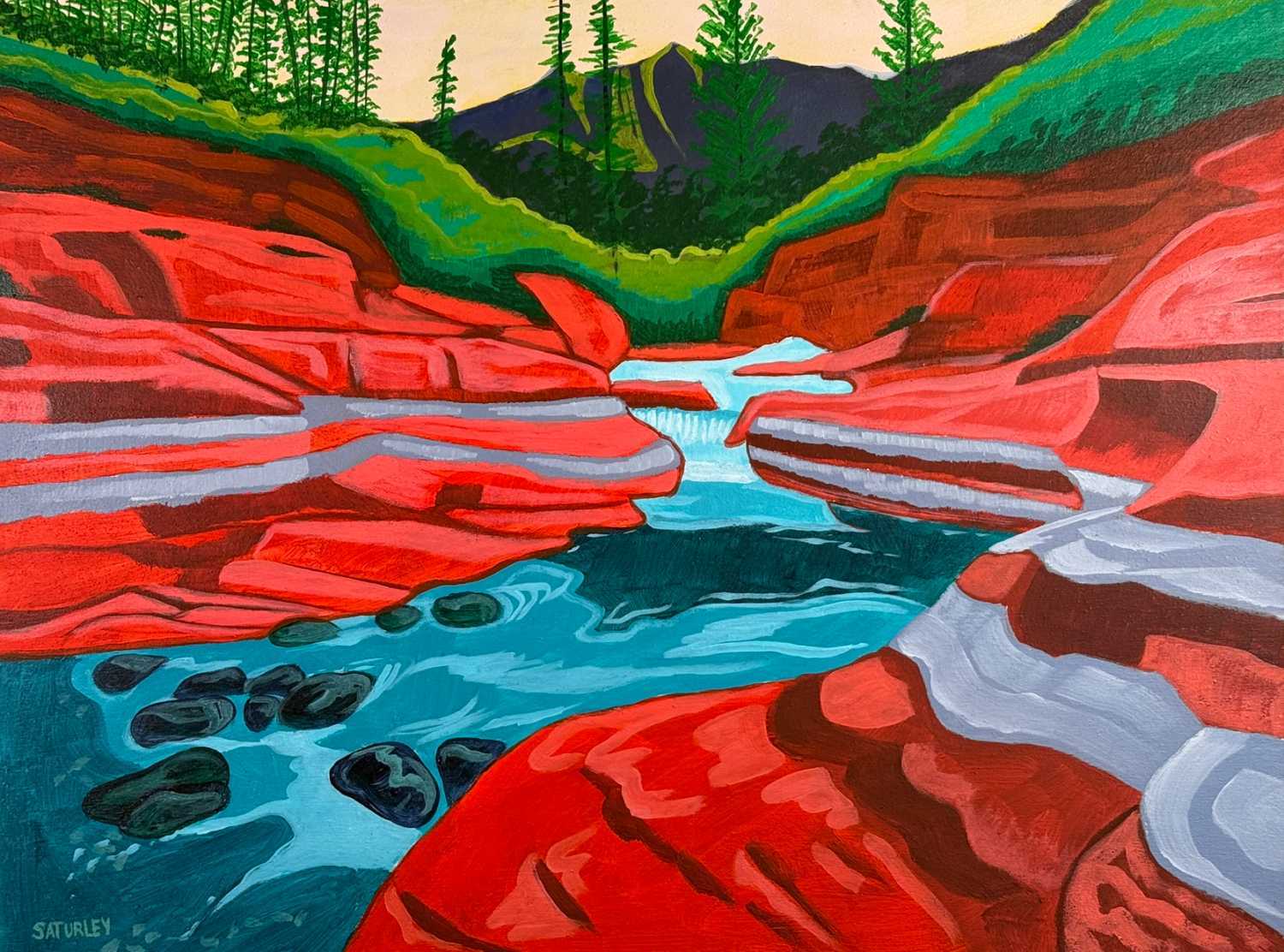
Red Rocks, c. 2025 Acrylic on wood panel 18 x 24 x 2 in Brandy Saturley
Explore More Canadian Art
If you enjoy Canadian landscape paintings, contemporary Canadian art and Pop Art-inspired paintings of Canada, I invite you to explore more of my work and follow my ongoing journey as a Canadian artist.
There are always new landscapes, stories and paintings emerging from the studio.