Canadian Art US Tariff
When Buying Canadian Art Comes With a 50% US Tariff
For years, Canadian artists have looked south to the United States as one of the most important markets for selling art. American collectors have bought Canadian paintings, galleries have represented Canadian artists, and Canadian artwork has crossed the border countless times on its way to new homes.
Now, that relationship has become considerably more complicated. As of August 2026, the United States has imposed a new 50% tariff on a range of Canadian imports, and that list includes something that may come as a surprise to many people: Canadian art. According to the Canadian Artists’ Representation/Le Front des artistes canadiens (CARFAC), the affected categories include paintings, drawings, pastels, collages, original prints, lithographs and sculptures. The tariff applies to covered works produced in Canada and imported into the United States.
For an American collector, this can dramatically change the cost of purchasing a Canadian artwork. Imagine finding a painting you love for $10,000. That $10,000 painting could now carry an additional $5,000 tariff when it enters the United States. Suddenly, the decision to purchase a Canadian painting becomes a very different financial proposition.
And this is where things get interesting.
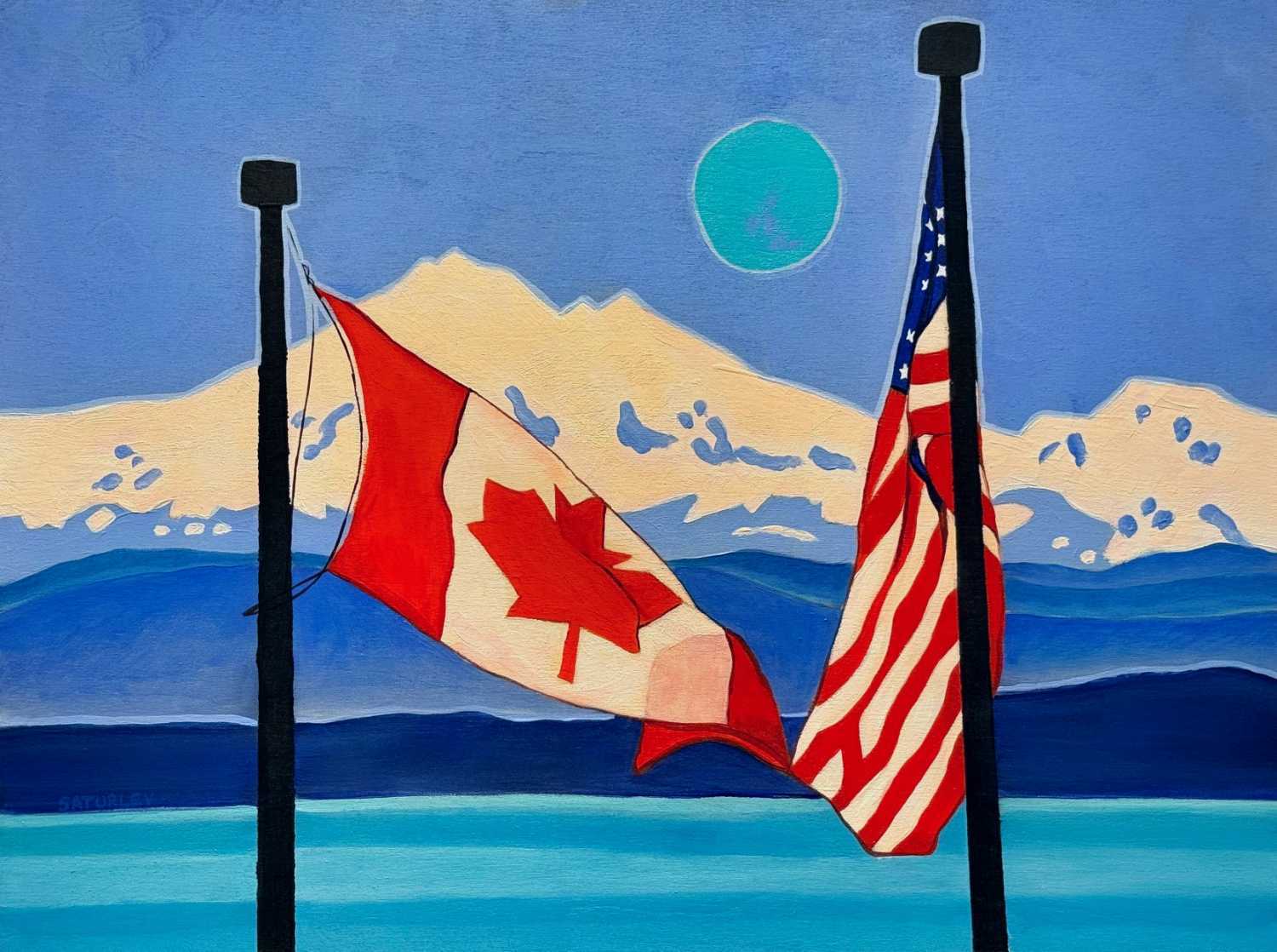
Lovers in a Dangerous Time (2025), c. 2025 Acrylic on wood panel 18 x 24 x 1.5 in Brandy Saturley
What does this mean for Canadian artists?
The United States has long been an important destination for Canadian art. It is a large and sophisticated art market with an enormous collector base. But this latest development is a reminder that relying heavily on a single international market can leave artists vulnerable to forces they cannot control. Artists can spend years building relationships with galleries, collectors and institutions in another country, only to find that a change in trade policy suddenly makes their work considerably more expensive for those collectors. That doesn’t mean Canadian artists should stop selling to the United States. It does mean we need to think more broadly.
Perhaps the question is no longer simply:
“How do I sell more art in the United States?”
Perhaps it is:
“How do I build a stronger market for Canadian art everywhere?”
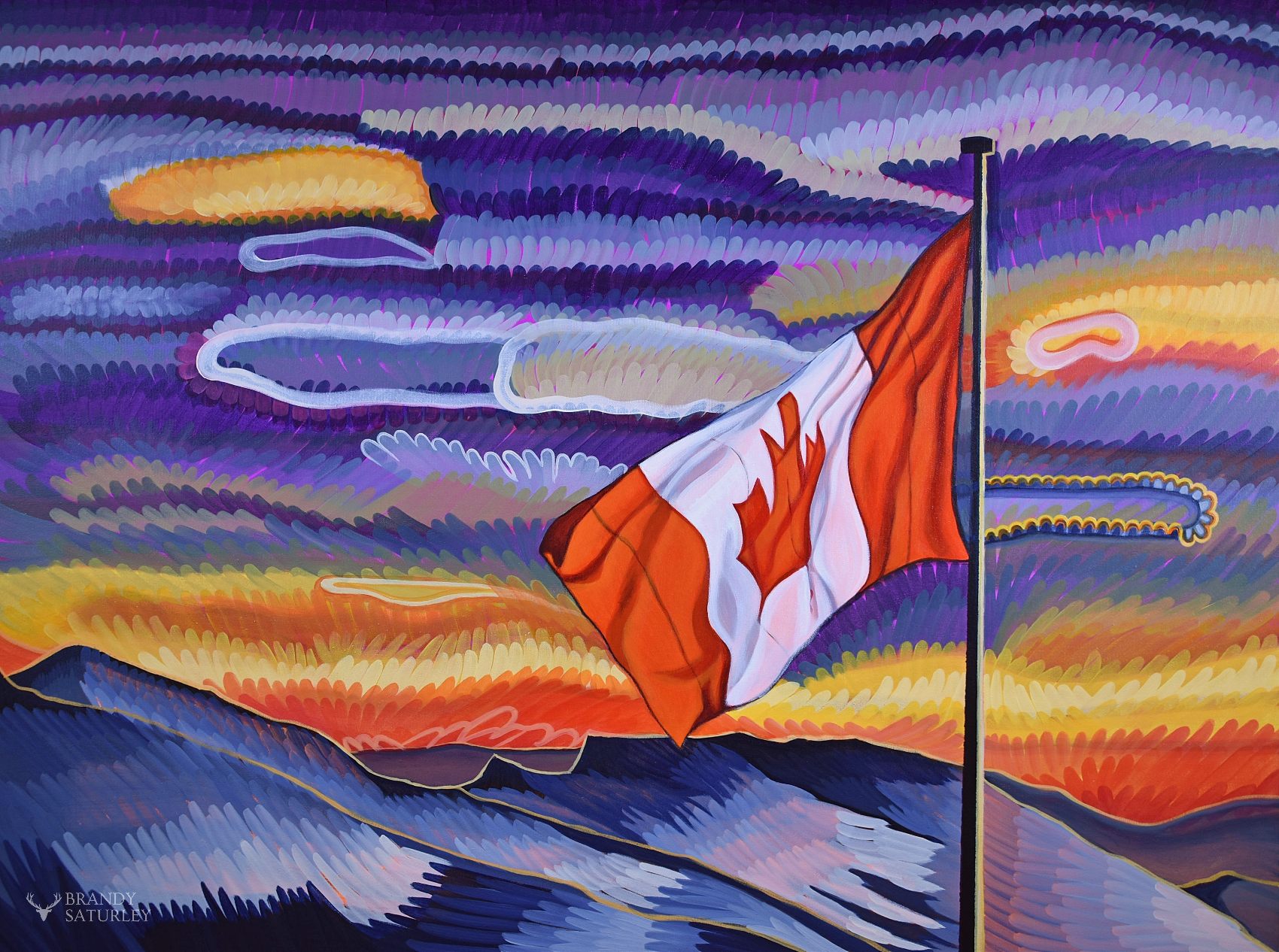
Stitched in Canada, c. 2023 Acrylic 36 x 48 x 1.5 in – Brandy Saturley
Canadian collectors have an opportunity
This is where I believe Canadian collectors have an important role to play. If you have been thinking about buying a painting by a Canadian artist, this may be the moment to look closer to home. Canada has an extraordinary community of artists working across the country. From Newfoundland to British Columbia, from the Arctic to the Prairies and the Great Lakes, artists are telling the stories of this country in wildly different ways.
Canadian art is not one thing. It is landscape and abstraction. It is portraiture and Pop Art. It is Indigenous art, contemporary practice, photography, sculpture, ceramics and so much more. It is our stories, our places, our people and our particular way of seeing the world. And buying Canadian art does more than put a beautiful painting on your wall.
It supports an artist’s career. It keeps money circulating within Canada’s creative economy. It helps galleries continue to operate. And it gives Canadian stories a place to live.

Ride My Wake, c. 2014 Acrylic 36 x 48 x 1.5 in – Brandy Saturley – Private Collection Edmonton, Canada
Canadian Art US Tariff: Perhaps it is time to look beyond the American market
For Canadian artists, there is another opportunity hidden inside this difficult moment. If the United States becomes a more expensive market for Canadian art, perhaps we should be looking more deliberately toward other international markets. Europe, The United Kingdom, Australia, Asia and, importantly, Canada itself.
Canadian artists already have audiences around the world. The challenge is to continue building those audiences rather than assuming that the American market will always be the easiest or most accessible destination. For me, this is particularly relevant because so much of my work is about Canada.
For more than 20 years, I have been painting the people, places, wildlife, landscapes and cultural symbols that make up my own Canadian experience. My work has travelled across the country and beyond, and I have always believed that Canadian stories can resonate with audiences far outside our borders. But perhaps we should also be asking whether Canadians themselves are collecting enough Canadian art.
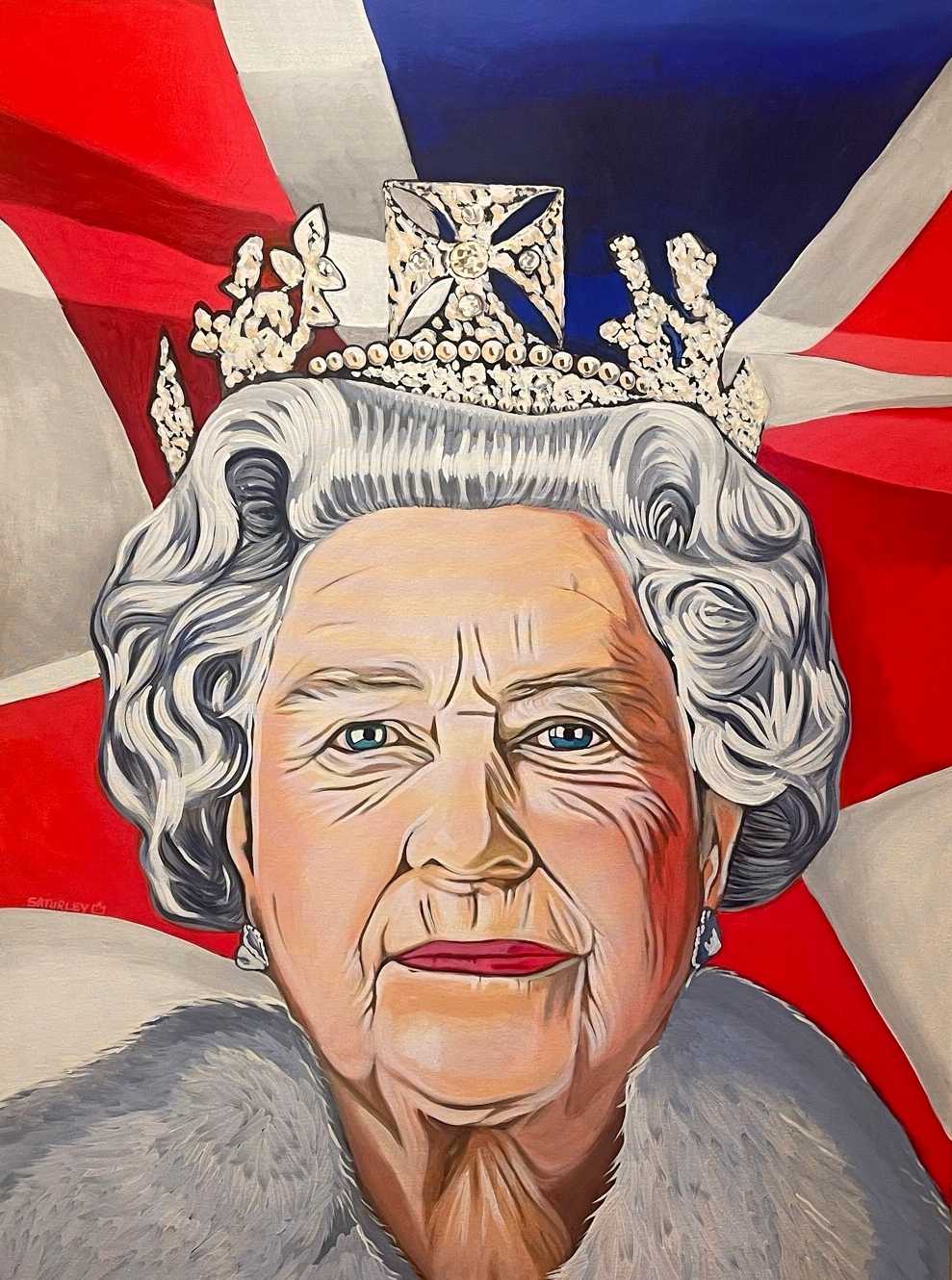
Royal Gaze 122cm x 91cm Acrylic on canvas – Brandy Saturley
Investing in Canadian stories
When you purchase an original painting from a Canadian artist, you are not simply purchasing an object. You are investing in a story. You might be buying a painting of a place you have visited, a landscape that reminds you of home, an animal that feels distinctly Canadian, or an interpretation of Canada that you have never seen before. You are also helping determine which stories survive. Artists document their time. We notice things. We interpret them. We make sense of the places we live and the moments we experience. A painting can become a record of a particular Canada. That makes collecting Canadian art more than a decorative decision.
It is a cultural investment.

Blind Love, c. 2026 Acrylic On Canvas 30 x 30 x 1.5 in – Brandy Saturley
The Canadian art market needs Canadian collectors
For years, Canadian artists have been encouraged to look outward. We have been told to build international careers, enter international markets, exhibit internationally and find collectors around the world. I still believe in all of that. But perhaps we also need to look inward. Canada has a tremendous amount of wealth, cultural diversity and artistic talent. There are collectors here who could play a much larger role in supporting Canadian artists. Imagine what could happen if more Canadians decided that their next artwork would come from a Canadian artist.
Imagine if Canadian businesses made Canadian art part of their collections. Imagine if Canadian homes, hotels, offices, hospitals and public spaces increasingly reflected the work of artists who live and work here. That would create a stronger ecosystem for Canadian art. And a stronger Canadian art market means Canadian artists have more choices.

Dreaming Under Northern Lights, 2022 Acrylic on Canvas 36 x 36 in – Brandy Saturley
Canadian Art US Tariff: The world is bigger than one border
The 50% U.S. tariff is frustrating for Canadian artists and collectors alike. It adds cost and uncertainty to something that should ultimately be about connecting a person with a work of art. But perhaps it also gives us a reason to rethink how we build an art career and how we collect art. The American market will undoubtedly remain important. But it does not have to be the only market. There are collectors elsewhere who are interested in Canadian art. There are galleries and art fairs beyond the United States. There are international audiences discovering Canadian artists every day.
And there is an enormous market sitting right here at home.
Canada.
Perhaps this is the moment for Canadians to look at the art being created around them and ask:
What Canadian artist would I like to live with?
Because while trade policy can put a tariff on a painting crossing a border, it cannot put a tariff on the cultural value of the painting itself. And perhaps the best response is to make sure Canadian art continues to find homes, here in Canada and around the world.
Buy Canadian art. Collect Canadian stories. Keep Canadian creativity moving.

Monarch of The Arctic Realms, c. 2024 acrylic and gouache on canvas 48 x 48 x 1.5 in – Brandy Saturley