Beyond the Painting
Beyond the Painting: The Personal Connections Behind an Art Career
Over the years, I have come to realize that some of the most meaningful parts of my art career have very little to do with the time I spend alone in my studio. They have to do with the people I meet because of my paintings, and the unexpected relationships that develop along the way.
Since leaving my full-time job in 2006 to pursue art as a career, I have created hundreds of paintings, exhibited across Canada and internationally, and met collectors from all walks of life. I expected that building a career as an artist would involve making work, exhibiting, marketing, and finding people who connected with what I was doing. What I didn’t fully anticipate was the depth of the personal connections that would grow from those encounters.
Sometimes, a painting catches someone’s attention because of its colour, subject, or familiar Canadian imagery. Sometimes, it evokes a memory, a place, or a person they love. And sometimes, a collector develops such a deep connection to a painting that they want to know more about the person who created it.
I understand that curiosity. When a work of art becomes meaningful to someone, it is natural to wonder about the person behind it. What inspired them? What experiences shaped their perspective? What were they thinking about when they made it?
I am happy to share those stories. But over time, I have also come to understand that the relationship between an artist and a collector can become something much more than an exchange of money for a painting. It can be a connection that carries joy, unexpected intimacy, and, at times, a profound sense of responsibility.
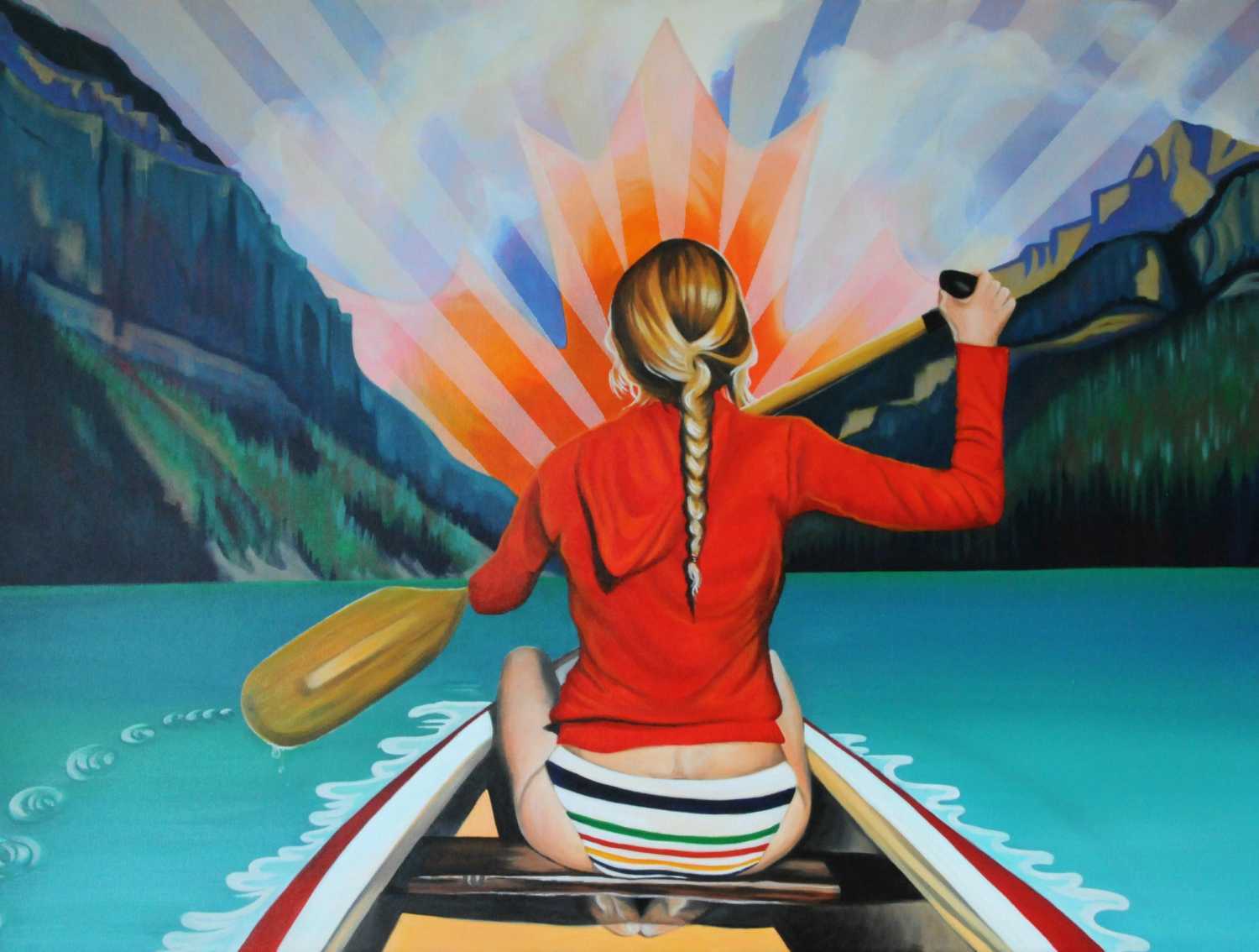
Ride My Wake, c. 2014 Acrylic on canvas 36 x 48 x 1.5 in Brandy Saturley
When a Painting Becomes Personal
My paintings often explore Canadian identity, cultural icons, our relationship with the landscape, and the stories we tell ourselves about the place we call home. I am interested in the symbols and imagery that shape our collective identity, but I am equally interested in the personal stories that exist beneath the surface.
When I begin a painting, I have my own reasons for making it. There may be a photograph that captures my imagination, a place I have visited, a moment in Canadian history, or an idea I want to explore. I make decisions about composition, colour, symbolism, and the details that will bring the work to life. But once a painting leaves my studio, its story begins to expand beyond my intentions.
A collector brings their own experiences, memories, and relationships to the work. Something I painted for one reason may hold an entirely different meaning for someone else. I cannot always anticipate what they will see, and I certainly cannot dictate what the painting will eventually mean to them. I find that fascinating. It is one of the things that keeps me curious about the relationship between art and the people who live with it. I remember a collector who purchased one of my paintings of Three Sisters Mountain. Later, they explained to me that the three peaks represented their own three sisters. I had painted a mountain, but they had seen their family.
That simple revelation has stayed with me. What I had approached as a landscape had become a personal symbol of family and connection. The painting had taken on a meaning that extended beyond the place itself and into the collector’s own life. These moments remind me that a painting doesn’t have to tell only one story. My interpretation is embedded in the choices I make, but the viewer brings their own life to the experience. Their memories, relationships, and emotions become part of what they see. Sometimes collectors share these personal connections with me. Other times, I may never know the full extent of what a painting means to the person who owns it.
We may be the ones who make the paintings, but we don’t have the final word on their meaning.
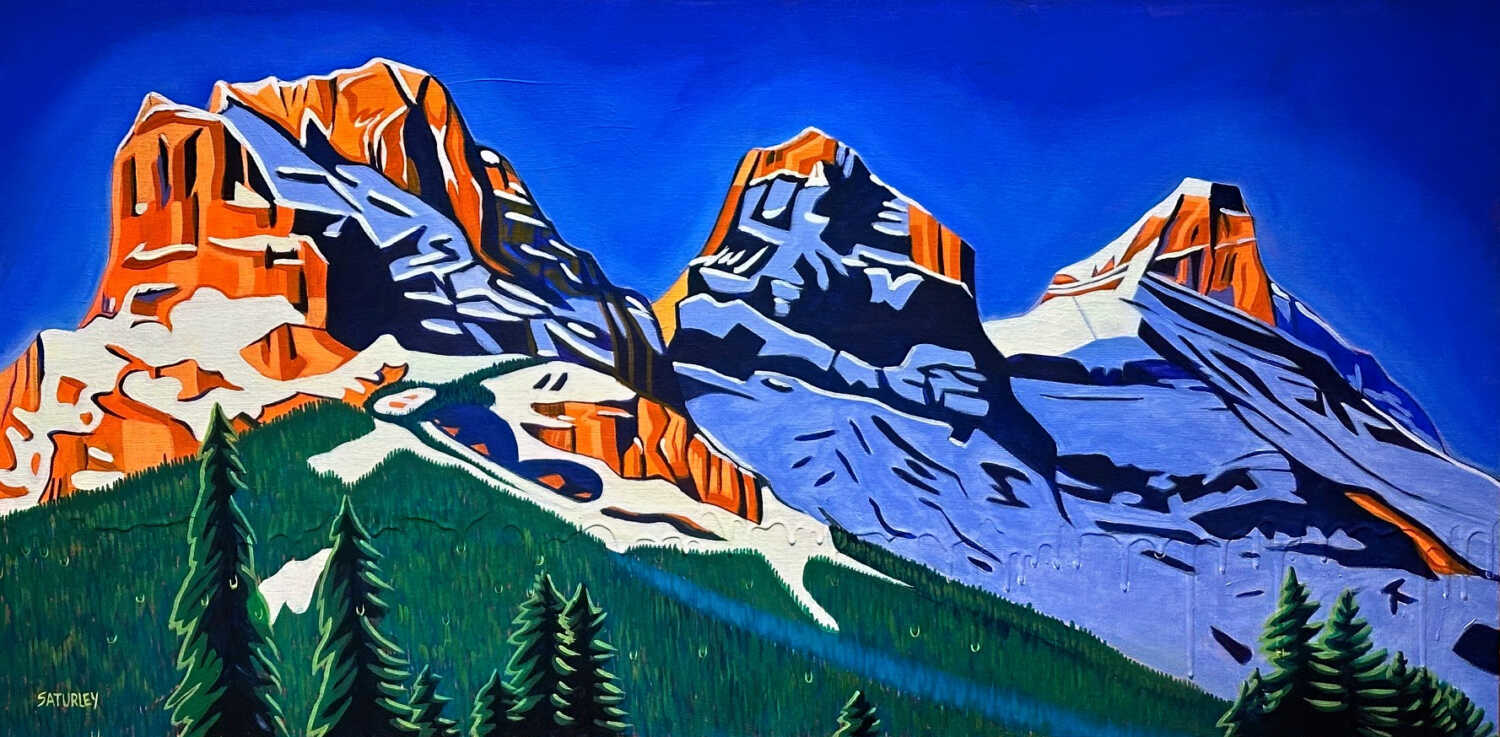
Three Sisters, 2025 Oil and Acrylic on canvas 24 x 48 x 1.5 in Brandy Saturley
When a Painting Becomes Part of Someone’s Story
Some relationships that begin with a painting continue to grow long after the work has left the studio.
One of the most memorable connections of my career began with a portrait I painted of a collector, capturing a moment during the Vimy100 anniversary commemorations. At the time, I could not have known the journey that painting would take, or the place it would eventually hold in both our lives. When I travelled to the Banff Centre for Arts for a residency, the collector followed my work and made a point of coming to see me. They took me out for lunch, and shortly afterwards, we began communicating on a regular basis. Our conversations continued over time, and they subsequently purchased three of my paintings.
What began with a shared connection to a work of art developed into a relationship that extended well beyond the usual exchange between artist and collector. As the years passed, I stayed in touch with them through their battle with cancer. It was a difficult time, and I valued being able to maintain that connection as they navigated their illness. Eventually, the cancer took their life. At their funeral, the portrait I had painted of them during the Vimy100 commemorations was on display.
I have thought about that painting many times since. When I created it, I was capturing a particular moment, one connected to remembrance, history, and the Canadian experience. I could never have anticipated that the portrait would eventually be present at the funeral of the person I had painted. The work had become more than a record of a moment. It had become part of a much larger story, one that included a friendship, the passage of time, and the loss of someone whose life had intersected with mine through my art.
There is something profoundly moving about that.
As artists, we cannot know where our paintings will go or what role they will eventually play in someone’s life. We make the work, release it into the world, and hope it finds a meaningful connection. Sometimes, that connection reaches far beyond anything we could have imagined when we stood in front of the canvas.
Experiences like this have deepened my understanding of what it means to share my work with others. When someone allows you into their life because of something you have created, you recognize that you are being trusted with something that matters to them.
I don’t take that lightly.
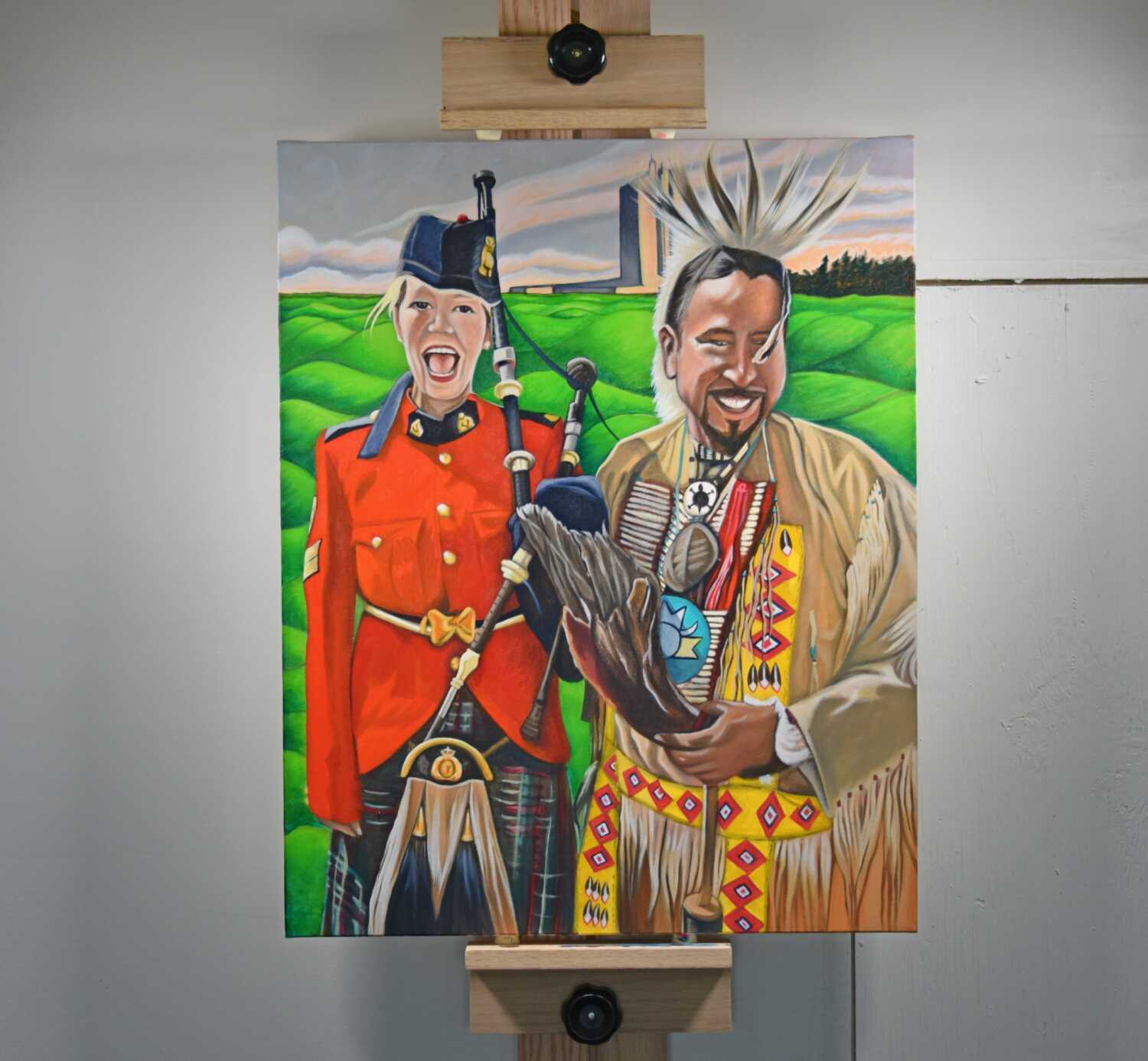
Vimy Jam Acrylic 30 x 24 x 1.5 in Brandy Saturley
The Joy and Responsibility of Connection
There is a particular joy in discovering that a painting has become important to someone. It is one thing to have a person appreciate your work, but it is quite another to hear how deeply they connect with it.
These connections can be unexpected. A landscape can represent a family. An image inspired by a moment in Canadian history can become part of a person’s own life story. A painting can lead to conversations, friendships, and relationships that continue for years. I feel fortunate to have experienced this side of an art career. But there is another side to it, too. When people develop a strong connection to your work, their interest sometimes extends to you as the artist. They want to know who you are, hear your stories, meet you in person, have a photograph taken together, or ask for an autograph.
These are experiences I have had to get used to as my career has grown. Most of my working life is spent alone in my studio. Creating art is a solitary pursuit. I spend hours thinking, observing, experimenting, and working through the many decisions that eventually become a finished painting. It is an inward-looking process, one that requires concentration, time, and space.
I don’t spend those hours thinking about being a public figure. I am thinking about the work in front of me. Yet the paintings can take me into a very different world, one where people are interested in the person who made them. It can feel a little surreal to move between the quiet of the studio and the expectations that sometimes accompany being a recognized artist.
I understand the curiosity. When we feel a strong connection to something an artist has created, we may want to know more about the person behind it. Meeting the artist can add another dimension to the experience of owning a painting. At the same time, I have had to learn that the public identity of an artist and the private person who creates the work are not quite the same thing.
I am still the person who spends hours alone with a canvas, trying to resolve a composition or find just the right shade of blue. The paintings may travel farther than I do, and they may introduce me to people I would never otherwise meet, but the creative process remains deeply personal. For me, part of the responsibility of being an artist is learning how to navigate that difference. It means appreciating the people who connect with my work, recognizing the trust they place in me, and remaining genuine in those encounters, while also protecting the solitude that allows me to create.
I am still learning to find that balance.
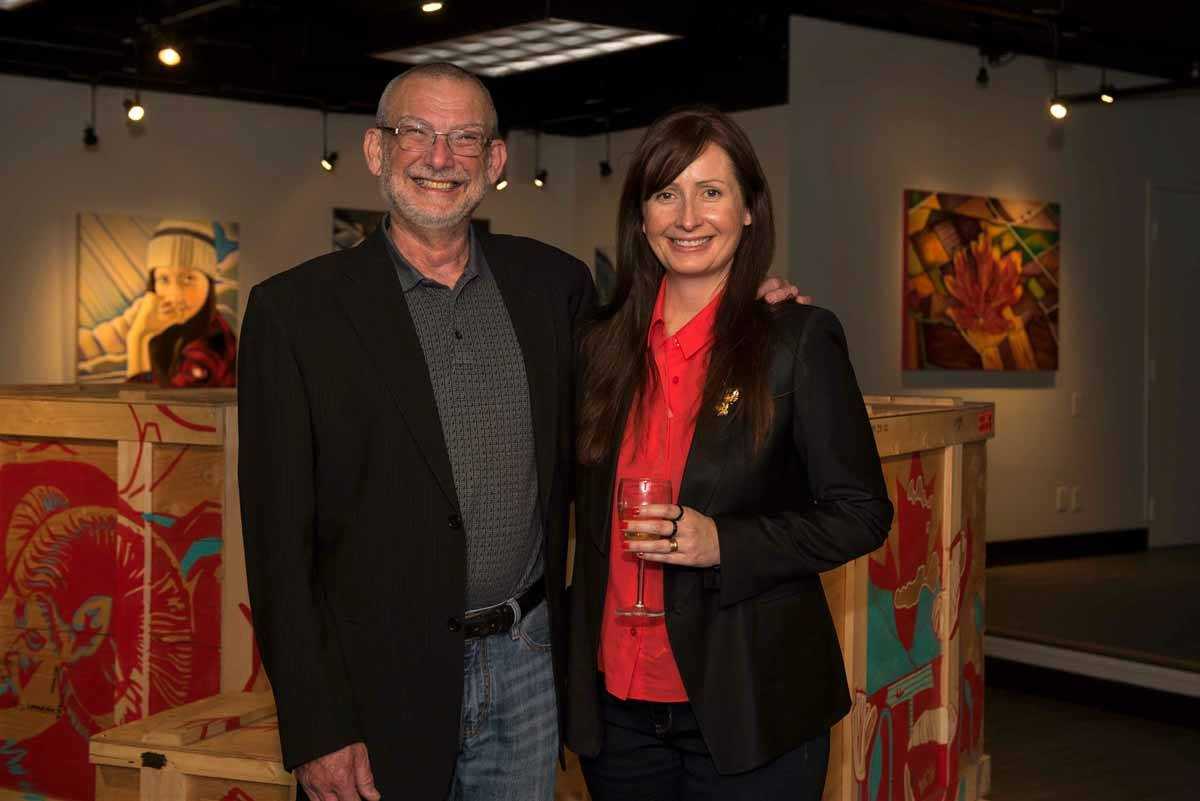
More Than a Transaction
The business of being an artist has its practical realities. Paintings need to be priced, packaged, shipped, exhibited, and sold. There are deadlines, expenses, and countless hours of work behind the scenes. Building a sustainable career requires much more than simply painting.
But if I measured my career only by the number of paintings I have sold or the exhibitions I have participated in, I would miss an important part of the story.
My work has introduced me to people I might never otherwise have encountered. It has created conversations and connections built around shared interests, memories, and ways of seeing the world. Some relationships begin with a single painting. Others continue as collectors follow my work and career over time. These relationships remind me that an art career is not built entirely within the four walls of a studio. It is also built through the exchange between the person who creates and the person who responds.
When someone purchases a painting, they are choosing to live with a piece of my perspective. They may connect with the imagery, the story, or simply the feeling the work evokes. Over time, the painting may become intertwined with their own experiences, changing meaning as their life unfolds. That is something I cannot plan or manufacture. All I can do is make the work I believe in and remain open to the connections that follow.
I also recognize that a meaningful relationship does not require constant contact or a particular kind of closeness. Every collector is different, and every relationship develops in its own way. What matters to me is approaching those connections with sincerity and respect, without losing sight of the person I am outside my work.
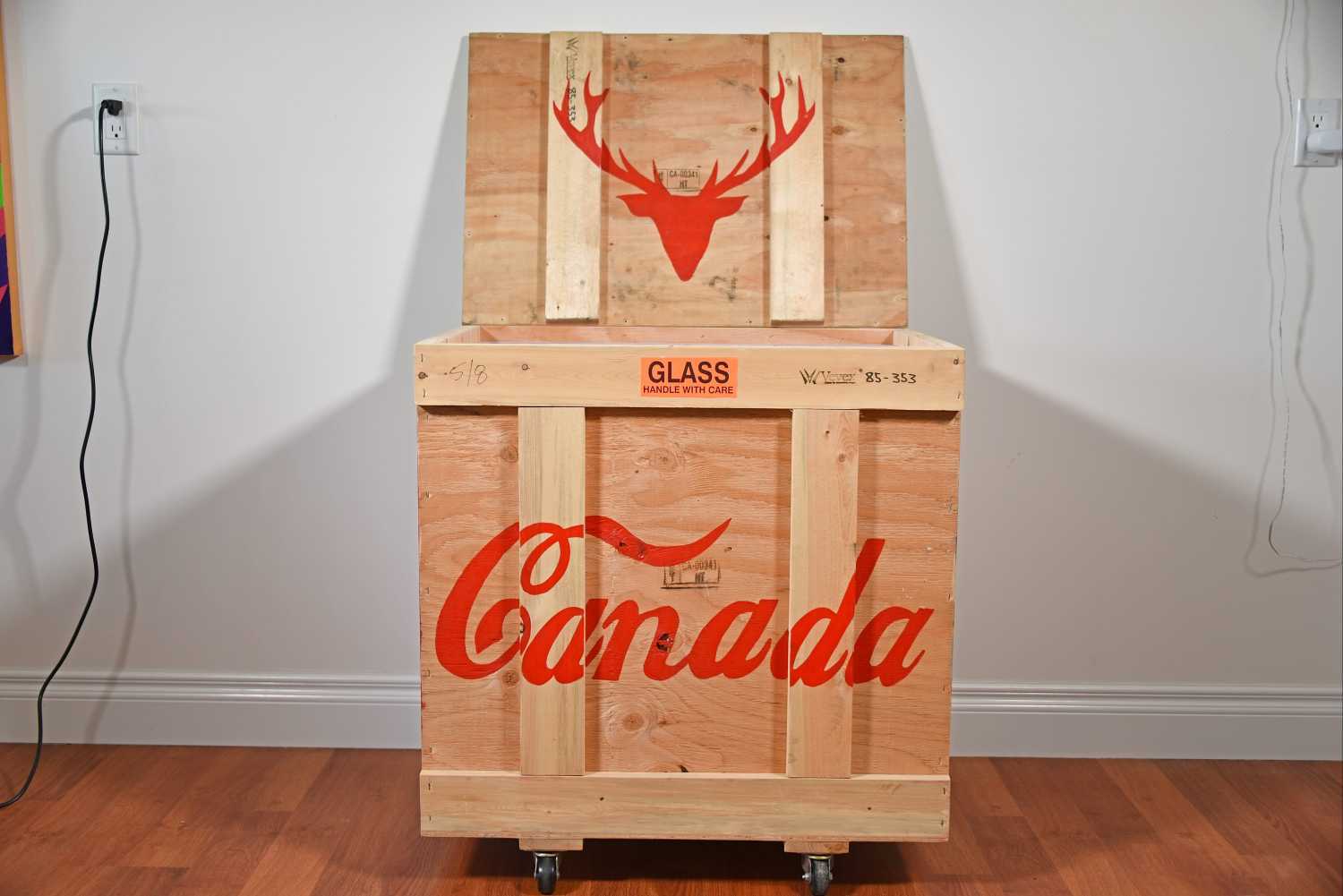
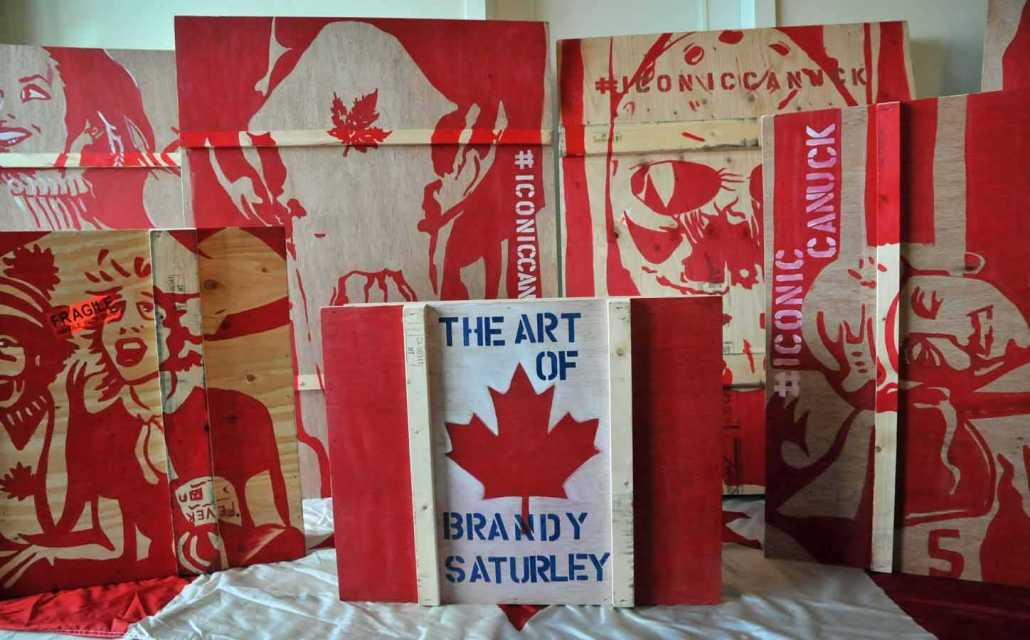
The Art of Brandy Saturley shipping crate
The Stories Continue
After nearly two decades as a full-time artist, I remain fascinated by the unpredictable life of a painting.
I can spend weeks or months bringing a work into existence, thinking carefully about its composition, colours, symbols, and meaning. Yet once it leaves my studio, I no longer control the story. It becomes part of someone else’s world, carrying whatever meaning they discover in it. A painting of a mountain can become a symbol of family. A portrait created to commemorate an important moment in Canadian history can become a treasured reminder of a person’s life. A simple encounter at an exhibition can lead to a relationship that lasts for years.
These experiences have taught me that being an artist is about more than making objects for people to collect. It is about creating work that can connect with others in ways both visible and unexpected. I feel privileged when someone shares a personal story with me, when they tell me what a painting means to them, or when I discover that something I created has become part of their life in a way I could never have foreseen.
I also understand that these connections carry a responsibility. They ask me to be thoughtful about the person behind the collector, to appreciate the trust involved, and to remember that while my work may be public, the process of making it begins in a very private place. The paintings may begin with me, but their stories do not end when they leave my studio.
In many ways, that is one of the greatest gifts of an art career. I set out to create paintings, and along the way, those paintings have introduced me to people, opened doors to unexpected relationships, and allowed me to become part of stories that extend far beyond my own.
I could never have planned that when I began. And I would not want to.
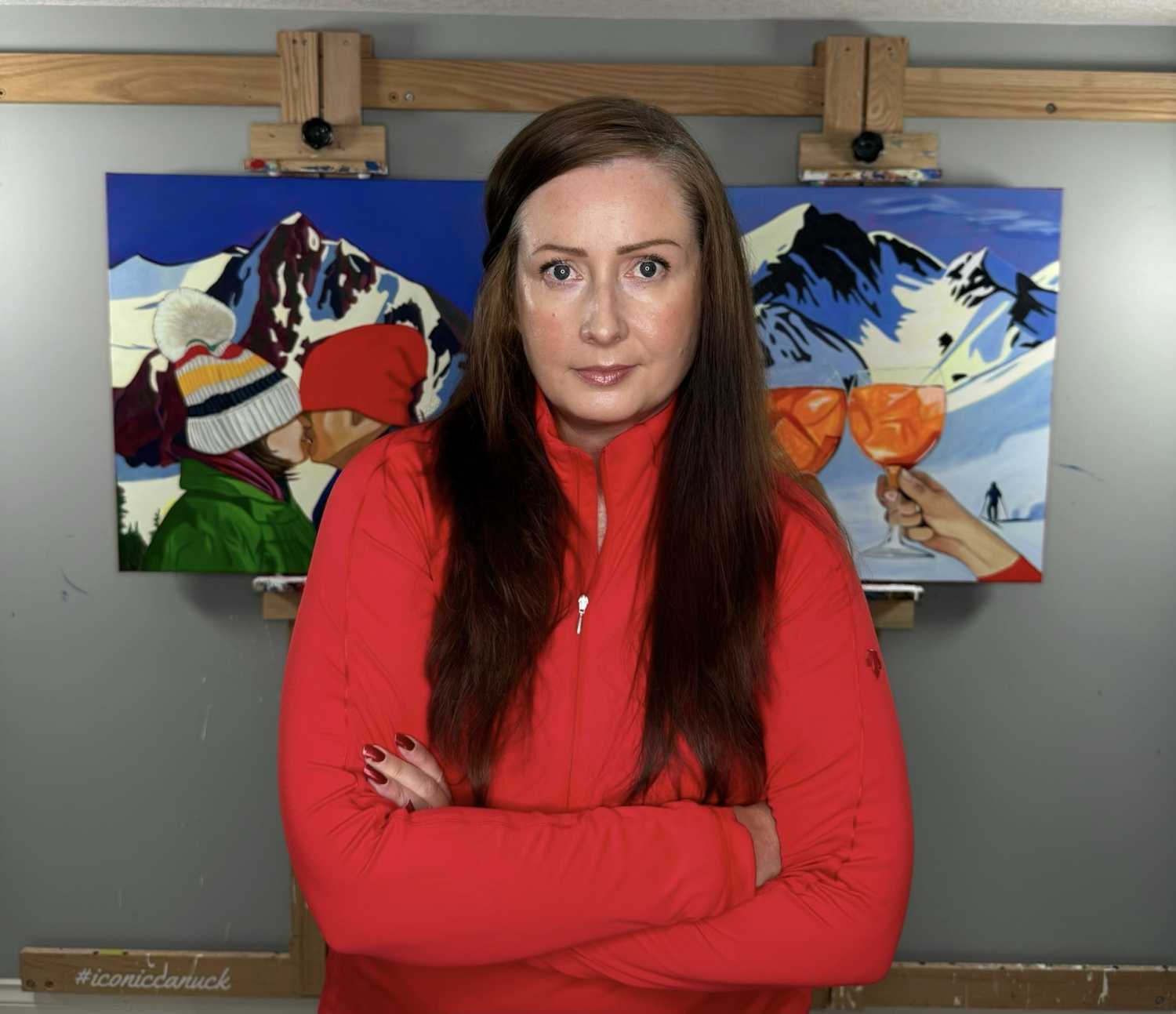
Brandy Saturley in her Parksville, BC studio