20 Years Painting Canada
What Nearly 20 Years of Painting Canada Has Taught Me
After nearly two decades of painting my way across Canada, one thing has become abundantly clear: Canada is not one art scene. It never was. After nearly 20 years painting Canada one thing is clear – Regionalism is alive and well, quietly shaping subject matter, price points, conversations, and even how artists and collectors relate to one another.
Every province carries its own visual accent.
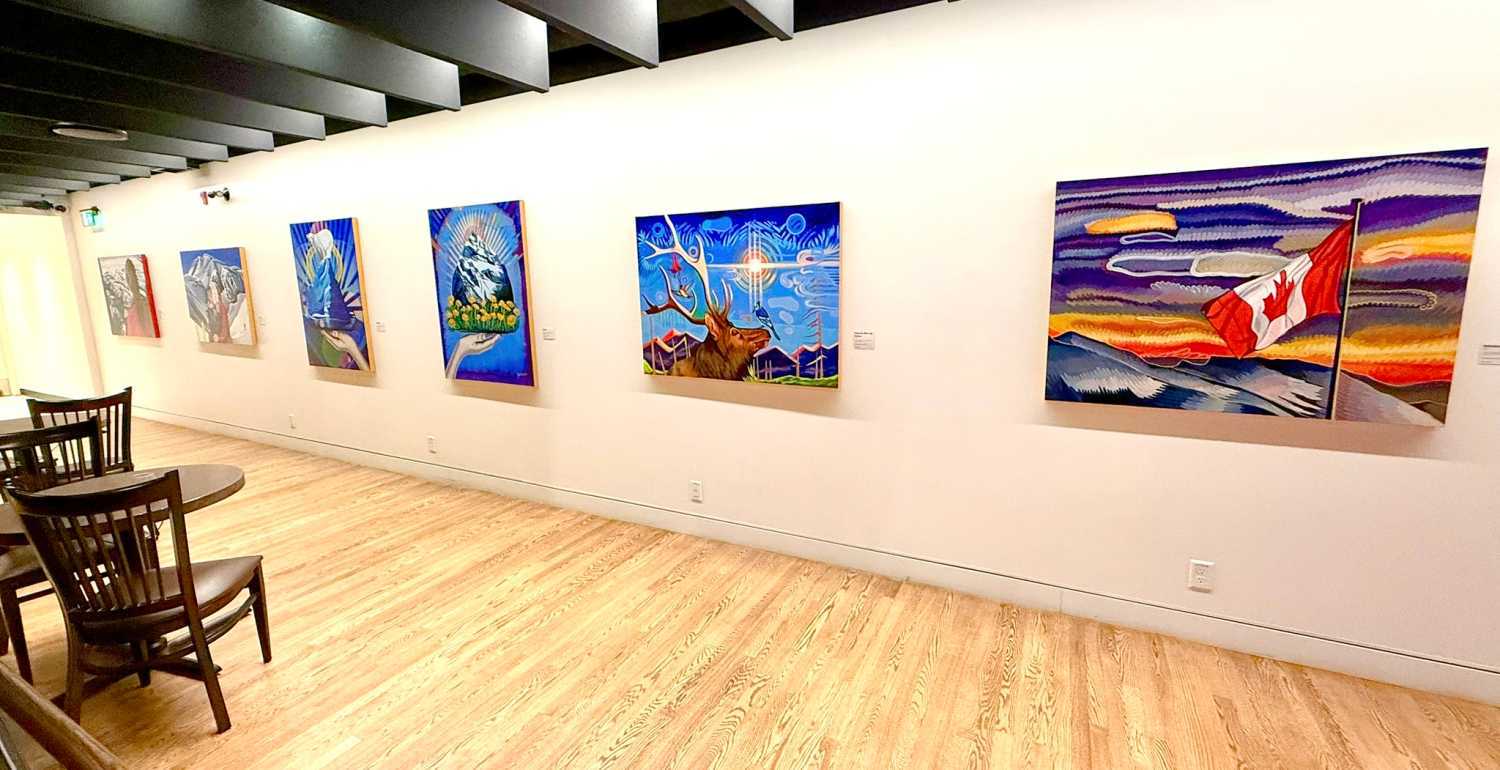
The Wild Life – Miller Art Gallery, Edmonton AB – 2025 – Brandy Saturley
The landscapes change, yes, but so does the emotional temperature of the work. The West leans into space, light, and openness. The Prairies carry restraint, repetition, and horizon lines that stretch patience and perspective. Ontario often balances concept with commerce. Quebec moves confidently between tradition and experimentation. Atlantic Canada holds history close, with work that feels weathered, human, and deeply rooted. The North resists simplification altogether.
These regional differences still matter. They inform what gets painted and what gets collected.
The East Coast: Negotiation and Personal Connection
I’ve also learned that price points are not universal across the country. What feels reasonable in one region can feel ambitious in another. On the East Coast especially, there’s more conversation around price, more negotiation, and more relationship-building involved in the sale. This isn’t a criticism. It’s cultural. Art there is personal. It’s tied to community, story, and often survival. Sales are slower, but often deeper.
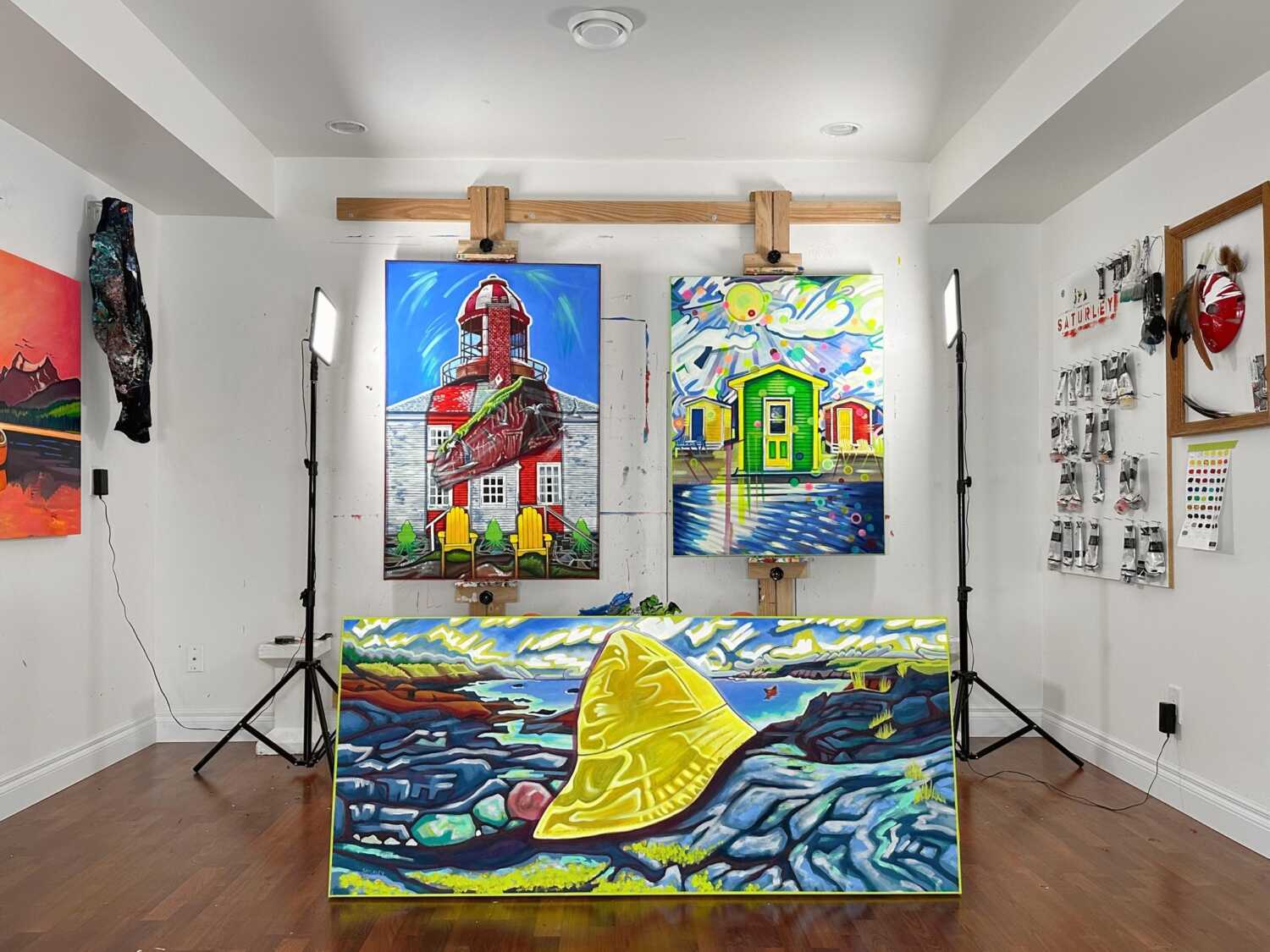
Newfoundland Paintings – Brandy Saturley – 2024
Alberta: Decisive Collectors, Immediate Connection
One of the most striking collector cultures I’ve encountered is in Alberta. There’s a directness there that feels refreshing and unapologetic. Alberta collectors often buy on the spot. When the connection is made, the decision follows quickly, without prolonged hesitation or extended negotiation.
These collectors tend to trust their instincts. They respond to scale, confidence, and clarity of vision. There’s an appreciation for work that knows what it is and stands firmly behind it. Conversations happen, of course, but they’re efficient. The artwork either resonates, or it doesn’t.
This decisiveness doesn’t feel transactional. It feels practical. Art is valued as something to live with, not endlessly deliberate over. The result is a market that rewards artists who show up prepared, present their work clearly, and stand behind their pricing.
After years of painting and exhibiting across the country, Alberta remains one of the places where I’ve felt the least friction between artist and collector. When the work connects, the answer is often simply yes.
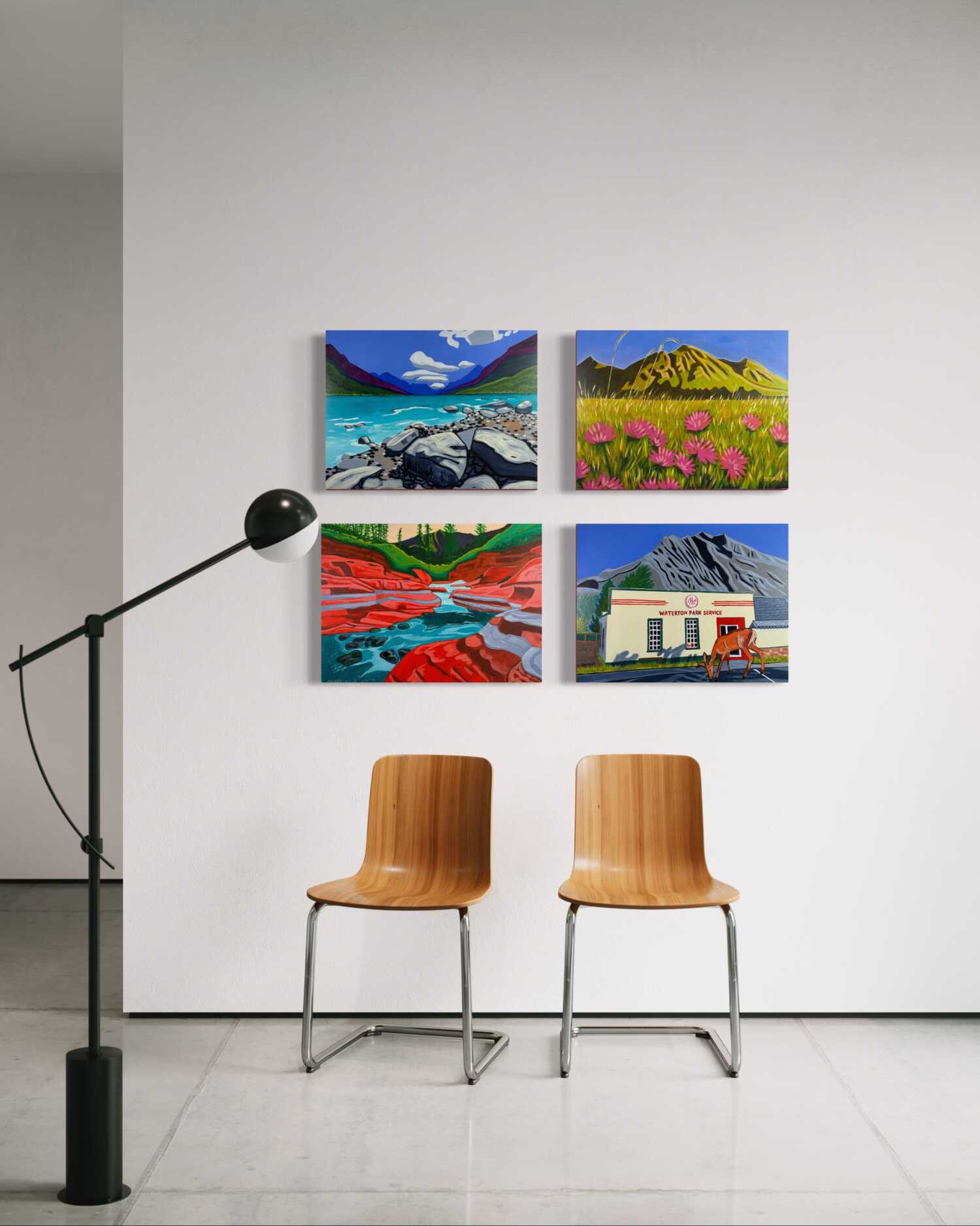
Alberta paintings – Brandy Saturley – 2025
Vancouver: Small, Abstract, and a Little Bit Shiny
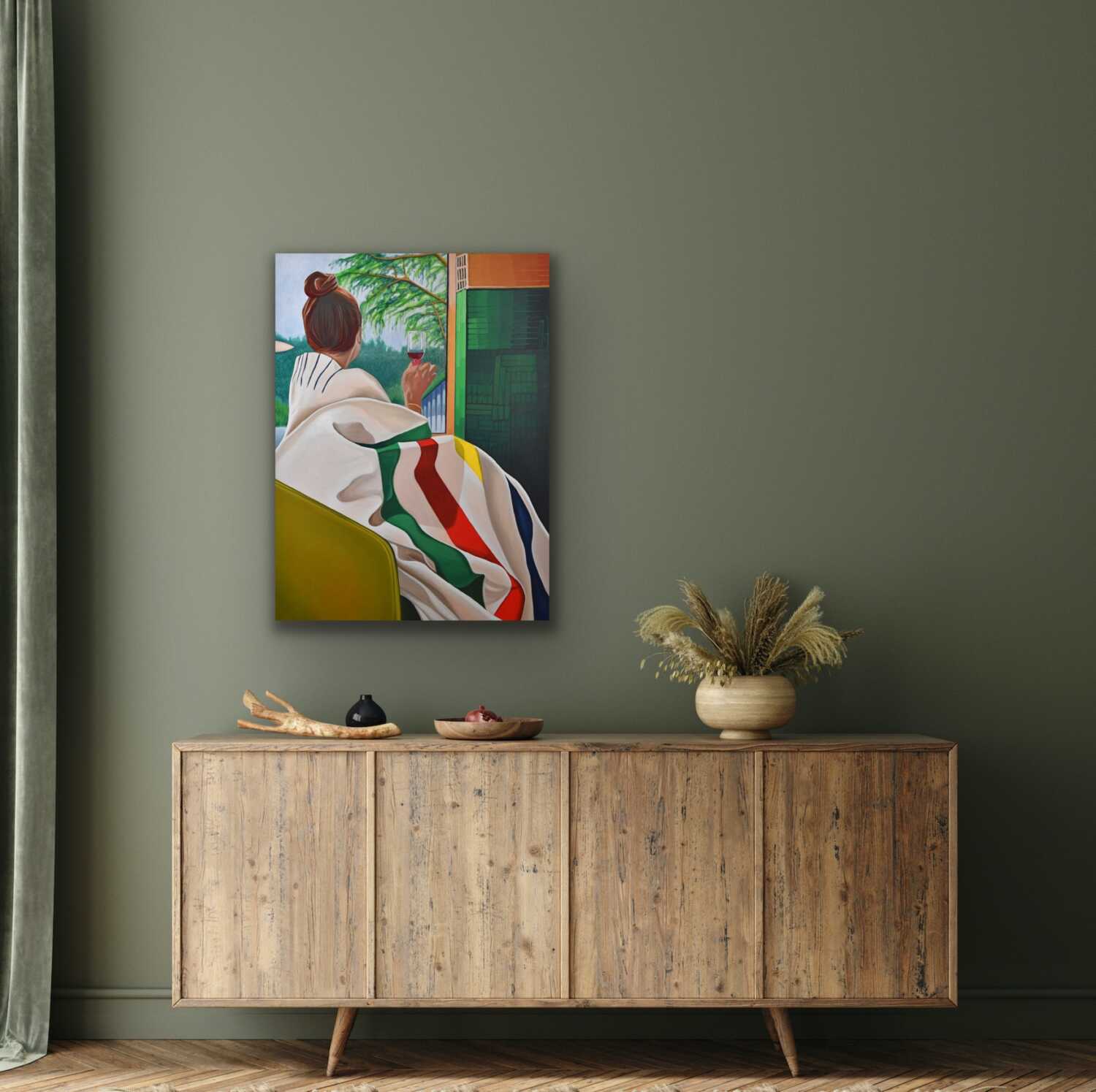
Vancouver has long favoured a quieter kind of confidence. Collectors there tend to gravitate toward smaller-scale works, abstraction, and surfaces that carry a sense of refinement or subtle polish. There’s an attentiveness to finish, material, and atmosphere. The work doesn’t need to announce itself loudly. It needs to hum.
Abstraction plays well in Vancouver, especially when it leans contemplative rather than confrontational. Shifts in tone, light, and texture often matter more than overt narrative. There’s also an openness to work that feels elevated or luminous, pieces that reflect light, carry sheen, or reward close looking over time.
This collecting culture aligns closely with the city itself. Dense, design-aware, and visually restrained, Vancouver values art that integrates seamlessly into living spaces while still holding conceptual depth. The emphasis is less on declaration and more on resonance.
For an artist, Vancouver rewards precision. The work needs to be resolved, intentional, and confident in its quietness. When it is, collectors notice.
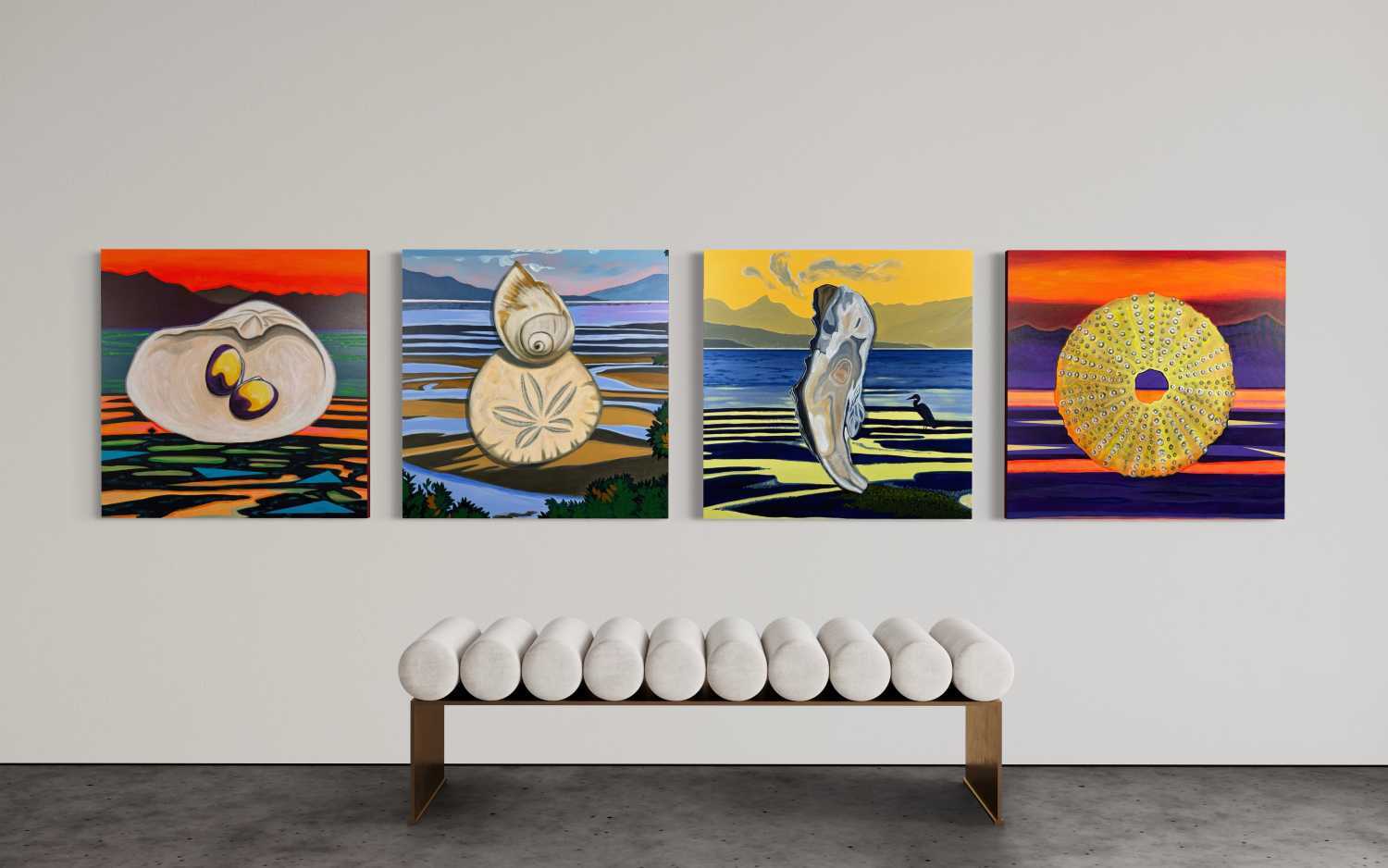
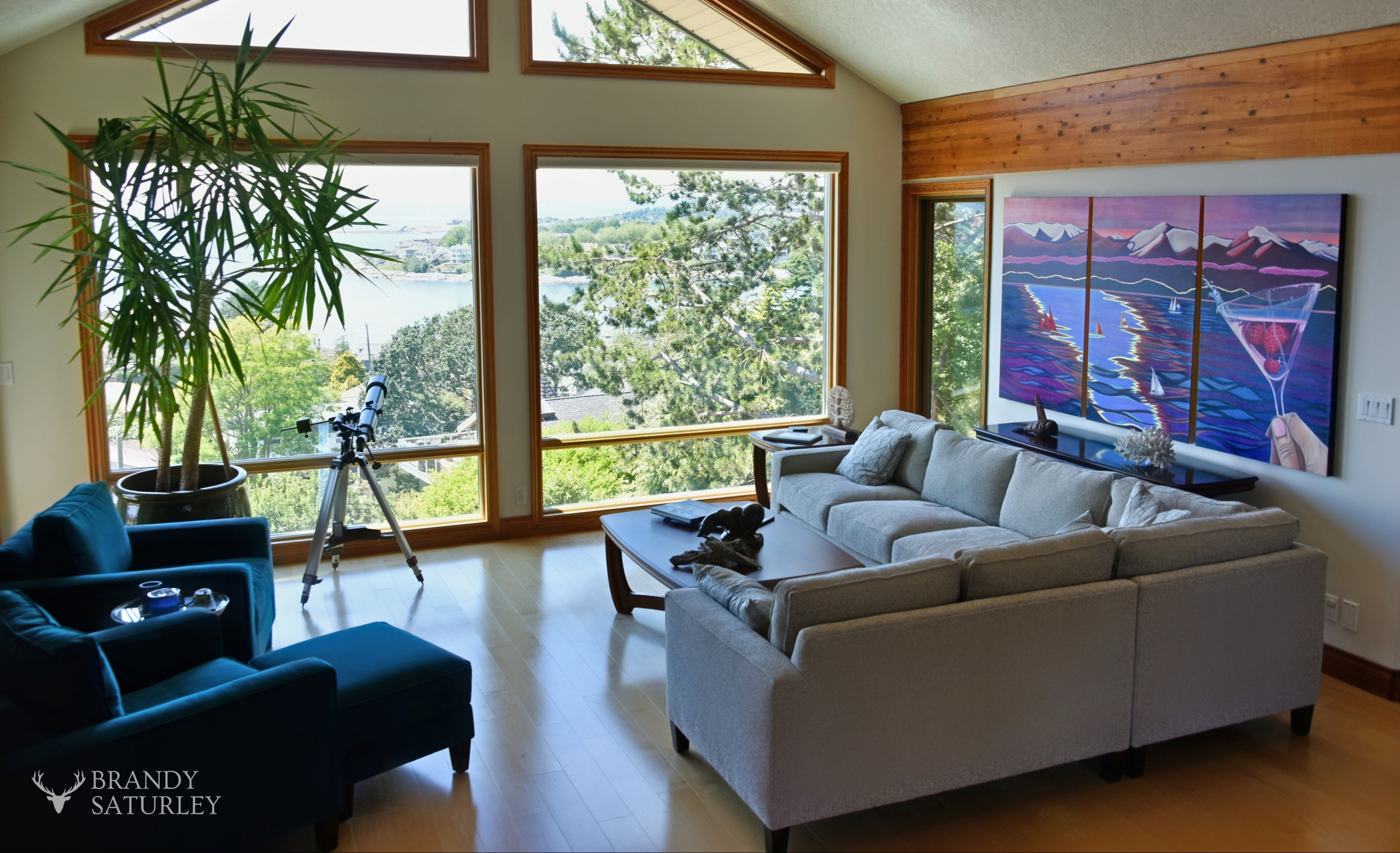
Vancouver Island Paintings – Brandy Saturley – 2025
20 Years Painting Canada
Across Canada, however, landscape painting continues to hold. Despite decades of predictions about its decline, collectors still respond to place. Not postcard versions of Canada, but lived-in ones. Weather, distance, memory, solitude. Landscape remains a shared language, even as the dialect changes from province to province.
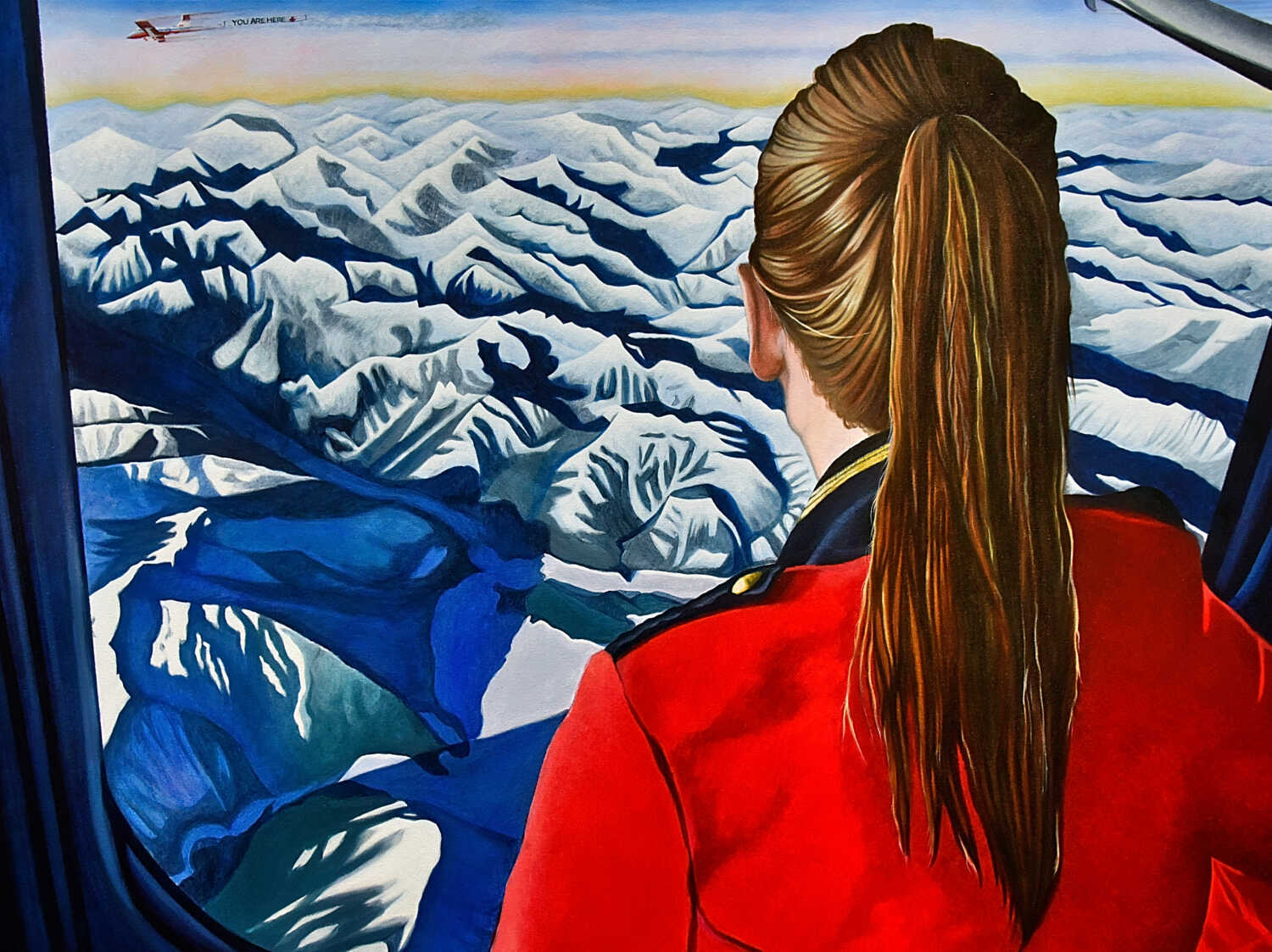
Rocky Mountains Higher – Brandy Saturley – 2017
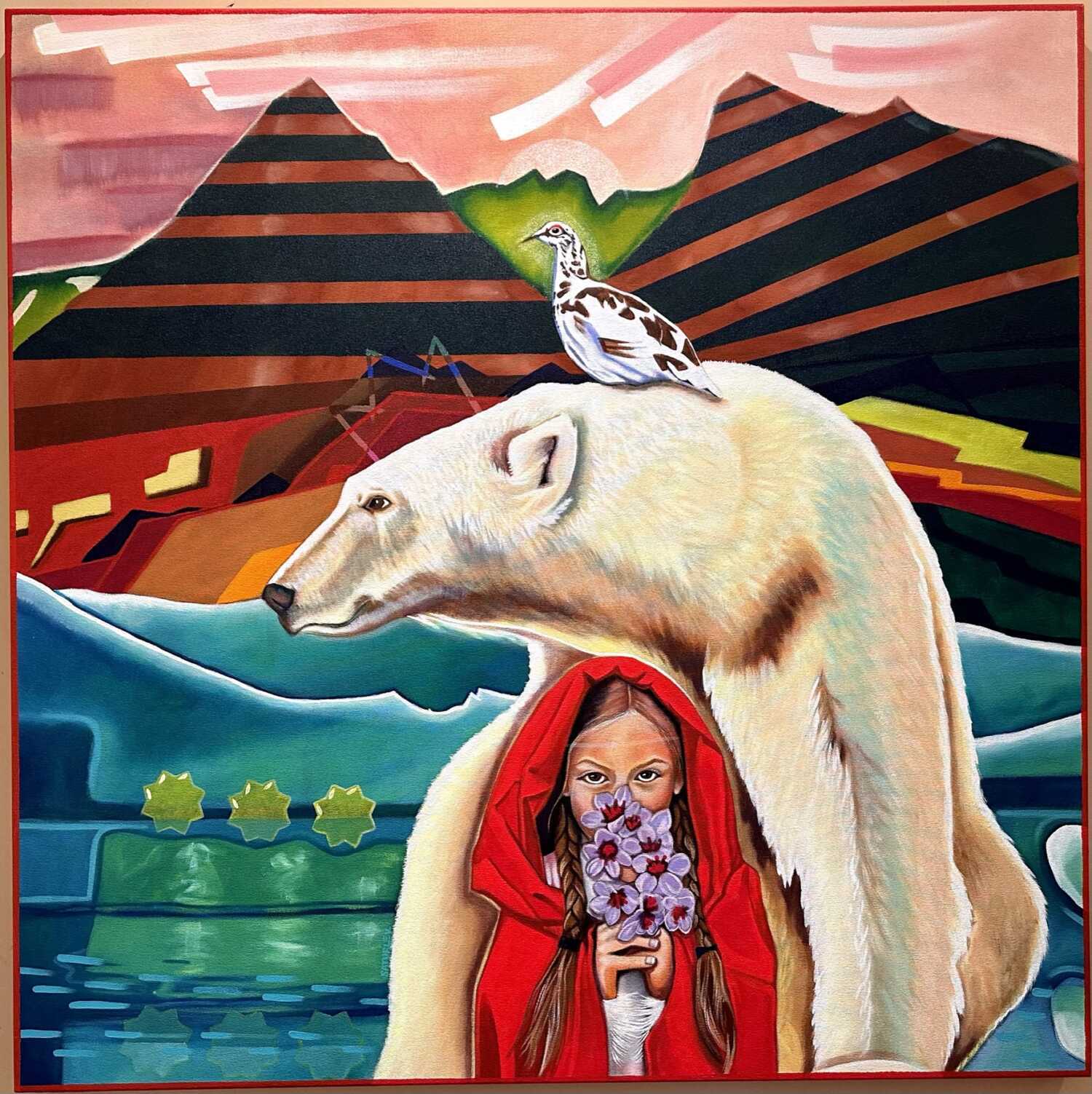
In recent years, I’ve witnessed Indigenous art command long-overdue attention and market strength. This visibility matters, though it also brings responsibility. Institutions, collectors, and artists alike must approach Indigenous work with care, context, and respect, not trend-chasing. The depth, diversity, and regional specificity within Indigenous art resists any single narrative, much like Canada itself.
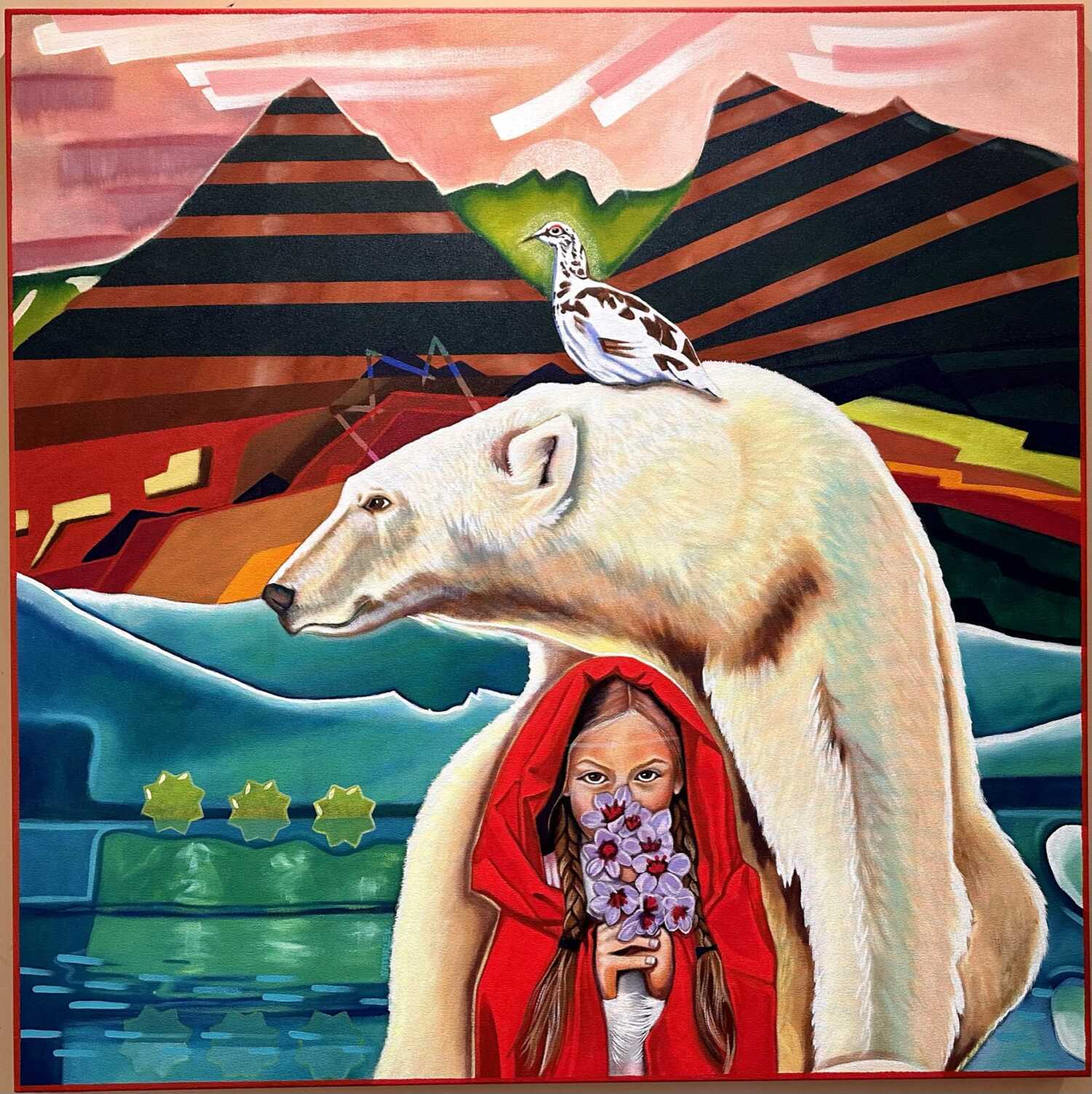
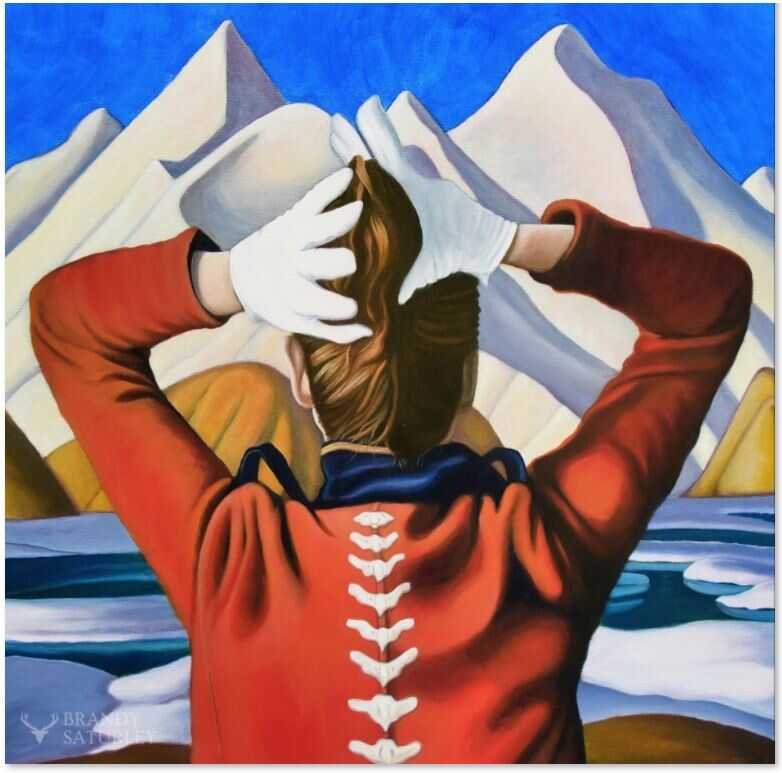
Monarch of The Arctic Realms, Brandy Saturley, 2024
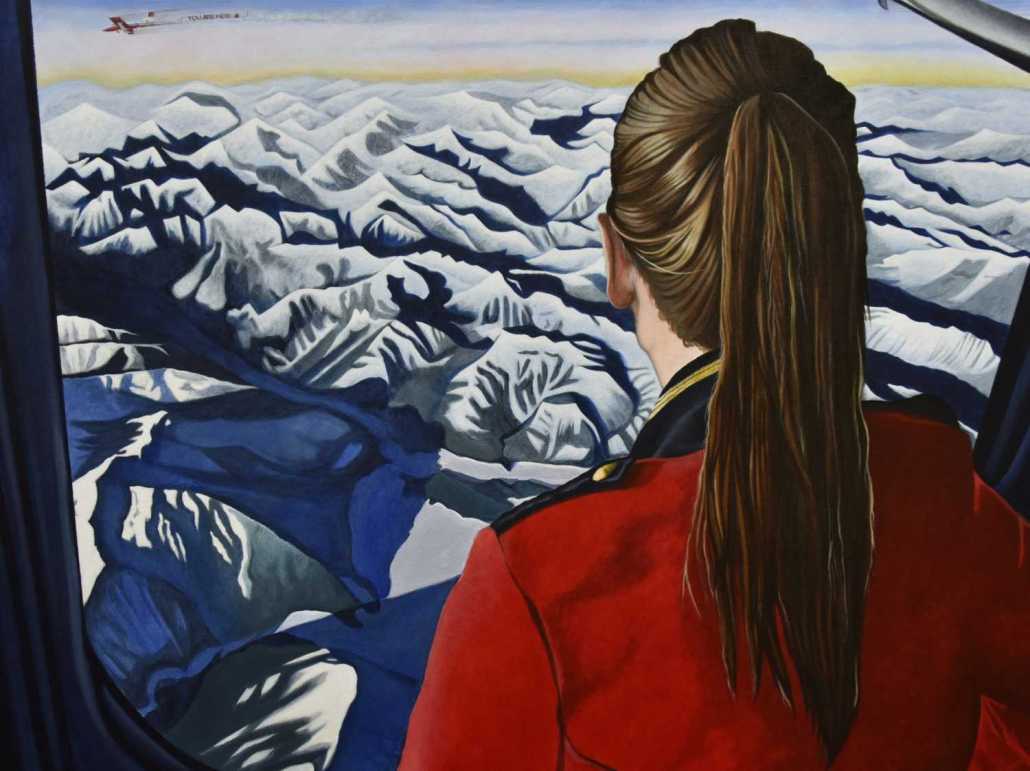
Another noticeable shift has been the increased visibility of women artists. There’s more space now, more recognition, and more leadership. While equity is still a work in progress, the conversation has changed. Women’s voices are no longer peripheral. They’re shaping the centre.
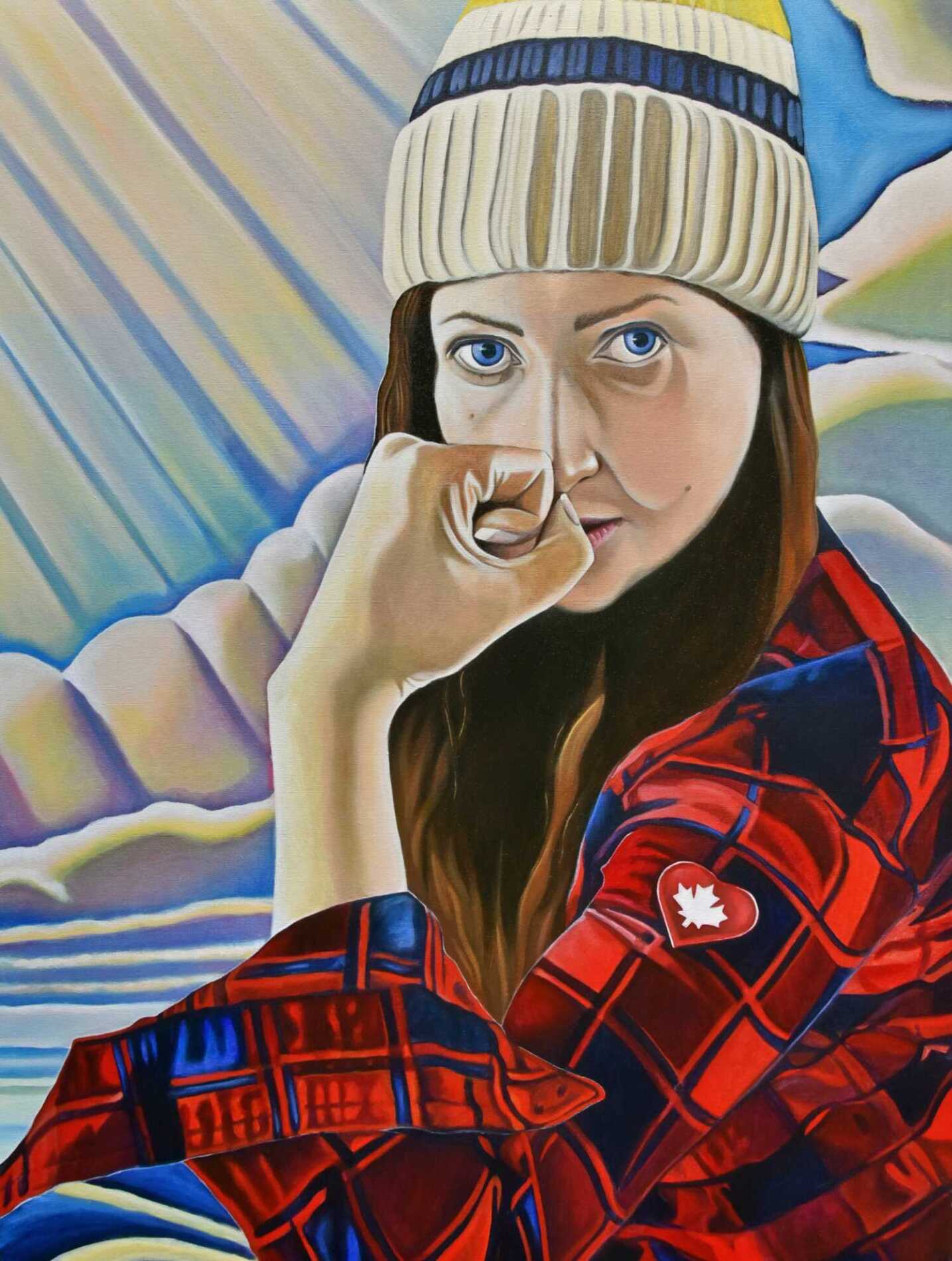
With Hearts On Our Sleeves, Brandy Saturley, 2017
What painting Canada for nearly twenty years has taught me most is this: the country reveals itself slowly. It resists shortcuts. You have to show up, travel it, listen to it, and let the regions speak for themselves.
Canada isn’t one story. It’s many, told in different accents, under different skies, at different price points, with different expectations. Painting my way through it has been less about defining Canada and more about paying attention to its nuances.
And that, I think, is where the real work lives. See more Canadian Paintings here.
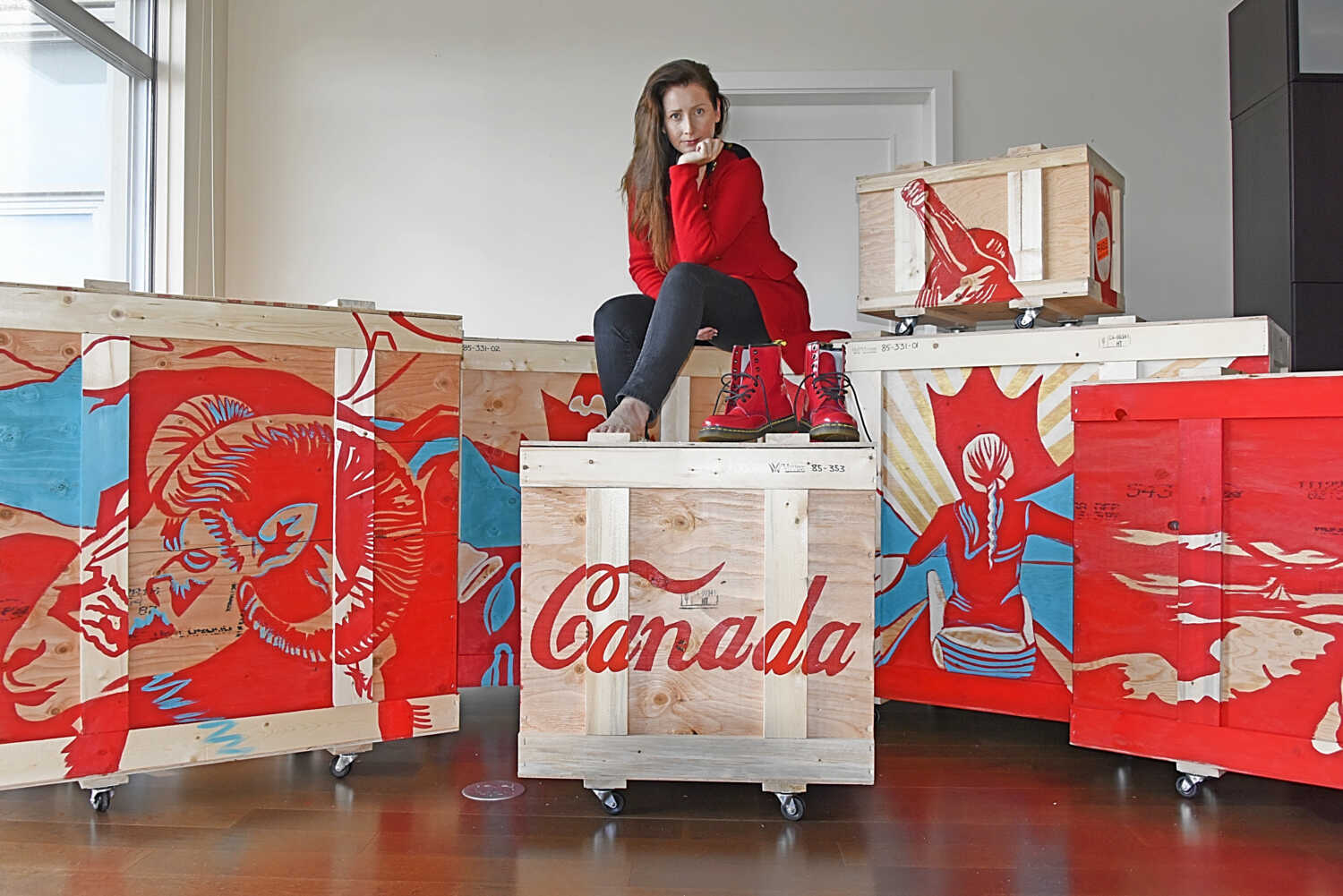
Brandy Saturley with her art shipping crates, 2017