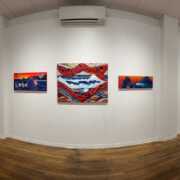
Canadian in 2026
What Does It Mean to Be Canadian in 2026? Art, Identity and the Stories We Tell
What does it mean to be Canadian in 2026? It is a question I find myself thinking about more and more.
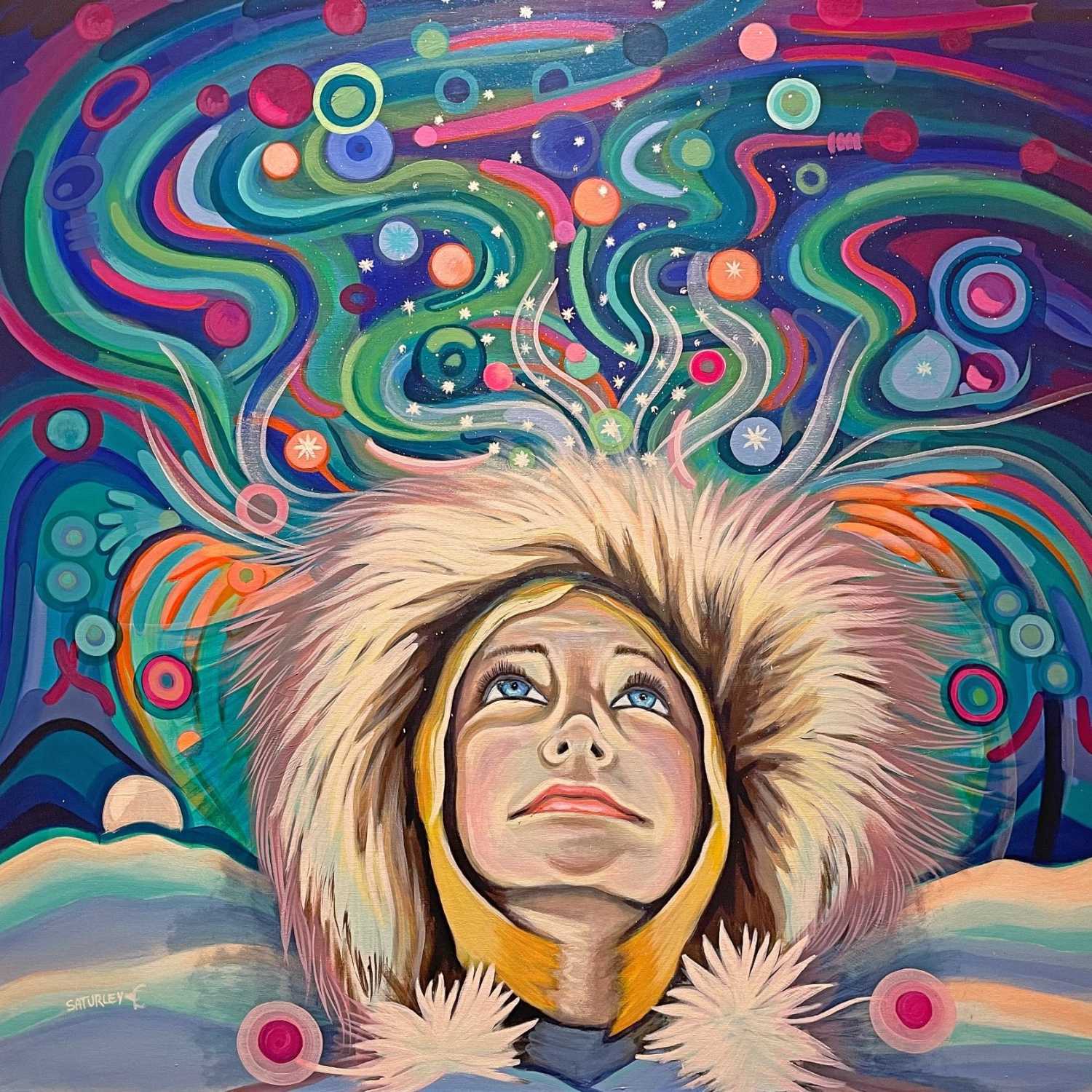
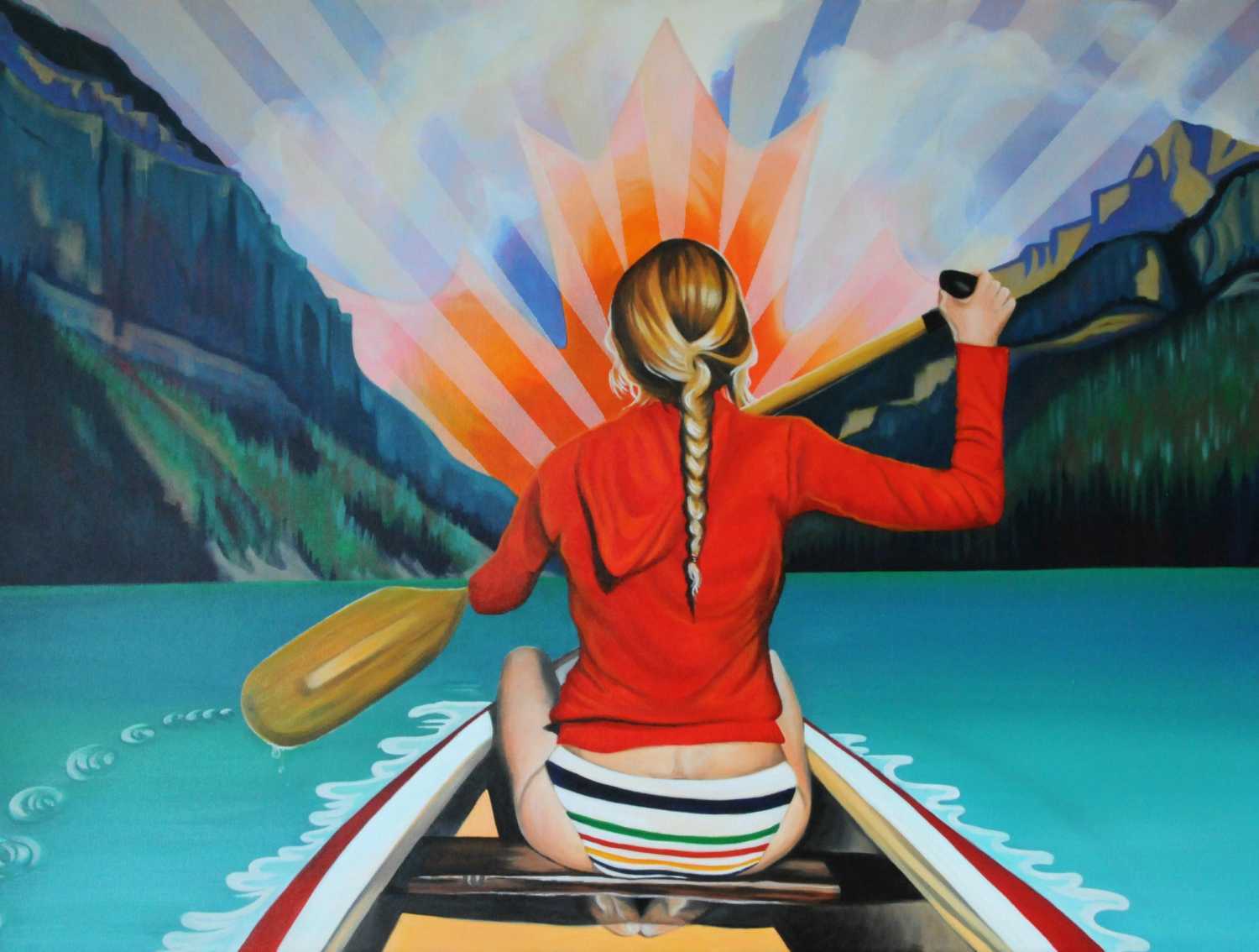
Perhaps that is because I have spent nearly two decades painting Canada. I have painted hockey players, polar bears, mountains, maple leaves, Canadian flags, Hudson’s Bay stripes, wildlife, wilderness and the people who inhabit these places. I have painted the things we recognize immediately as Canadian, but I have also spent years asking a deeper question:
What makes something feel Canadian? For me, the answer has never been as simple as a maple leaf or a flag. Canada is a collection of stories and those stories are constantly changing.
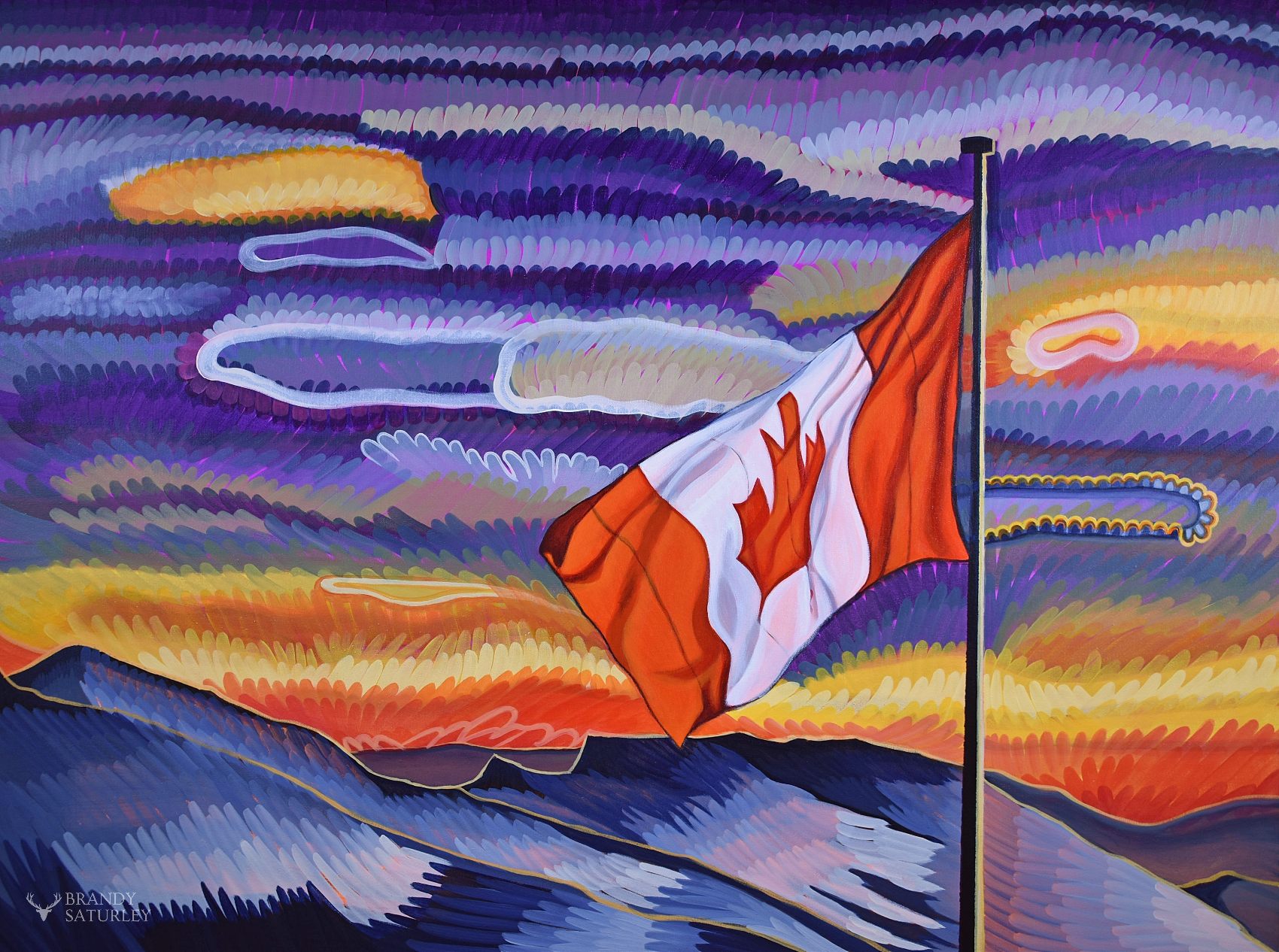
Canada is more than an image
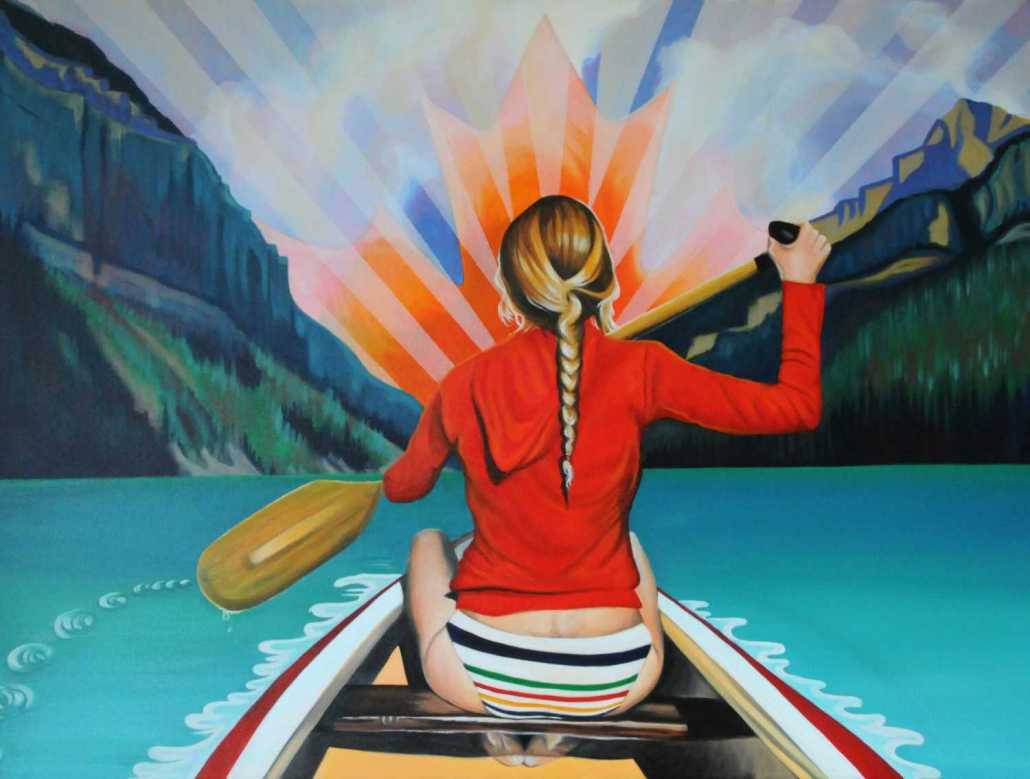
I have always been fascinated by Canadian iconography. The maple leaf. Hockey. The Hudson’s Bay blanket. The Canadian flag. Mountains. Wildlife. Canoes. Snow. The coast.
These are recognizable symbols, but symbols are only the beginning. A symbol carries memory.
A hockey jersey might remind one person of childhood Saturday nights watching a game with their family. A maple leaf might represent national pride to one person and a complicated history to another. A landscape might evoke a family vacation, a place of belonging, a childhood home or simply the feeling of standing somewhere vast and beautiful. This is one of the reasons I am drawn to painting Canadian icons. I am less interested in simply reproducing the thing than in exploring what the thing means to us.
My paintings often begin with something recognizable, but I want them to become something more. I want the viewer to bring their own story to the painting.
I don’t think Canadian identity is one thing
Canada is enormous. From the Pacific coast where I live on Vancouver Island to the Atlantic provinces, from the Arctic to the Prairies, our experiences of this country can be dramatically different. There isn’t one Canadian landscape or one Canadian experience. And there certainly isn’t one Canadian identity. Our country contains many histories, cultures, languages, communities and perspectives. Indigenous histories and contemporary Indigenous voices are an essential part of understanding this place. So are the stories of generations of immigrants, French and English Canadian histories, regional cultures, rural communities, northern communities and the many people who have made Canada their home.
This complexity is part of what makes Canadian identity interesting to me as an artist. I don’t want to paint a Canada that feels frozen in time. I want to paint the Canada I am living in.
From coast to coast to coast
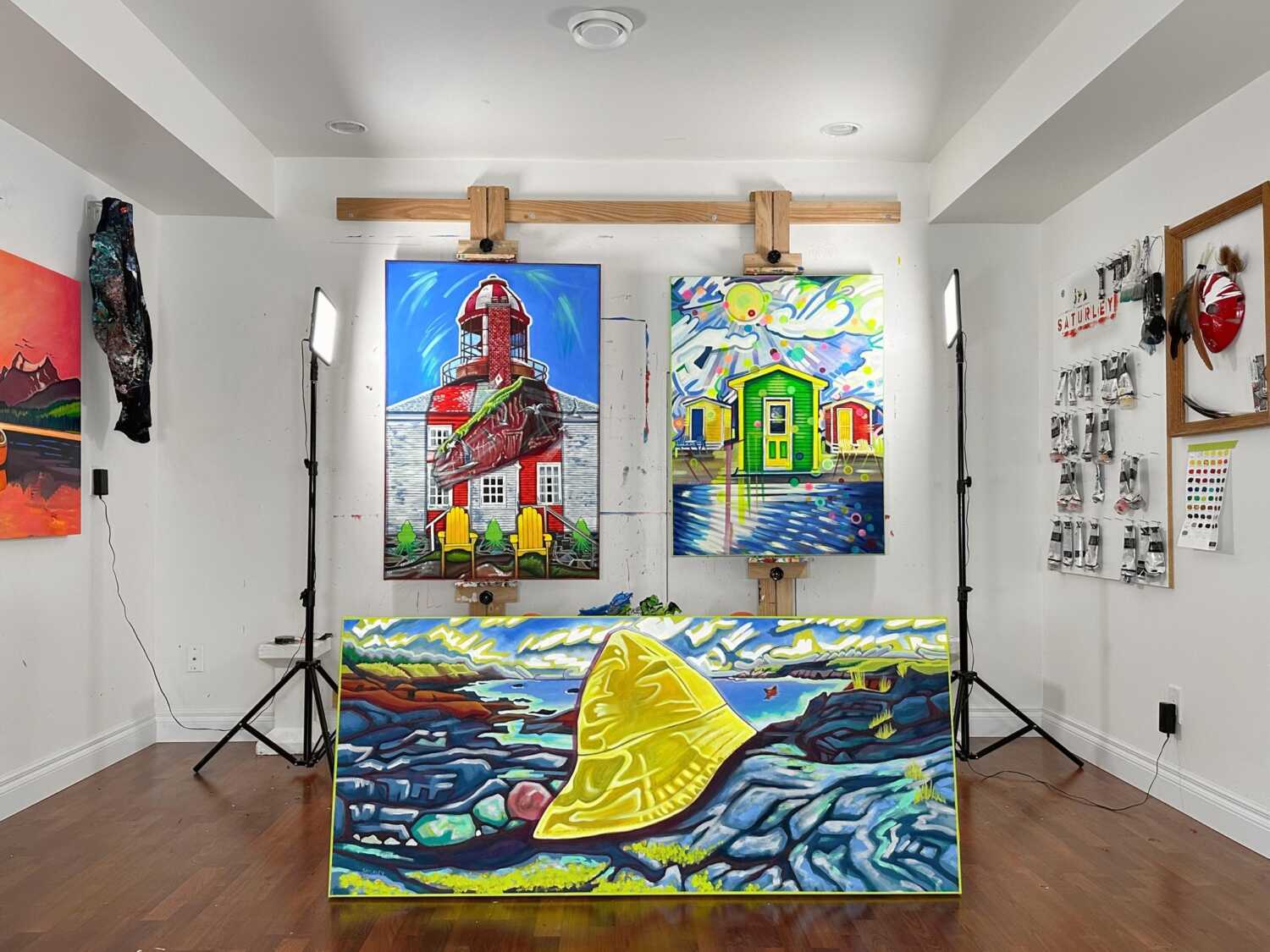
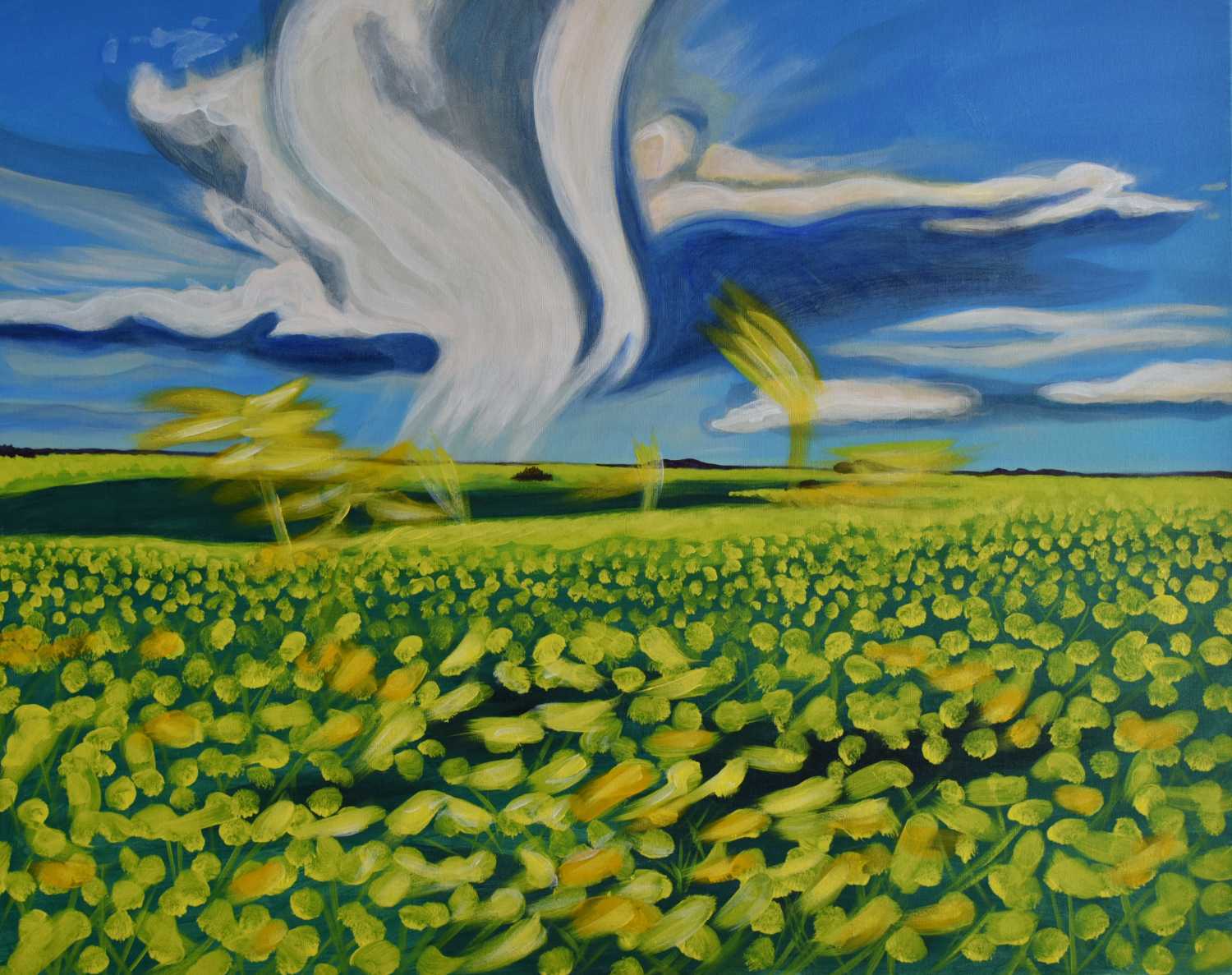
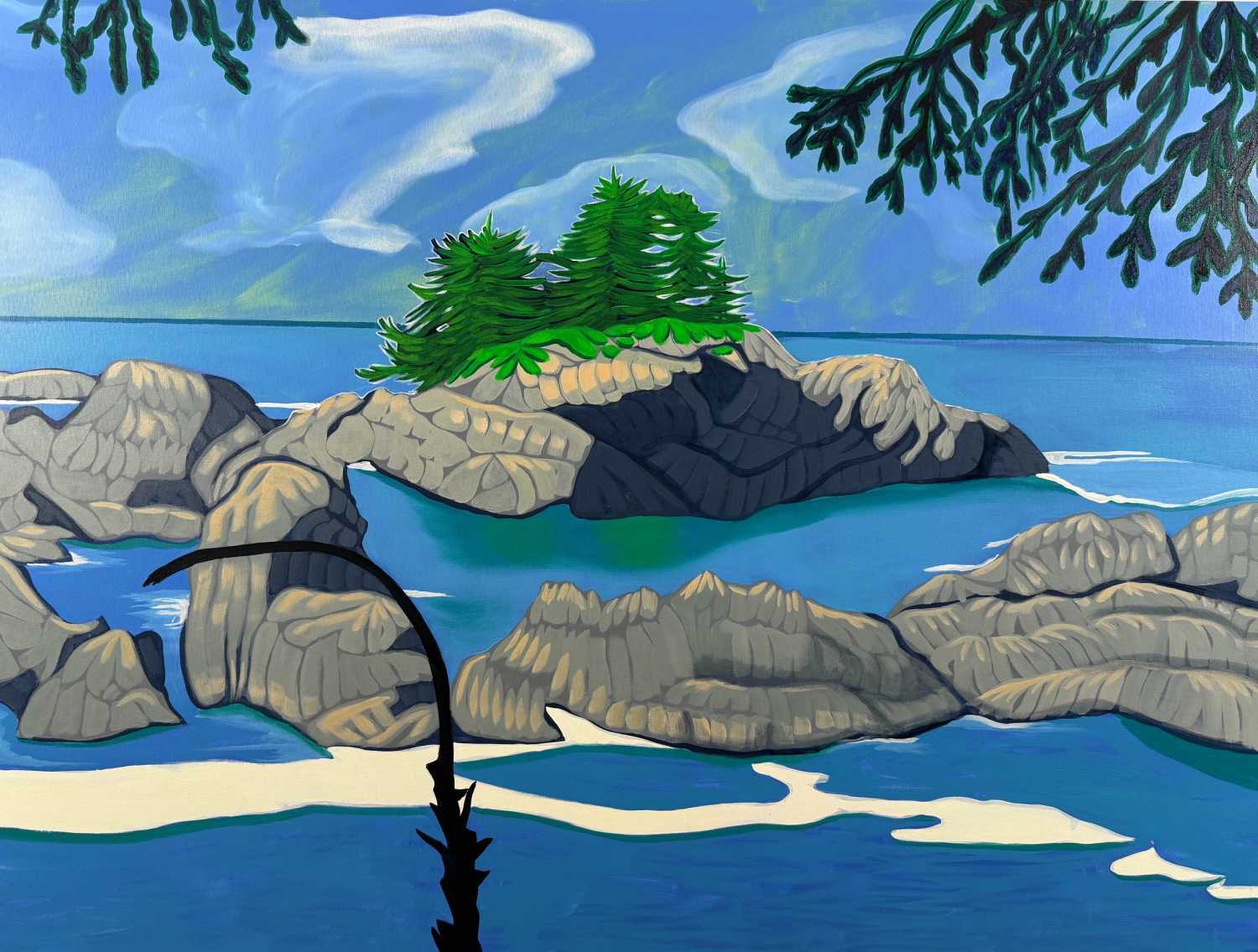
Over the years, my paintings have taken me across the country. I have painted and worked in Newfoundland, Alberta and the Northwest Territories. I have spent time in Banff, Yellowknife and on the Atlantic coast. I have travelled through landscapes that feel profoundly different from one another, yet somehow belong to the same enormous story. Now I am back home on Vancouver Island. After moving my home and studio from Victoria to Parksville in 2025, I have found myself looking at Canada from a distinctly West Coast perspective. The Salish Sea has entered my visual vocabulary. Orcas, ravens, eagles, sea lions, mountains, beaches, mist and water are becoming part of a new body of work. I walk the beaches near my studio and watch the tide move across the sand. I notice the birds. I watch the light change. I see the mountains in the distance. This is also Canada and it is the Canada I am experiencing now.
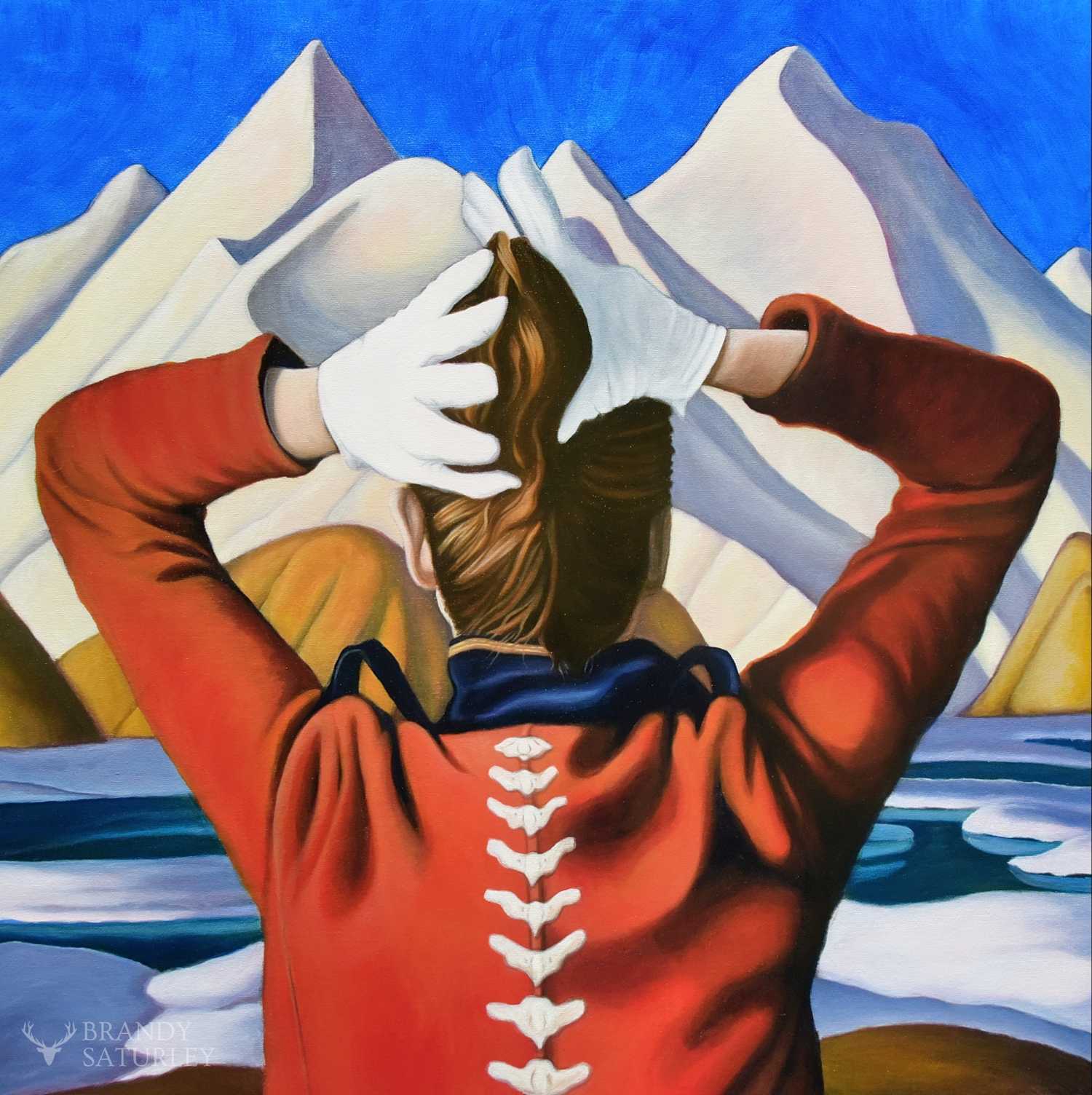
I have never really considered myself a traditional landscape painter. I am interested in the landscape, but I am often more interested in the stories we attach to it. A landscape can be a place, memory, mythology, history, identity, and a kind of character in a larger story. This is why figures, animals, cultural symbols and familiar Canadian objects often appear in my paintings. They allow me to move beyond simply depicting a location. I think of it as painting stories of the landscape rather than simply painting the landscape. That distinction has become increasingly important to me.
Canadian in 2026: Why Canadian art matters right now
This conversation feels particularly relevant in 2026. Earlier this month, the Canada Council for the Arts published an open letter titled Choosing Canadian Arts Means Choosing Canada. In it, Canada Council CEO Michelle Chawla described the arts as a way Canadians connect with one another and imagine their future, while emphasizing the importance of experiencing Canadian stories told in Canadian voices. I found that sentiment particularly resonant. Because a country is not only its borders, economy, politics or geography. A country is also the stories it tells about itself and Artists are part of that storytelling. So are writers, musicians, filmmakers, photographers, dancers, designers and all of the people who create culture.
We hold up a mirror. Sometimes that mirror shows us something familiar. Sometimes it shows us something we have never noticed before.
Contemporary Canadian art is not one visual language
You can see this diversity reflected in Canadian contemporary art right now. The 2026 Sobey Art Award exhibition at the National Gallery of Canada brings together six artists from across the country whose practices include sculpture, installation, photography, painting, film, textiles, metalwork and land-based practices. Their work explores subjects including memory, language, land, identity and cultural traditions. That range is important.
There is no single visual language that defines Canadian art, and I think that is exactly as it should be. Canadian art can be quiet or loud. Minimal or maximal. Traditional or experimental. It can look toward the land, the city, the body, history, technology, family, politics or memory.
It can be beautiful, uncomfortable, funny and ask difficult questions. It can simply make us stop and look.
My Canada is full of symbols
For much of my career, I have been called a Canadian Pop artist. I have even described my work as Pop Canadianisms. I like that phrase because it acknowledges the tension between popular culture and personal meaning.
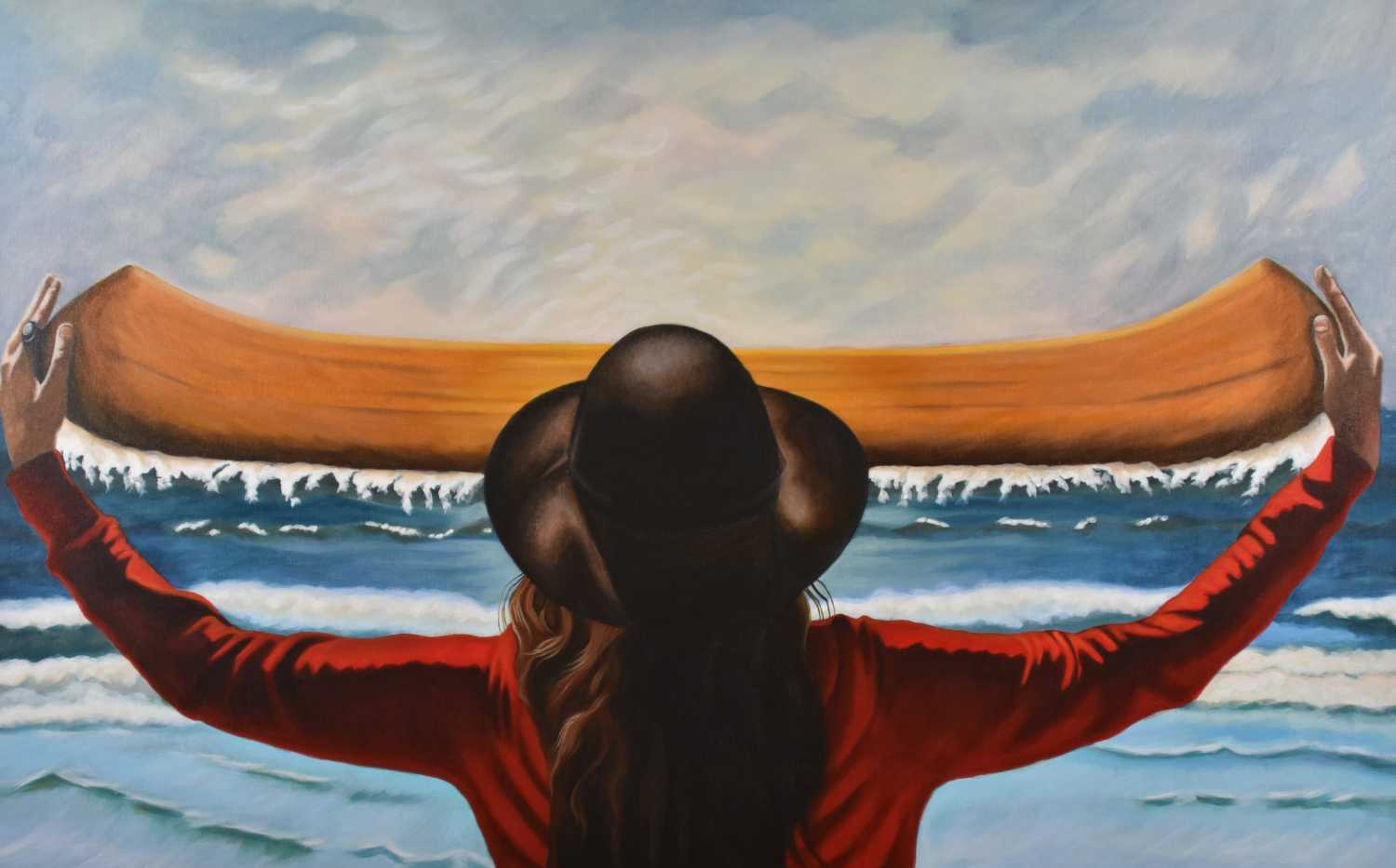
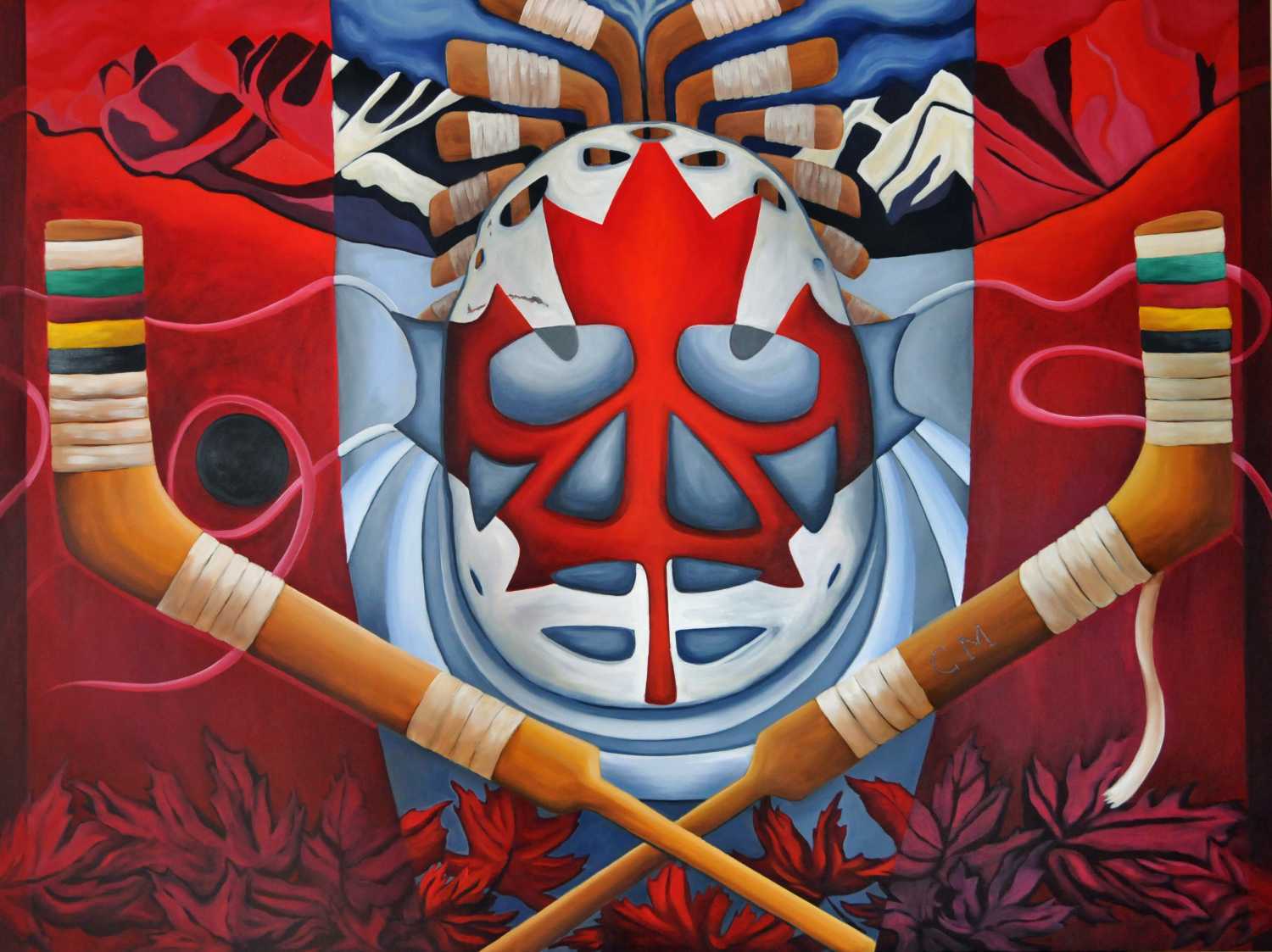
I take familiar Canadian symbols and place them into new contexts. The maple leaf becomes more than a national emblem. The polar bear becomes a symbol of a changing climate. The Hudson’s Bay stripes become a piece of cultural memory.
A hockey mask becomes something larger than sport. A mountain can become a memory. A raven can become a messenger. A coastline can become home. The familiar gives us a doorway into the unfamiliar.
So, what does it mean to be Canadian in 2026?
I don’t think there is a single answer. Maybe that is the point.
Being Canadian in 2026 can mean many things to many people.
It can mean living beside the ocean and watching an orca surface, cheering for a hockey team, speaking French, English, an Indigenous language or one of the many languages spoken in Canadian homes. It can mean growing up in a small northern community or a major city, arriving here recently or having generations of family history rooted in this country. It can mean carrying complicated histories alongside genuine affection for this place or questioning what Canada has been while imagining what it could become.
And perhaps it can mean recognizing that our national story is still being written.
Artists are part of that story
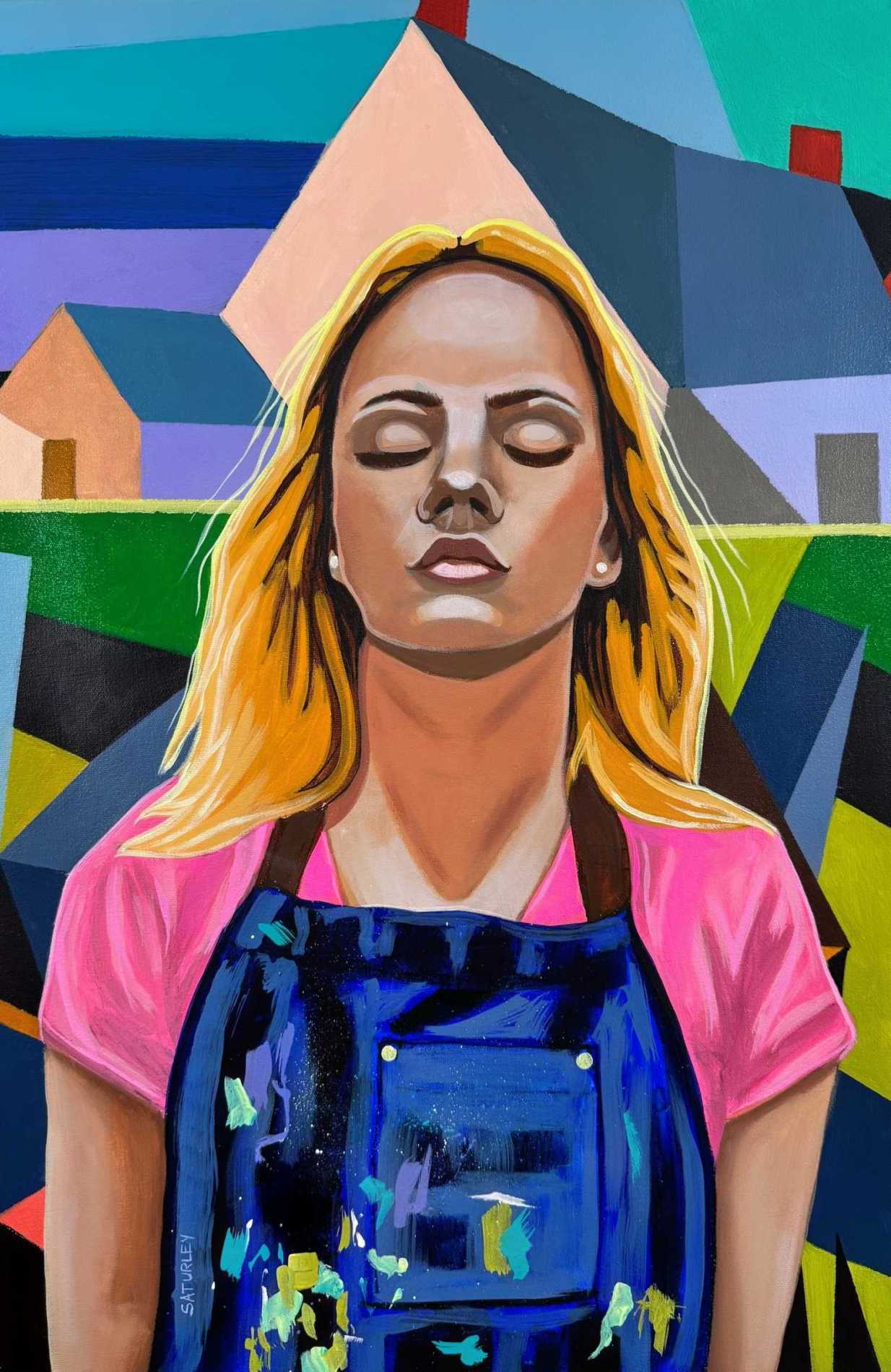
That is where I believe art becomes particularly powerful. A painting doesn’t have to explain Canada. It can simply give us a place to think about Canada.
It can make us remember something, feel connected to a place, make us ask a question.
It can remind us of something we don’t want to forget and sometimes, it can make us see something familiar in an entirely new way. That is what I hope my paintings do. I don’t want to create a picture of Canada that tells you exactly what to think. I want to create paintings that give you something to feel, remember and interpret for yourself.
Because the story of Canada belongs to all of us, and in 2026, that story is still being painted.
Collecting Canadian Art
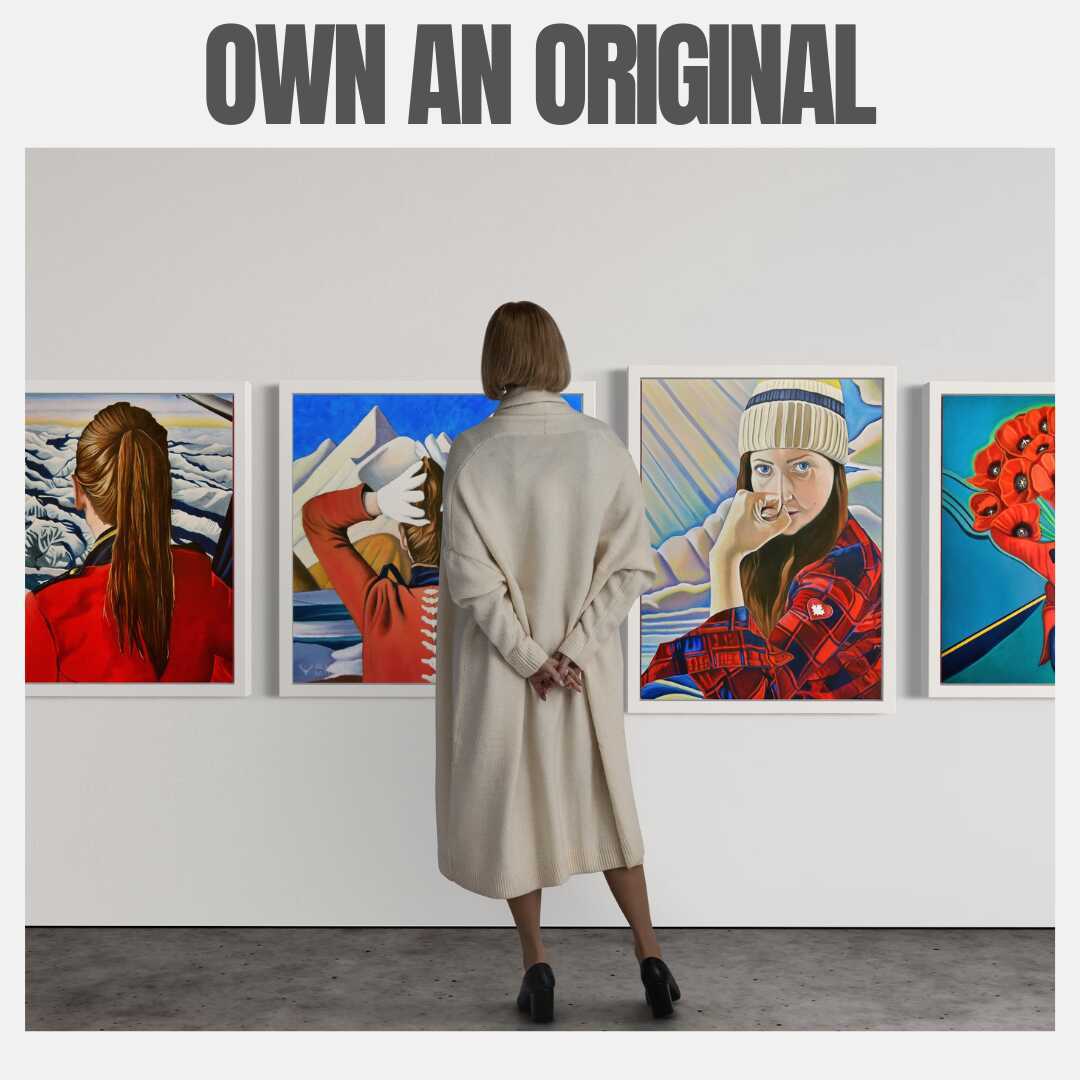
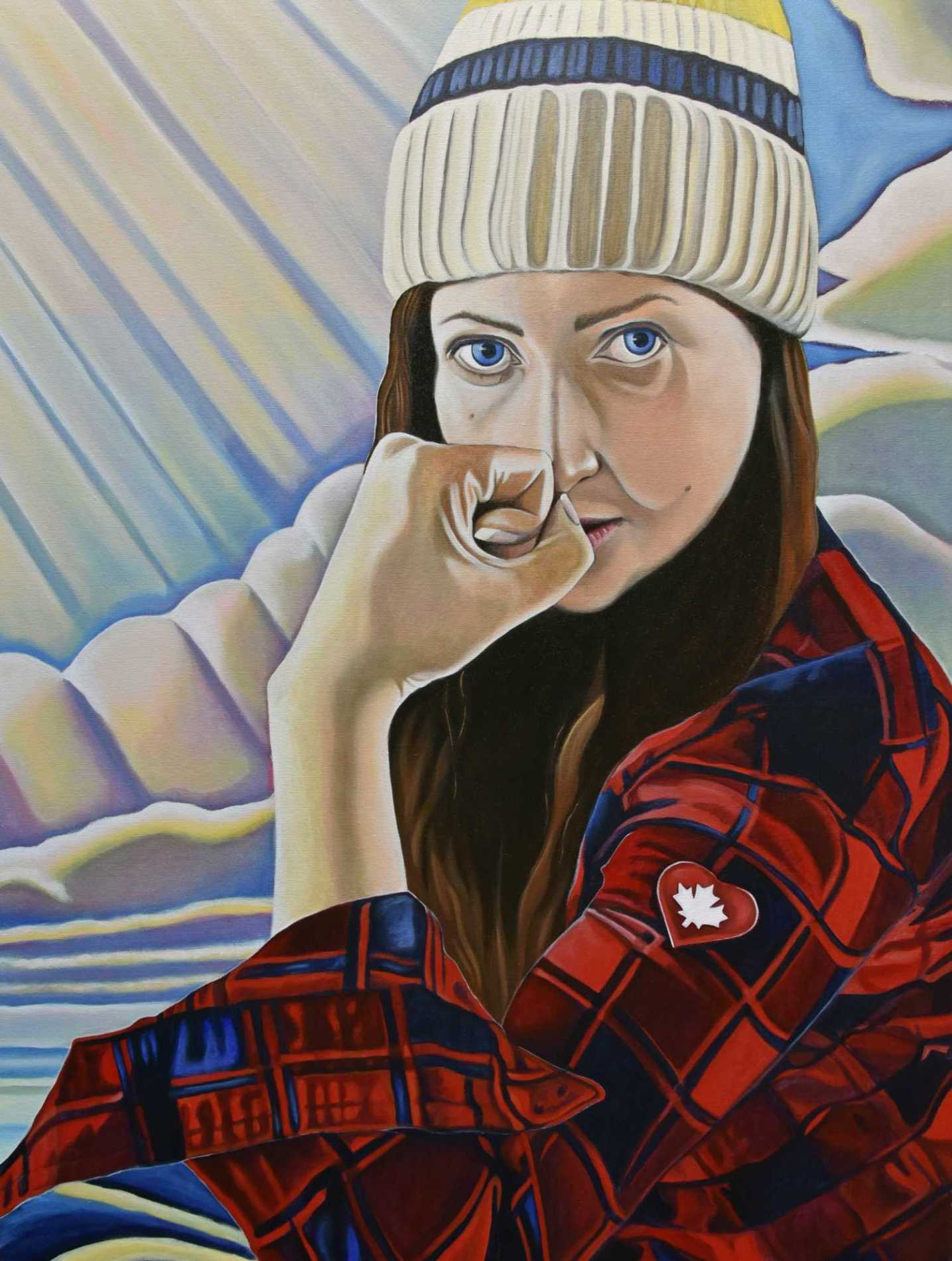
For me, collecting Canadian art is also a way of participating in that story. When you bring an original Canadian painting into your home, you are not simply bringing home an image of a place.
You may be bringing home a memory, a connection, a piece of cultural history, or a reminder of somewhere you have travelled or somewhere you call home. Or perhaps simply a feeling that you cannot quite put into words.
After twenty years of painting Canada, that is what continues to interest me most. Not simply what Canada looks like. What Canada feels like. And what stories we choose to carry forward.