Painting Canada’s West Coast
Painting the Edge of the Continent: The Artists Who Defined Canada’s West Coast
The west coast of Canada has long inspired artists with its dramatic landscapes, ancient forests, rugged shorelines, and ever-changing skies. Stretching from Vancouver Island to Haida Gwaii and north along British Columbia’s coastal wilderness, the region offers a visual language unlike anywhere else in Canada. Painting Canada’s West Coast.
For more than a century, painters have attempted to capture the spirit of this landscape. Some approached it through realism, others through modernism, abstraction, or Indigenous traditions. Together, they created a visual record of the Pacific coast and helped shape Canada’s artistic identity.
Here are some of the most influential painters associated with Canada’s West Coast.
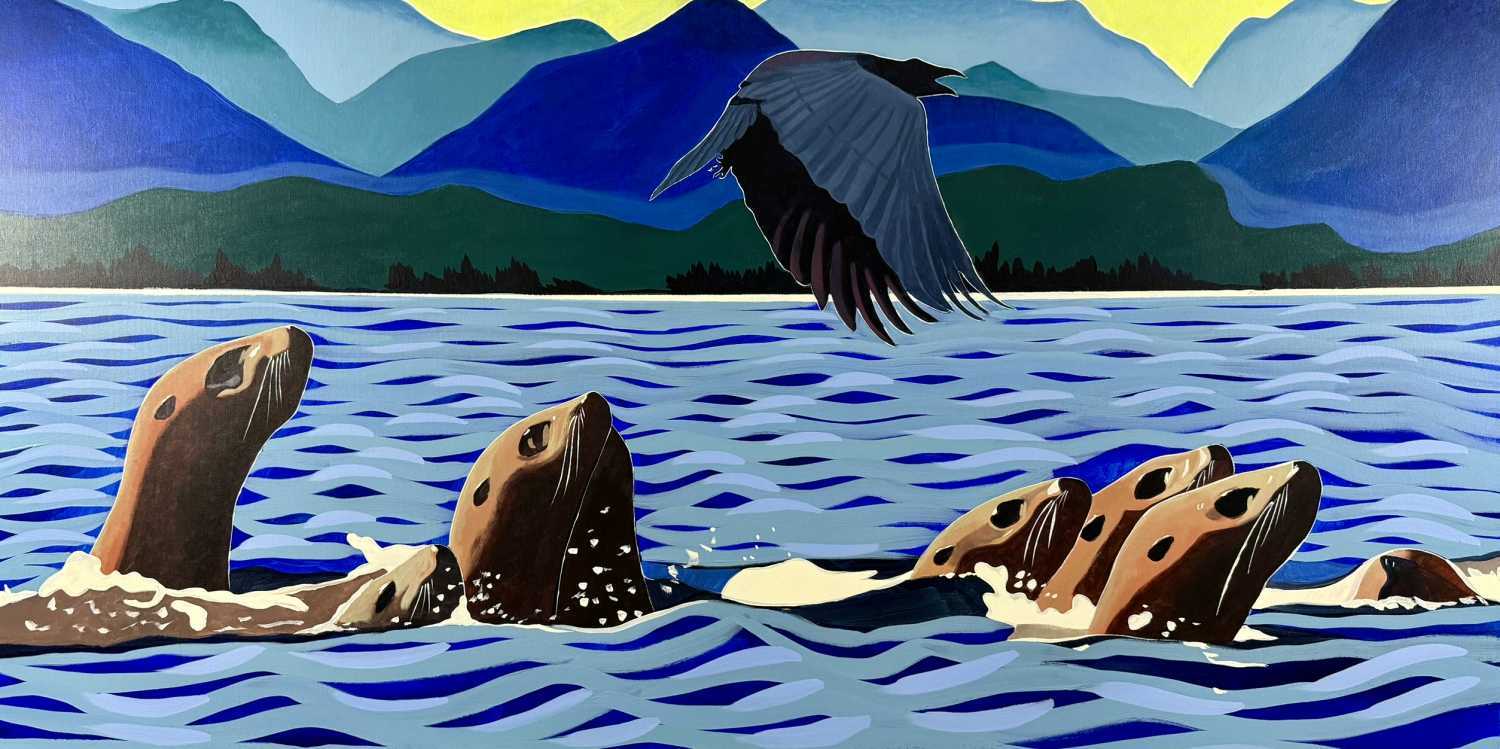
Sealions Song, c. 2026 Acrylic On Canvas 30 x 60 x 1.5 in – Brandy Saturley
Emily Carr (1871-1945)
No discussion of West Coast art can begin anywhere other than with Emily Carr.
Born in Victoria, British Columbia, Carr devoted much of her career to painting the forests, coastal villages, and Indigenous cultures of the Pacific Northwest. Her expressive paintings of towering cedars, windswept skies, and totem poles remain among the most iconic images in Canadian art.
Carr’s work moved beyond simple documentation. She sought to capture the spiritual energy of the landscape itself. Her paintings transformed the forests of British Columbia into living, breathing presences and helped establish the West Coast as a distinct artistic subject.
E.J. Hughes (1913-2007)
If Emily Carr painted the soul of the forest, then E. J. Hughes painted the character of coastal communities.
Living for many years on Vancouver Island, Hughes became known for his vibrant depictions of fishing villages, harbours, roads, forests, and small-town life. His paintings distilled the landscape into simplified forms and brilliant colours while retaining a deep sense of place.
Today, Hughes is considered one of Canada’s most beloved painters and one of the most important visual interpreters of coastal British Columbia.
Jack Shadbolt (1909-1998)
Born in England but deeply connected to British Columbia, Jack Shadbolt became one of Canada’s most important modernist painters.
Shadbolt drew inspiration from Indigenous art, coastal mythology, and the rhythms of the Pacific landscape. His paintings often blend abstraction with references to nature, creating works that feel both ancient and contemporary.
He helped expand the conversation about what West Coast art could be beyond traditional landscape painting.
Gordon Smith (1919-2020)
For more than seven decades, Gordon Smith explored the forests and landscapes of British Columbia.
His work evolved from representational painting into increasingly abstract interpretations of nature. Trees, rivers, and mountains became recurring motifs that reflected the changing relationship between artist and environment.
Smith’s influence as both artist and educator helped shape generations of West Coast painters.
Takao Tanabe (1926-2024)
Born in Prince Rupert, British Columbia, Takao Tanabe became known for his serene and contemplative landscapes.
His paintings often reduce the landscape to subtle bands of colour, atmosphere, and horizon. While minimalist in appearance, they are deeply rooted in the geography and mood of Canada’s western regions.
Tanabe’s work demonstrates how the West Coast landscape can be interpreted through restraint rather than detail.
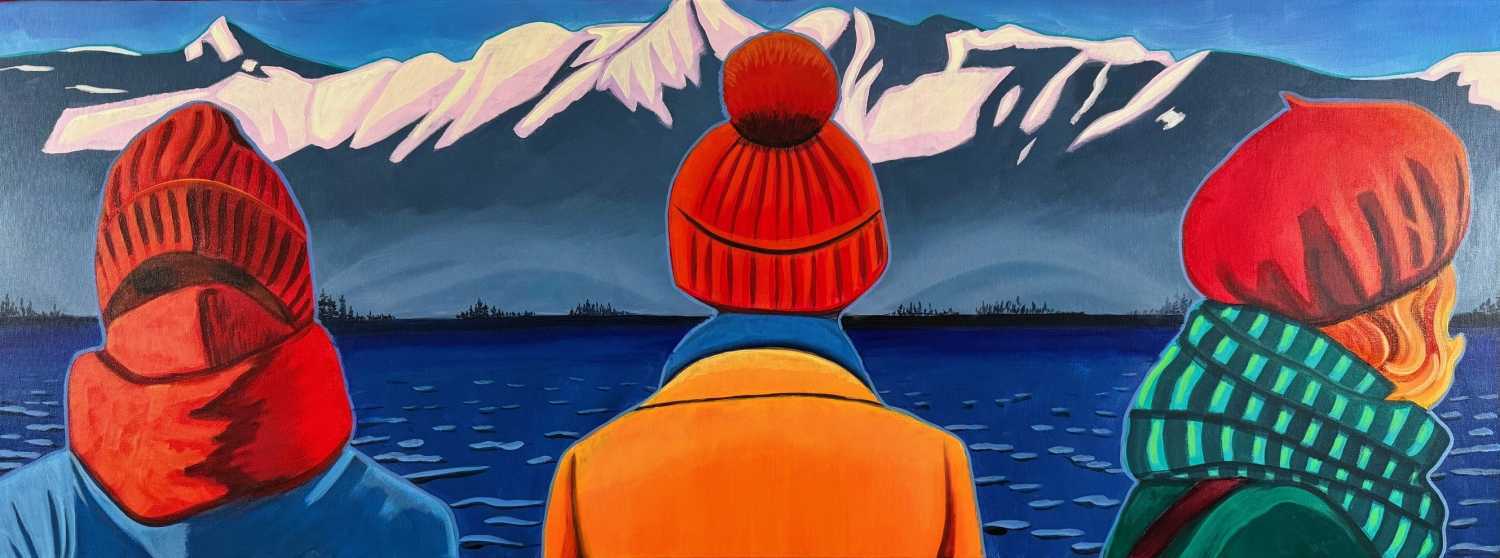
Gateway to The World, c. 2026 Acrylic On Canvas 18 x 48 x 1.5 in – Brandy Saturley
Contemporary Voices : Painting Canada’s West Coast
Today’s West Coast art scene remains vibrant and diverse. Artists continue to explore themes of environment, identity, climate, culture, and place through painting.
From Indigenous artists reclaiming traditional narratives to contemporary painters examining urban and rural life, the Pacific coast continues to inspire new generations of creators.
The West Coast remains more than a geographic location. It is a source of stories, symbols, and visual inspiration that continues to shape Canadian art.
Why the West Coast Matters
What makes the West Coast unique is not simply its scenery. It is the intersection of ocean, forest, mountains, weather, and culture. The region contains some of the oldest living ecosystems on Earth and some of the richest Indigenous artistic traditions in North America.
Artists who paint this coast are often responding to something larger than landscape. They are responding to a sense of place, history, and connection.
From Emily Carr’s forests to E.J. Hughes’ villages, from Robert Davidson’s Haida imagery to contemporary interpretations of the Salish Sea, the West Coast continues to offer artists an endless source of inspiration. It remains one of Canada’s most powerful creative frontiers.
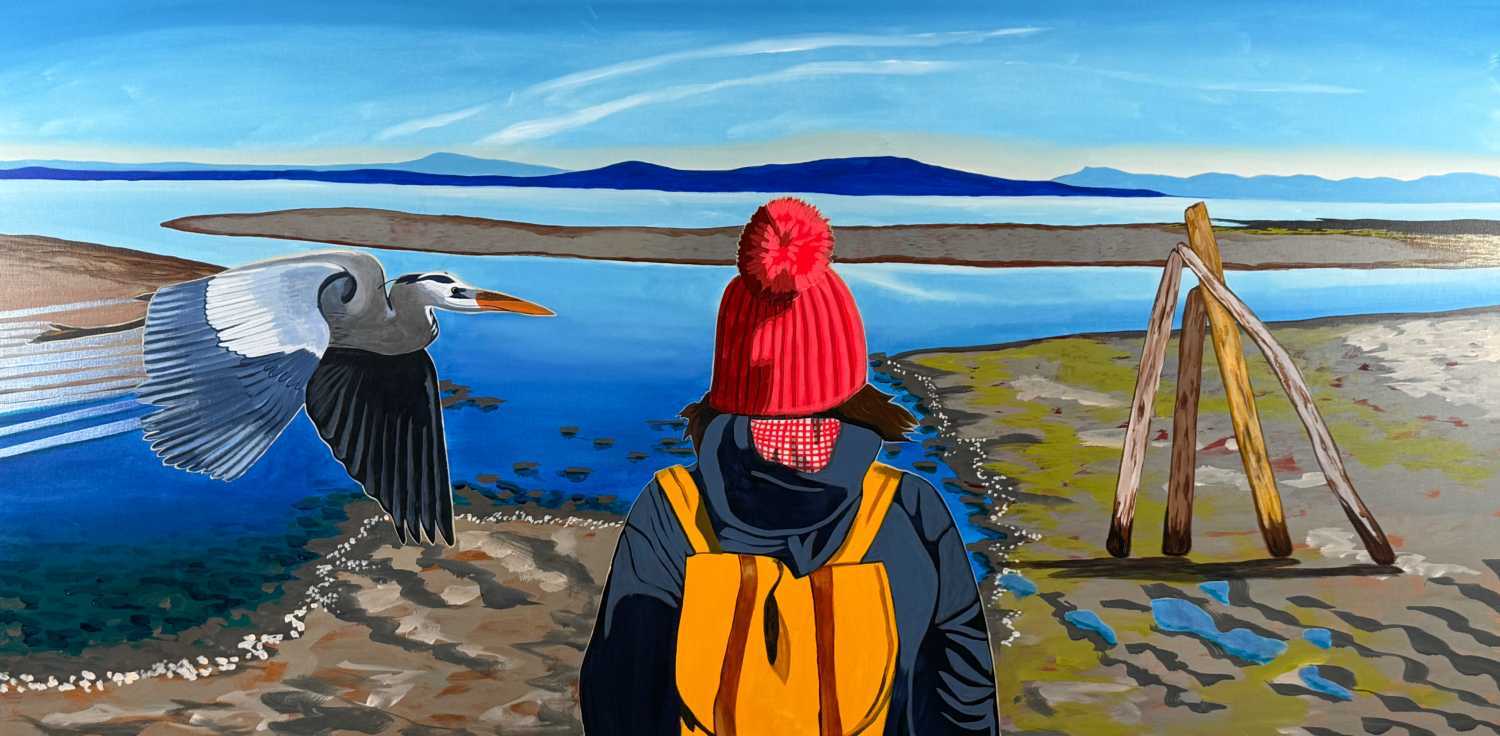
When I Go to SEE, c. 2025 Acrylic On Canvas 30 x 60 x 1.5 in – Brandy Saturley
Five Living West Coast Painters to Watch : Painting Canada’s West Coast
While the legacy of Emily Carr, E.J. Hughes, and Jack Shadbolt continues to influence Canadian art, a new generation of artists is carrying the conversation forward. These painters and visual artists are expanding what West Coast art can be while remaining connected to the landscapes, cultures, and stories of the Pacific coast.
Robert Davidson
Among the most influential Indigenous artists in Canada, Robert Davidson has spent decades revitalizing and evolving Haida visual traditions. His paintings, prints, and installations blend ancestral knowledge with contemporary expression. Davidson’s work has had a profound impact on Canadian art and continues to inspire artists across generations.
Rande Cook
A Kwakwaka’wakw artist from Vancouver Island, Rande Cook is internationally recognized for his paintings, carvings, and installations. His work draws upon traditional Northwest Coast design while addressing contemporary themes of identity, culture, and resilience. Cook represents the powerful continuity of Indigenous artistic practice on the West Coast.
Luke Ramsey
Based in British Columbia, Luke Ramsey has developed a distinctive visual language that combines drawing, painting, storytelling, and imagination. His work often blurs the boundaries between observation and dream, creating richly detailed worlds populated by curious characters and unexpected narratives. Ramsey’s work reflects the creative spirit and independent nature of contemporary West Coast culture.
Victoria Klassen
Based in Vancouver BC, working primarily with acrylic and mixed media on canvas or wood panel, she is best known for her expressive brushwork and graphite mark-making, utilizing both a vibrant yet subdued colour palette or a neutral limited palette. Her work explores themes of solitude and vulnerability through organic shapes found in nature. Characterized by the use of visible brushwork and line, her paintings evoke a sense of freedom, energy and wildness.
Brandy Saturley
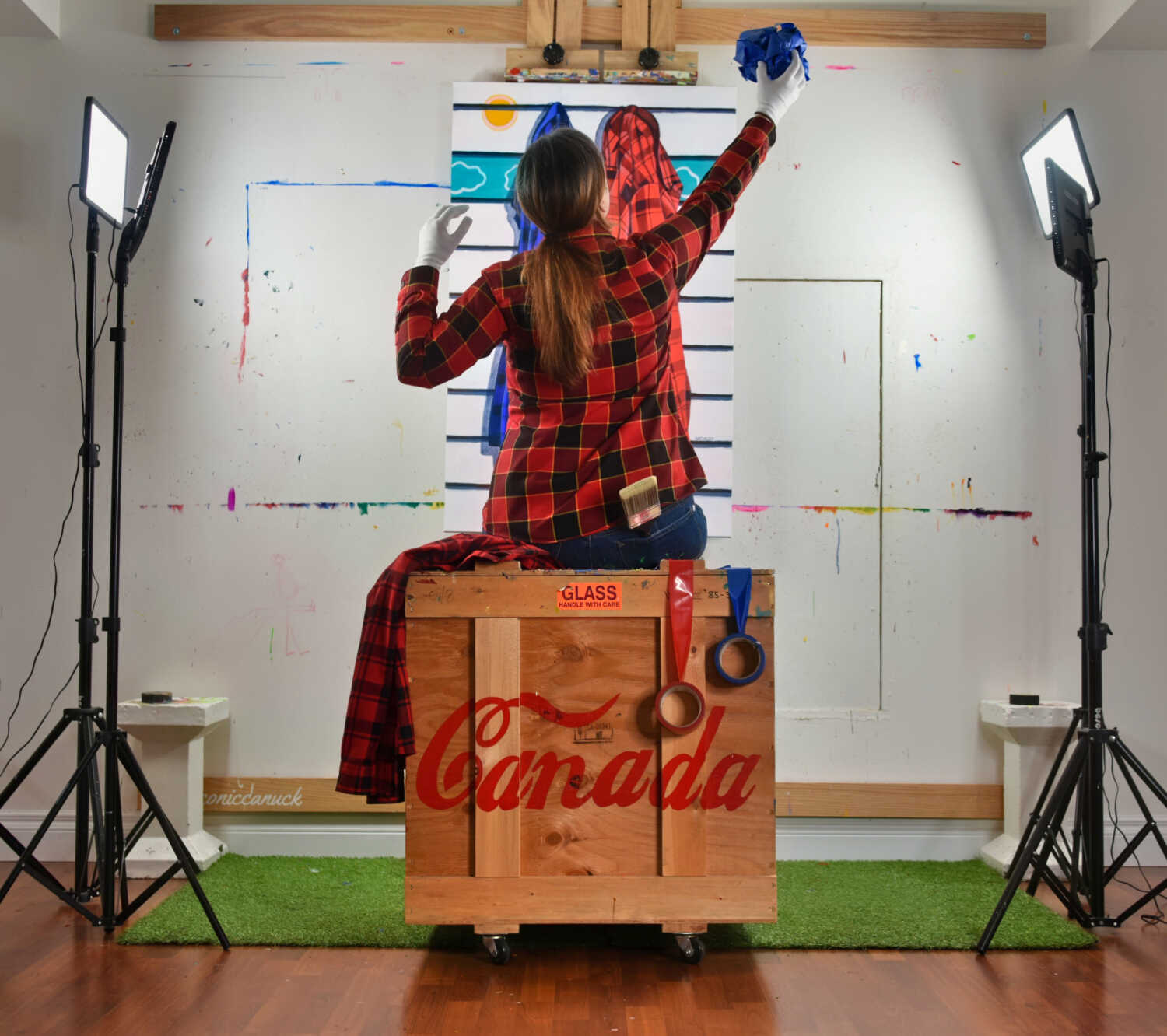
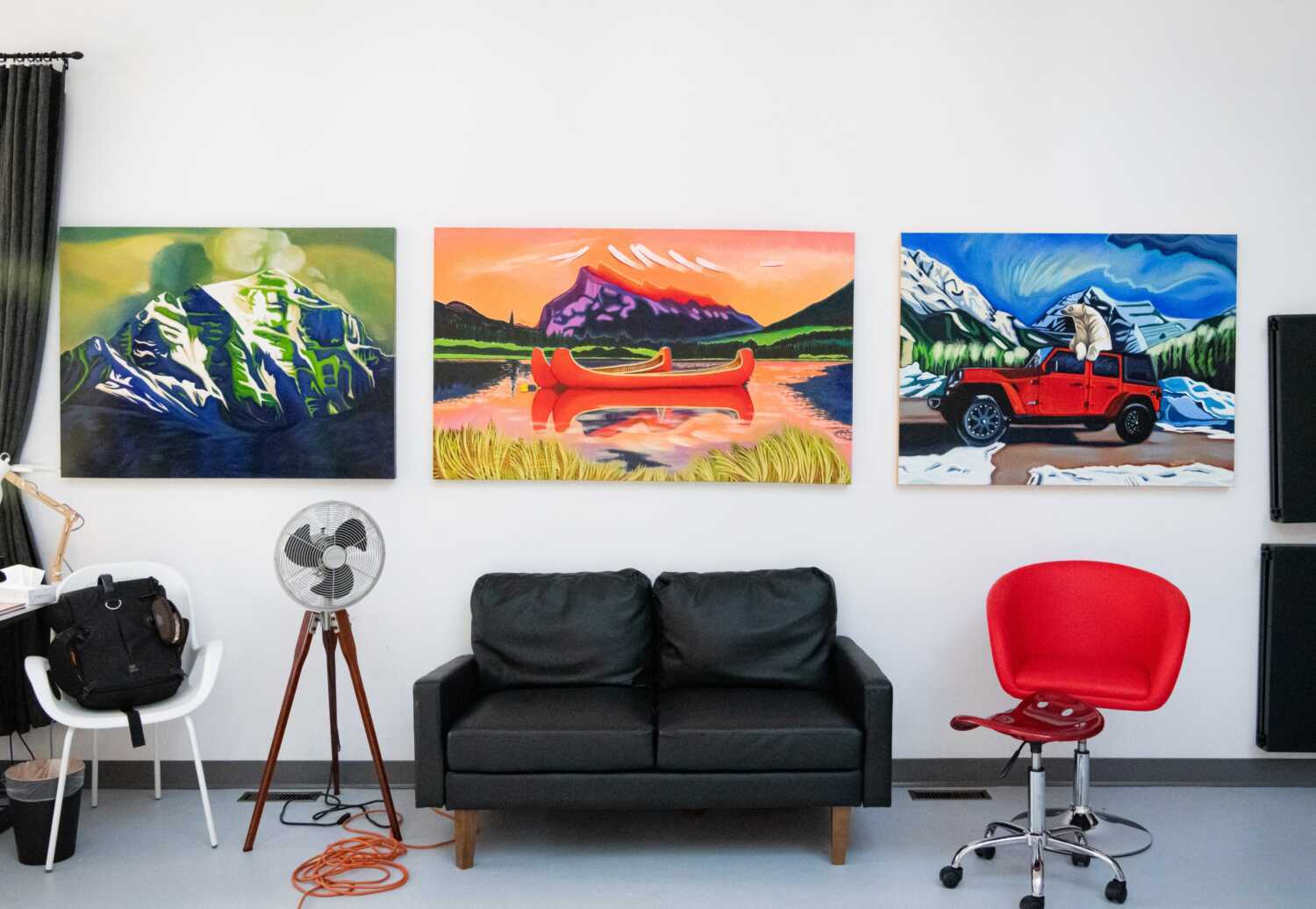
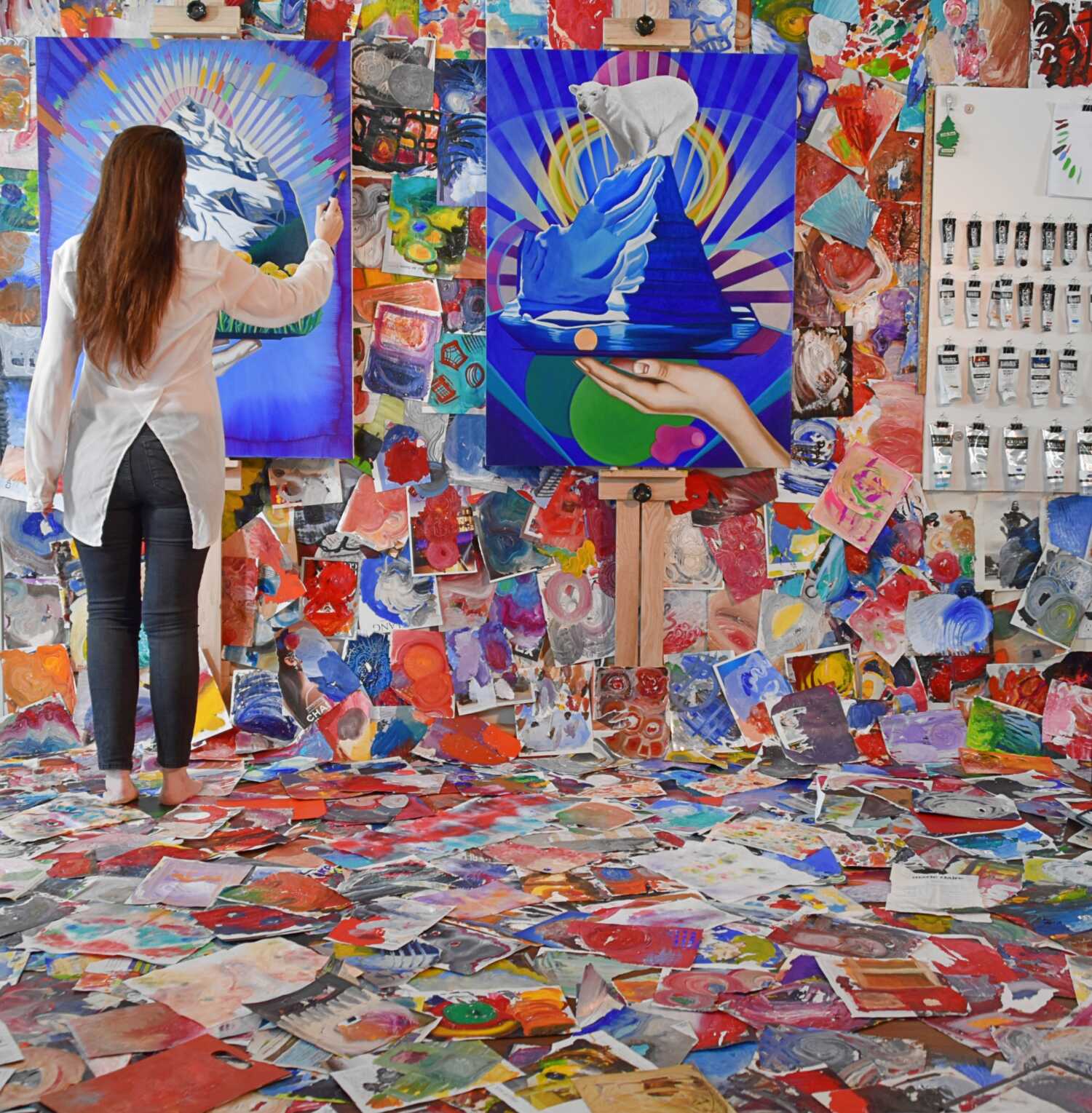
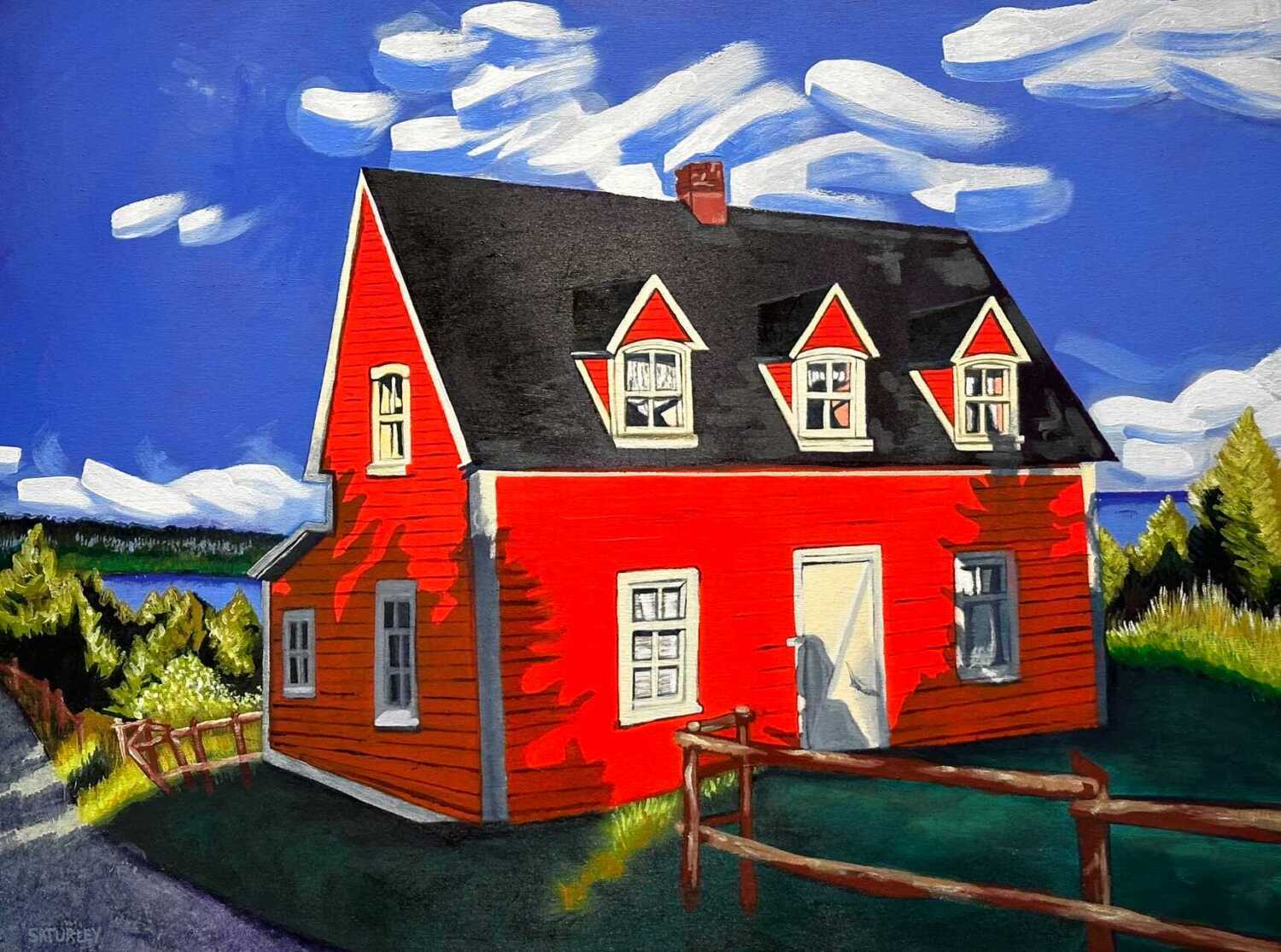
Over the past two decades, Brandy Saturley has built a body of work that explores Canadian identity through painting. While her work spans the entire country, Vancouver Island and the West Coast continue to play an important role in her visual vocabulary. Drawing upon Canadian symbolism, popular culture, landscape, and storytelling, Saturley creates paintings that examine what it means to be Canadian in the twenty-first century. Her ongoing explorations of the Salish Sea, coastal communities, and the evolving iconography of Canada place her within the continuing tradition of artists inspired by the West Coast.
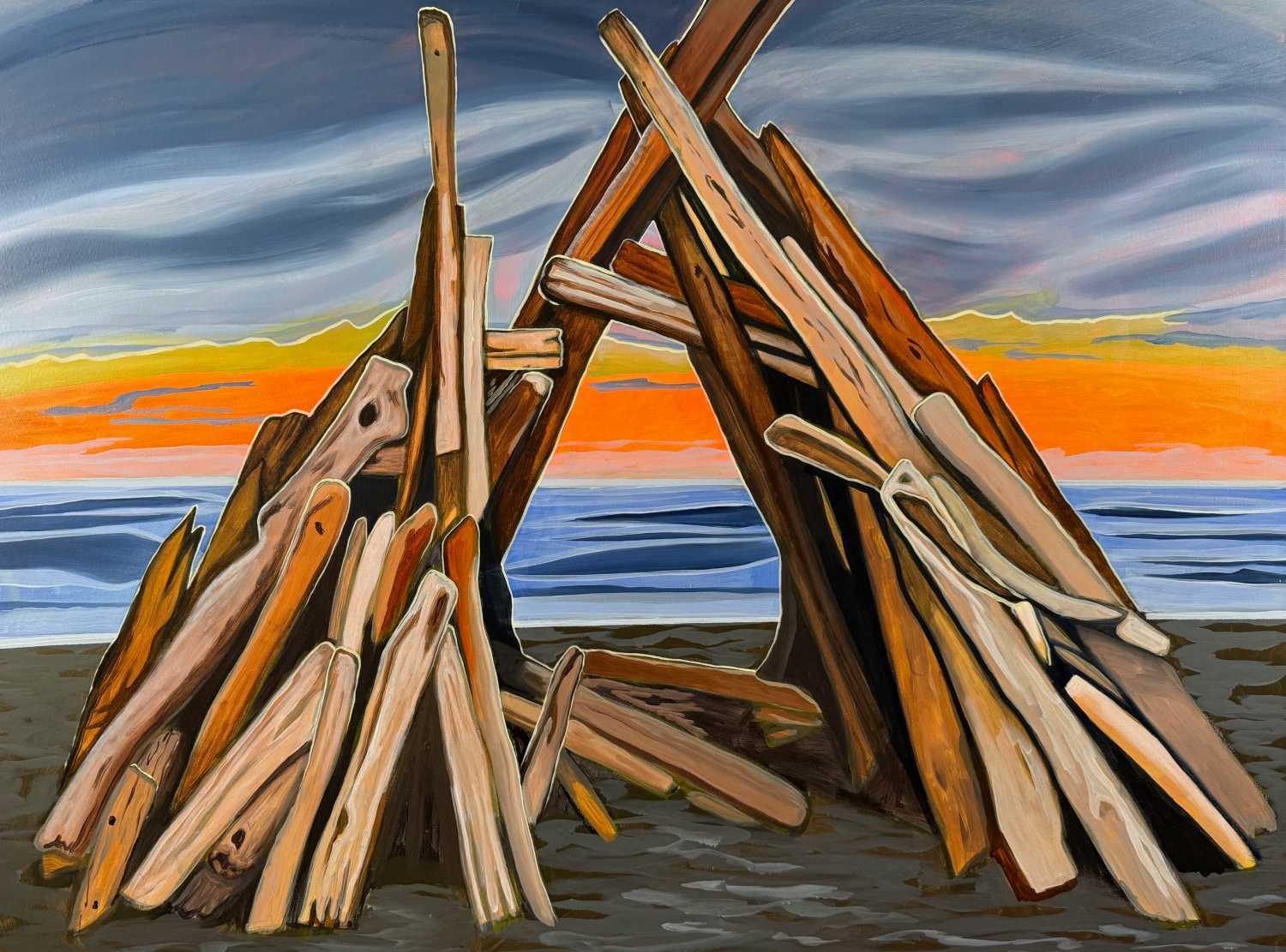
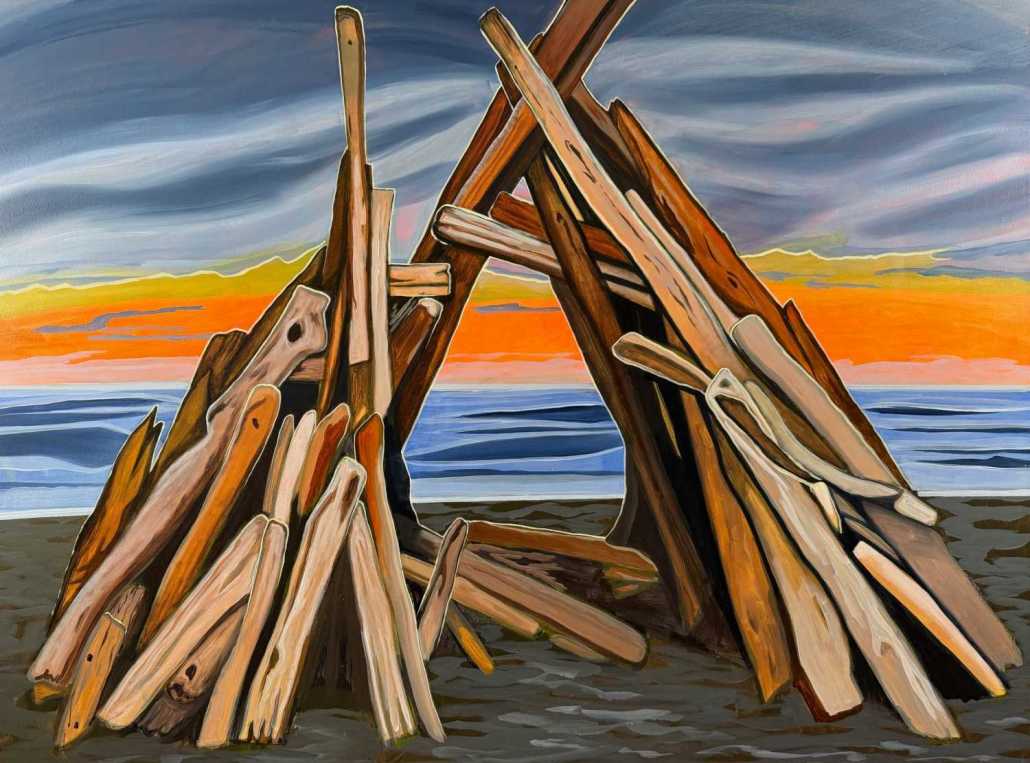
Beach House, c. 2025 Acrylic On Canvas 36 x 48 x 1.5 in – Brandy Saturley
The Next Chapter of West Coast Art
What connects these contemporary artists is not a shared style, but a shared relationship to place. The West Coast continues to provide artists with endless material: ancient forests, shifting shorelines, Indigenous histories, working waterfronts, island communities, and the constant presence of the Pacific Ocean.
Just as Emily Carr and E.J. Hughes interpreted the coast through the lens of their own time, today’s artists are documenting and reimagining the region for a new generation. Their work ensures that the story of West Coast art remains a living, evolving conversation.
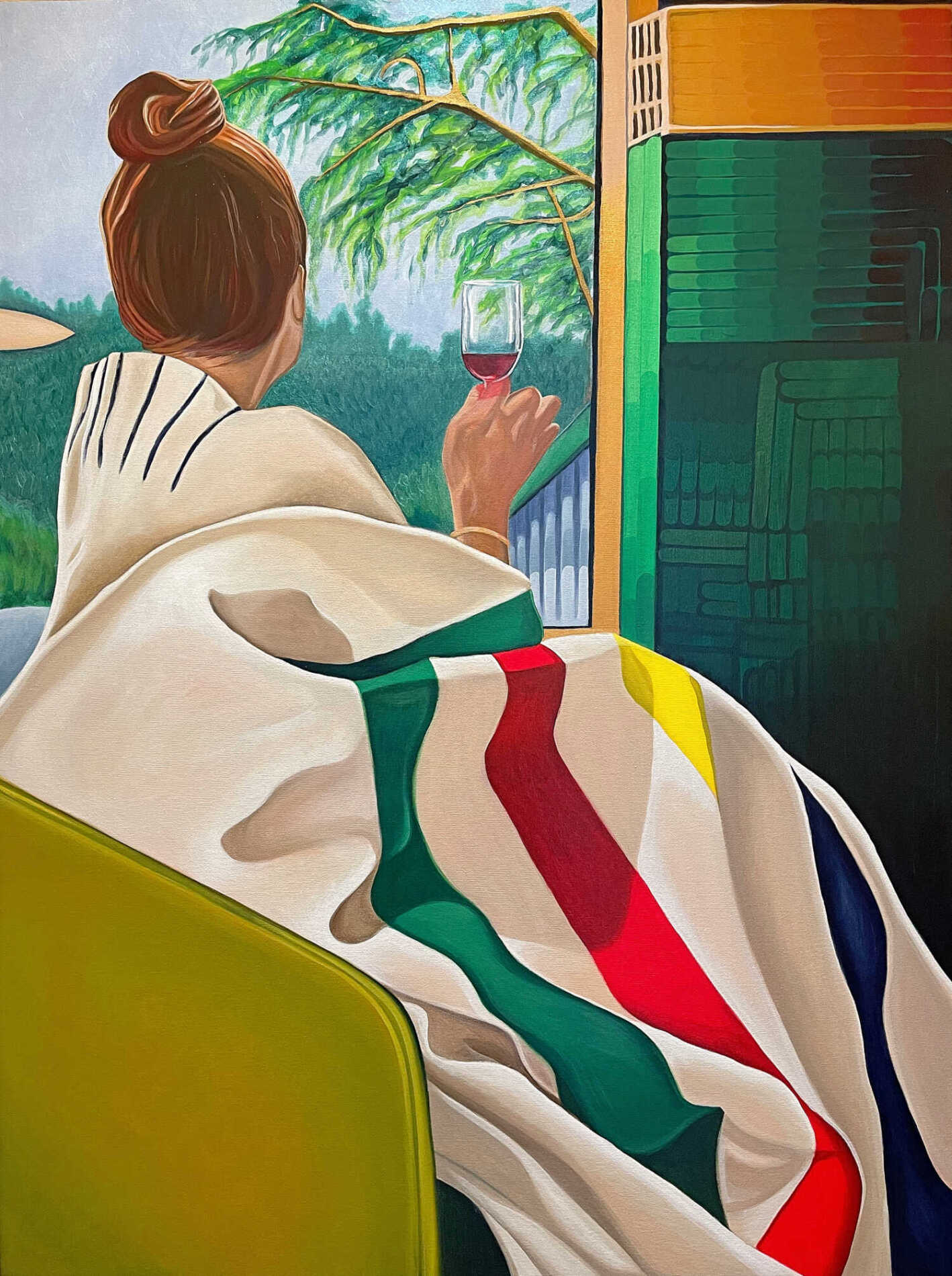
West Coast Solitudes, 2022 Acrylic on Canvas 48 x 36 x 1.5 in – Brandy Saturley