Ice Skating Art
Painting People on Outdoor Ponds – Ice Skating Art in Canada
Recently, The Canadian Art Junkie published a feature on The Art of Skating, highlighting Canadian artists who have celebrated outdoor skating through visual storytelling on canvas. It is a subject deeply woven into the fabric of Canadian art history. From Alex Colville to Ken Danby, many painters before me have been drawn to skating as both image and metaphor. Whether it’s an outdoor hockey rink, a game of shinny, families circling a frozen pond, or the quiet focus of a lone figure skater, skating offers endless material to keep a painter’s brush in motion.
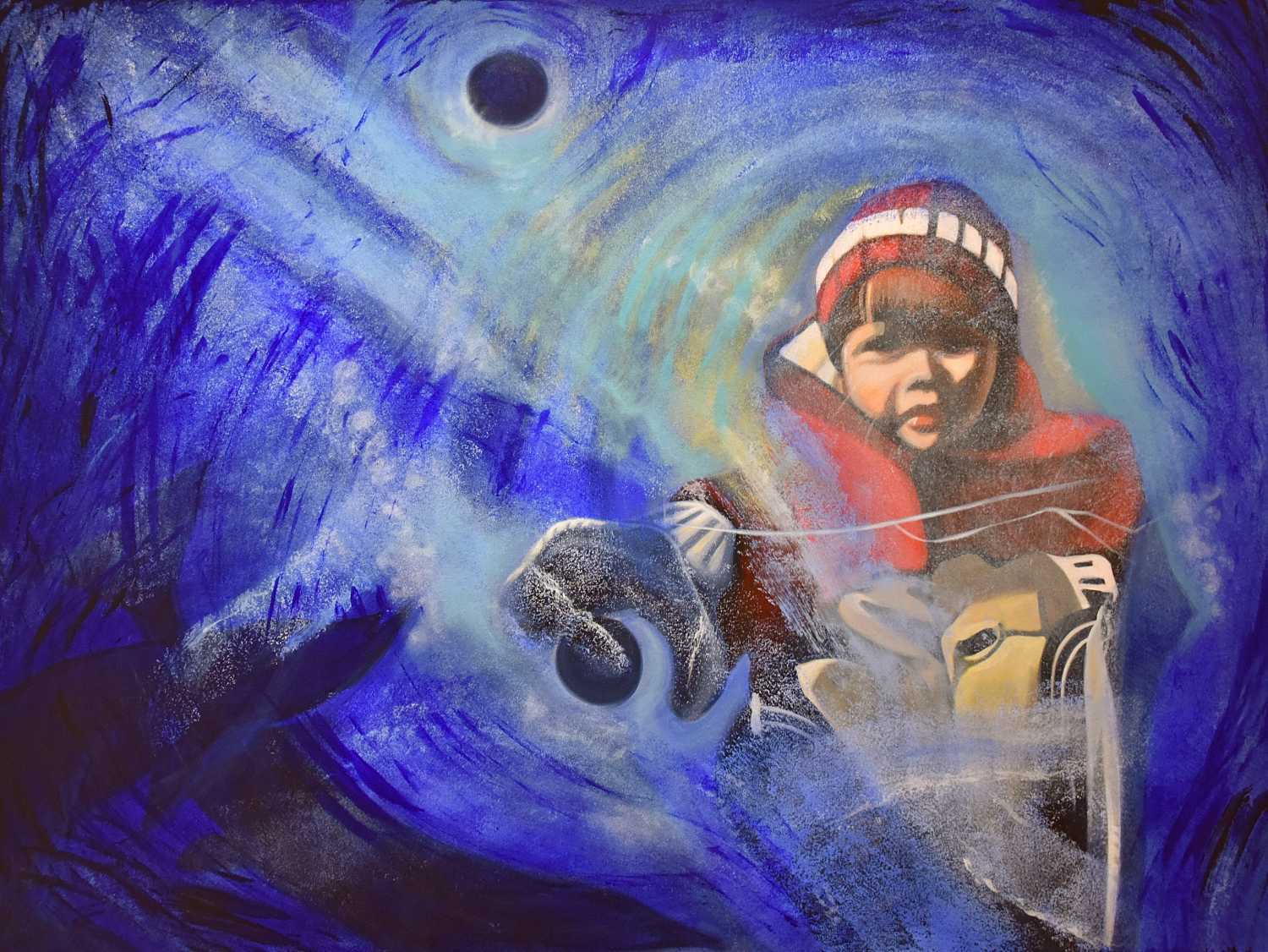
The Prodigy, Acrylic On Canvas, 36 x 48 x 1.5 in, 2021 – Brandy Saturley
Over the years, the theme of ice skating has surfaced again and again in my own work. That feels fitting, as Canadian winter is not merely endured, it is actively lived on ice. From farmers’ fields flooded and frozen on the Prairies, to glassy mountain lakes in Alberta, from the Great Lakes to small backyard ponds, skating is one of the most democratic and joyful ways Canadians meet winter head-on. It turns cold into community.
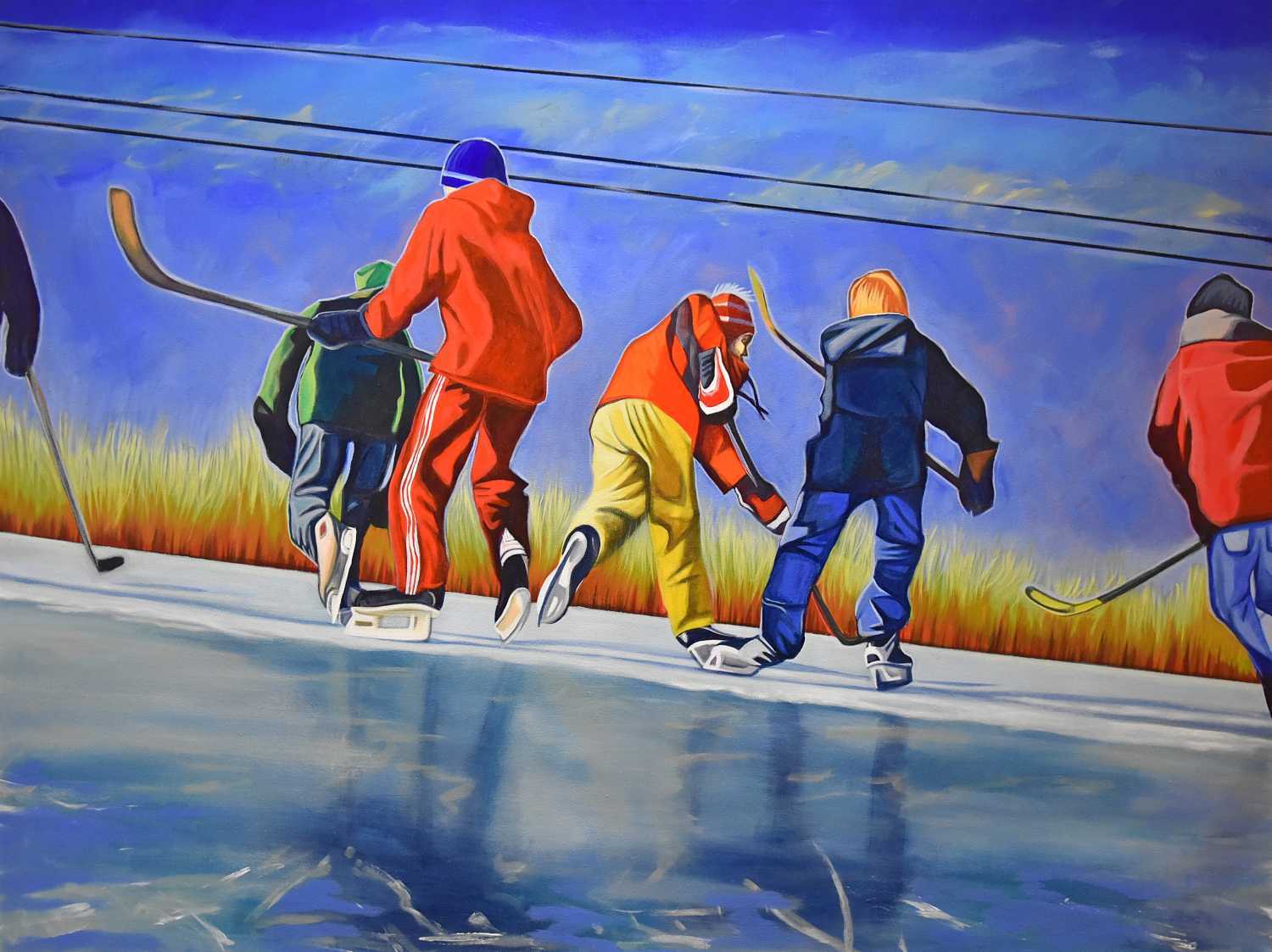
Pond Hockey Days, Acrylic On Canvas, 36 x 48 x 1.5 in, 2021 – Brandy Saturley
Painting skaters outdoors allows me to explore more than motion. It’s about atmosphere, breath in the air, the scrape of blades against ice, the muted soundscape that comes with snow-covered land. Skaters become small but essential figures within vast winter landscapes, reminding us of our scale in nature and our resilience within it. Often bundled in parkas, scarves, and knit hats, they carry a distinctly Canadian silhouette, recognizable even without faces.
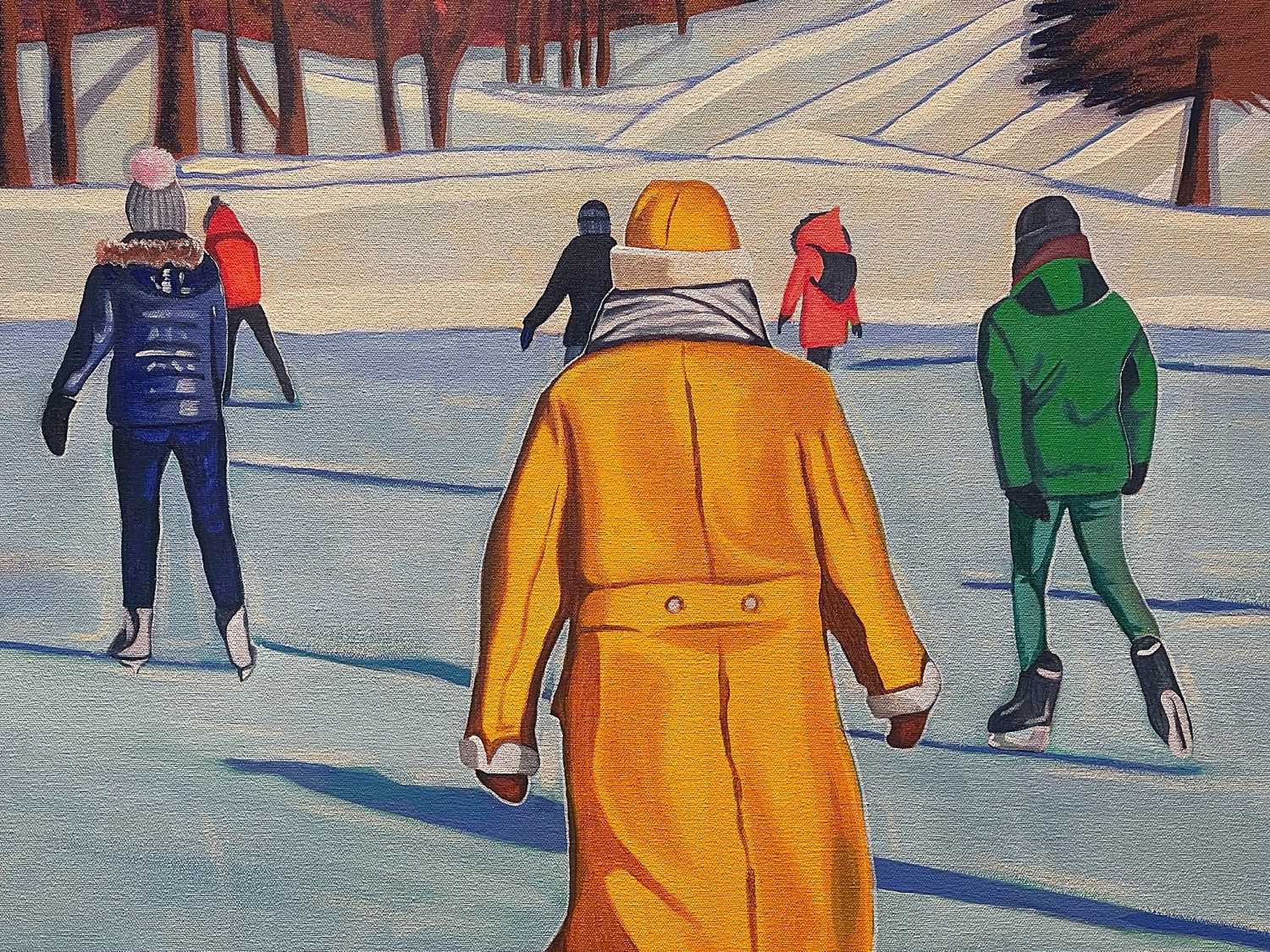
Detail view – Glide Away, Acrylic On Canvas, 36 x 48 x 1.5 in, 2021 – Brandy Saturley
There is also a quiet nostalgia embedded in these scenes. Outdoor skating often exists outside of structured time. It happens at dusk after school, on weekends, during holidays, or in those fleeting moments when the ice is just right. Painting these scenes becomes a way of preserving a shared memory. Many viewers tell me they can feel themselves back on the ice when they encounter these works, toes numb, cheeks burning, laughter echoing across a frozen surface.
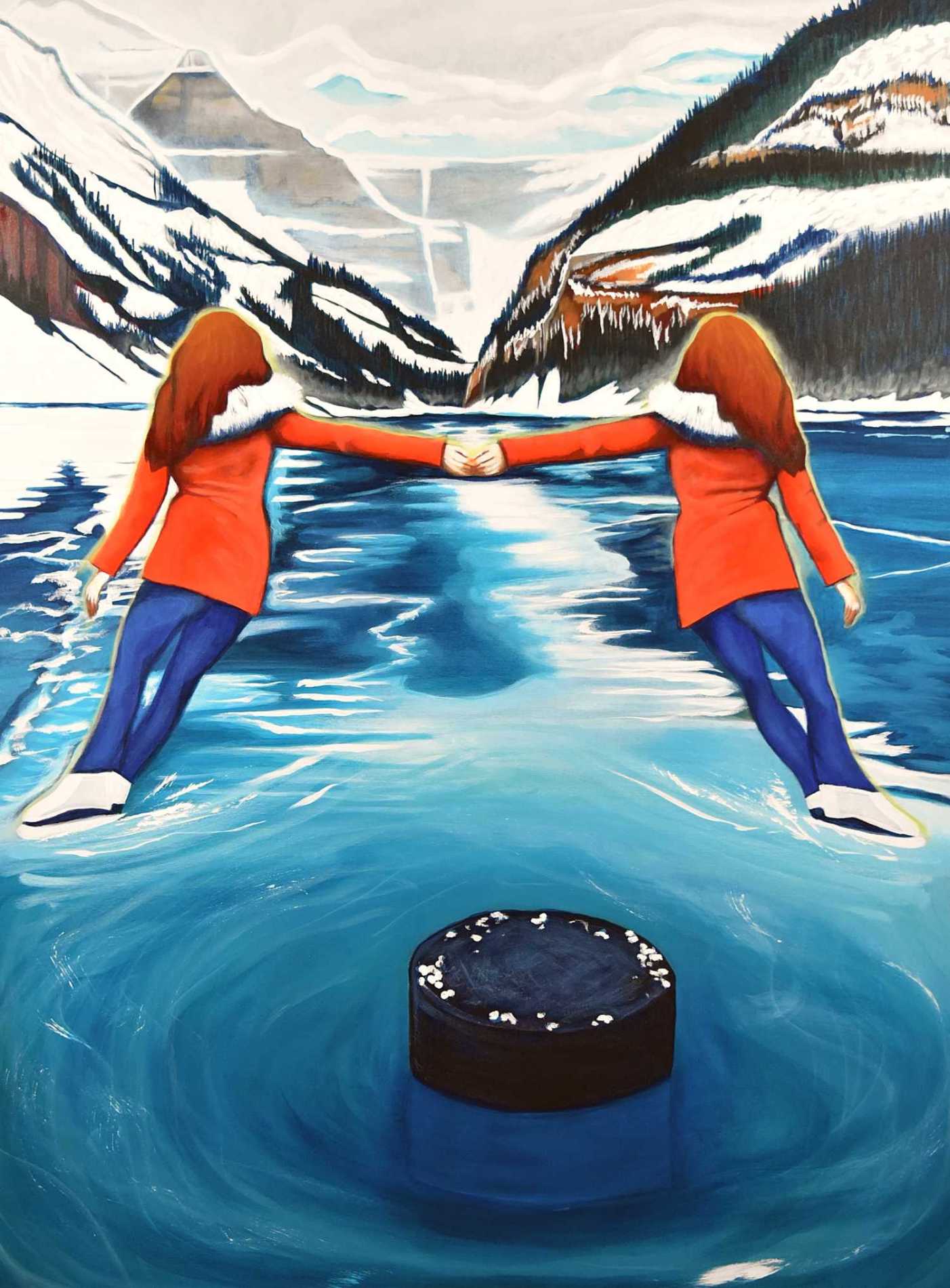
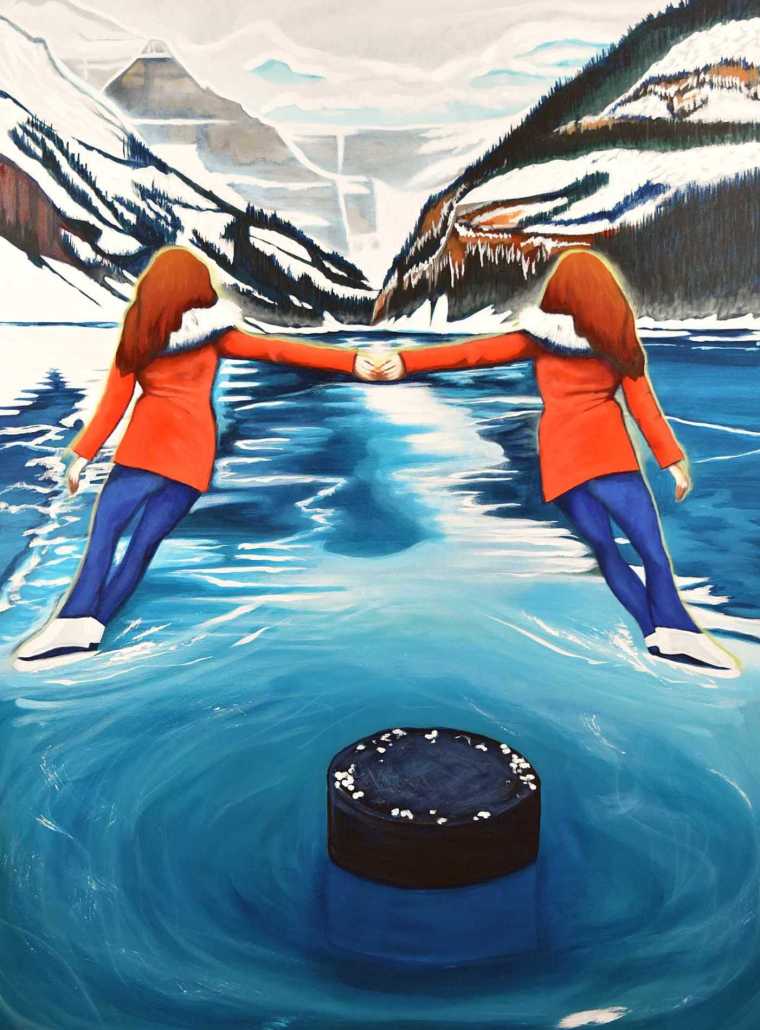
Vortex, Acrylic on canvas, 48×36, 2021 – Brandy Saturley
Historically, skating in Canadian painting has often been used to speak about balance, discipline, and grace, but also about play. It sits at the intersection of sport and leisure, survival and joy. That duality continues to interest me. A frozen pond can be both serene and energetic, expansive yet intimate. It’s a stage where stories unfold without spectacle, where everyday life quietly becomes worthy of paint.
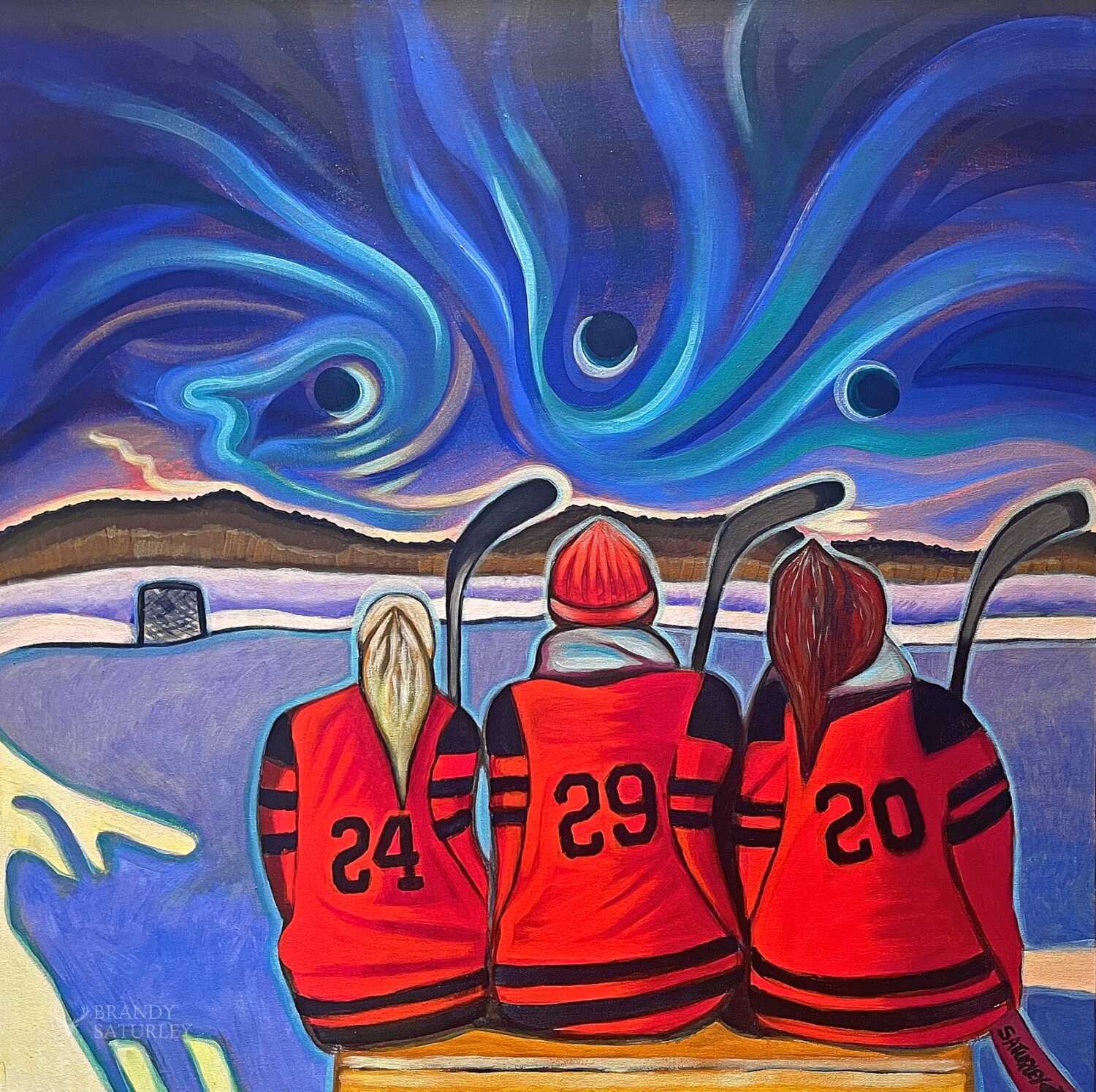
We Dream, Acrylic On Canvas, 30 x 30 x 1.5 in, 2022 – Brandy Saturley
In a country where winter defines so much of our rhythm, skating remains one of the most poetic expressions of how we adapt, celebrate, and gather. To paint people skating outdoors is to paint a very particular Canadian way of being in the world. One where cold sharpens awareness, community forms organically, and the landscape is never just a backdrop, but an active participant in the story.
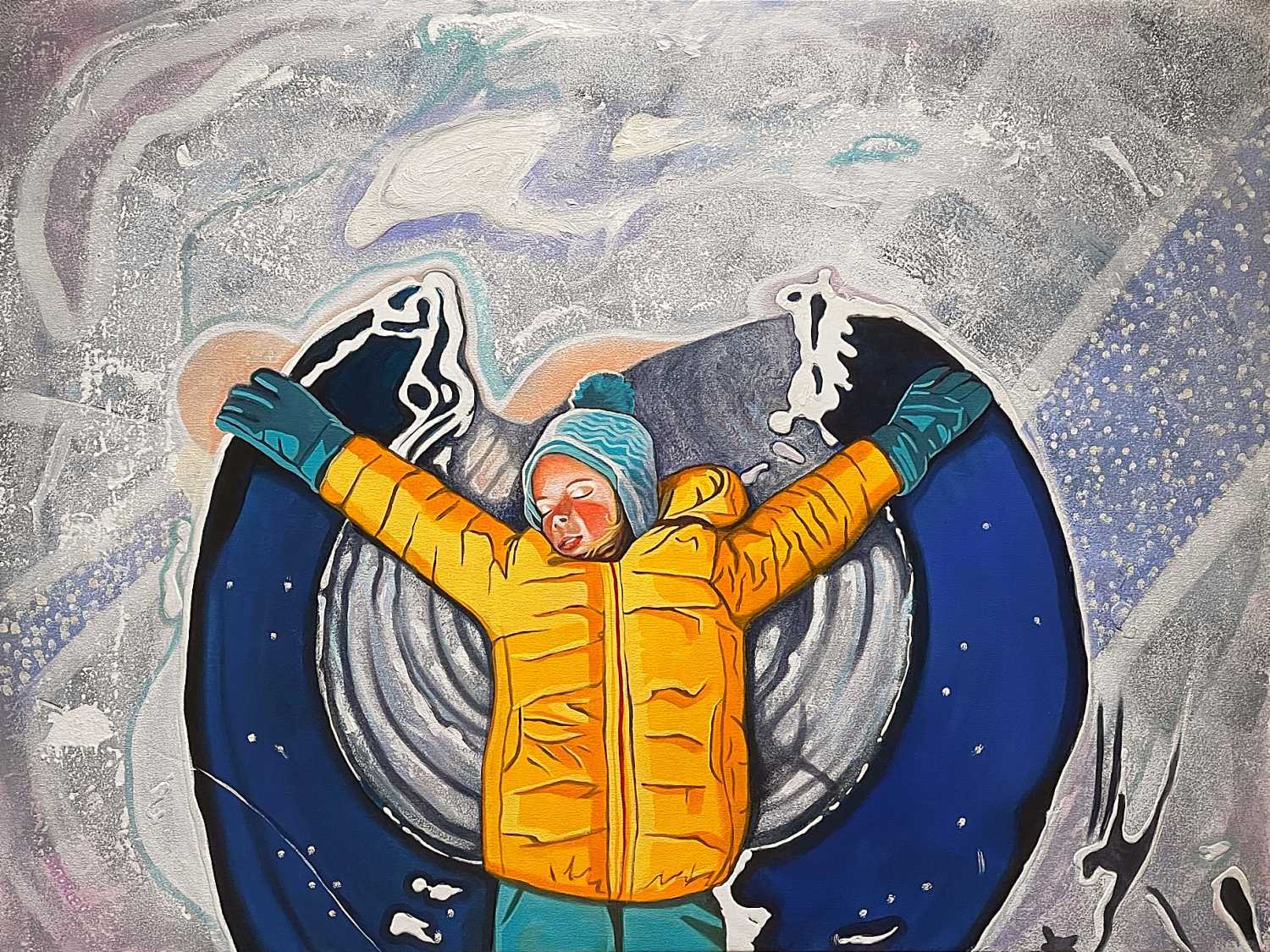
Angel of Snow & Ice, Acrylic On Canvas, 36 x 48 x 1.5 in, 2023 – Brandy Saturley
Ice, after all, is never still. And neither are we.