The Art of Brandy SaturleyIconic Canadian Pop Art to Collect #iconiccanuck
  • Home
  • Paintings by Series
  • Paintings
  • About
  • Testimonials
  • Buying Art
  • Contact
  • News
  • Menu Menu

Tag Archive for: David Hockney

Posts

Spirit of David Hockney

Art Career

The Momentous Spirit of David Hockney: A Painter’s Painter

When I was a young artist making drawings in my bedroom, I dreamed of big things for my art. I imagined large canvases, distant galleries, and the possibility that painting could become a way of seeing the world more clearly. As I grew older and found my way to art college, I discovered the spirit of British artist David Hockney and something shifted in me.

Hockney was born in Bradford, England, in 1937 and became one of the defining artists of the 20th century. Associated with the Pop Art movement of the 1960s, he quickly stood apart from many of his contemporaries. While others leaned into irony and commercial imagery, Hockney brought warmth, observation, and deep affection for everyday life into his work. His portraits, California swimming pool paintings, stage designs, and later monumental landscapes all carried the same unmistakable energy: a vivid curiosity about how we see and experience the world.
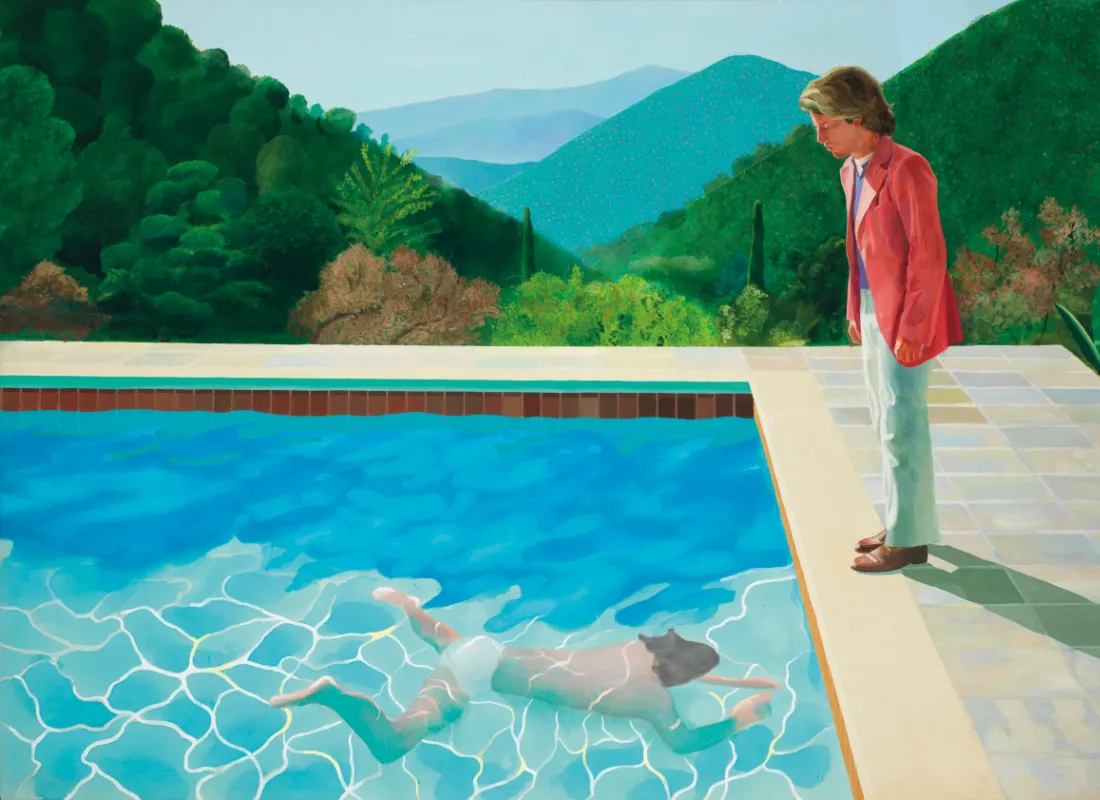
Spirit of David Hockney

One of the most famous paintings of David Hockney is this double portrait from the swimming pool series. (Image: Christie’s)

What struck me first was the sense of wonder in his paintings. Hockney’s work feels open-hearted and alive. His portraits are intimate without becoming sentimental, and his landscapes transform familiar scenes into something almost dreamlike. Over time I became especially drawn to those immense, near-abstract landscapes where colour and rhythm seem to pulse across the canvas. The spirit in the work kept expanding, radiating outward from the paintings themselves.

The first time I saw Hockney’s work in person was at the Vancouver Art Gallery, during an exhibition of his portraits and later digital works. Even though he was already regarded as a master painter, he never stopped evolving. Hockney embraced new technology with the same curiosity he brought to oil paint and drawing. He understood that the tool is secondary to the artist using it. Standing in front of those digital portraits, I could still feel his painterly touch, his vibrant palette, and his sharp observational eye.
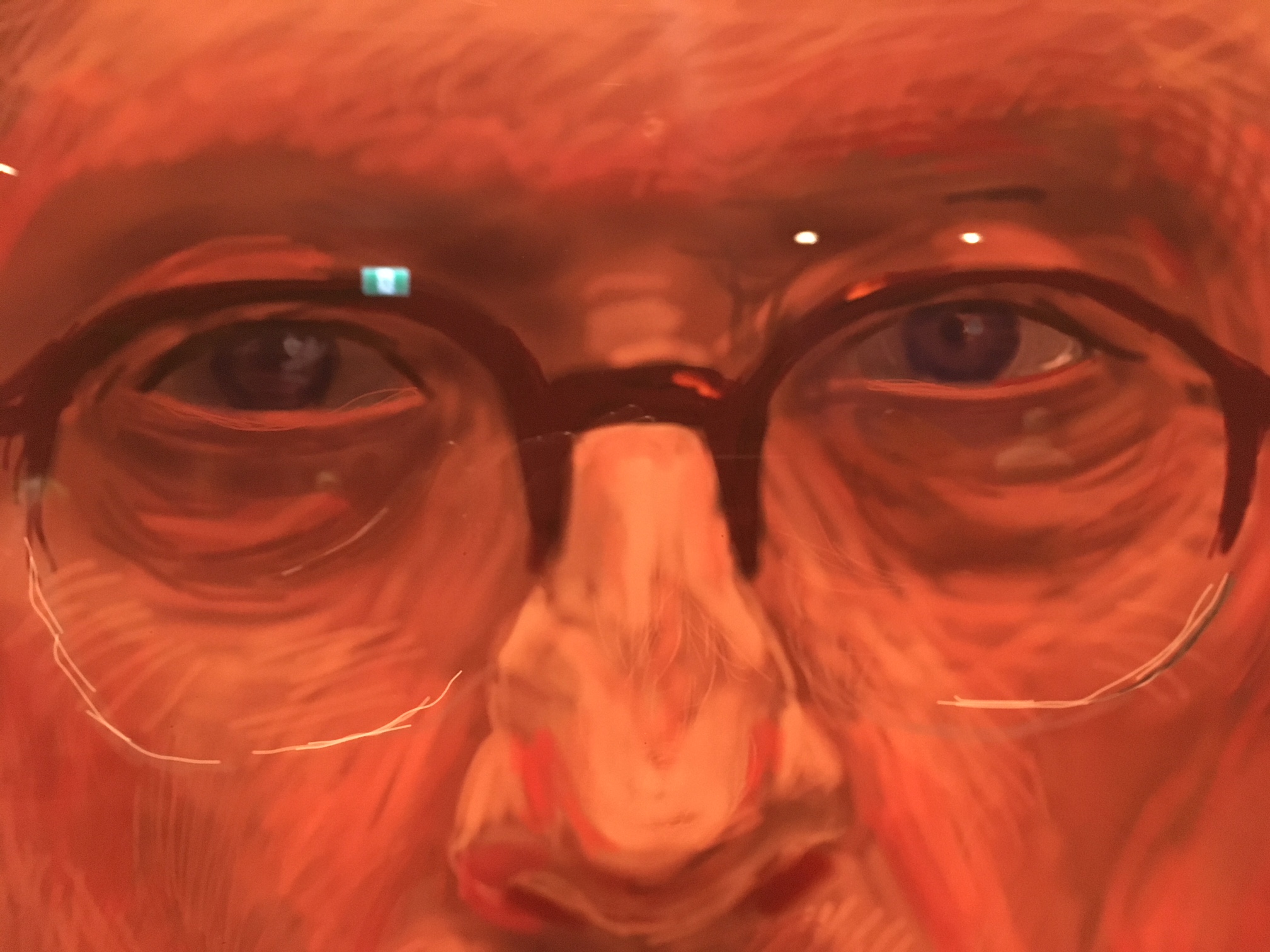
Spirit of David Hockney

Self-Portrait on iPad, 2012 – David Hockney

A few years later, I visited the Seattle Art Fair and was invited to view part of Paul Allen’s private collection. There, filling an entire wall like a towering window into another world, was Hockney’s monumental multi-panel landscape Winter Timber (2009). The scale was overwhelming in the best possible way. It wasn’t just a landscape painting; it was an environment, a rhythm of colour and structure that seemed to pull the viewer inside.
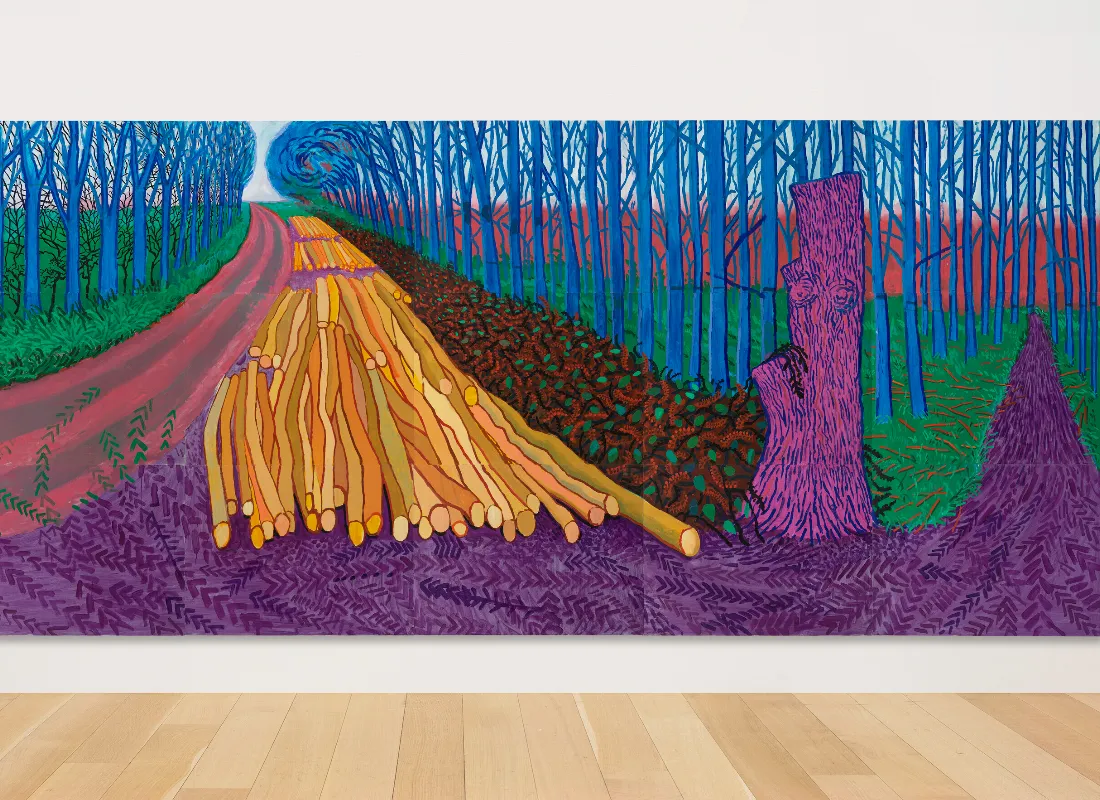
Spirit of David Hockney

In Winter Timber, Hockney captured the Yorkshire countryside. (Image: Christie’s)

By the end of 2018, I was searching for a way to disrupt my own studio practice. I felt caught in a creative rut and wanted to challenge the habits I had built around my work. At the time, I was known primarily for a pop realism aesthetic and had been described as “The Voice of Canadian Pop Art.” I began researching short programs and art schools, eventually discovering a summer contemporary art program in London, UK, at the Royal College of Art — the same institution where Hockney had once studied.

Spirit of David Hockney: In 2019, I went to London.

The experience was transformative. At the RCA, I was pushed to make work in ways that felt unfamiliar and risky. I was encouraged to move beyond polished narrative painting and toward experimentation, gesture, and abstraction. My vivid colour palette remained, but the structure of the work began to loosen and expand.
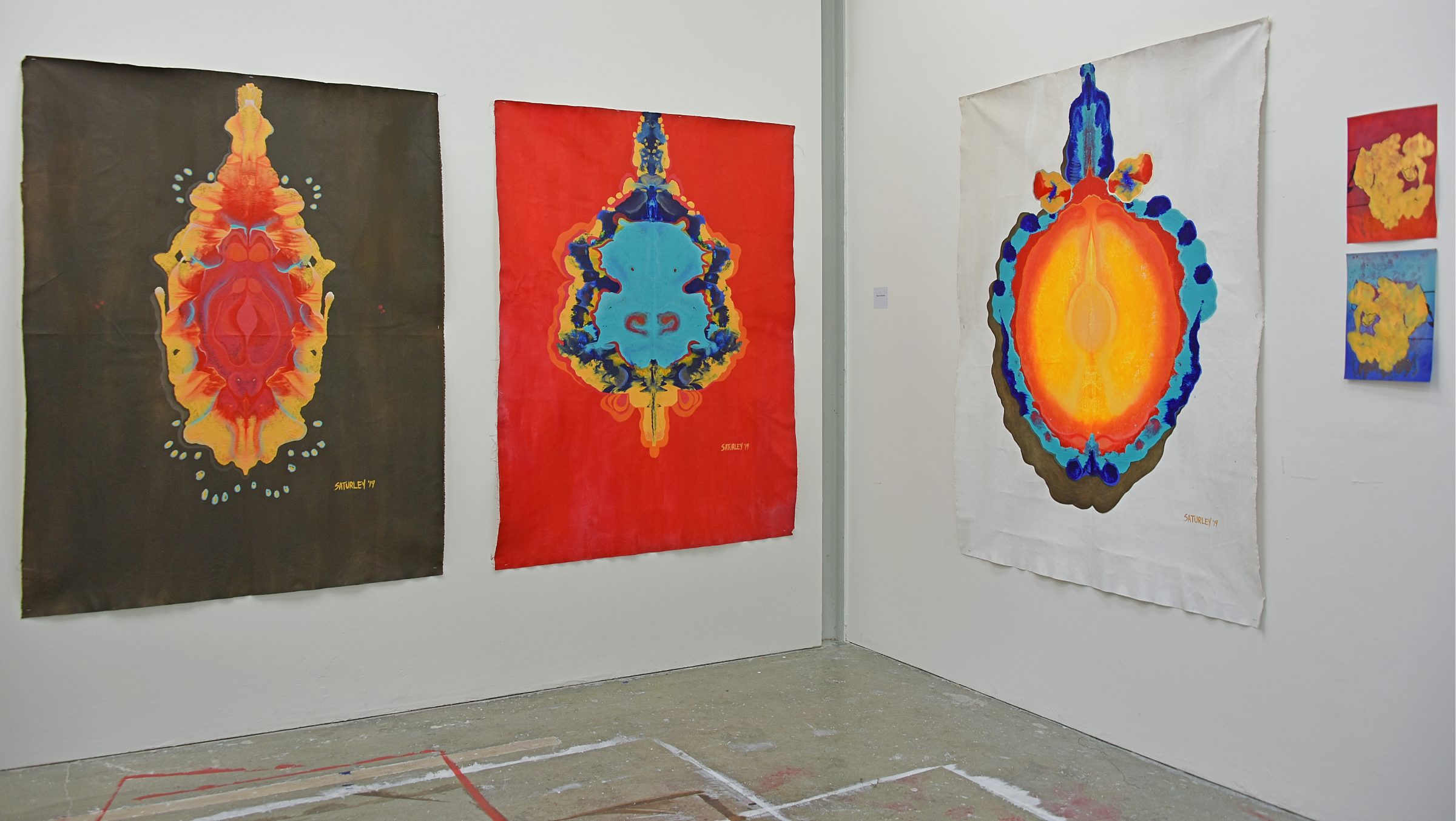
Spirit Mirror paintings by Brandy Saturley, Royal College of Art, 2019

When I returned to Canada, I felt creatively unsettled — in a productive way. I was surrounded again by the pop-art narratives and Canadian iconography that had defined my practice, but I no longer wanted to approach them in the same manner. I kept thinking about that enormous Hockney landscape in Seattle and the freedom it embodied.

I chose Princess Louisa Inlet in British Columbia as the subject for a new painting. On a huge expanse of unstretched duck canvas stapled directly to the wall, I began sketching the landscape in paint. I had worked this way in London, and I wanted to preserve that sense of immediacy and physical engagement. As I painted, the work opened up. Marks became bolder, layers of colour accumulated, forms dissolved and re-emerged. The painting grew into the largest work I had made at that point, and with it came a flood of new ideas. It felt less like illustrating a place and more like building an atmosphere, a memory, a rhythm of looking.
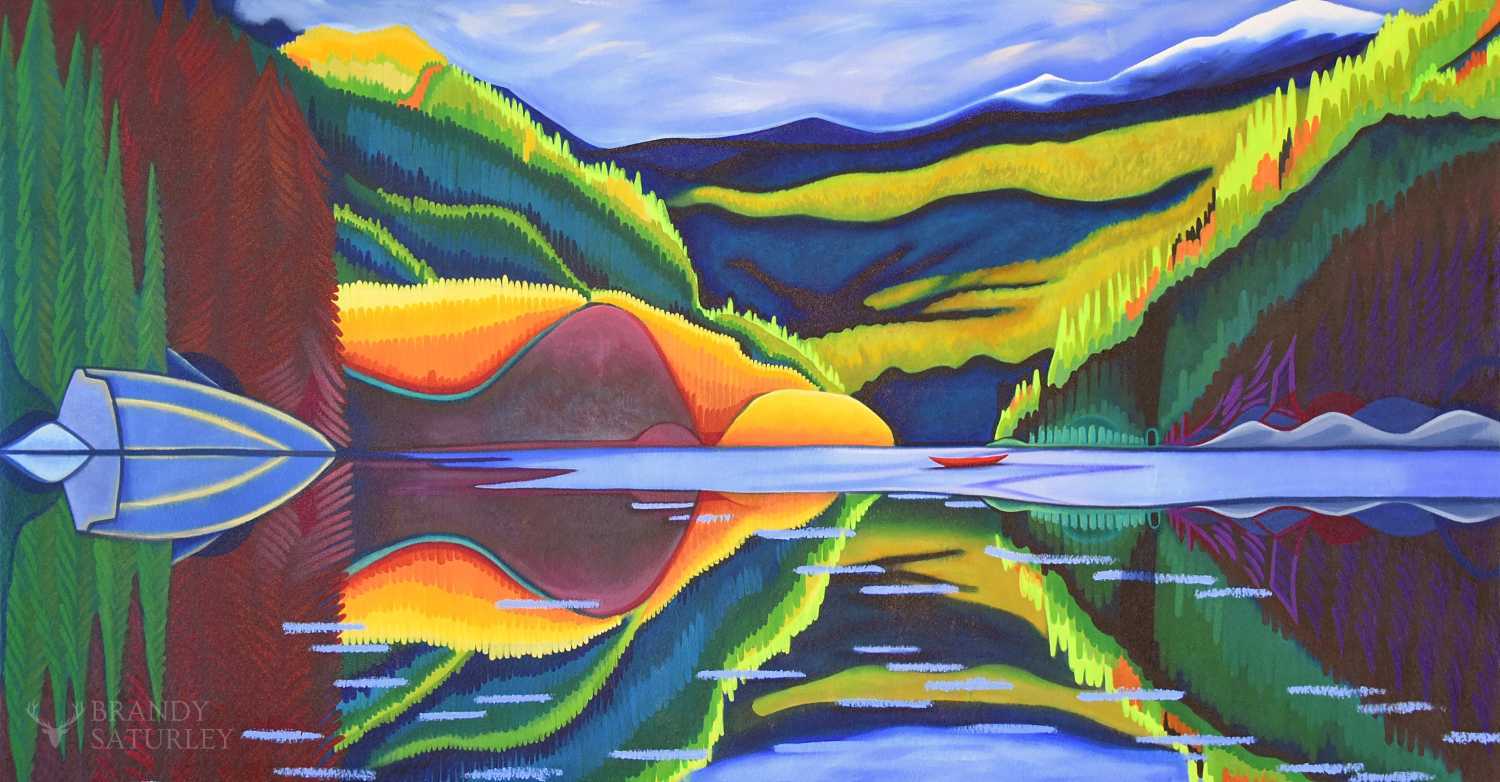
Sound of a Landscape, 42 x 80 x 2 in, 2019, Brandy Saturley

Today, I woke to social media feeds filled with tributes to David Hockney. At 88 years old, this icon of contemporary art has passed away.

Hockney was more than a celebrated painter; he was a reminder that artistic curiosity never has to harden into certainty. He kept experimenting, kept looking closely, kept finding joy in colour, technology, landscape, and human connection. For many artists of my generation, he was a painter’s painter — someone whose influence extended beyond style into the very attitude of making art.

Godspeed, Mr. Hockney. Your spirit continues to live on through your paintings, and through the countless artists you encouraged simply by showing us how fearlessly alive art can be.

June 12, 2026
https://www.brandysaturley.com/wp-content/uploads/2026/06/Winter-Timber-David-Hockney.webp 800 1100 Brandy Saturley https://www.brandysaturley.com/wp-content/uploads/2020/10/brandysaturley_logo.png Brandy Saturley2026-06-12 11:21:102026-06-12 11:21:10Spirit of David Hockney

Making Art in London

Art Career, London Art Scene

Making Art in London: From Victoria, BC to the Royal College of Art

Making Art in LondonShe was just a girl living in her own world, her bedroom walls covered in pink and purple rose wallpaper. The carpet was green like the Spring grass, and she would sit for hours on this grass dreaming up ideas and writing down thoughts. It was her English Garden. The tape cassette player clicking and pushing out tin can sounds of great, and not so great but popular, music. The Beatles Greatest Hits, Billie Holliday, the soundtrack for Miami Vice and AC/DC. It was the 1980’s and her world was mostly created, in this room. The walls were lined with stacks of magazines; Cosmopolitan, Vogue, Top Model, British Elle and the European Newspaper. Making art in London was a dream.

Fast forward to 2019, with nearly two decades working as a professional visual artist and a dozen years working full-time developing my artist voice as a painter, I am now looking forward to the next challenge and opportunity to ‘freshen-up’ my practice and perspective as a contemporary artist.  As long as we are persistent in our pursuit of our deepest destiny, we will continue to grow.

It has been said that there is a number when it comes to mastery, related to time spent practicing an activity, that number is 10,000 hours. In recent years this popularized rule of numbers, was clarified. Within that study, there was no magic number for greatness. 10,000 hours was not actually a number of hours reached, but an average of the time elites spent practicing. Some practiced for much less than 10,000 hours. Others for over 25,000 hours. Where the rule has been challenged, is in the quality of time spent, versus the quantity. Meaning, someone who was not genetically pre-disposed or exposed to a practice, such as painting, might not attain expert level ability just be practicing daily. The research found that there’s much more to mastering a skill than just months, even years, of practice. Genetics may play some role, but science is also giving us glimpses into what else we can do to learn more efficiently.alanrickmanquote

There are many things that make a master; hard work, persistence, patience, and an early introduction in life to the activity, in my case art. (painting, drawing and photography)  Equally important skill acquisition, and particularly rapid skill acquisition. Exposure to mentors and learning that teaches advanced skills, short-cuts and new forms of creative problem-solving and reasoning. As long as I can remember I always sought out the elders in the room, because they were better at things than me, more experienced, and I wanted to learn.

My study in the arts began with my artist mother, with my eyes being opened with that first public school art teacher. This led to the study of fashion design, cinema, and time working in the motion picture arts. These experiences led to the fine arts with schooling in sculpture, graphic design, drawing, painting, and art history. These experiences found me obsessed with taking my drawing practice to the canvas and once I began painting, I never looked back, I was hooked. Photography came to play a role in my practice and complemented my time in the studio, while it also gave me an opportunity to break from my studio practice and explore the world, behind the lens.

ridleyscott_quoteI am a fan of shaking up my perspective, and challenging my practice of art and I am now preparing for a new opportunity for learning, in one of the world’s art centres.

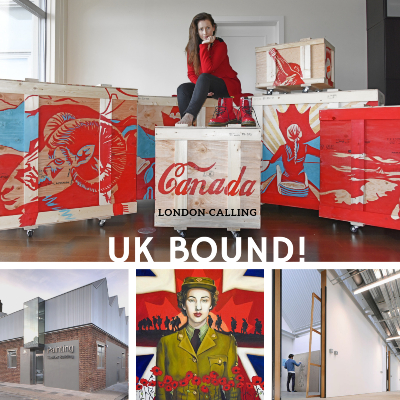
In July and August his year I will be shaking up my practice and perspective while I make art at the Royal College of Art in London, United Kingdom as part of the Contemporary Art Summer School program. I will be making art where some of my favorite masters, walked before.

The Royal College of Art and its predecessor schools have numerous notable alumni in many fields. Alumni from the twentieth and twenty-first centuries include the sculptors Barbara Hepworth and Henry Moore, painters Frank Auerbach, David Hockney, Bridget Riley, Sir Peter Blake and Charles Tunnicliffe, artists Jake and Dinos Chapman, Tracey Emin and R. B. Kitaj, fashion designers Ossie Clark and Zandra Rhodes, industrial designers James Dyson and David Mellor, film directors Tony and Ridley Scott, designers Thomas Heatherwick and Sir David Adjaye, prominent member of the suffragette movement Sylvia Pankhurst, the musician Ian Dury and the actor Alan Rickman. making art in london

The world’s number one art and design university, the Royal College of Art. The only entirely postgraduate art and design university in the world. The RCA has three campuses, in South Kensington, Battersea and White City. The Darwin Building in Kensington Gore.

I will be making art, alongside a small group of  international artists, on the Battersea campus. Battersea is a district of south west London, England, within the London Borough of Wandsworth. It is located on the south bank of the River Thames.

Bringing my Canadian art voice to the country that is the birthplace of my paternal grandparents and ancestry. I will be making art and disrupting my perspective and art practice for the months of July and August. Looking forward to sharing this experience with you!

David Hockney quote

February 19, 2019
https://www.brandysaturley.com/wp-content/uploads/2019/02/royalcollegeofart_brandysaturley.jpg 400 400 am-330 https://www.brandysaturley.com/wp-content/uploads/2020/10/brandysaturley_logo.png am-3302019-02-19 14:16:582022-04-22 09:49:13Making Art in London

BLOG archive

Search Posts

Search Search
© Copyright 2024 - The Art of Brandy Saturley
  • Link to X
  • Link to Youtube
  • Link to Facebook
  • Link to Vimeo
  • Link to Instagram
Scroll to top Scroll to top Scroll to top