Five Indigenous Canadian Artists
Five Indigenous Canadian Artists to Know on the National Day for Truth and Reconciliation
September 30, 2026
September 30 marks the National Day for Truth and Reconciliation, a day to honour Survivors of residential schools, remember the children who never returned home, and reflect on the ongoing legacy of the residential school system in Canada. Established in response to Call to Action 80 of the Truth and Reconciliation Commission, the day asks Canadians to listen, learn and reflect. Across the country, art and culture continue to provide important spaces for that learning.
For me, as a Canadian artist who has spent nearly two decades exploring Canadian identity through painting, Indigenous art has become an increasingly important part of understanding the complicated story of this country. Canada is not one story. It is a collection of histories, cultures, relationships to land and lived experiences, some celebrated and others deliberately silenced.
Indigenous artists have played an essential role in bringing those stories into the contemporary cultural conversation. Their work can challenge the way Canadian history has traditionally been represented while also celebrating Indigenous knowledge, identity, resilience, spirituality, humour and connection to the land.
This National Day for Truth and Reconciliation, I wanted to highlight five Indigenous Canadian artists whose work has influenced the way I think about Canadian art.
Five Indigenous Canadian Artists
Terry McCue
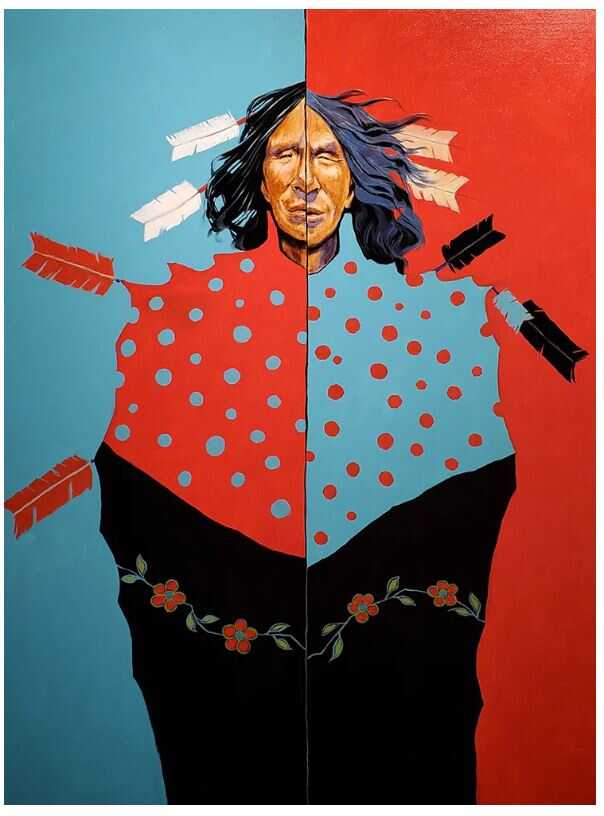
Terry McCue (1945-2024) was an Ojibway artist from Curve Lake First Nation in Ontario who later made Alberta his home. A self-taught painter, McCue was influenced by his cousin, the celebrated artist Arthur Shilling. His artistic career developed after years of working as a facilitator in Indigenous communities and as a freelance illustrator.
McCue’s paintings are immediately recognizable for their bold colour, symbolism and connections between humans, animals and the natural world. His philosophy was rooted in the idea that humanity is part of creation and that respect for the natural world is central to understanding our place within it.
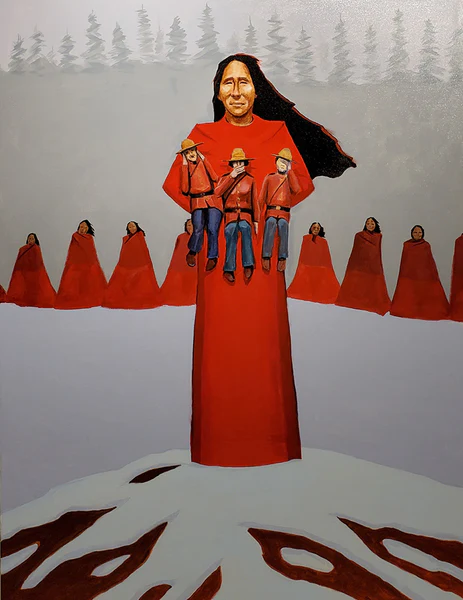
His later series Ripples of Loss addressed the crisis of Missing and Murdered Indigenous Women and Girls. The paintings use red dresses, ceremonial clothing, spirit animals and landscape to create powerful images of absence, remembrance and loss.
McCue’s work reminds us that art can carry difficult stories while still holding space for beauty, spirituality and hope.
Jason Carter
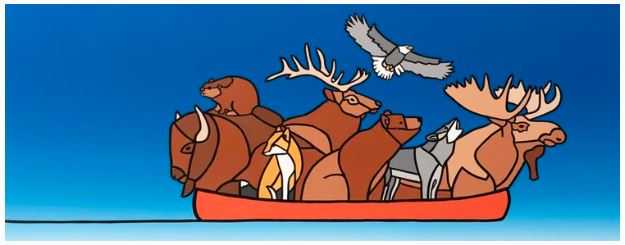
Jason Carter is an Indigenous artist from the Little Red River Cree Nation in Alberta. Working across painting, sculpture, illustration and public art, Carter has developed a highly recognizable visual language built around bold colour, strong lines, humour and animals.
His work can be found in public spaces across Alberta and beyond, including major installations at Calgary and Edmonton International Airports. He has also created large-scale public artworks and immersive installations, including wâpos, an installation celebrating the rabbit through sculpture, light, sound and storytelling.
What I find particularly interesting about Carter’s work is its ability to communicate with a broad audience without sacrificing its Indigenous perspective. There is humour, colour and joy, but beneath that surface is a connection to stories, characters and teachings passed down through generations.
His paintings and sculptures demonstrate that contemporary Indigenous art is not confined to one visual language. It can be playful, monumental, colourful, accessible and deeply rooted in cultural knowledge all at once.
Kent Monkman
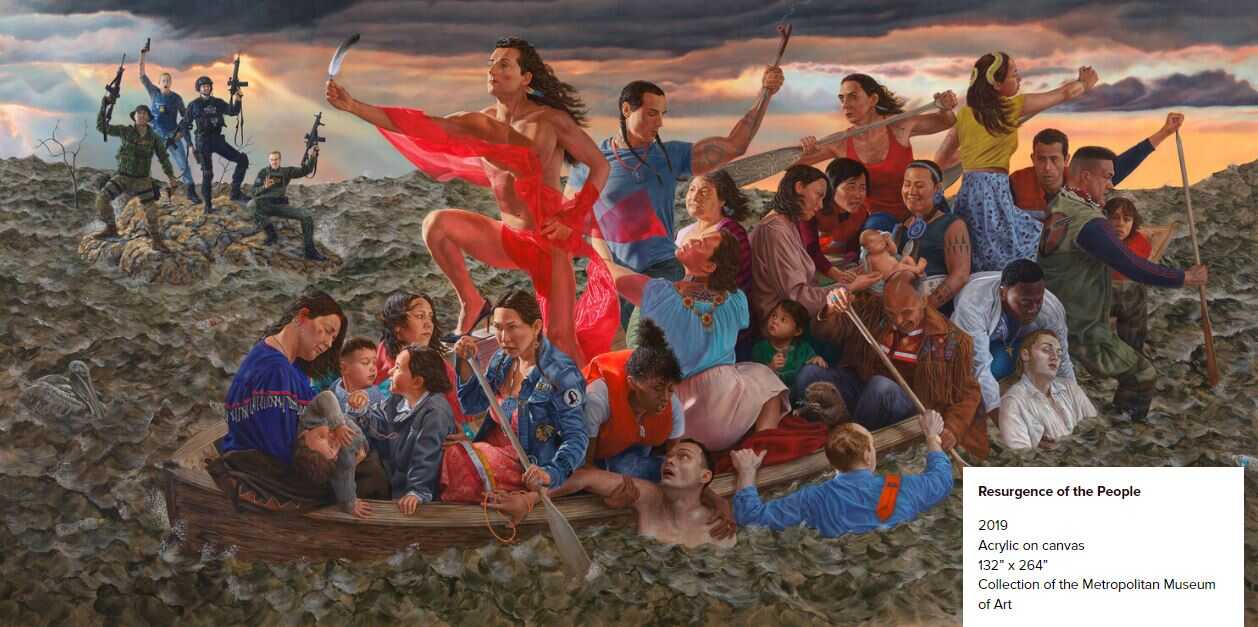
Kent Monkman is a Cree interdisciplinary artist and member of Fisher River Cree Nation in Manitoba. Working across painting, film, performance and installation, Monkman has become internationally recognized for confronting the ways Indigenous peoples and histories have been represented through Western art.
His paintings often appropriate the visual language of European and American history painting, turning it back toward the stories that have traditionally been left out of those pictures. His gender-fluid alter ego, Miss Chief Eagle Testickle, appears throughout his work as a shape-shifting figure who challenges the colonial gaze.
Monkman’s work asks uncomfortable questions about who gets to tell history and whose version of the past becomes part of the national story.
For anyone interested in Canadian art, his work is particularly important because it challenges the idea that Canadian art history is a single, continuous narrative. Instead, it reveals how history can be revised, questioned and retold from different perspectives.
Rebecca Belmore
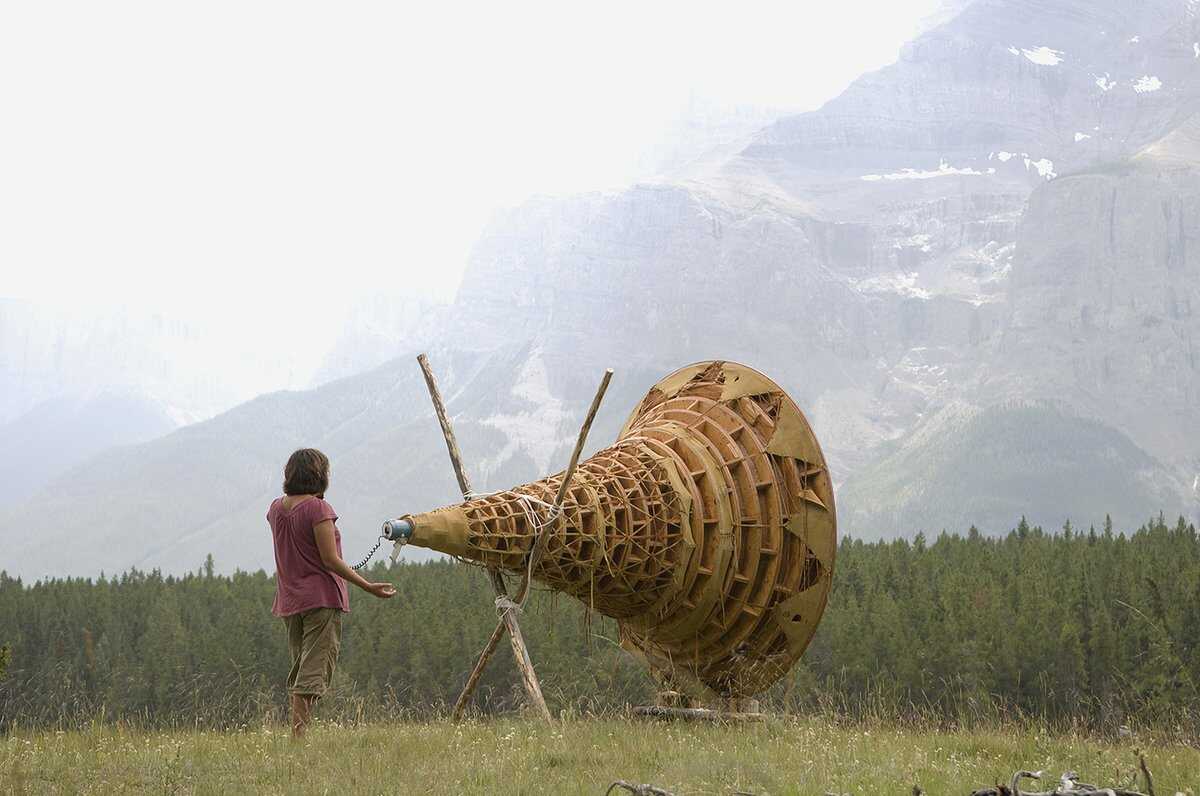
Rebecca Belmore is an Anishinaabe multidisciplinary artist whose practice spans sculpture, installation, performance and photography. Her work frequently addresses Indigenous identity, violence, colonialism, memory and the relationship between people and place.
Belmore’s art demonstrates the power of the body and the physical act of performance as forms of storytelling. Her work can be intimate and personal while simultaneously speaking to larger histories of Indigenous experience in Canada.
Her practice has also helped expand the understanding of what contemporary Canadian art can be. Indigenous art does not need to fit neatly into categories such as landscape, portraiture or traditional craft. It can occupy galleries, public spaces, performance stages and places of memory.
Christi Belcourt
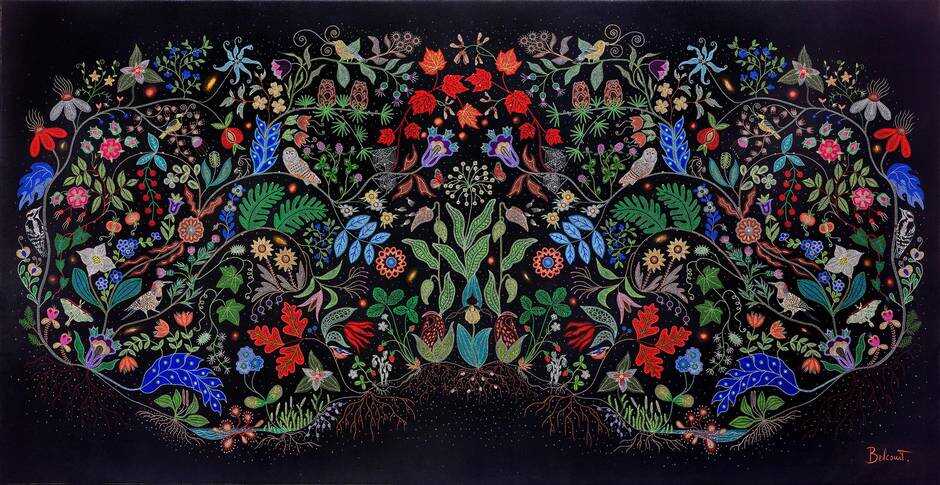
Métis artist Christi Belcourt is widely recognized for paintings and mixed-media works inspired by the natural world, Michif culture and traditional Métis floral beadwork. Her densely patterned compositions transform flowers, plants and animals into vibrant fields of interconnected life.
Belcourt’s work offers another way of thinking about the relationship between art, nature and cultural knowledge. The natural world in her paintings is not simply scenery. It becomes a living network of relationships.
That idea resonates deeply with my own practice. I have spent years painting Canadian landscapes and wildlife, but increasingly I think about the landscape as something more than a beautiful place to depict. It is a place of memory, relationship, story and responsibility.
Looking, Listening and Learning
These five artists represent only a tiny portion of the extraordinary diversity of Indigenous art being created across Canada. There are many generations, nations, communities, languages and artistic practices represented within Indigenous contemporary art.
That diversity matters.
There is no single Indigenous artistic experience, just as there is no single Canadian experience.
The National Day for Truth and Reconciliation offers an opportunity to move beyond simply wearing orange and acknowledging a difficult chapter in Canadian history. It can also be a day to listen to Indigenous voices, learn from Indigenous artists and engage with Indigenous-created work on its own terms.
The Canada Council for the Arts has recognized the important role Indigenous artists play in helping Canadians understand both the past and the present, while creating opportunities for dialogue between Indigenous and non-Indigenous peoples.
For me, looking at Indigenous art is part of a larger question I return to again and again in my own work:
What does it mean to be Canadian?
The answer becomes more complicated the more we learn. And perhaps that is exactly where the learning needs to begin.
On September 30, I encourage you to spend some time with the work of Indigenous artists. Visit a gallery, museum or cultural centre. Read the words of an Indigenous artist. Listen to a Survivor. Learn whose traditional territory you live on. Support Indigenous artists and cultural organizations.
Most importantly, keep listening after September 30.
Truth and reconciliation is not a single-day subject. It is an ongoing conversation, and art can be one of the places where we learn how to have it.
Orange Shirt Day and the National Day for Truth and Reconciliation are an invitation to remember, listen, learn and continue the work. Recently I took the program Indigenous Canada through the University of Alberta.