Contemporary Canadian Genre Art
Genre Art and the Canadian Story: Everyday Life on Canvas
Genre art has long played a quiet but powerful role in the history of painting. Traditionally defined as scenes of everyday life, people at work, at leisure, or gathered in shared rituals, genre painting has always been about observation, empathy, and cultural record. In Canada, genre art carries a particular weight. Ours is a country often described through landscape, yet it is the people moving through those landscapes, skating, hiking, gathering, playing, that complete the story.
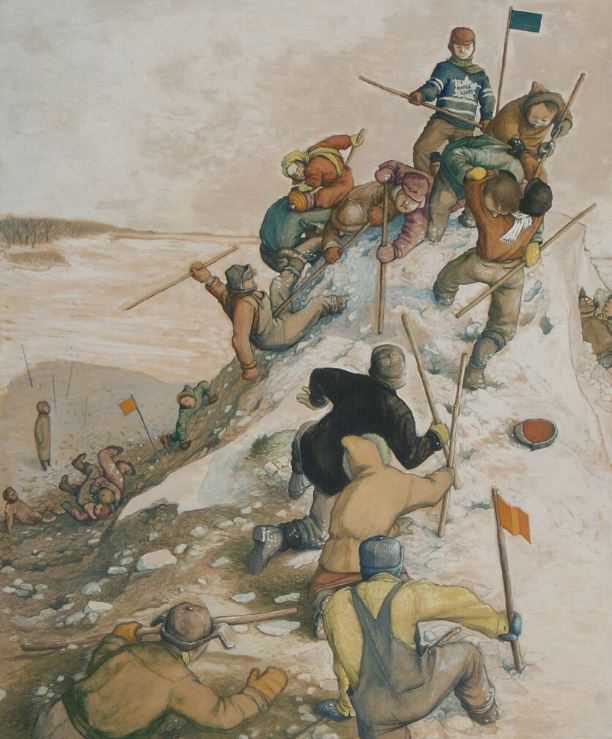
William Kurelek, King of the Castle, 1958–59 Gouache and watercolour on Masonite 53.9 x 45.7 cm
Contemporary Canadian genre art reflects how we live rather than how we mythologize ourselves. It captures moments that feel instantly familiar: winter breath hanging in the air at a frozen pond, families walking forest trails, friends gathered around a campfire, or skiers cutting across fresh snow. These are not grand historical events, but they are deeply shared experiences. Together, they form a collective portrait of Canadian life.
Contemporary Voices in Canadian Genre Painting
Brandy Saturley’s work exists within a wider resurgence of genre painting in Canada, where many contemporary artists are turning their attention to lived experience, community, and the everyday. Across the country, painters are documenting moments of ordinary life that speak quietly but powerfully to Canadian identity.
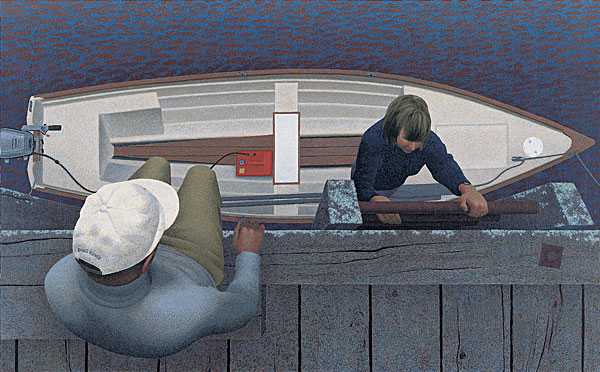
Embarkation 1994 Acrylic polymer emulsion on hardboard 43.2 x 69.9 cm Beaverbrook Art Gallery – Alex Colville
Artists such as Colville-inspired realist Alex Colville helped establish the groundwork for this tradition, but today’s genre painters have expanded it into more personal, regional, and socially attuned territory. Kim Dorland, while often associated with landscape, frequently incorporates figures whose activities speak to youth culture, suburban life, and the tension between humans and the natural environment. David Blackwood’s narrative-driven scenes of Newfoundland life continue to influence contemporary approaches to storytelling through everyday labour and ritual.
Painters like Shary Boyle explore genre through a more symbolic and psychological lens, drawing from folklore and domestic life to reflect collective and personal narratives. Kent Monkman, though often working on a monumental scale, incorporates scenes of daily activity and social interaction to challenge historical narratives and reframe Indigenous presence within contemporary Canadian life. Meanwhile, Christopher Pratt’s quiet, restrained depictions of domestic and industrial spaces remain touchstones for artists interested in the poetry of the ordinary.
Together, these artists demonstrate the breadth of genre painting in Canada today, ranging from realism to symbolism, narrative to critique. Saturley’s paintings contribute to this lineage by focusing on shared recreational and social moments, offering a contemporary portrait of Canadians in motion, in nature, and in community.
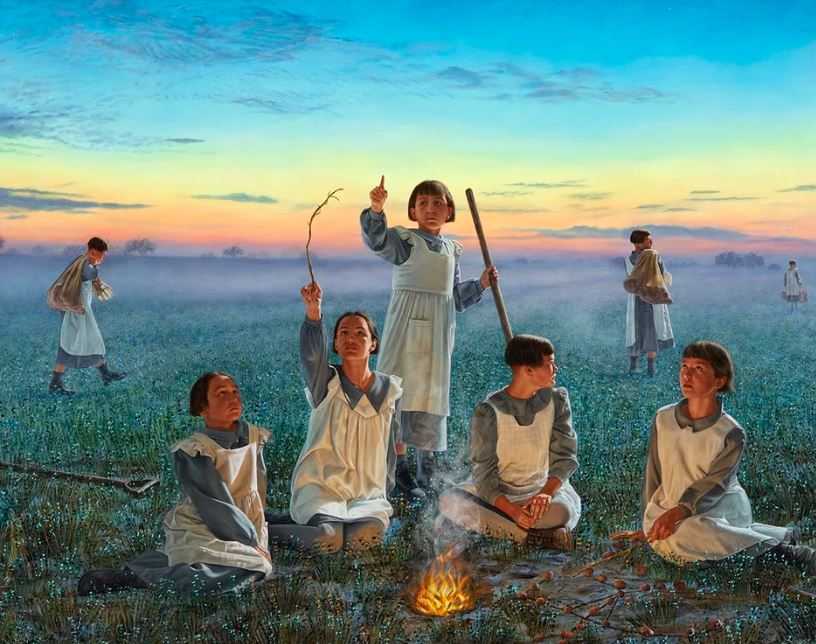
kîwêtin acâhkos (The North Star) 2025 Acrylic on canvas 80 × 120 in – Kent Monkman
Genre Art in Canada – Brandy Saturley
Brandy Saturley’s paintings explore this tradition through a distinctly modern lens. Her work focuses on everyday Canadian culture, often depicting people engaged in outdoor activities that are woven into the national psyche. Pond hockey scenes, figures enjoying nature together, and moments of sport and recreation become more than casual snapshots. They are visual touchstones, reminding viewers of the rhythms and rituals that quietly define life in this country.
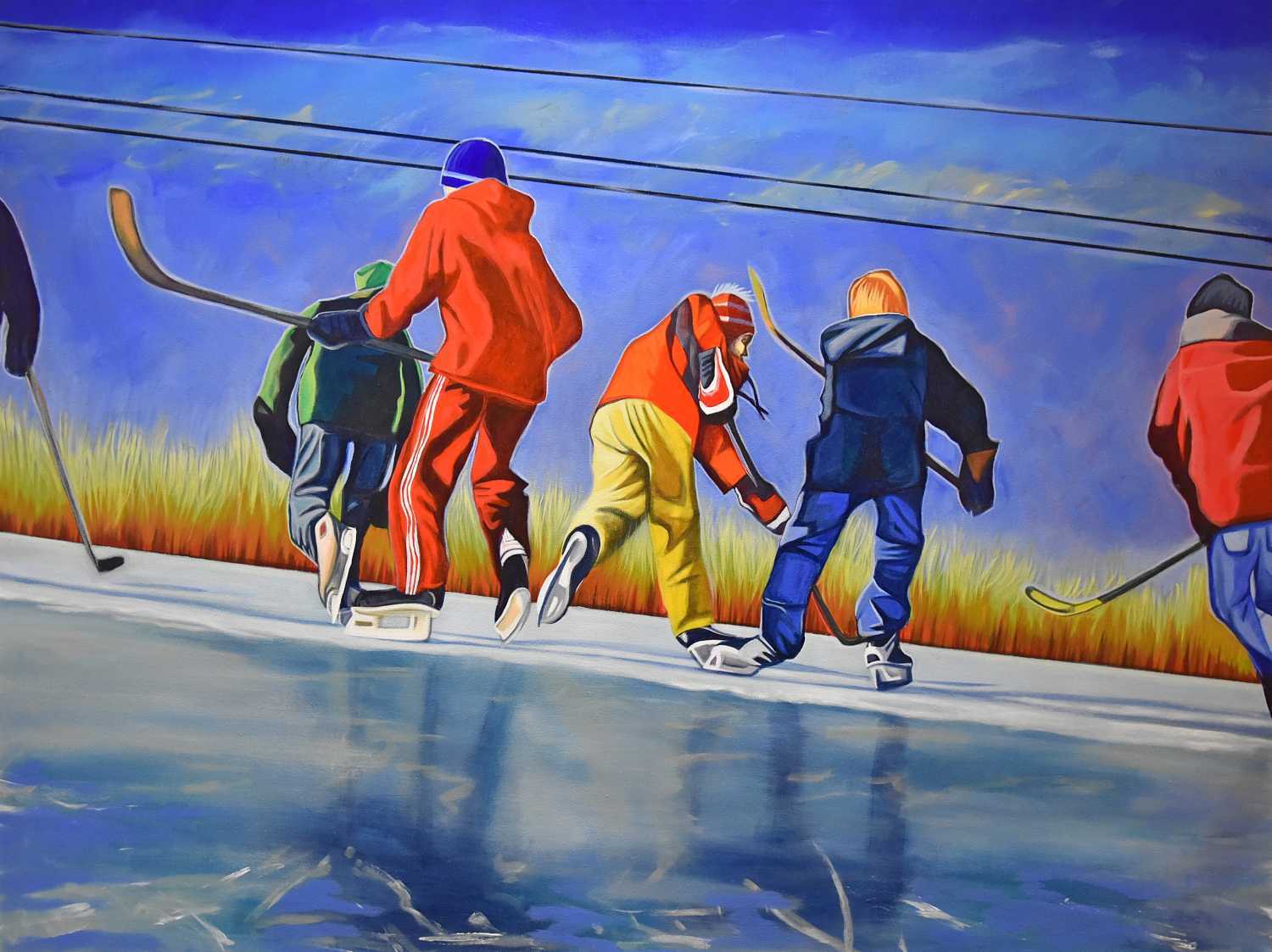
Pond Hockey Days, c. 2021 Acrylic On Canvas 36 x 48 x 1.5 in (91.44 x 121.92 x 3.81 cm) – Brandy Saturley
Rather than romanticizing the landscape alone, Saturley places people at the centre of it. Her figures are active participants in their environments, skating, hiking, skiing, or simply standing together against vast backdrops. This approach shifts the conversation from land as spectacle to land as lived space. The paintings become about connection: between people, between communities, and between Canadians and the places they inhabit.
There is also a subtle social dimension to this work. Group activities suggest cooperation, shared effort, and collective joy. In a time when much of life feels fragmented or digital, these painted scenes of togetherness feel grounding. They recall the simple, physical experiences that continue to shape Canadian identity across regions and generations.
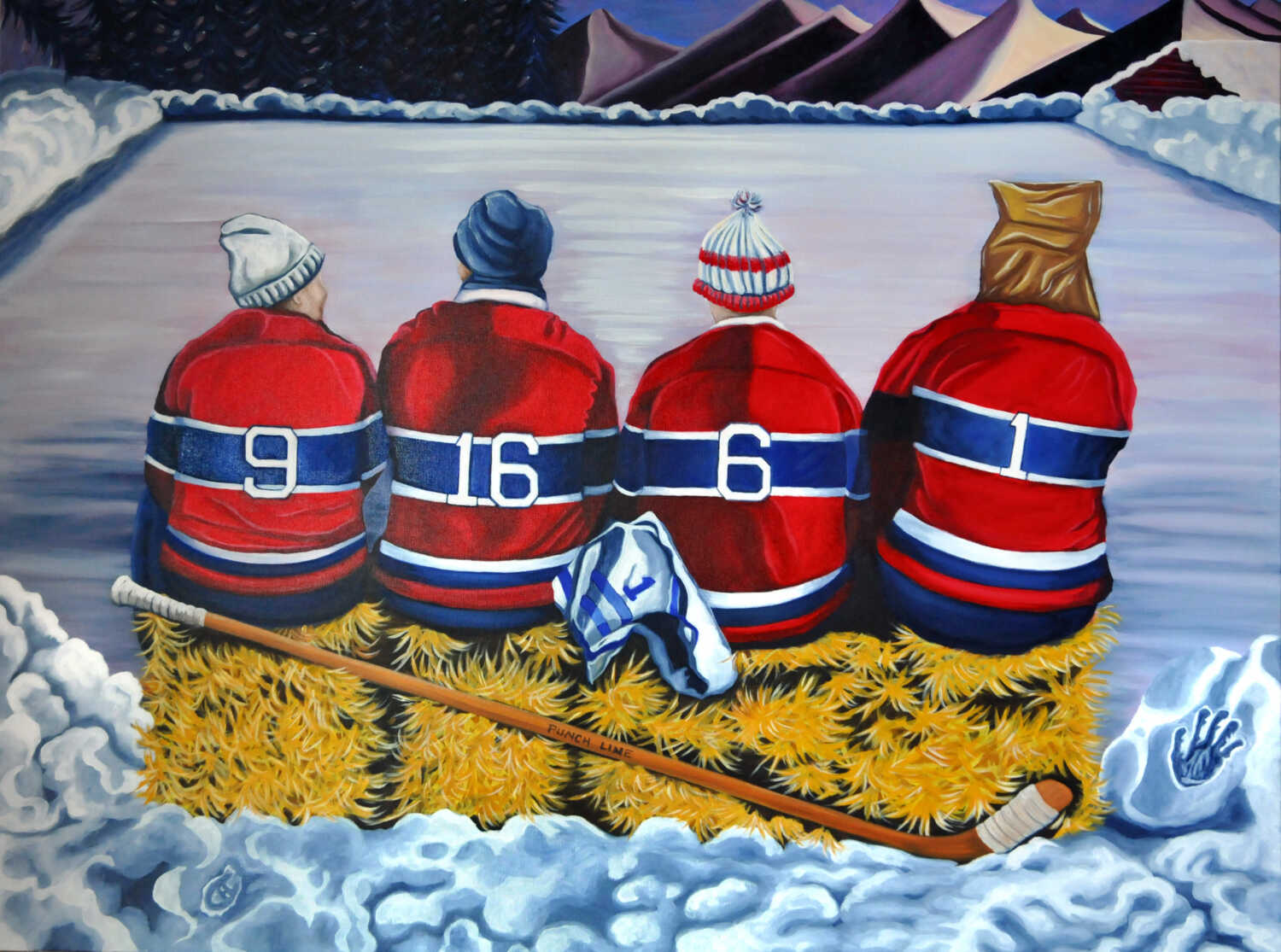
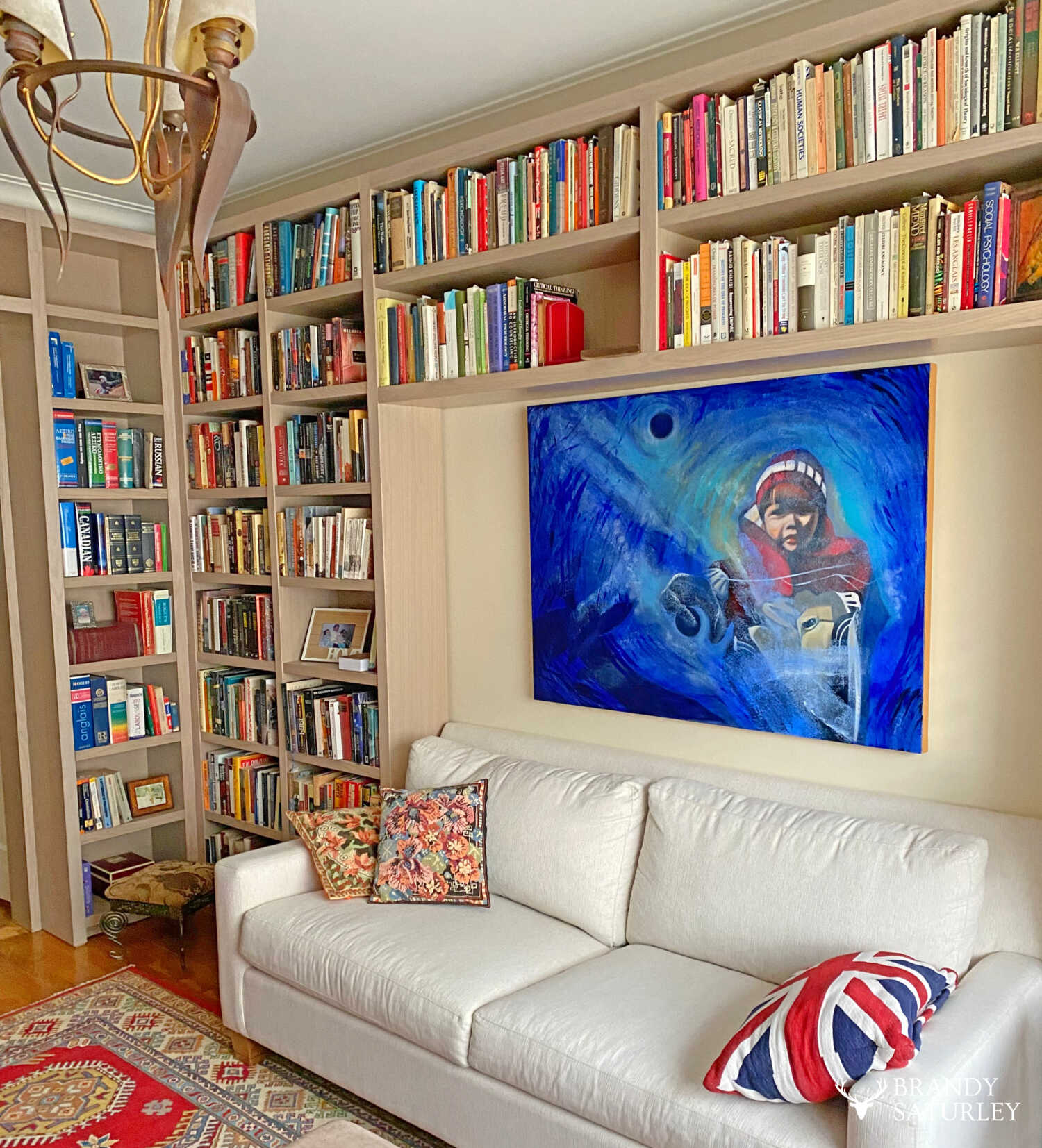
A Punch Line and An Unknown, c. 2013 Acrylic 36 x 24 x 1.5 in – Colart Collection, Quebec – Brandy Saturley
Genre art in Canada today is not nostalgic for its own sake. It is reflective, inclusive, and evolving. Through paintings of everyday moments and familiar activities, artists like Brandy Saturley contribute to an ongoing visual archive of who we are and how we live now. These works invite viewers to see their own experiences mirrored on the canvas and to recognize that the ordinary moments of Canadian life are, in fact, worth preserving.
In capturing people at play, at rest, and in relationship with the land, contemporary Canadian genre painting affirms a powerful idea: culture is not only built through monuments or milestones, but through shared moments that quietly repeat themselves, season after season, across the country.
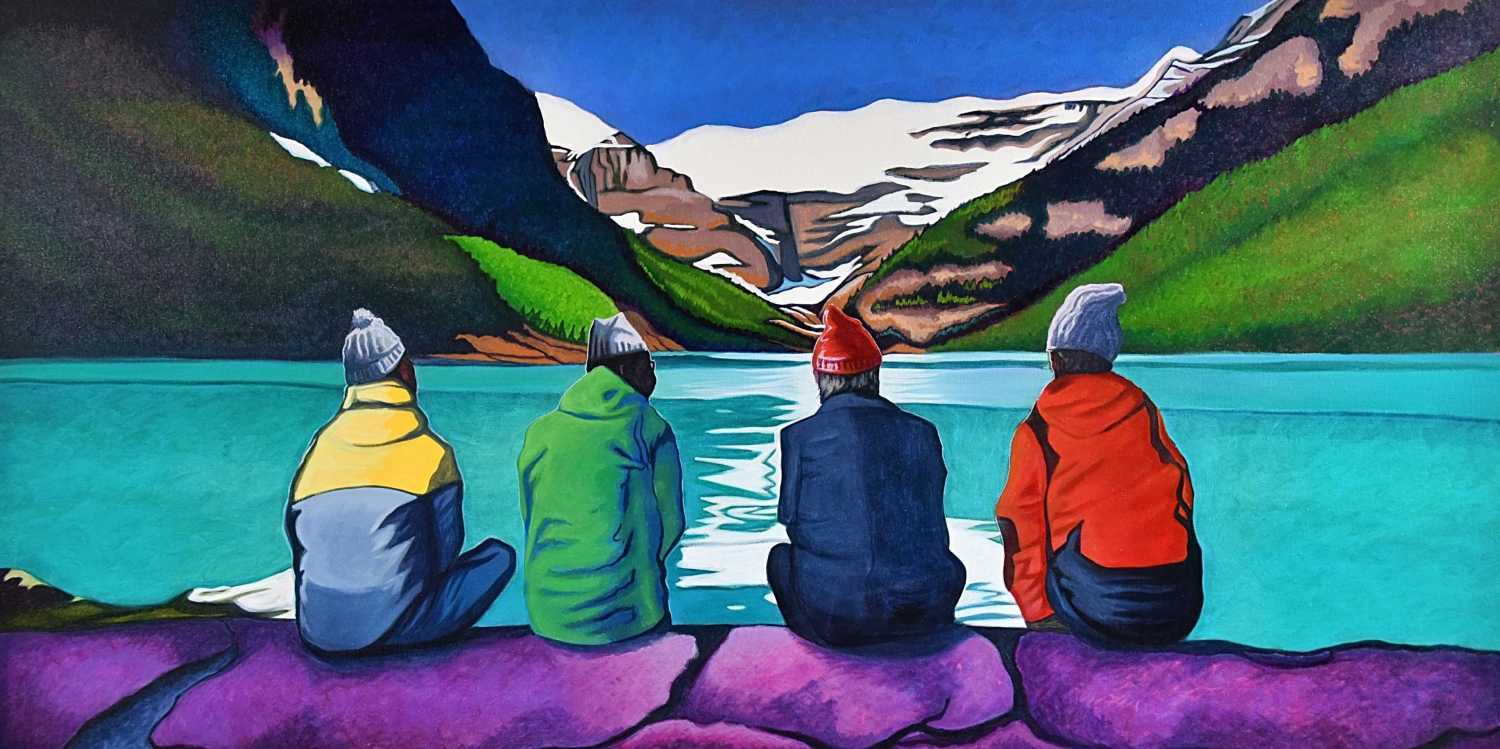
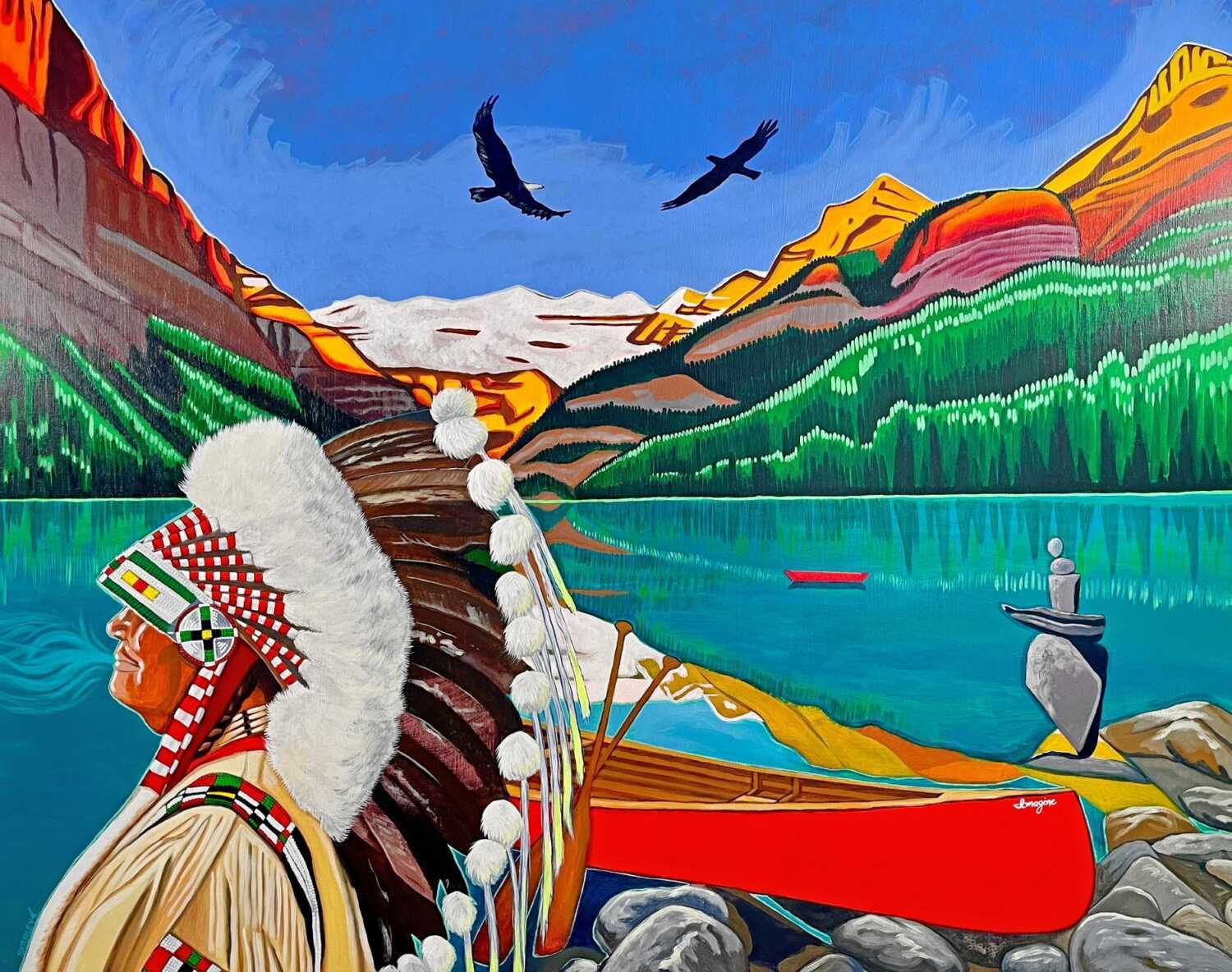
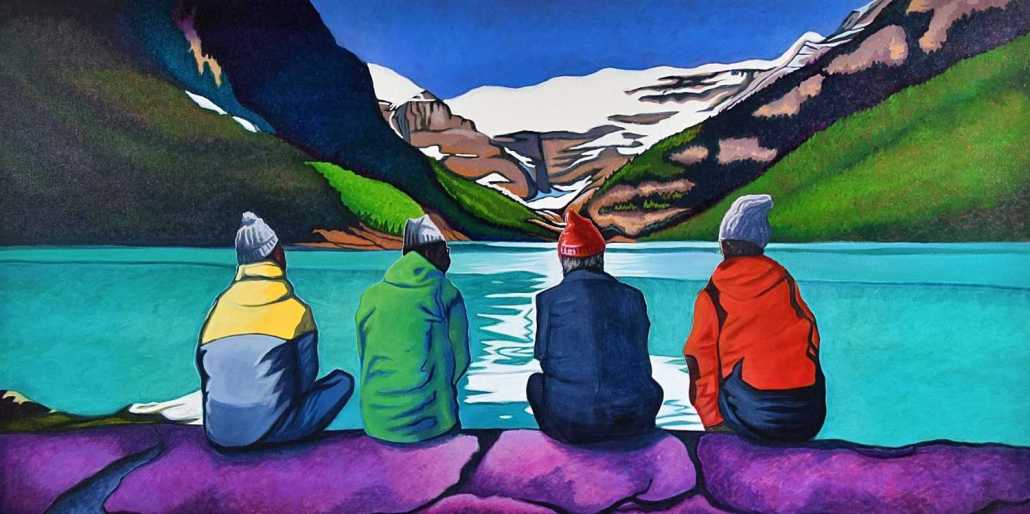
Stare Time at Lake Louise, c. 2018 Acrylic 30 x 48 x 1.5 in – Brandy Saturley