A Portrait of Canada
Art For Sale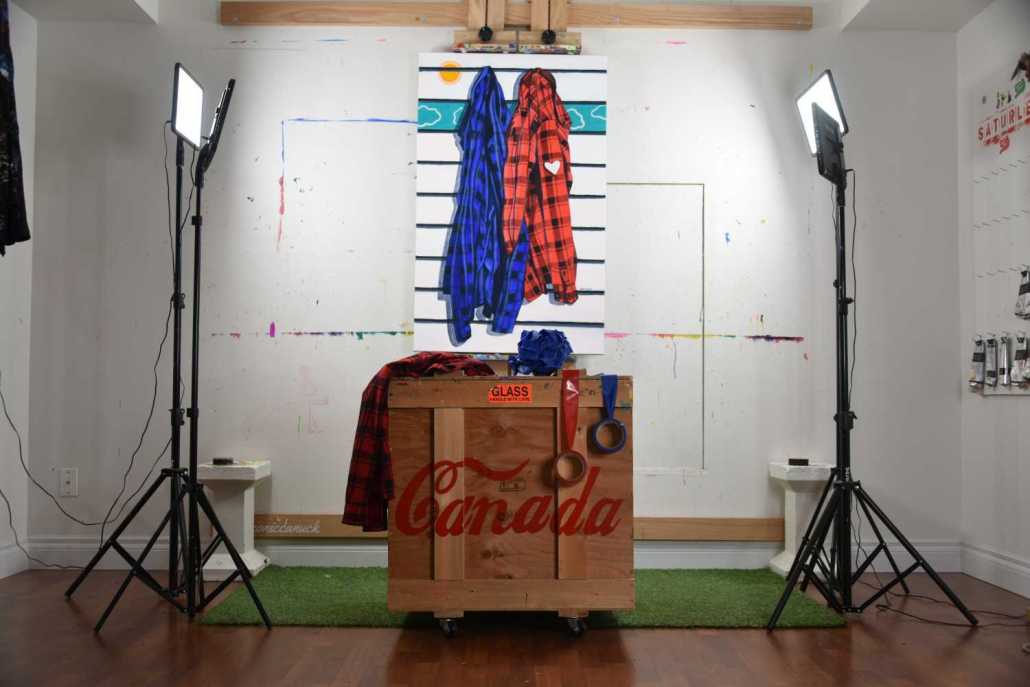
Come On, Just Let’s Go: A Portrait of Canada Without a Single Person
There are paintings that announce themselves as Canadian immediately. A maple leaf. A hockey sweater. The Rocky Mountains. A canoe on a northern lake. And then there are paintings that feel Canadian for reasons that are much harder to put your finger on. Come On, Just Let’s Go is a portrait of Canada.
At first glance, it is simply two plaid jackets hanging side by side. One is deep blue, the other a vivid red and black. Behind them are horizontal lines suggesting the siding of a cabin, boathouse or coastal building. A little yellow sun peeks over the top, while turquoise water and small white clouds occupy the space between the boards. There is no maple leaf. No flag. No mountain range. And yet, to me, this painting is unmistakably Canadian.
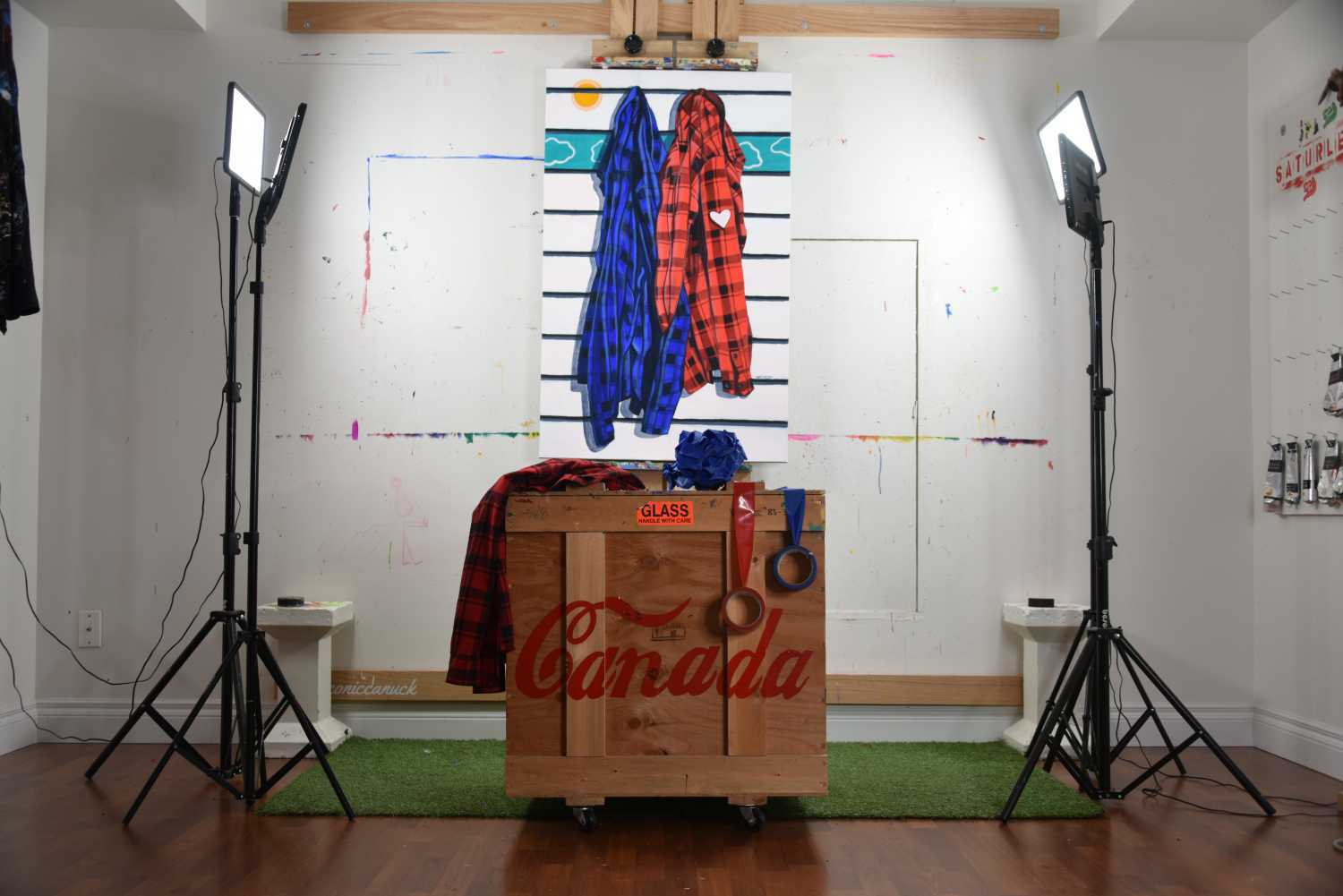
The Canadian jacket
The red-and-black buffalo plaid jacket carries a particular kind of Canadian cultural memory. It makes me think of cabins, lakes, logging roads, campfires, hiking trails, fishing trips and weekends away. It belongs to the Canadian outdoors, but it is also wonderfully ordinary. This isn’t heroic wilderness. It is the everyday version of being outside.
You put on your plaid jacket because it’s cool outside, because it’s raining, because you’re heading down to the lake or because someone has said, Come on, just let’s go. The blue plaid jacket brings another note to the composition. Together, the two jackets become something more than clothing. They begin to feel like characters.
A Portrait of Canada: A portrait without people
One of the things I love about this painting is that there are no people in it, yet it feels like a portrait. The jackets stand in for the people who wear them. I can imagine two people arriving home after a walk and hanging their jackets side by side. Or perhaps they’re getting ready to head out together. The white heart on the red jacket adds another little clue, suggesting affection and connection without explaining exactly what that relationship might be.
The viewer gets to fill in the story. In that way, the painting is less about two garments and more about companionship, belonging and shared experience. It is a portrait of people by the things they leave behind.
Painting Canada through everyday things
Much of my work is concerned with Canadian identity and the visual language of Canada. I’ve spent years painting the things, places and symbols that have become part of our collective visual memory. But I am increasingly interested in the difference between painting Canada and painting what it feels like to be Canadian. Those aren’t necessarily the same thing. A landscape can tell us where we are. An object can sometimes tell us who we are. The plaid jacket is one of those objects. It carries memories of the outdoors, of practicality, of changing weather and of a culture that has long had a complicated and affectionate relationship with the wilderness. We don’t necessarily need to see the forest, the lake or the mountains. The jacket already tells us that someone is going there.
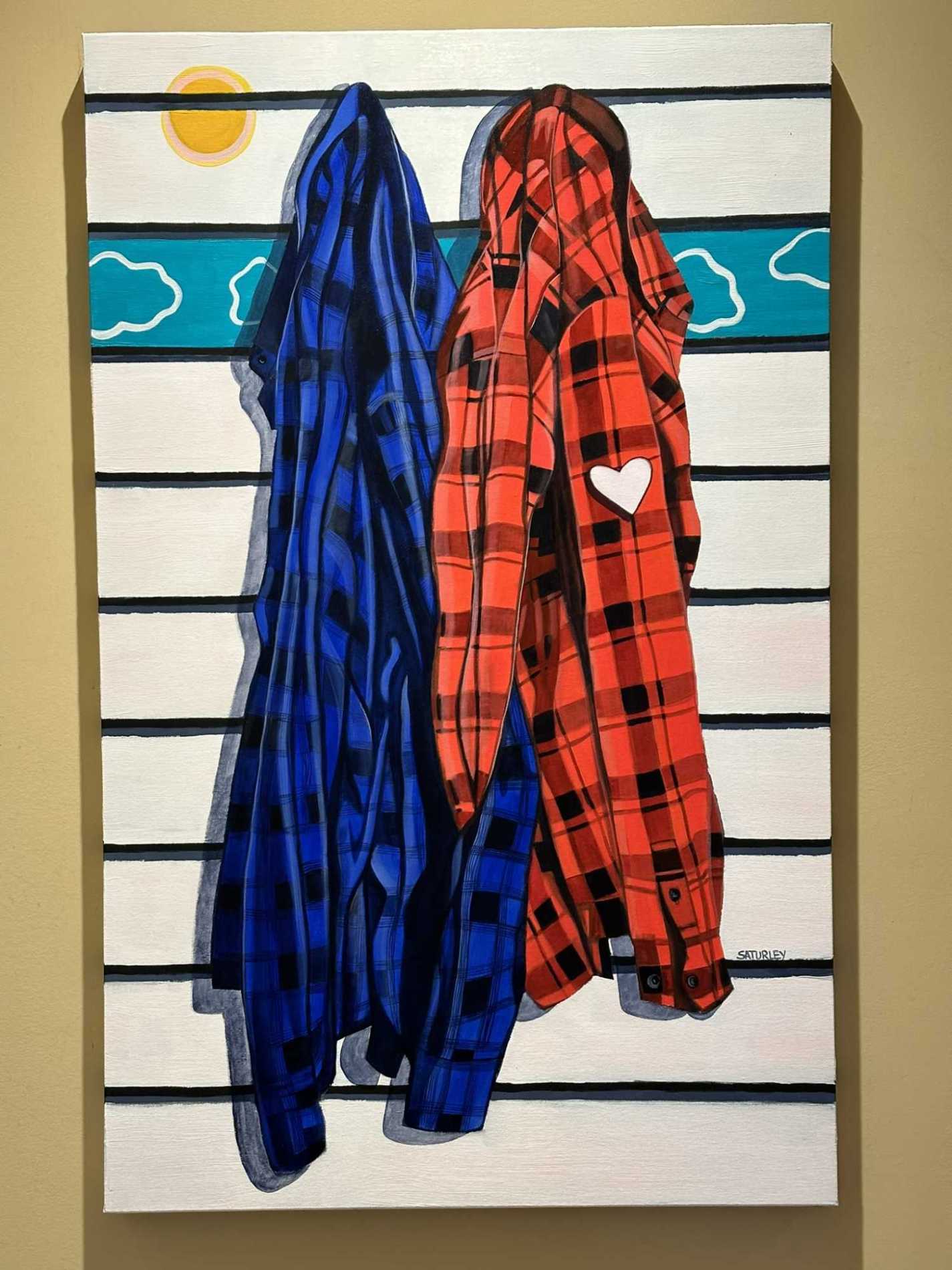
Come On Just Let’s Go, 2024 Acrylic on Canvas 48 x 30 in Brandy Saturley
A landscape hiding in plain sight
The background of the painting is important too. The horizontal lines create an architectural structure that could belong to a cabin, cottage or coastal building. The turquoise strip suggests water. The small white cloud forms give us sky. The yellow sun sits quietly behind it all. The landscape has been reduced to a few graphic elements. This is something I enjoy doing in my paintings: taking a recognizable place or experience and distilling it until what remains is the feeling of it. Instead of painting a literal Canadian landscape, I have painted the suggestion of one. The coast, the weather, the cabin, the outdoors and the people who inhabit that world are all present, but indirectly.
A very Canadian kind of freedom
Canada is often represented through its grand landscapes. The mountains, the forests, the lakes, the Arctic, the ocean. But our experience of those places is often much more modest and personal. It’s a jacket thrown over a chair. A pair of boots beside the door. A thermos in the car. A weekend at the cabin. A walk along the water when the weather isn’t quite sure what it’s doing.
Someone saying, Come on. Just let’s go. That, too, is Canada.
And for me, Come On, Just Let’s Go is a painting about exactly that: the small, familiar objects and gestures that can carry an enormous sense of place. It is a Canadian painting without a maple leaf. A landscape without really being a landscape. And a portrait of two people who never appear.
Sometimes the most Canadian stories are hiding in plain sight.
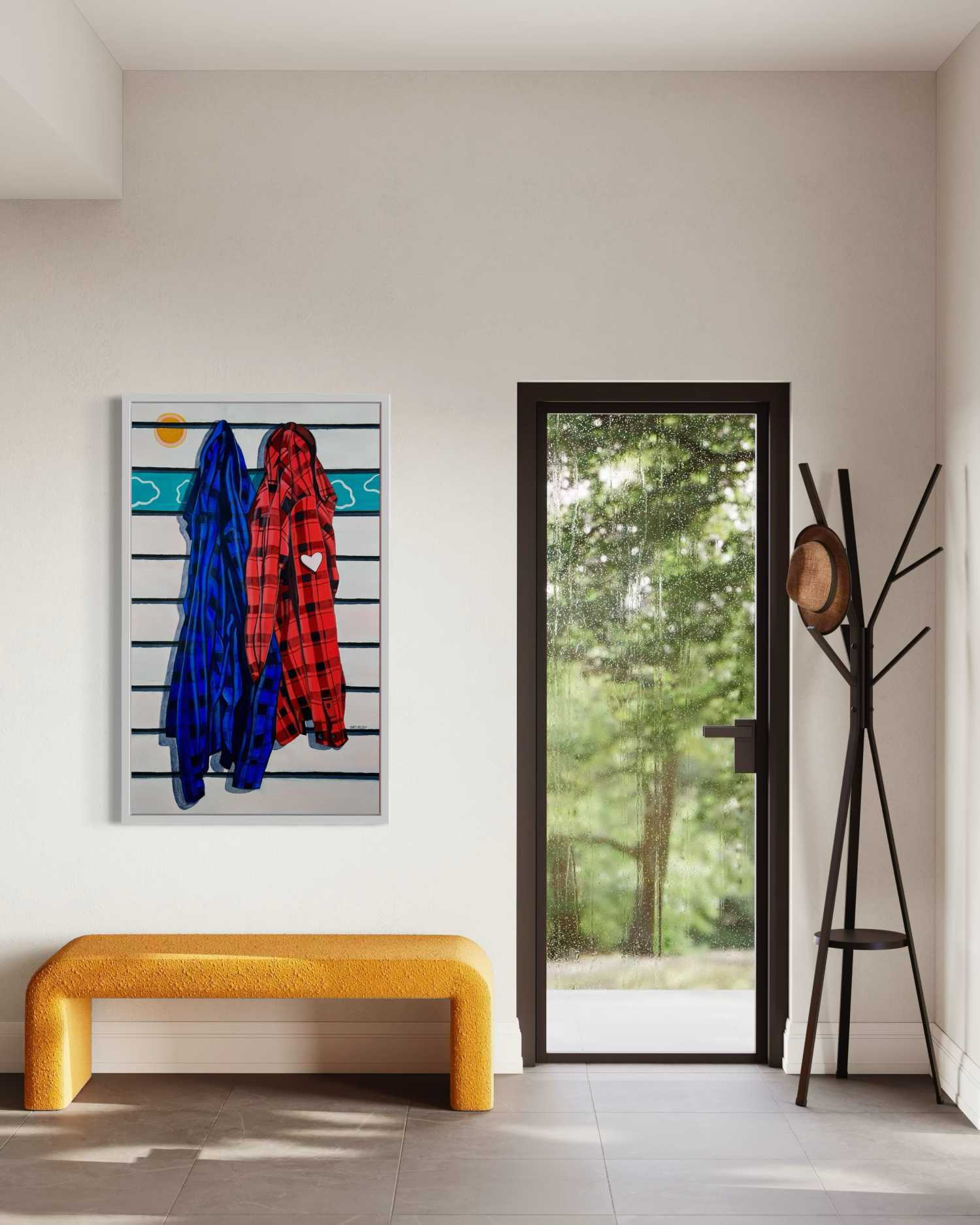
Come On Just Let’s Go, 2024 Acrylic on Canvas 48 x 30 in Brandy Saturley