Handmade Art Still Matters
Why Handmade Art Still Matters in the Age of AI
About a year ago, an interviewer asked me how I thought artificial intelligence would affect my life as an artist. At the time, I didn’t have much to say. I understood very little about its capabilities, and my initial reaction was straightforward: here comes another tool I might use in my creative process, handmade art still matters.
I thought of AI as something like a paintbrush or a camera. I wasn’t especially worried about it ending my career. My understanding has changed since that conversation. I can see the potential pressure on people who earn their living through graphic design, copywriting, illustration, and other creative services. I can also see possibilities for artists who want to experiment with ideas.
Yet I remain confident that handmade art has a place in our lives. As a Canadian painter approaching two decades of full-time practice, I still believe people will want original paintings, physical objects, and a connection to the person who made them.
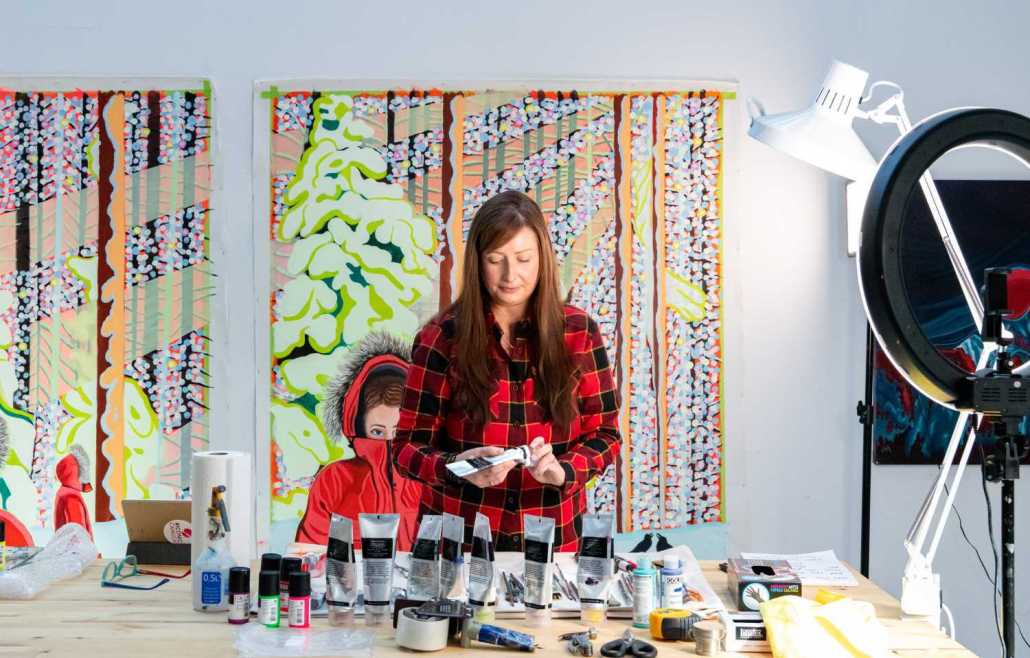
Brandy Saturley in Leighton Studios at Banff Centre for Arts & Creativity, 2022
AI and the Creative Process
My original comparison between AI and a paintbrush now feels incomplete. A brush requires my hand for every mark. AI can produce an image from written instructions, which gives it a different role in the creative process and potentially in the market for creative work. For a painter, it might offer ways to explore a composition or consider different directions. But the development of a painting continues long after the initial idea. When I paint, each decision affects the next. A colour changes the feeling of a scene. A figure shifts the balance of a landscape. Something unexpected happens on the canvas, and I have to decide whether to keep it, change it, or follow it somewhere new. My paintings emerge through that sustained attention. The finished work carries decisions made over days and weeks, informed by years of painting.
The Physical Experience of an Original Painting
We discover so much art through screens that it is easy to forget how much a photograph leaves out. An original painting has scale, texture, and a surface that responds to light. Standing in front of it, you can move closer to examine a brushstroke or step back to experience the whole composition. Its presence changes as you move through the room. For collectors, living with a painting offers opportunities to notice something new. A colour becomes more apparent in morning light. A detail catches your attention months after you first hung the work. Your relationship with it develops over time. That physical experience is one reason I believe handmade art will continue to matter in the age of AI. There is lasting pleasure in living with something another person has made.
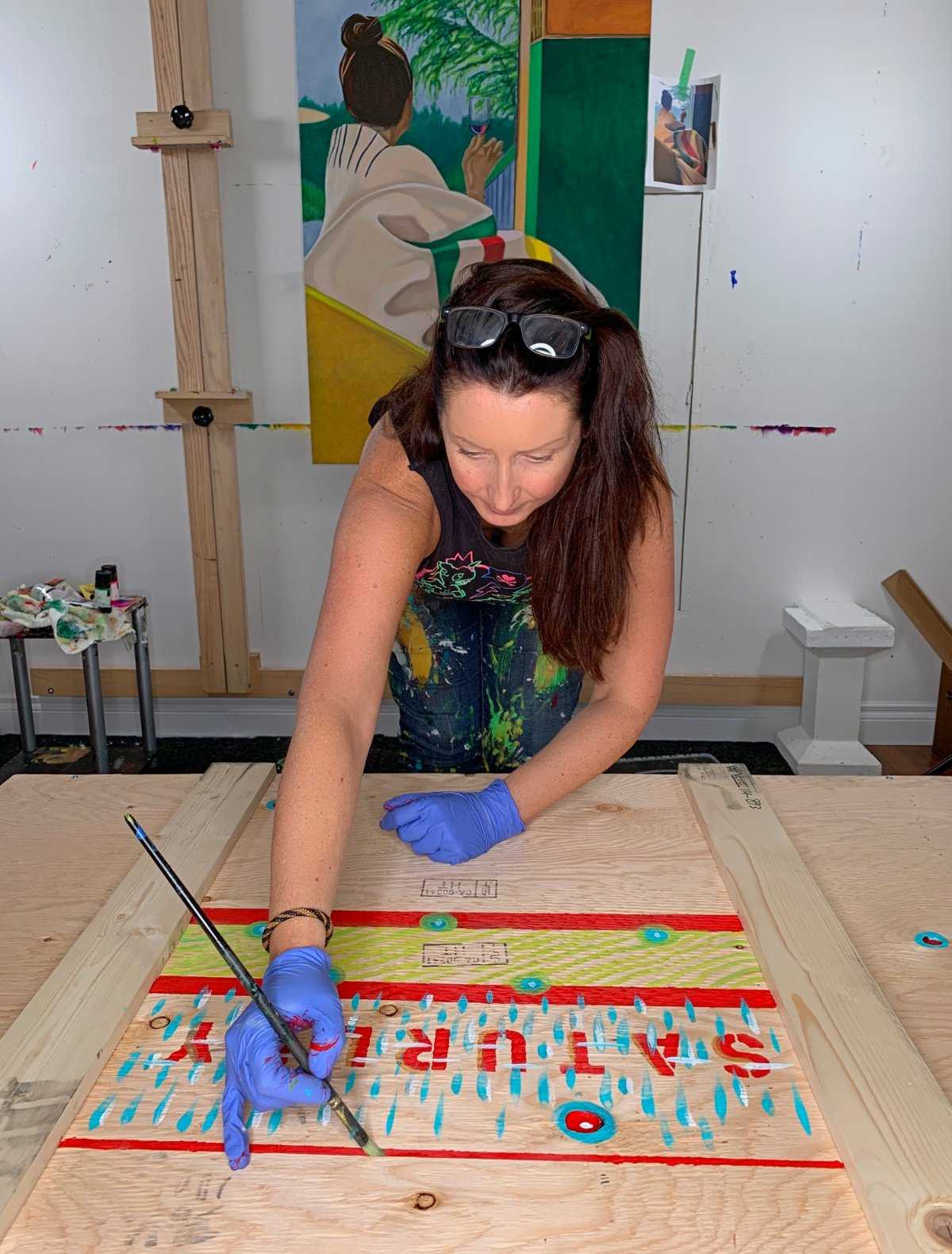
Brandy Saturley painting her handmade wooden art shipping crate
Why Collectors Connect With Handmade Art
Over the years, collectors have shown me how personal the experience of buying original art can be. A landscape might remind someone of a meaningful journey. A painting of mountains might come to represent members of their family. A familiar Canadian symbol might bring forward a memory I knew nothing about when I painted it. I begin with my own experiences and intentions, but viewers bring their lives to the work. The painting becomes a meeting place for those different perspectives. Knowing the artist can add another dimension. Collectors may follow a series as it develops, meet me at an exhibition, or learn about the place that inspired a painting. Those encounters become part of the story they carry home with the artwork. For my practice, that relationship between artist, painting, and collector remains deeply meaningful.
The Future of Artists’ Livelihoods
Believing in the value of handmade art does not mean dismissing concerns about AI. Many artists support their studio work through other creative occupations. If commissions for design, writing, or illustration become harder to secure, that pressure can affect their ability to keep making art. I would like to think that an abundance of generated images could encourage people to appreciate original artwork more deeply. But appreciation alone does not sustain a studio. Artists need purchases, commissions, exhibition opportunities, and people willing to support their work. The future of art also depends on the practical conditions that allow artists to continue. Buying an original painting, visiting a gallery, or commissioning an artist helps sustain the people whose work we value.
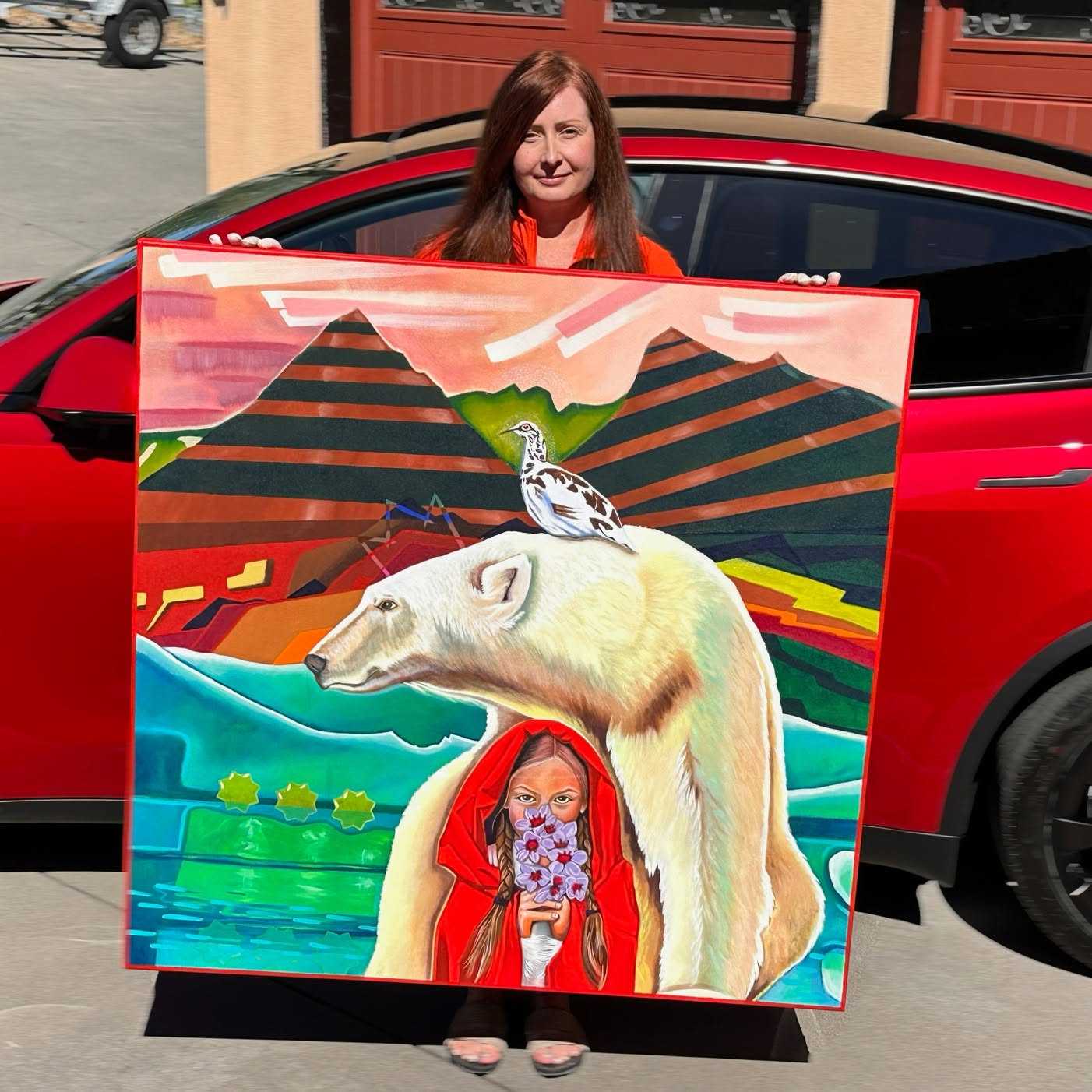
Brandy Saturley with her handmade original acrylic painting, 2023
Handmade Art Still Matters: Why I Will Keep Painting
My own work grows from the places I visit, the symbols that interest me, and the stories I want to tell about Canada. Those experiences continue to give me reasons to paint. I want to discover what happens when a particular blue meets a particular red. I want to explore how a figure changes a landscape. I want to turn something I have observed or imagined into an object someone else can encounter. AI will continue to give me things to consider. My opinion of it will likely evolve, just as it has over the past year. But I still return to the studio with the desire to make something with my hands. There is a canvas waiting, an idea forming, and work to be done. I believe there will continue to be people who want to live with the results.
Brandy Saturley is a Vancouver Island–based Canadian painter exploring Canadian identity through landscape, people, wildlife, and symbolism. Discover her original paintings and the stories behind them.
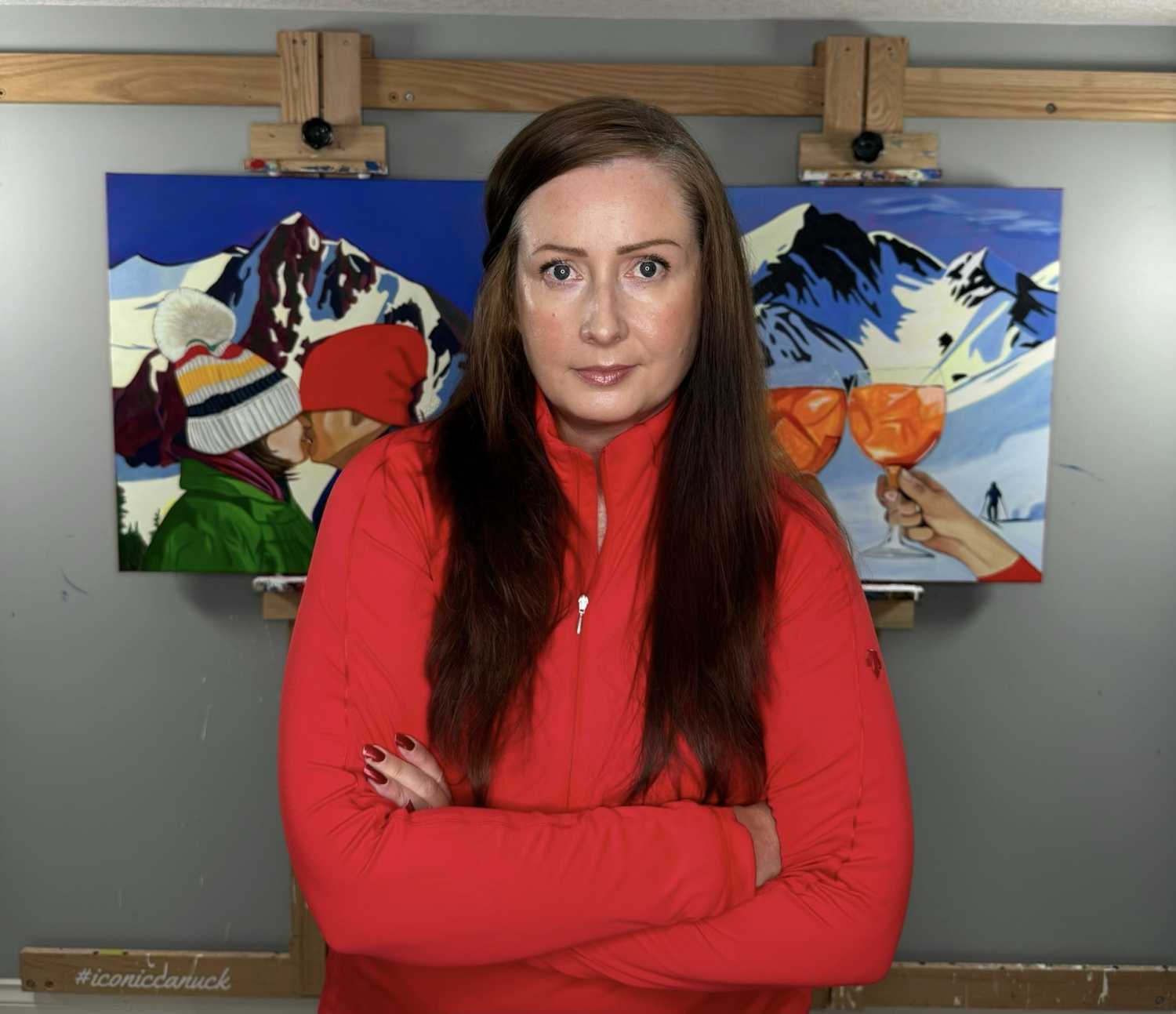
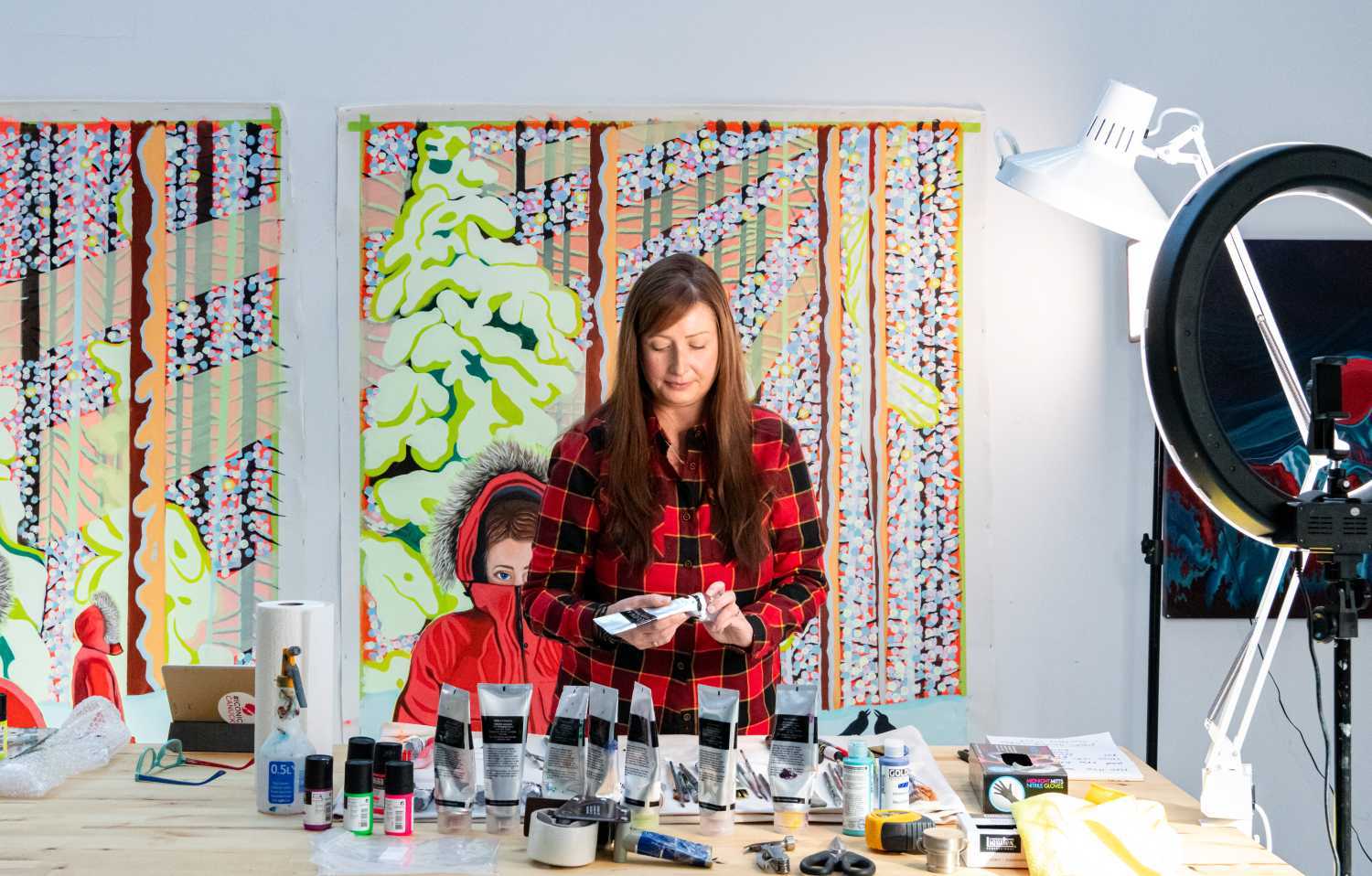
Brandy Saturley in her Parksville art studio, 2026