
What Makes a Painting Canadian? Art, Identity and the Iconography of Canada
What makes a painting Canadian? Is it the landscape, a maple leaf, a hockey jersey, a Hudson’s Bay blanket, a polar bear or a canoe? Is it where the painting was made, the nationality of the artist, or the cultural memory embedded within the work? For more than two decades, these questions have been at the centre of my practice. I am obsessed with the iconography of Canada, and I am in turn creating my own.
My work explores Canada through its symbols, stories, landscapes, people, wildlife and cultural mythology. Rather than approaching the Canadian landscape as a traditional landscape painter, I am interested in what exists adjacent to the landscape: the figures, objects, histories, icons and ideas that shape our understanding of place and identity. My paintings have become an ongoing visual investigation into what it means to be Canadian.
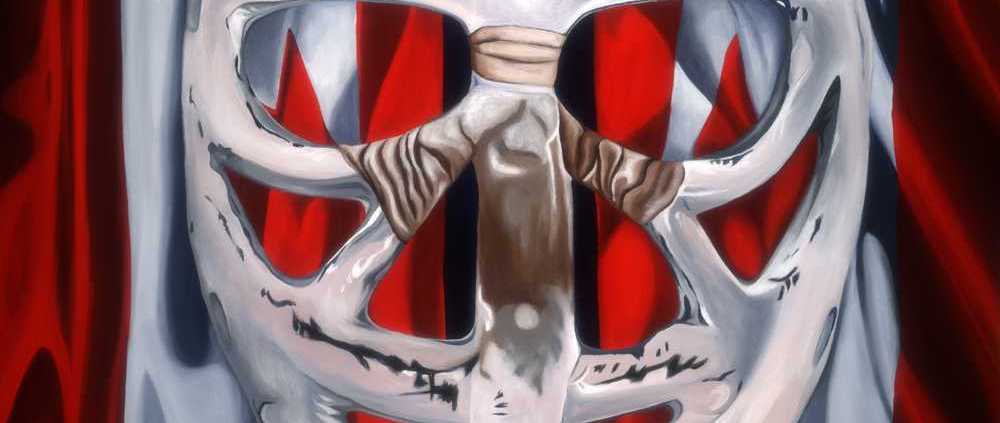
Canada possesses an extraordinarily recognizable visual vocabulary. The maple leaf may be the most obvious symbol, but it is only the beginning. Over the course of my career, I have painted Hudson’s Bay blankets, hockey masks, canoes, polar bears, wildlife, poppies, mountains, coastlines and other objects that have accumulated cultural meaning. Some are immediately recognizable as Canadian, while others become Canadian through context, memory and association. I am interested in that tension. An ordinary object can become an icon, carrying stories about history, place, identity and belonging.
My intention is not simply to reproduce these symbols, but to question, transform and sometimes complicate them. A hockey mask can become a portrait of Canadian identity. A Hudson’s Bay blanket can represent commerce, geography, cultural memory and colonial history. A polar bear can embody the North while simultaneously becoming a symbol of climate change and environmental vulnerability. These familiar images provide an entry point into larger questions about how Canada understands itself.
My practice began with detailed realism, but over the past twenty years my paintings have evolved toward simplified forms, bold colour, graphic shapes and a heightened visual language. My work has been described as Canadian Pop Art, Pop Canadianisms, Pop Modernism and Pop Realism, and I have been called the “Voice of Canadian Pop Art.” While these descriptions help situate the work, my larger interest is in contemporary Canadian identity and the ways that familiar cultural symbols continue to change meaning.
Canada is not a static idea. It is a country continually redefining itself through changing relationships to land, culture, politics, history and one another. This makes Canadian iconography fertile territory for contemporary painting. A maple leaf can represent national pride, environmental stewardship, political identity and the idea of the Canadian greater good. A landscape can be beautiful while also carrying histories of extraction, displacement, tourism and environmental change. My paintings provide a space where these ideas can exist together.
Place is equally important to my practice. I was born on Vancouver Island and have lived my entire life on the island. My studio is now based in Parksville, on the east coast of Vancouver Island, surrounded by the landscapes of the Salish Sea. Although my work is deeply connected to place, I have never considered myself simply a traditional landscape painter. I am interested in the stories contained within landscapes and the relationships between people, animals, objects and place. The landscape becomes a stage for questions about identity, memory, belonging and environmental change rather than simply a subject to be depicted.
This is particularly evident in my recent West Coast paintings, which explore the Salish Sea and the wildlife of Vancouver Island. Orcas, ravens, eagles, sea lions, forests, mountains and water become part of a visual language concerned with movement, resilience and our changing relationship with the natural world. The landscape is not background. It is an active participant in the story.
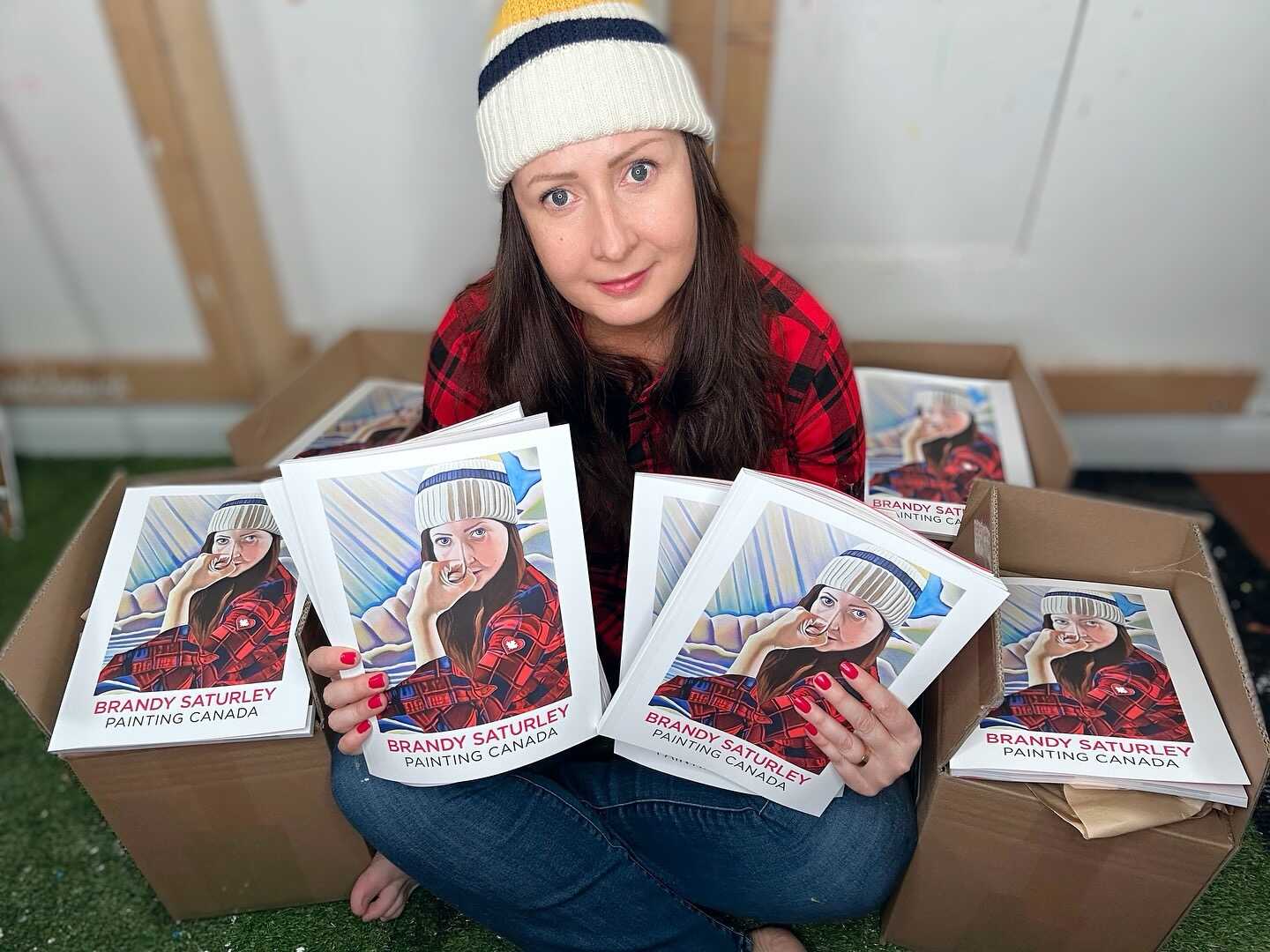
Brandy Saturley with her artist monograph, Painting Canada, 2025
Art, Identity and Canadian Iconography
In 2026, I am marking twenty years as a full-time artist. Over these twenty years, I have created more than 400 paintings exploring Canadian culture, wildlife, politics, sport, women, nature and national identity.
Travel has also become an important part of this investigation. My work has taken me across Canada, from Newfoundland and the Atlantic provinces to the Rockies, the North and the West Coast. These journeys allow me to encounter different Canadian landscapes and regional identities while considering how they contribute to a larger national story. The result is not one singular image of Canada, but a collection of Canadian stories.
Contemporary Canadian art has an important role to play in examining how the country sees itself. Questions surrounding Indigenous reconciliation, climate change, national identity, immigration, political division, regional identity and our relationship with the natural world continue to reshape the Canadian story. For me, painting is a way of participating in that conversation. I am particularly interested in the tension between national symbols and contemporary realities, and in what happens when nostalgia meets history, environmental change and a changing sense of identity.
My paintings often begin with research, photography, observation and collected visual material. I develop photographic references and digital blueprints before translating imagery onto canvas through drawing, colour blocking and successive layers of paint. My background in cinema also informs the process. I often work in groups of paintings, allowing ideas to move between works and creating visual relationships across a series. The finished image may appear immediate, but it is usually the result of an extended process of looking, editing and distilling.
I am not trying to reproduce Canada exactly as it appears. I am interested in understanding how Canada feels, what it represents and which images have become embedded in our collective imagination. Canadian art has never been simply about depicting Canadian scenery. It can also be a way of asking who we are, where we belong and how we understand the land around us.
After twenty years of painting Canada, I remain fascinated by the possibility that this country contains an almost inexhaustible visual vocabulary. There are still landscapes I have not painted, stories I have not encountered, symbols whose meanings are changing and questions that have not yet been answered. The project continues.
I am obsessed with the iconography of Canada, and I am in turn creating my own.
Documentary film from 2019, The Iconic Canuck.
2026: I am currently represented by Willock & Sax Gallery, James Baird Gallery and Nicholas Penn Fine Art.
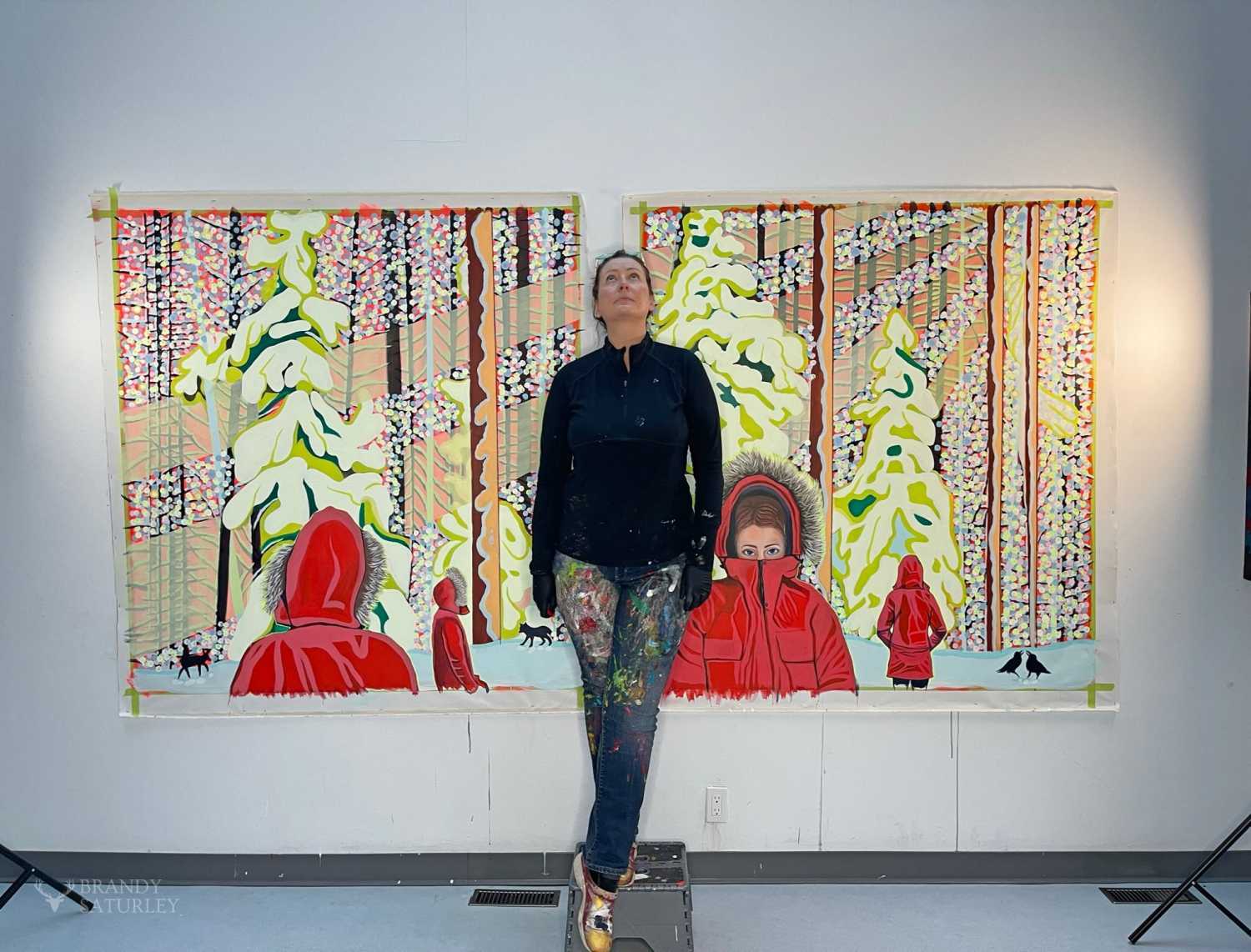
Brandy Saturley in the Leighton Studios at The Banff Cente for Arts & Creativity 2022